Thursday, April 14, 2016

Top Five

When making something like a thesis film, it's easy to get caught up in all of the bullshit and forget about why you wanted to make the film in the first place and what the film is actually about. That is why, this week, I decided to take a step back and list my top five favorite movies and really think about why I enjoy watching them over and over again and why they give me with such an emotional response.

1) Shaun of the Dead (my favorite movie of all time)

Shaun of the Dead is about two slacker roommates in their late-twenties that struggle to survive a zombie apocalypse that terrorizes their small town in Great Britain. This movie is a comedy/horror. It’s funny because it follows two very unlikely heroes as they try to protect the ones they love from a zombie apocalypse. In a particular scene, the survivors pretend to act like zombies to “fit in” with the undead as they make their way to a safe place. Though this movie has a ridiculous plot with ridiculous characters, it’s filled with many messages. One of the main messages is the message of love and friendship. When everything goes to hell, the main character, Shaun, who never had much responsibility in his life prior to the zombie invasion, must protect his mother, his girlfriend and his best friend. Even through the hardship, Shaun must step up and leave behind his everyday slacker desires to keep everybody safe.

2) Cool Hand Luke
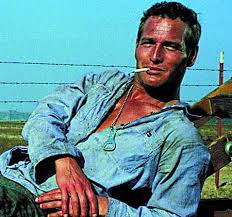
Cool Hand Luke is about a misguided war veteran who is arrested and sent to a prison camp where he refuses to conform to the prison life. This movie is very moving because, as the viewer, you fall in love with the main character, Luke. Luke is a free spirited rebel that inspires hope in the other inmates. The scene where the guards make the inmates pave a dirt road is particularly uplifting because Luke turns it into a game. Normally a physically demanding job, the inmates have fun paving the road as each side races the other side to finish first. Cool Hand Luke explores hardship and adversity but making the best of it. Though the inmates are put to hard work, Luke keeps everybody’s spirits high showing that even through a horrible experience, there is still light.

3) The Producers
The Producers is about a washed up producer who teams up with an accountant to over-sell shares on a Broadway play that’ll surely flop to make a large profit. The play that the producers choose to finance is called Springtime for Hitler. It’s supposed to be extremely pro-Hitler and offensive but the actors in the play turn it into a hilarious mockery that everybody loves. The message in this film is that though the main characters may have had a bullet proof plan to get rich, the plan was illegal, which eventually led them to jail. Though they may have had everything planned out, there were still some aspects that they couldn’t predict which led to their downfall.

4) The Dark Knight 
The Dark Knight is about the iconic super hero Batman as he struggles to defeat his most prominent villain – the Joker. This movie is a psychological thriller because Batman must deal with the Joker: a villain notorious for his erratic and unpredictable behavior. The scene where Batman is in the interrogation room with the Joker is extremely unnerving because it’s the first time we see Batman lose his temper. Batman is usually calm, collective, and focused but the Joker is able to get into his head and take advantage of him. There are many messages in this movie. The Dark Knight focuses heavily on the grey area of right and wrong. Batman typically overcomes his difficulties in a black and white way, but with the Joker, he needs to go against his moral code in order to defeat him.

5) (500) Days of Summer

(500) Days of Summer is about a young man who falls in love with a girl who doesn’t believe in love. The movie is a romantic comedy. The scene where the Tom, the main character, visits Summer, the girl he falls for, at a party shortly after they broke up is particularly funny because it split screens the harsh “reality” that Tom is undergoing and the uplifting “expectations” that Tom fantasizes about. Though it may be a depressing scene, it is presented in a light and comedic way. (500) Days of Summer explores the messiness of love. The main character falls for this girl that ultimately breaks his heart and he feels like he has lost his soul mate. He’s convinced that there isn’t another girl out there that suits him better. But he eventually learns that it isn’t the end of the world and he can move on and be happy.

Wednesday, April 13, 2016

The Hunting Ground


This week I sat down and watched a documentary that has been sitting in my Netflix queue for quite sometime. The Hunting Ground explores the incidences of sexual assaults on college campuses and how they go disgustingly under-addressed due to college's desire for a "clean image" to attract future students. The doc follows two students from Chapel Hill whom, after the own assaults, were largely treated as an administrative problem rather than a victim of sexual assault. They threw themselves into legal research, filed a title IX complaint against the school, and began a country wide investigation of similar instances of neglect in colleges around the country.

The film is a powerful portrayal of sexual assault and how it effects victims and their families around the country. Many times throughout I felt myself have strong emotional reactions ranging from sadness to disgust. While documentaries are supposed to entertain and educate, the emotional reaction that they can inspire is perhaps the most power part. I highly recommend giving this a view. While it does have some problems, such as it's lack of attention to male victims of sexual assault, it is a powerful exposition of one of the biggest, under-discussed problems faced by college campuses.


Friday, April 8, 2016

Modular Synthesis: Widely misunderstood but very cool

Amidst the vast methods of sound creation there lies a very underutilized but ultimately extremely powerful method of synthesis known as modular synthesis. Modular Synthesis is one of the most primitive forms of electronic synthesis. It take everything you would find in a software synthesizer and essentially makes it more complex by making it physical. Thats right, the oscillators, the effects and the macros are all physical devices. However, fear not! For the king of modular synthesis, Deadmau5 has arrived. There's no one better to explain the intricacies of this system than the modern mod god himself...


Thursday, April 7, 2016

Kazaamukkah

This week is the fourth annual Kazaamukkah. During Kazaamukkah, a friend and I watch the 1996 film Kazaam for eight straight nights in a row. If you're wondering what Kazaam is, it's this movie.

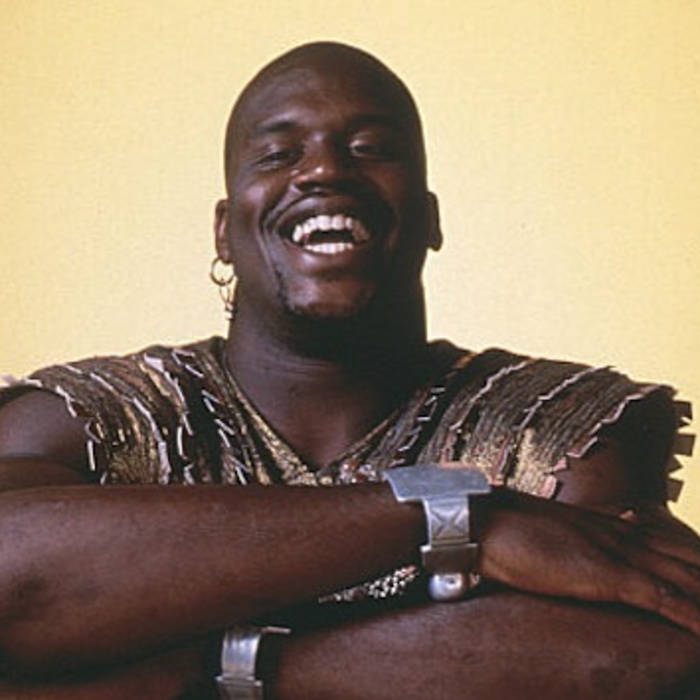
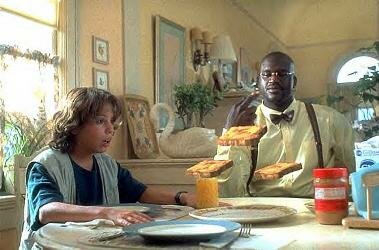
The movie stars Shaq as a rapping genie who lives in a boombox until a young boy named Max awakens him. There are also a subplot where Shaq raps with Salt-n-Pepa and Max's father gets involved in a cassette tape piracy scheme. There is also this scene.


While this is normally the kind of film you see once or twice for laughs, at the time of this posting I have seen the film 28 times and will have seen it 32 times by Monday night. Being that this is the first film I've watched that many of times in that short a span of time, I've started to notice a few things when you watch a film that many times.
1. I don't have the film memorized.
When I first started watching Kazaam I had assumed that by the 16th or so time seeing the movie I would more or less have most of the film memorized. This however is not the case. In fact I'll often forget large portions of the movie. I still don't have the minute long rap "We Genie" memorized and would be unable to give you a complete summary of the movie. I feel like is probably do to the fact that the movie has so little actual content to it. Almost 30 viewings in and both friend and I cannot find any resemblance of a theme or real arc in this film.

2.  An event like Kazaamukkah can't be done with just any film.
I feel like it's the aforementioned lack of any substance that makes Kazaamukah so bearable. The event is only bearable because of how little impact the film actually leaves on you. Kazaam is far from my favorite film, which is exactly why it's perfect for such an event. If I were to do Kazaamukkah with any film I remotely liked, I would end up hating it.

3. Errors, Inconsistencies, and Hidden Gems Galore.
Around the third watchthrough of Kazaam, you've pretty much gotten everything you're going to get out of the movie from its intended purpose. However, this allows you to focus on 
background elements of the movie. When you do that, things start to fall apart. The film is littered with blatant product placements mainly for Pepsi, Mcdonald's, and a candy bar called Mr. Big. the films beings to feel more and more like a 90 minute Pepsi commercial. Along with the soft drink promotions are large amounts of continuity errors both in background, editing, and story progression. There are several scenes including this one which fail to progress any aspect of the plot. Perhaps my favorite part of 
watching the film are the extras. Fun Fact, Efren Ramierez plays the role of a minor school bully in this film. He would gain more fame 
and recognition eight years later when we played Pedro in Napoleon Dynamite. Don't take my word for it, experience the film for yourself. It's on Youtube! While watching, here are a few fun games to play
-Spot the director's son.
-Identify what the father's job title is.
-What does Asia Moon lend to the plot?

The Darjeeling Limited

    King of the Sadbois, Wes Anderson generates stories that are unique visually and, especially earlier in his career, walked a line between amusingly absurd and deeply troubling. The Darjeeling Limited is his most perplexing and exotic film. 


     The film stars Owen Wilson, Adrien Brody, and Jason Schwartzman as brothers who are taking a train ride through India to reconnect after the death of their father. The characters deal with complex relationships that center around the mental health issues their patriarch's passing has caused. 


     Like any Wes Anderson film, the visuals seem almost like a picture book. Robert Yeoman composes the shots so they are symmetrical and balanced and the characters seem to move along distinct planes. What makes this movie slightly different from his other works is that a lot of the film is extremely crowded. 

     The train is a naturally confining space which pushes and compresses the brothers closer together. Additionally, Anderson consciously burdens the scenes by putting all three brothers in the frame at the same time. 
     The Darjeeling Limited has the most distinguishably production design of any Wes Anderson film, the colors are almost entirely blue and orange.
     Until the very end and the emotional climax when Anderson switches to a more neutral green. 

     This may be Anderson's most strikingly pretty film. However, it fails to be his best due to story and structural failings. There are several obstacles that the brothers face that could be considered end of Act Two moments. Whenever the brothers are faced with conflict they back down and when they are offered an option to leave they turn around and go back. This creates a meandering journey in which each brother has his own emotional climax rather than the family having an emotional climax together. Additionally there is a long flashback scene that doesn't add to the plot or the character development.


     The Darjeeling Limited is not Wes Anderson's best film but is one of the most poignant. Complex characters and visuals create a interesting dynamic. However, its structural issues bring the movie down. Wes Anderson, instead of doing his usual and making an amusing movie that is also sad, makes a sad movie that is amusing.


The Simpsons: A Case Study on Birds in TV

For this weeks blog post I will be watching a 22 minute episode of the Simpsons as a case study to see what the RTBPM (references to birds per minute) of an average American television show is.

The episode I chose is season 27 episode 12, "Much Apu About Something"

Notes:
- 00:05 - They show a clip of Mary Poppins flying through the sky in the opening credits when they could have shown a bird.
- 01:09 - They had a small montage of outdoors stuff and there weren't any birds in the sky in any of the scenes. Seems unrealistic.
- 01:40 - BIRD REFERENCE #1 - There is a container of Turkey Jerkey on Apu's counter in Kwik-E-Mart
- 07:22 - BIRD REFERENCE #2 - In the background of the quick&fresh supermarket there are "FREE RANGE CHICK PEAS", an classic twist on free range chicken. 
- 09:53 - They point to a beehive in a tree but there are no birds nests in the tree. Seems unrealistic.
- 11:58 - BIRD REFERENCE #3 - There is what looks to be chicken parm on the table at an Italian restaurant Homer and Apu are at. I'm bothered that the first 3 references to birds are about them being food.
- 13:10 - BIRD REFERENCE #4 - Apu says "chicken vindaloo" to his nephew. Seriously? Another reference to birds as food? This isn't okay at all.
- 17:38 - BIRD REFERENCE #5 - A shot of eggs going bad in quick&fresh. Another food reference. 

There were 5 bird references in 22 minutes. That makes the RTBPM exactly 0.22727.

It is extremely troubling that every reference was to them being portrayed as food. I am consider filing a lawsuit against American TV.

Documentary: Real Life or Half-Truth

In nonfiction media education, every student always gets asked the question of whether or not staging a scene from real life is still nonfiction. If you haven't asked that question - try it. Robert Fenton is the historical example of this question in action through his photography of the Crimean War.
One photo is the photograph right after a battle, while the other is a photograph right after Fenton placed a few canon balls in the road to make the scene more intense. The question is - which is true? 

In documentary film, this question of half-truths becomes even more prevalent. A filmmaker could stage a subject in his room with a poster of half-naked women behind him or the filmmaker could stage him at his church for an interview. Which is true? 

In my opinion, documentary film is a series of half-truths. At the beginning of my exploration into documentary film, my goal was always to bring the truth to life, to be an advocate of accuracy, a sultan of specifics. However, one quickly realizes that life is full of half-truths. Unfortunately, the human psyche does not exist on a binary of real and fake. Instead, our beings are made up of half-truths. Subjects in documentaries reveal, but they cannot reveal everything. But if what I see in every documentary is a half-truth, what's the other half? I don't believe its a half-lie. I don't believe it's half-fake. Documentary film can just only capture what the time and place allows. So rather than being half this or half that, a documentary is a product of circumstance. 

PEOPLE NEED TO TAKE THIS MATTER SERIOUSLY

Look at this bird:
Looks like a normal bird, right? I mean ya its pretty cute in what not but what is so special about it? What you are looking at is the New Zealand Dotterel, and endangered species of bird only found in certain parts of New Zealand. 

The reason I bring this bird up is because recently I was watching Taylor Swift's music video "Out of the Woods" (if you haven't seen it, check it out)  http://www.stuff.co.nz/entertainment/music/75580001/Taylor-Swifts-new-music-video-Out-Of-The-Woods-showcases-New-Zealand
and I realized that the location where most of the filming takes place is very similar to that of where the Dotterel roost. I became a little concerned that maybe Taylor Swift and her film crew perhaps intruded on this species' home so I decided to do a little research, and it turns out I was exactly right.

http://www.nme.com/news/taylor-swift/89978
The above link is an article that I stumbled upon while doing some research that claims that Taylor Swift's film crew disrupted the Dotterel's natural habitat and harmed some of the birds. The crew supposedly drove over a dozen vehicles onto the beaches where they roost and potentially murdered some of the birds. Now I personally am a firm believer that a filmmaker must do whatever it takes to get the perfect shot. But when it comes to endangered birds, thats where I draw the line. No birds life is worth a flawless dolly, especially that of a Dotterels. 
I do enjoy Taylor Swift and I think the music video is a beautiful homage to New Zealand's natural landscapes, but there are certain things that I just can't turn a blind eye to.
Please share this.

Interpreting Narrative

So, my film is not finished, but I've been showing a lot of people the stuff I have so far. And it's really interesting to hear what people say about it. Everybody has a different interpretation. Everybody has a different perspective -- telling me things that I never thought of while filming.

This got me thinking a lot about interpreting story and how different backgrounds and beliefs can cause different interpretations. 

Here's a little story.

A while ago, I dated this girl named Courtney. She wasn’t the nicest girl -- actually, she was downright cruel, but I can’t deny the love we shared for television and movies. After watching a show or a movie, we would both share our individual opinions and reasons for our opinions. Though we may not have always agreed, (which happened frequently thus resulting in our break up) we would both have educated and thought-out reasons for why we liked or didn’t like a show or movie. This was one of her few redeeming qualities.
            
Courtney and I both followed the show Breaking Bad very closely. It was perfect for television junkies like the two of us because it had strong character development, clever symbolism and great cinematography. We would watch season after season guessing what would happen next. The show follows the life of Walter White, who is an under appreciated chemistry teacher who turns to cooking methamphetamine to provide for his family after he is informed that he has lung cancer. As the show progresses, you see how the life of crime changes Walter White as he deviates from simple family man to becoming a megalomaniac drug kingpin.
          
 Breaking Bad shows the transformation from the good guy to the bad guy. And what usually happens to the bad guy at the end of a movie or television show? They die. When Breaking Bad was coming to its final season, Courtney and I made predictions on how the show would end. Opposed to popular belief, Courtney did not think that Walter was going to die at the end. She was certain that the writers were going to show how Walter pushed away everything that he valued in his life and then show him living with nothing left. I thought that was absurd. There was no way that the writers would let Walter White live after all of the villainous things that he had done throughout the series. Courtney and I had legitimate fights where we would yell and scream at each other because we couldn’t agree how it would end. More of her yelling at me because I didn't agree with her. Well, at least, that's how I remember it. 

She was convinced that Walter White would have to live with himself after ruining his life that he worked so hard to afford. She thought that this would be the punishment that Walter deserved giving the viewers a satisfying ending. I thought that Walter was going to die. I thought that the whole show revolved around how Walter tied to escape death, from when he first found out he had lung cancer to killing his drug competitor, and the conclusion would show how death finally caught up to him. Courtney did not like this. But when the finale premiered and Walter White died, I didn’t let Courtney forget it. It felt great being right. But more importantly, this showed how our different beliefs resulted in our different interpretations.


Ryan Playground


It amazes me how many times I go into a project, and how many lessons I take away from it in the end.  Because I have fallen in love with music videos, and want to pursue it as a career I am trying to collect the ones I love the most. This video by Ryan Playground catches everything I wish I did in Miami and more.

Here are some:

1. Take way way way more shots of random things (B Roll) 
2. Slow the fram rate down (60 fps) for slomo 
3. Utilize the artist whenever he/she is not singing. Just shoot them walking around. It will come out nice in the long run

With every video I watch, I learn that there is always a certain style that I can take away from it.

Keeping It Real

Generally, in documentaries, the audience relies on the filmmaker to portray the truth and reality of an event. But sometimes, as a filmmaker, it is easy to want to manipulate and direct what is happening in front of the camera. Whether or not this is okay is up for debate. Some people think that you can manipulate events slightly as long as you're not changing the overall truth of the film. However, this turns a fine line into a very blurry line. How much manipulation is too much? How much can a filmmaker direct without effecting the integrity of the documentary?

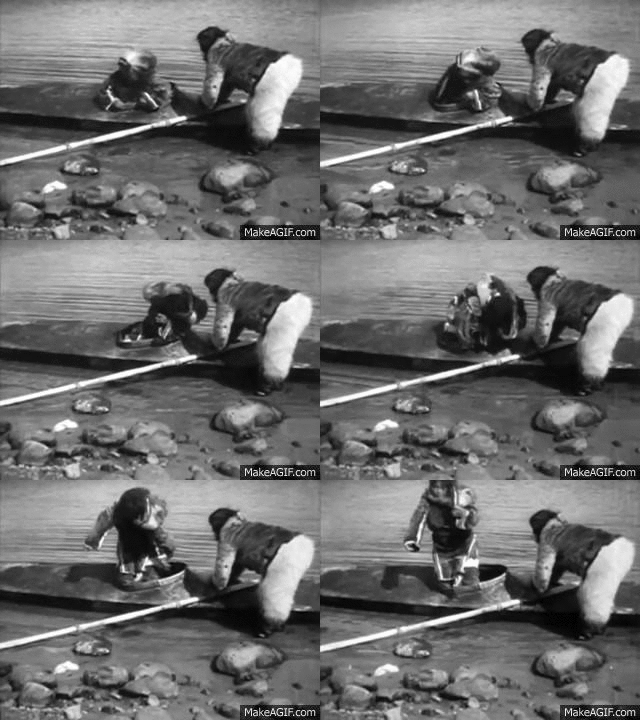
Nanook of the North, by Robert Flaherty, is typically considered the first documentary film. At the time, people were fascinated by the inside look Flaherty provided on a culture that was foreign to them. However, it was later discovered that Flaherty lost all of his original film for the documentary in a fire, and went back and tried to recreate it all. In other words, he was telling Nanook what to do the entire time. Can we even consider this a documentary then?


This week, Evin and I went back to Buffalo to film with one of our subjects, Rubens Mukunzi. Rubens is the creator and editor of Karibu News, a multilingual newspaper in Buffalo. He used to be a media star when he was still living in Rwanda, so he is extremely comfortable in front of the camera. So much so that, while we were following him on his paper delivery, he started directing his customers and telling them what to do on camera. At one point, he staged an entire scene for us. So what do we do? The footage is great and gives solid insight on the paper, but does it ruin the integrity of the doc since it is directed?

We essentially have three options: use the directed scene, scrap the directed scene, or include the scene along with his directions. I would argue that it is okay to use the directed scene because using the footage does not discredit the doc; it does not change the overall truth of the documentary like Flaherty did. However, using the scene along with his directions could be interesting since it really shows his personality. We'll decide as we continue with the editing process, but I think that this provides and important lesson for documentary filmmakers. It can be tempting, and much easier, to direct your subjects, but it's extremely important to make sure that doing so does not ruin the integrity of the film.

Wednesday, April 6, 2016

Fair Use: Using the Principle To Ethically Shape My Project


My documentary project revolves around media criticism and serves as a platform for greater discussion of the treatment of transgender individuals in the media (non-fiction, news media, that is). To facilitate conversation and illustrate the problems in the media regarding bodily privacy and respecting an indvidual's identity. While I am in the process of reaching out to the various media outlets for permission to utilize footage for my project, I'm not receiving any feedback. While I need to keep trying, I started thinking about my other avenues. Insert fair use. I watched this fantastic video on youtube that features prominent entertainment lawyer Michael C. Donaldson. For each media example I utilize, I must ask myself three questions:
                      1. Does this item well illustrate your point?
                      2. Did you only use as much needed to illustrate the point?
                      3. Is the connection between the item you are using and the point you are making obvious to                         the average viewer?

I thus far have asked myself those questions and it has aided me well in cutting down on the length of the clips I've utilized in conjunction with my interviews. As Donaldson mentions: I need to treat this project like a journalist. Through my research and interviews, I have revealed a lot of inequalities and inappropriate treatment of trans individuals within the media system, and that's what my focus is on. While I want to do this process right, this project has ultimately been a creative and intellectual exercise for myself and a launching pad for what I plan to take with me into graduate studies rather than something I aim to distribute.


Friday, April 1, 2016

Digital Dual: Broadcast vs. Online

The market for film and television moved online years ago. Movie theaters are empty, jacking up their prices on even a chocolate bar to $5. Cable companies are lacking clientele, moving their assets into online forms. So the question for producers ends up being publish online or in traditional forums?

Recently, the British television show, Black Mirror was faced with the same choice. Despite the millions Channel 4 put into the show, they opted to go with Netflix for distribution. Personally, I'm in agreement with this choice. Few people pay for cable prescriptions anymore for one. In addition, you're more likely to reach a larger audience through online distribution.

For example, I share an account with family members. Within just my family, the "Shows You Might Like" is reaching a 50-year-old, a 26-year-old, a 22-year-old and and 18-year-old all in vastly different parts of the United States. Not to mention the friends they may share those Netflix accounts with. On the other hand, a cable subscriber is reaching whoever their clients happen to invite over to watch TV.

The Guardian recently made a great report on the deal between Netflix and Black Mirror that's worth a look.


Every Bird Needs A Hero

It's hard to imagine that a bird could possess the ability to admire other birds or perhaps even look at other birds with respect and admiration. Sure a rooster probably doesn't look at a hawk and think that it would be cool to be a hawk, no, roosters are too busy cocka-doodle-dooing and watching the sun rise. But there is one bird out there that all other birds look to as a source of inspiration, a glimpse of hope, a key to the birdcage.

Big Bird
Or better known as Caroll Spinney. Thats right, there is only one big bird, and Spinney has been it since 1969. Its difficult to pinpoint exactly what species of bird Big Bird belongs to within the biological class Aves. The book "G" is for Growing: Thirty Years of Research on Children and Sesame Street refers to Big Bird as a canary, while in other instances Bird Bird has referred to himself as a condor, lark, as well as an ibis. Further research conducted by Zoologist Mike Dickison suggested that Big Bird represents a unique species that evolved from the whooping crane.

Big Bird is a character on the children's television show Sesame Street that can roller skate, ice skate, dance, swim, sing, write poetry, draw, and even ride a unicycle, wow. Big Bird is probably sole reason for Sesame Street's success. But how successful could a children's show be? Take a few moments to review this list of awards Sesame Street have been nominated for compiled by Wikipedia.


YearCategoryNomineeResult
1970Outstanding Achievement in Children's Programming (Program)David D. Connell, executive producer; Sam GibbonJon StoneLutrelle Horne, producers for Sesame StreetWon
Outstanding Achievement in Children's Programming (Individuals)Joe RaposoJeffrey Moss, music and lyrics, for the song This Way to Sesame StreetSesame StreetWon
Outstanding Achievement in Children's Programming (Individuals)Jon Stone, Jeff Moss, Ray SipherdJerry Juhl, Dan Wilcox, Dave Connell, Bruce HartCarole Hart, and Virginia Schone, writers, for "Sally Sees Sesame Street", the first episode of Sesame StreetWon
Outstanding New SeriesConnell, Gibbon, Stone, Horne for Sesame StreetNominated
1971Outstanding Achievement in Children's Programming (Programs)David Connell, executive producer; Jon Stone, Lutrelle Horne, producers for Sesame StreetWon
Outstanding Achievement in Children's Programming (individuals)George W. Riesenberger, lighting director for Sesame StreetNominated
1972Outstanding Achievement in Children's Programming (Programs)David D. Connell, executive producer; Jon Stone, producer for Sesame StreetWon
Outstanding Achievement in Children's Programming (individuals)George W. Riesenberger, lighting director for Sesame StreetNominated
1973Outstanding Achievement in Children's Programming (Entertainment-Fictional)Jon Stone, executive producer, Bob Cunniff, producer for Sesame StreetWon
Outstanding Achievement in Children's Programming (individuals)Joe Raposo, music director for Sesame StreetNominated
Outstanding Achievement in Children's Programming (individuals)Robert G. Myhrum, director for Sesame StreetNominated
1977 PrimetimeOutstanding Achievement in Any Area of Creative Technical CraftsDonald SahlinKermit LoveCaroly WilcoxJohn LoveladyRollie Krewson, costumes and props for the MuppetsWon
1979 PrimetimeOutstanding Children's ProgramChristmas Eve on Sesame Street: Jon Stone, executive producer; Dulcy Singer, producerWon
Outstanding Individual Achievement (children's program)Christmas Eve on Sesame Street: Dave Clark and Tony Di Giroloma, lighting directorsNominated
Outstanding Individual Achievement (children's program)Christmas Eve on Sesame Street: Gerri Brioso, graphic artistNominated
Outstanding Children's ProgramA Special Sesame Street ChristmasBob Banner, executive producerNominated
1980 PrimetimeOutstanding Children's ProgramSesame Street in Puerto RicoMichael Cozell, producer; Al Hyslop, executive producerNominated
Outstanding Individual Achievement (children's program)Sesame Street in Puerto RicoNat Mongioi, art directorNominated
Outstanding Individual Achievement (children's program)Sesame Street in Puerto RicoOzzie Alfonso, directorNominated
1984 PrimetimeOutstanding Children's ProgramDon't Eat the PicturesNominated
1989 PrimetimeOutstanding Special EventSesame Street: 20 and Still CountingNominated
Outstanding Achievement in Music and LyricsSesame Street: 20 and Still Counting: Joe RaposoNominated
1990 PrimetimeOutstanding Achievement in ChoreographySing! Sesame Street Remembers Joe Raposo and His Music: Jacques d'AmboiseNominated
1990 InternationalFounders AwardChildren's Television Workshop co-founder Joan Ganz Cooney for her work, including Sesame StreetWon
1994 PrimetimeOutstanding Children's ProgramSesame Street Jam: A Musical CelebrationArlene Sherman, executive producerNominated
Outstanding Children's ProgramSesame Street's All-Star 25th Birthday: Stars and Streets Forever: Franklin Getchall, co-executive producer; Marjorie Kalins, co-executive producer; Joel Lipman, coordinating producer; Marc Sachnoff, producer; Andrew Solt, executive producer; Emily Squires, co-producer; Victoria Strong, producer; Greg Vines, Supervising ProducerNominated
2004 PrimetimeOutstanding Children's ProgramThe Street We Live On: Dr. Lewis Bernstein, executive producer; Tim Carter, producer; Kevin Clash, co-executive producer; Melissa Dino, producer; Karen Ialacci, producer; Carol-Lynn Parente, producerNominated
Outstanding Music And LyricsThe Street We Live OnLou Berger, lyricist; Mike Renzi, composerNominated

It is no coincidence that this long running show that has won so many rewards just happens to have a big yellow bird as one of the main characters, no, it was a perfectly executed plan created by think tanks Joan Ganz Cooney and Lloyd Morrisett. With such a strong central character, both birds and children alike could now look up to this 8 foot bird.