Showing posts with label movies. Show all posts

Thursday, April 14, 2016

Top Five

When making something like a thesis film, it's easy to get caught up in all of the bullshit and forget about why you wanted to make the film in the first place and what the film is actually about. That is why, this week, I decided to take a step back and list my top five favorite movies and really think about why I enjoy watching them over and over again and why they give me with such an emotional response.

1) Shaun of the Dead (my favorite movie of all time)

Shaun of the Dead is about two slacker roommates in their late-twenties that struggle to survive a zombie apocalypse that terrorizes their small town in Great Britain. This movie is a comedy/horror. It’s funny because it follows two very unlikely heroes as they try to protect the ones they love from a zombie apocalypse. In a particular scene, the survivors pretend to act like zombies to “fit in” with the undead as they make their way to a safe place. Though this movie has a ridiculous plot with ridiculous characters, it’s filled with many messages. One of the main messages is the message of love and friendship. When everything goes to hell, the main character, Shaun, who never had much responsibility in his life prior to the zombie invasion, must protect his mother, his girlfriend and his best friend. Even through the hardship, Shaun must step up and leave behind his everyday slacker desires to keep everybody safe.

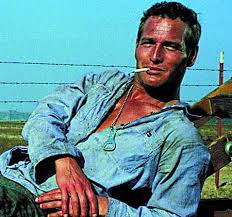
2) Cool Hand Luke
Cool Hand Luke is about a misguided war veteran who is arrested and sent to a prison camp where he refuses to conform to the prison life. This movie is very moving because, as the viewer, you fall in love with the main character, Luke. Luke is a free spirited rebel that inspires hope in the other inmates. The scene where the guards make the inmates pave a dirt road is particularly uplifting because Luke turns it into a game. Normally a physically demanding job, the inmates have fun paving the road as each side races the other side to finish first. Cool Hand Luke explores hardship and adversity but making the best of it. Though the inmates are put to hard work, Luke keeps everybody’s spirits high showing that even through a horrible experience, there is still light.

3) The Producers
The Producers is about a washed up producer who teams up with an accountant to over-sell shares on a Broadway play that’ll surely flop to make a large profit. The play that the producers choose to finance is called Springtime for Hitler. It’s supposed to be extremely pro-Hitler and offensive but the actors in the play turn it into a hilarious mockery that everybody loves. The message in this film is that though the main characters may have had a bullet proof plan to get rich, the plan was illegal, which eventually led them to jail. Though they may have had everything planned out, there were still some aspects that they couldn’t predict which led to their downfall.

4) The Dark Knight 
The Dark Knight is about the iconic super hero Batman as he struggles to defeat his most prominent villain – the Joker. This movie is a psychological thriller because Batman must deal with the Joker: a villain notorious for his erratic and unpredictable behavior. The scene where Batman is in the interrogation room with the Joker is extremely unnerving because it’s the first time we see Batman lose his temper. Batman is usually calm, collective, and focused but the Joker is able to get into his head and take advantage of him. There are many messages in this movie. The Dark Knight focuses heavily on the grey area of right and wrong. Batman typically overcomes his difficulties in a black and white way, but with the Joker, he needs to go against his moral code in order to defeat him.

5) (500) Days of Summer

(500) Days of Summer is about a young man who falls in love with a girl who doesn’t believe in love. The movie is a romantic comedy. The scene where the Tom, the main character, visits Summer, the girl he falls for, at a party shortly after they broke up is particularly funny because it split screens the harsh “reality” that Tom is undergoing and the uplifting “expectations” that Tom fantasizes about. Though it may be a depressing scene, it is presented in a light and comedic way. (500) Days of Summer explores the messiness of love. The main character falls for this girl that ultimately breaks his heart and he feels like he has lost his soul mate. He’s convinced that there isn’t another girl out there that suits him better. But he eventually learns that it isn’t the end of the world and he can move on and be happy.

Thursday, April 7, 2016

Interpreting Narrative

So, my film is not finished, but I've been showing a lot of people the stuff I have so far. And it's really interesting to hear what people say about it. Everybody has a different interpretation. Everybody has a different perspective -- telling me things that I never thought of while filming.

This got me thinking a lot about interpreting story and how different backgrounds and beliefs can cause different interpretations. 

Here's a little story.

A while ago, I dated this girl named Courtney. She wasn’t the nicest girl -- actually, she was downright cruel, but I can’t deny the love we shared for television and movies. After watching a show or a movie, we would both share our individual opinions and reasons for our opinions. Though we may not have always agreed, (which happened frequently thus resulting in our break up) we would both have educated and thought-out reasons for why we liked or didn’t like a show or movie. This was one of her few redeeming qualities.
            
Courtney and I both followed the show Breaking Bad very closely. It was perfect for television junkies like the two of us because it had strong character development, clever symbolism and great cinematography. We would watch season after season guessing what would happen next. The show follows the life of Walter White, who is an under appreciated chemistry teacher who turns to cooking methamphetamine to provide for his family after he is informed that he has lung cancer. As the show progresses, you see how the life of crime changes Walter White as he deviates from simple family man to becoming a megalomaniac drug kingpin.
          
 Breaking Bad shows the transformation from the good guy to the bad guy. And what usually happens to the bad guy at the end of a movie or television show? They die. When Breaking Bad was coming to its final season, Courtney and I made predictions on how the show would end. Opposed to popular belief, Courtney did not think that Walter was going to die at the end. She was certain that the writers were going to show how Walter pushed away everything that he valued in his life and then show him living with nothing left. I thought that was absurd. There was no way that the writers would let Walter White live after all of the villainous things that he had done throughout the series. Courtney and I had legitimate fights where we would yell and scream at each other because we couldn’t agree how it would end. More of her yelling at me because I didn't agree with her. Well, at least, that's how I remember it. 

She was convinced that Walter White would have to live with himself after ruining his life that he worked so hard to afford. She thought that this would be the punishment that Walter deserved giving the viewers a satisfying ending. I thought that Walter was going to die. I thought that the whole show revolved around how Walter tied to escape death, from when he first found out he had lung cancer to killing his drug competitor, and the conclusion would show how death finally caught up to him. Courtney did not like this. But when the finale premiered and Walter White died, I didn’t let Courtney forget it. It felt great being right. But more importantly, this showed how our different beliefs resulted in our different interpretations.


Thursday, March 31, 2016

Directing is not easy

So, coming into this class, my main goal was to make something that I would find funny. Throughout my time here at Ithaca, and being a screenwriting concentration, I've written a lot of stupid short scripts. But I've never had the opportunity to make the stupidity come to life. That's why I decided to take thesis. I wanted to make something - 100% of the way - directing, filming, editing, maybe acting - instead of just writing the story and being done with it.

But, as I started to shoot, I soon realized that I totally underestimated the of challenges of actually making a film. And considering I haven't taken any production classes prior to thesis, it was either sink or swim.

Writing the script has always been easy for me (well, relatively speaking...). But actually taking the finished script to the locations, with a camera, and audio equipment, and actors, and unforeseen problems, and then filming it - well, that's fucking hard.

The biggest thing I worry about is making everything look good. So, I decided to re-watch some of my favorite shows and look at how they're directed and what makes them look so good. First, I watched Louie - probably my favorite show ever in the entire world of television. Since I want my film to have a very Louie-esque feel to it, I took close note to the camera work, the shot angles, what is in focus and what is out of focus, etc. Louie has a lot of hand held camera work. It gives a very "real" feel which is something I want to accomplish in my film. Another element that gives it the "real" feel is the use of natural lighting - street lights, lamps, sunlight, etc. There are also a lot of close ups on characters when they say or do something important, with the background out of focus.

A lot of what I'm saying is pretty self explanatory and obvious, but when it comes to actually implementing these elements in your own film, it becomes challenging. Not only did I watch Louie, but I watched specific scenes from other movies and television shows. For example, I have a scene where my main character gets mugged. So I researched all of the best mugging scenes in cinema to see how they did it. And the more I watched, the more I was able to take and use these techniques.

If I learned anything, it's that you have to steal. You have to steal from the best and make it your own. That's the only way you can make something of quality.

Thursday, January 28, 2016

Anomalisa is a Movie that is Playing in a Theater Somewhere

So I saw this movie the other day. It's called Anomalisa. If you haven't heard of it, check it out. It was written and directed by Charlie Kaufman. If you haven't heard of him, check him out. Because he and his work... well, it's definitely out there.

Anomalisa is a stop motion animated film that follows protagonist Michael Stone as he travels to Cincinnati to his latest book at a hotel service convention. The story is extraordinarily simple. Michael checks into his hotel. He meets a girl. And he falls in love with her. It's basically a 90 minute movie about a one night stand.

But, if you know anything about Kaufman, you'll know that things are never that simple. Every character that Michael perceives in the movie has the same voice and the same face (whether they are male or female, they are voiced by Tom Noonan). This is an extremely original and clever way of showing Michael's inability to connect to anyone.

But when he meets Lisa, he's immediately attracted. Why? Because Lisa doesn't sound like everybody else (voiced by Jennifer Jason Leigh). She doesn't look like everybody else. She's her own person.

Finally, somebody different. Somebody unique. Somebody to make a connection with. Right?

I don't want to give anything away, so I will say no more. But I highly recommend this film. I don't remember a film that made me feel so many different feelings all at once like this film did. So go out and see Anonalisa.


Tuesday, September 15, 2015

A Revolutionary Gimbal For Now

As filmmakers we are always trying to get the shot no one else can get, the smoothest footage, the money shot. Recently, numerous 3-axis gimbal stabilizers have been released which have thought to be the replacement of the Steadicam. While there is a lot of controversy about this topic, a new piece of equipment has been released that might throw all we know about stabilizers out the window.


As you see in the video, Sachtler has combined the brilliant gimbal benefits, that are available through use of devices like the DJI Ronin and the Movi, and the steadicam, which has long been the go to method of tracking shots. The movie "Goodfellas" has a historic tacking sequence all thanks to our beloved steadicam. This amazing idea provides a whole new style of filmmaking. As mentioned in the video above one shot that has been created through this system is being able to peak around corners with the camera. This could be great for giving a shot the feeling that someone is watching a character in a film. Being able to invert the camera as well makes this tool that much more versatile. Low angle shots were not attainable with former steadicams. Due to this item being brand new, there are limited visuals of real world applications so far, but by combining both of these amazing stabilization systems, the world of filmmaking just got a little crazier.

(GlideCam)

Having used the DJI Ronin quite extensively, as well as owning a Glidecam, I have experience advantages and disadvantages of both systems. First off the Ronin is electric and must be calibrated for the specific weight load that it is carrying. This is frustrating because with my Glidecam and many other traditional Steadicams, all weight adjustments are done through physical weight distribution adjustments. With my Glidecam the weight distribution does not have to be perfect either to still get a smooth shot, this is great for run and gun when you can't always count on a motor holding up for the entire shoot. The motor also is very susceptible to the cold due to the intricate mechanics of the system.

The Ronin however does trump the Glidecam in certain ways though. Getting low angle shots is extremely hard when the weights on the bottom of your Glidecam are hitting the ground. The Ronin is great for these types of shots because you are almost using your body as a crane and you can control the height of the Ronin to a much more specific point. The motor of the ronin, while running haywire occasionally, does however help with any bumpy steps you are taking as well.

Sachtler having combined these two amazing tools is really on to something. As mentioned earlier a new age of filmmaking with emerge from this system, but it is also costs about 15,800 Euros at the moment and the price truly makes it a professional piece of equipment. I previously thought the Movi would be the top stabilizer in the industry for sometime, however this industry changes faster than you can adjust and I'm sure this currently revolutionary equipment will soon be outdated and the bigger and better stabilizer will be running the streets soon.

Thursday, March 5, 2015

5 Centimeters Per Second

5 Centimeters Per Second received a lot of attention when it was first released in Japan. People loved the breath taking animation and the mature story that was told. It was recommended to me by a friend who agreed that critical acclaim was rightly deserved. I watched the whole thing over the weekend and while I did appreciate the illustration, the story and characters didn't seem very realistic to me.
The story takes place in the 1990's and centers around Takaki Tono and Akari Shinohara, two elementary school students who form a strong bond between each other. Over the course of the film, the story follows them as they try to maintain a long distance relationship as Akari's family moves away. It follows them throughout their high school and early adult years and highlights the hardships and the crippling truths that arise from trying to maintain their relationship.


The film does do a good job of showing how realistic long distance relationships can be, especially in the early 90s when instant messaging and texting wasn't really around. However, I feel like the main characters, especially Takaki, wouldn't let a childhood relationship inevitably ruin there lives. In the third part of the film when they are both young adults, it shows how they are still heavily invested in a relationship that ended years before. The entire movie is only about an hour long and I feel like they really could have made the film a lot more impactful if they had added another half an hour of content. The characters would feel much more fleshed out and the time skips wouldn't have felt so rushed. The breathtaking animation is definitely worth sticking around for though, even if you find yourself less than invested in what is actually happening in the story.
Overall, I don't think I would really recommend this movie to anyone other than people who appreciate really nice artwork and animation. The story and characters fall short in my opinion, but it is only an hour long film so maybe I was expecting.          

Thursday, January 22, 2015

American Sniper

I recently went to the movies to see American Sniper, and I have to say I was not disappointed.

American Sniper is a film directed by Clint Eastwood, staring Bradley Cooper. It is based around the life of Chris Kyle, the Sniper with the most confirmed kills in America.

While this film is a very enjoyable high action movie, there are both strong points and weak points in this piece. 

The Weak: 
I personally thought that the plot line wasn't very strong. The film was divided into the "3 Tours" and it seemed to be fragmented with out very much emphasis on the current setting of each tour. 
Another weak point was the stylistic color selection. The film had a very sepia tone style that I did not find appealing. 

The Strong: 
This was a very powerful movie. With out giving away any spoilers, I can say that this was the first film I have ever been too that left the audience speechless. Everyone left the theatre in silence. I have heard from multiple people that this was the same experience for them. 
Another strong point was the cinematography. There where multiple shots through out this film that I was impressed with. Very nicely executed. 


Over All Rating:  7.9/10 

Great film to see in theaters, but lacking in some ascetics and felt rushed. 

Sunday, January 18, 2015

Tarkovsky and Herzog on Film Schools and life.

"What is important to the education of a filmmaker is not a matter learning a set of skills and techniques, but having a vital, passionate need to express something unique and personal. Above all, the student has to understand why he wants to become a filmmaker rather than work in some other art form and he has to ponder what he wants to say in film's unique form of expression. "In recent years I have met more and more young people who go to film school to prepare themselves to do "what they have to do" (as they say in Russia) or "to make a living" (as they say in Europe and America). This is tragic. Learning to use the equipment and edit a movie is child's play; anyone can learn that without half-trying. But learning how to think independently, learning how to be an individual, is entirely different from learning "how to do" something. Learning how to say something unique and different is a skill that no one can force you to master. And to go down that path is to shoulder a burden that is not merely difficult, but at times impossible to bear. But there is no other way to become an artist. You have to go for broke. You must risk everything in your quest to express a personal truth. It must be all or nothing. "The man who has stolen in order never to thieve again is forever a thief. Nobody who has once betrayed his principles can have a pure relationship with life ever again. When a filmmaker says he will try to please people - relatives, friends, teachers, or reviewers -- this time in order to get a degree or earn the money to make the film of his dreams the next time, he is lying to you, or even worse, lying to himself. Once he heads down the path of deceit he will never be capable of making a real film." --Andrei Tarkovsky, Sculpting in Time, p. 124 (adapted and updated by Ray Carney)


 Werner Herzog on Film School "I personally don't believe in the kind of film schools you find all over the world today. I never worked as another filmmaker's assistant and I never had any formal training. My early films come from my very deepest commitment to what I was doing, what I felt I had no choice but to do, and as such they are totally unconnected to what was going on at the film schools - and cinemas - of the time. It's my strong autodidactic streak and my faith in my own work that have kept me going for more than forty years. "A pianist is made in childhood, a filmmaker at any age. I say this only because physically, in order to play the piano well, the body needs to be conditioned from a very early age. Real musicians have an innate feel for all music and all instruments, something that can be instilled only at an early age. Of course it's possible to learn to play the piano as an adult, but the intuitive qualities needed just won't be there.

As a young filmmaker I just read in an encyclopedia the fifteen or so pages on filmmaking. Everything I needed to get myself started came from this book. It has always seemed to me that almost everything you are forced to learn at school you forget in a couple of years. But the things you set out to learn yourself in order to quench a thirst, these are things you never forget. It was a vital early lesson for me, realizing that the knowledge gleaned from a book will suffice for the first week on the set, which is all the time needed to learn everything you need to know as a filmmaker. To this very day the technical knowledge I have is relatively rudimentary. But if there are things that seem too complicated, experiment; if you still can't master them, hire a technician.

 "Filmmaking is a more vulnerable journey than most other creative ventures. When you are a sculptor you have only one obstacle - a lump of rock - which you chisel away on. But filmmaking involves organization and money and technology, things like that. You might get the best shot of your life but if the lab mixes the developing solution wrongly then your shot is gone forever. You can build a ship, cast 5000 extras and plan a scene with your leading actors, and in the morning one of them has a stomach ache and can't go on set. These things happen, everything is interwoven and interlinked, and if one element doesn't function properly then the whole venture is prone to collapse. Filmmakers should be taught about how things will go wrong, about how to deal with these problems, how to handle a crew that is getting out of hand, how to handle a producing partner who won't pay up or a distributor who won't advertise properly, things like this. People who keep moaning about these kinds of problems aren't really suited for this line of business.

 "And, vitally, aspiring filmmakers have to be taught that sometimes the only way of overcoming problems involves real physicality. Many great filmmakers have been astonishingly physical, athletic people. A much higher percentage than writers or musicians. Actually, for some time now I have given some thought to opening a film school. But if I did start one up you would only be allowed to fill out an application form after you have walked alone on foot, let's say from Madrid to Kiev, a distance of about five thousand kilometres. While walking, write. Write about your experiences and give me your notebooks. I would be able to tell who had really walked the distance and who had not. While you are walking you would learn much more about filmmaking and what it truly involves than you ever would sitting in a classroom. During your voyage you will learn more about what your future holds than in five years at film school. Your experiences would be the very opposite of academic knowledge, for academia is the death of cinema. It is the very opposite of passion."


Friday, September 26, 2014

Inside the Theater

Since I was a young boy the movie theatre has always been a sacred place to me. Almost every other weekend as a kid the movie theatre was always a place to escape. In an odd way going to see a film with my family was a time to bond. And I say it's odd because going to see a movie with other people doesn't give you much time to talk to the other person. But it's the time before and after the movie that starts up a conversation and creates this bond between people. And I believe that all starts with the movie theatre.

From the moment you step into a theatre you are hit with the that buttery aroma, and the bright lights illuminate the concession stand. Even before the film starts you are already enthralled into a different world where candy and soda are overpriced beyond one's imagination. And as you walk into the theatre and up the stairs the little lights guide you like plane on it's take off. You sit through the previews as you get excited by another reason to come back and you can't wait until the film actually starts. And it finally does.

One of the most magical moments about going to the movies is not knowing. Not knowing what the film will do to you and how you may remember this moment is something truly special. There are moments sitting in different theaters that I will always remember. Laughing with my best friends, crying alone in a theatre, or the awkward dates I've had all while watching a movie. Some have been pretty bad movies now that I'm looking back but it's what the films remind me of and that's all that matters. Sometimes a film is more than just individual frames trying to tell a story and it becomes more about the moment of time your life is in. Movies and the experiences I've had at the theatre have changed me into who I am today, and I hope to one day make someone feel the same. 

Friday, April 25, 2014

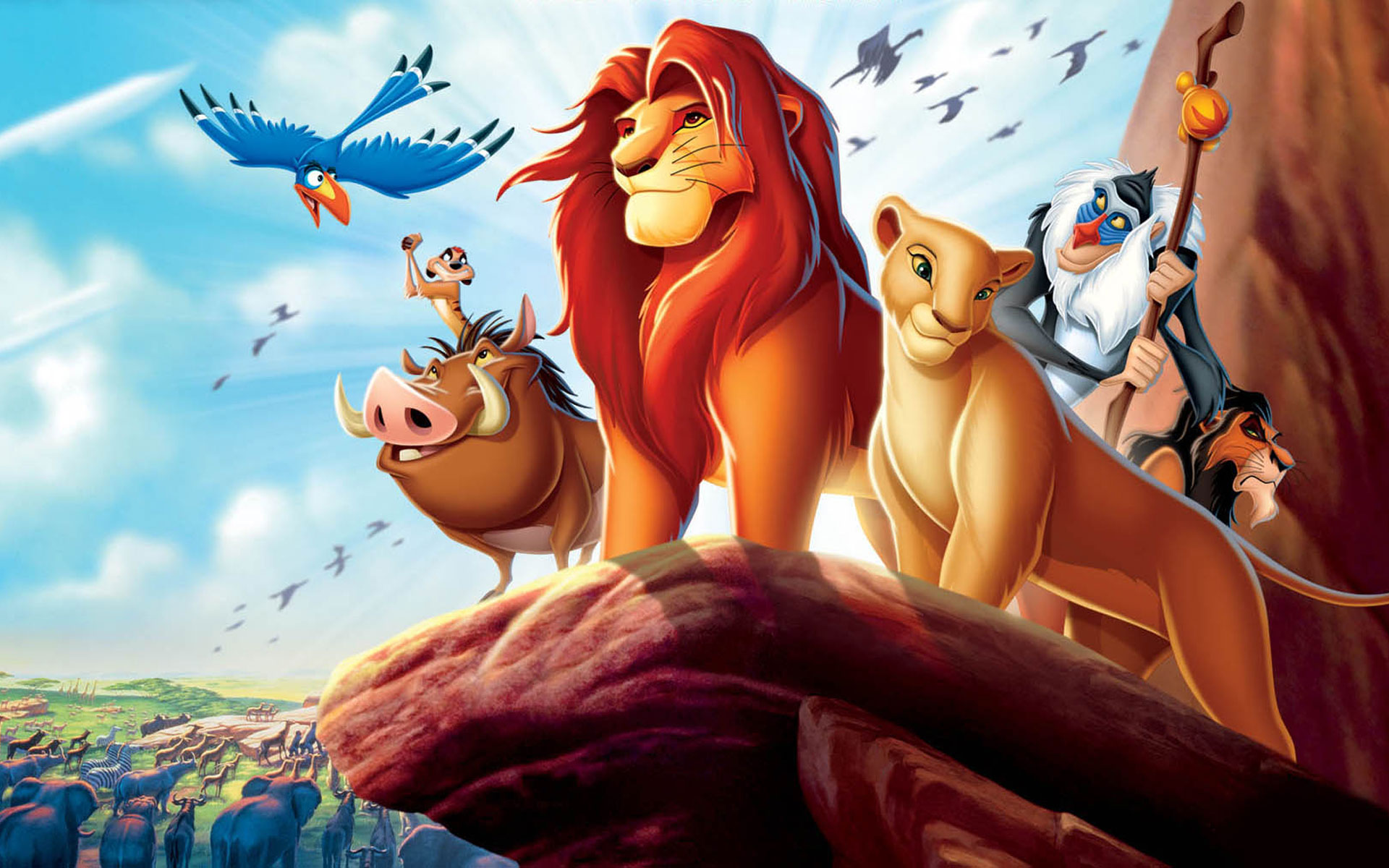
On Simba’s General Assholery, The Poor Parenting Technique of Mufasa, and The Errs of a Male Focused Society


            Lion King’s a solid flick. Directed by Roger Allers and Rob Minkoff, the film serves as an interesting riff on Hamlet with the pieces re-arranged to make it kid friendly and a superb musical accompaniment courtesy of sir Elton John that worms itself into your brain for years to come. But people misread the film. Specifically, the character Simba. Canon has it that Simba is  a deeply sympathetic hero whose bravery and tenacity in the face of tragedy serves as model of virtue that we all should aspire to exemplify a daily basis. This interpretation is, in fact, misguided fallacy, a misappropriation of story resulting from the buoyant, cartoonish, and musical atmosphere of the film. If you look at the movie on an objective level, Simba turns out to be an entitled, self-involved asshole raised in to a culture of privilege and indulgence by a father whose sole moment of proper parenting was dying.
            At the start of the story, Simba’s a young lion. He’s a boy acting in boyish ways: a tad immature, overly adventurous, and a disrespect of authority. It’s understandable because boys will be boys. You don’t slip out the womb full of wisdom and insight. Mufasa knows this and early on trues to implore upon Simba the virtues and requirements of a leader and, to an extent, of any halfway decent human being (Or lion, whatever, you know what I mean). But these type of ideas take a while to ferment within a personality, so Simba’s still off being a rambunctious little lion that he is.
Uncle Scar, the film’s agent of chaos and evil, tells Simba about this cool forbidden elephant graveyard. Simba, of course, wants to go. Zazu, being they kind of guy who, likes his King’s kid being alive and stuff, tells Simba not to venture off. Simba goes anyway, roping his innocent friend Nala along for the shenanigan. Disobedience, especially within small children, is if not forgiven, than understandable as long as it is the exception to their behavior, not their general mantra of behavior.
But before they take part in their disobedience, they need to get rid of Zazu. And they do so with a musical number called “I Just Can’t Wait to be King”. Simba riles up all these Pride Land animals (Who no doubt were enjoying their afternoon perfectly fine before Simba came along and brought his little song and dance routine, I’m sure) and performs this big musical number which subdues Zazu by pure chaotic force. Their handling of Zazu is not really the issue here though. What is bothersome is the lyrical content of Simba’s song. He sings about how he cannot wait until he will not have to bow down to authority. He is a power hungry crown chaser who wants to be in charge just so there’s no one above him telling him how to act. This mindset is not necessarily role model material, but one chalk it up to the pitfalls of boyhood I suppose.
Simba and Nala get to the elephant graveyard and, what do you know, it turns out to be dangerous and they nearly get eaten by hyenas! Like Zazu warned them! Mufasa sweeps in and saves the two children at the last minute. Now this is an opportunity for true parenting. If Mufasa handles this moment properly, a stern yet not entirely unsympathetic approach, this could become a real character forming moment for Simba that clearly defines for him the line between right and wrong. This line could go on to guide Simba years later during his time as king. Precision is necessary in this moment.
 Instead, Mufasa has about thirty seconds of glaring and grimacing before tussling his son’s mane and basically saying, “Hey, just don’t do that again.”
WHAT THE FUCK.
NO! Just no! This style of parenting, the type where your kid messes up and you let it slide just this one time because he definitely learned his lesson and will NEVER act like this again because you told him not to and it’s different then when you told him earlier not to do that thing because you, as a parent, really mean it now, breeds the absolute worst type of person. These are the type that not are not only unable to understand the nature of consequence, but are also unaware of its very existence. Such a force has never been a presence in their life because their parents excuse them of it. These people act in a reckless, selfish manner because that’s all they’ve ever known. And it is not as much that Simba is a horrible person in this particular moment, but that he would have grown to become one had everything in his life not gone to shit. Had Mufasa been able to keep up his parental style of fostering a privileged and consequence-free environment for his son, then, to draw a parallel to our world, Simba would have become that jock asshole in high school that got a brand new 50,000 dollar Porsche for his birthday and purposefully crashed it so he could get a new one, this time with the correct plush interior. Which is why Mufasa’s was at his best as a parent when he died.
Mufasa’s death is tragic on a variety of levels. Drawn beautifully, evocative voice acting and fantastic sound design, it’s a powerful moment that sits inside the viewer long after the movie’s over. But the situation Simba is put in may be that part that hits hardest. Simba’s childish ways end up leading to his father’s death (Or so Scar leads him to believe). Losing a father is hard enough, but having to bear the emotional brunt of responsibility for it as well is a form of psychological baggage so complex and weighty that I wouldn’t wish it upon my worst enemy. (Actually, I probably would on him, but probably not my third or fourth worst ones.) From a removed perspective though, this is an important and beneficial moment for Simba. There is no one there to excuse him for his actions this time. No one to say it’s ‘All okay.’ (Yet.) Simba’s forced to confront his personal flaws and deal with them. Hopefully, this will shock him out of his boyhood ignorance and thrust him into adulthood.


NOPE. After a brief period of angsty though really understandable period of moping, he runs off into the forest with Timon and Pumba and becomes the Disney animation equivalent of a stoner, preaching apathy and hedonism while munching on an endless amount of edibles. For years, he lives for the sole purpose of escaping the pain and guilt of his actions. If nothing else, as a kid, Simba at least had ambitions of leadership, no matter how egotistical and selfish they were at their core. But now he just sits on his ass all day thinking about the latest ways to please himself. Presented with the chance to move past his flaws and embrace the basic emotional requirements of becoming a mature adult capable of leadership, he doesn’t as much say no as ignore the opportunity all together.
Guilt, regret, shame. These emotional bedrocks are what ultimately carry us from childhood into adulthood. We confront these emotions after an array of mistakes, big or small, and deal with them, making promises and pledges to ourselves to not make these types of mistakes again. And in the process of fixing the ills and foibles of our personalities, we turn into better people. (Which is why the axiom “No regrets” is, pardon the vulgarity, utter bullshit.) Without regret, you have no reason to grow as a person because you are utterly content with the one you are today. So why bother trying to fix it? Simba makes that choice of apathy every day of his life for years. Sympathy for his tragic upbringing aside, this is not someone I aspire to become.
Simba, after years of indulgences escapism, is forced to confront his past during a chance encounter with Nala. After some passionate cuddling and nose rubbing, Nala asks him to come back to the Pride Lands and assume the throne because only he can stop Scar from making such a muck of things. (Nala, despite all of her other fantastic personality traits which we will get to later, clearly is not skilled in the art of character assessment.) Simba being Simba, he does not want to confront the emotional burden of his father’s death and refuses, angrily running off into the forest. All his old friends and family, even his mother, are in danger of dying out due to this egotistical tyrant. But hey, Simba comes before everyone else.
Simba eventually changes his mind though after encounters with floating flower petals and a monkey that’d get psychiatric help if he knew what was good for him. He goes back to the Pride Lands and fights off Scar, has a baby with Nala and rules over the Pride Lands. After basically an lifetime rife with moments basically calling out to him “Hey, get your shit together!”, he finally does. And you know what, kudos to him. Seriously, well done. It’s not easy changing, but we’re all glad he did. And so he ends the film as a fairly noble king and everyone likes him. But he should not be given all that much credit for this. Simba has been given such a dearth of opportunities to change himself, and he only acts upon them once everyone he loves pesters him to do so, as opposed to finding that change within himself through introspection and revelation. I’m not saying he is the worst person ever, but he’s not all that great, and he’s definitely not role model material.
Even as he grows up, Simba is not the leader the Pride Lands deserves. Nor is Scar (A man too enraptured in the thralls of jealousy and selfishness, despite his clear tactical qualifications and cunnery, to ever benefit the masses. Also, he’s just a big jerk). Nor is Mufasa, (Too naïve and kind hearted to make the types of decisions that need to be made as a king, i.e. Ned Stark). The leader the Pride Lands deserves is Nala. Look at this girl. Powerful, smart, yet not without compassion. She is a gentle soul who is not cruel yet knows what needs to be done for the kingdom to thrive. But can she be the ruler of the Pride Lands? No. She’s a girl.

Lion King ends up being about the faults of a society that empowers and breeds male egotism as well as the consequence that such institutional bias births. Scar, Simba Mufasa, none of them are fit to rule. Nala, the best candidate for leader, is relegated to being nothing more than a muse, a mere inspiration for passion and fortitude for Simba when he needs it most. And it’s a god damn shame that it works like that.  

Friday, April 11, 2014

Throwing Sound

The concept of throwing sound is a very interesting one. Placing a sound in a specific place is very difficult due to the eternal movement of sound waves. There is product out now that can throw sounds wherever you want them. Granted the speaker is the size of an old flip phone so theres not much output volume but nonetheless it is very cool.
Basically there is a small parabolic speaker that has a coned shape in order to "shoot" sound wherever you want. The effect is that you can point the speaker at someone and only they can hear it, like a whisper in their ear; when you move it away from the person it sounds like the sound is bouncing off the wall behind them. Difficult to explain in words but very easy if its actually been done to you. I found out about this product from a guest speaker in one of my classes who used chirping crickets to demonstrate the soundlazer to my astonishment. I had never heard such precise placement of sound I almost cried. In the entertainment industry, parabolic speakers are becoming increasingly popular in mixing sound for movies due to the precise location of the sound. Many new speaker systems are incorporating these speakers so engineers can adjust not only the direction of the sound but the HEIGHT of the sound. So say you're watching a movie and spaceship moves from the bottom of the frame to the top, you would hear the sound "underneath" you. Once the spaceship moves to the top half of the screen it would sound like it is "above" you. This was used in Gravity with amazing results and will soon become the new normal for mixing action movies. 

Friday, April 4, 2014

Musicals As Films

So I love musicals!!!! I have grown up listening to musicals and I have even performed in about seven musicals within my life time. I also love watching movies. So it is only fitting that I am in love with movies that are musicals/musicals that are movies! They have a certain something to them. I love the fact that they are musicals that I can see over and over again! The songs that are in the films just get stuck in my head which makes me then want to watch it again! Here are a couple of musical films that I am in love with.

   Fiddler on the Roof

Shrek the Musical

Hairspray

Les Miserable

Rent


Whoever invented the musical movie is the best!

Friday, March 21, 2014

The Village

Right before break I sprained my ankle. Because of this I spent 90 percent of my break on the couch catching up on TV and watching movies. One movie that stuck with me was The Village. I had watched this movie once before in english class junior year of high school but I forgot most of it. I decided to watch it again because my brother suggested it. 

The movie has such a strange feel about it. The village these people live in is not like any town we would typically encounter. At first I believe these people didn't know any other life. I was surprised to find that this place only existed for a relatively short time. I was brought into the movie thinking everyone that lived here was born and raised. I was very interested by the elders' reasons for starting this colony. Although the story was very uncomfortable and strange to grasp at first I was so intrigued that I had to continue watching. I'm not sure if I actually enjoyed the movie or if I just needed to know what was going on. 

There were a few parts during the film that didn't add up at first and made you question everything. Like when one of Those We Do Not Speak Of attacked Ivy in the woods after we had just been shown the truth of those creatures. That didn't add up initially but we shortly learn that it had been Noah in a costume. Almost everything was tied up nicely which I appreciated.  
 
One thing I didn't like was when Ivy gets out side of the gates, the guard sees her and doesn't question it as much as I think he should. He asks where she came from and is confused when she says from over the wall. But he doesn't even go looking around in there. He just gets her medicine and sends her on her way. I don't know that part just didn't quite sit with me. 

Overall I thought the movie was well done but I'm not sure if it's one I would watch again.