Friday, November 14, 2014

30 Rock, just the best show ever... nbd

Tina Fey's brain child, 30 Rock, is without a doubt a strange beast, but one of my most favorite, and in my opinion one of the best sitcoms ever. I have watched the entirety of the show more times than i can count, and still laugh out loud at every episode, even ones where i know all the jokes (which is most of them). 30 rock is a strange combination of unrelenting humor, heartwarming story-lines, insane plot twists, and calls attention to the fact that it is a show constantly,  for all intensive purposes this show should not work, but it does. For all those who haven't seen it (even though you should have, like really should have, like go watch it right now) the show revolves around Liz Lemon, played by the always amazing Tina Fey. Liz is the head writer of a some what low rated comedy show, in the same idea of a less successful SNL, called The girlie show. the show starts with Liz getting a new boss, Jack Donaghy, played by Alec Baldwin, who suggests that she should hire Tracy Jordan, played by Tracy Morgan, an A-list Comedy star to boost the shows ratings. So basically its a comedy show about a comedy show, that revolves around the fact that it pokes fun at its self and the industry insistently, its perfect and here are 5 episodes that prove it.


1. Tracy Does Conan (season 1, Episode 7)
To many, This is the first truly great episode of the show, that showed what 30 Rock would grow into. in this episode, Tracy is ambivalently booked on the Conan show, to promote his new movie and TGS, despite trying to stab Conan the last time he was on the show. however, tracy is off his meds and is new ones are causing him to hallucinate (not great for Conan). This epode is great for a multitude of reasons. firstly, the character development. Liz is trying to break up with her  current horrible boyfriend, but decides to stay with him because it is easier than starting over. however the best part about this episode is that it introduced my personal favorite reoccurring character on the show, Dr. Leo Spaceman played by Chris Parnell. His questionable morals and medical skills provide perhaps the funniest lines in the whole series.


2. The Rural Juror (Season 1, Episode 10)
This episode is by far one of the best episodes of the first season, and again show what the show would eventually evolve into. This Episode mainly (and I say mainly because every episode has many, many, sub plot lines) revolves around Jenna Maroney, the original star of the Girlie show, played by Jane Kraowski, and her appearance in the film adaptation of a "Kevin Grisham" novel (yes, John's brother) entitled the Rural Juror. One running gag of the episode is that no one actually knows the title of the film, although there were some good guesses, including "the Oral Germ Whore". This Episode also deals with Tracy and Jack trying to market The "Tracy Morgan Meat Machine" a Gorge Foreman Grill type invention. however the Meat Machine is made poorly and shoots out hot oil. as a result,  it can only be sold in the Ukraine, and is eventually endorsed by Whoopi Goldberg. Despite this episode being absolutely hilarious, it is also the first time in the show that there is any character development, and it really worked.


3.  Gavin Volure (season 3, Episode 4)
Its no wonder this episode is on my list, you cant really go wrong with a guest star like Steve Martin. In This brilliant Episode, he plays an billionaire agoraphobe named Gavin Volure, who wile at a dinner party, finds Liz so attractive that he asks her to spend the weekend with him in his mansion, too good to be true right? Right. In a true 30 Rock plot twist, it turns out that Gavin is actually not who he seems. he is under house arrest for fraud, arson, embezzlement, and racketeering, and only invited Liz for the weekend to attempt escape. This episode exemplifies the great acting talent of all cast members on the show, and has some great satire, with Gavin representing a number of Wall street crooks. there is also a side plot involving a strangely life like Japanese sex doll of Tracy.


4. Dealbreakesrs Talkshow (season 4, Episode 7)
this episode starts after Liz's relationship book "Dealbreakers"  becomes a best seller (even in China, although there her names is translated as "Lesbian Sour Fruit). After the success of her book, Jack decides it would be a good idea to have Liz come to the front of the cameras to star  in her own Dealbrakers talk show, it isn't. it starts off with Liz getting a, not so great, makeover, and her slow decent into insanity, acting just like the crazed actors she is usually forced to take care of. wile this is going on, Frank, an other writer for TGS played by Judah Friedlander, is put in charge wile Liz is filming the show. As a result, he slowly turns into Liz and you understand why Liz is the way she is a little more.


5. Hogcock! / Last Lunch (season 7 Episode 12/13)
unlike most shows, one of 30 Rocks best episodes is its last one (or last 2 i guess). this episode starts off after TGS is canceled, wile Liz is living relatively happily at home with her new husband and adopted children, however she really wants to get back to work. luckily for liz, it is descovered that if Tracy does not do one more episode of TGS his contract says he will have to be payed $3 million. As per usual Tracy avoids work, and Liz must force him to do his job, however not in the usual way. this episode is packed with heartfelt dialogue and sentimental situations, including Liz having to get tracy to come back to work after he flees to a strip club where we first meet him in episode one of season one. wile in the club, he Explains to Lemon that he is just avoiding work because he doesn't want the show to end (tear jerker, i know). however the show is still packed with humor, humor that would arguably only work for a show like 30 Rock. for example, the last few moments of the show shows we zoom out to see Kenneth, now the head of NBC, holding a snow globe of 30 Rockefeller plaza. we hear Liz Lemons granddaughter pitching Kenneth a show about Liz's life, and her working on TGS. Kenneth replies "I know, i love it" as a ship from Star Wars flies past his office window.

6 Seasons and a Movie

As a huge fan of Community - except season 4, which we'll pretend doesn't exist - it's life has been an emotional roller coaster. It first began halfway through season 3, NBC executives removed Community from its schedule mid season. Fans took up the phrase, "Six seasons and a movie" (originally said by Abed referring to The Cape), became a battle cry for community fans. The show was eventually put back in the line up to finish its season, but that was not the end of Community's troubles.

Dan Harmon, the creator and executive producer was replaced for season four. Most fans have agreed to not talk about season 4. Season 5 brought back Dan Harmon, but we also lost Donald Glover as Troy Barnes. The show found its groove again with Jonathan Banks as a Criminology professor. Community was not renewed by NBC for season 6 but was picked up by Yahoo!

Community has been through so much but I love its weird story lines. Dan Harmon is a great story teller, some weird things come out of his head. If you like Community I suggest you check out his other show, Rick and Morty.


2014 Ithaca International Fantastic Fest


Just a short post this week, but it's on a very relevant topic. This weekend, Cinemapolis and Cornell Cinema will be hosting Ithaca's 3rd Annual International Fantastic Film Festival. Halloween may have been two weeks ago, but this encompasses all things horror anyway. New films from around the world as well as recognized classics will be screening, with a special focus put on the theme of witchcraft.

I've never been to a film festival of any kind and despite this being a far cry from the likes of Cannes, Venice, Sundance or TIFF, it remains a reason for excitement. The occasion aligns with a weekend of relatively little work, so there will be plenty of time check out what the fest has to offer, retrospectives and unreleased works alike.

As for a schedule, my plans are not set in stone, but here's what it looks like at the moment:
 First up is Cold in July. It's not exactly a horror film, more like a crime thriller, but a second chance to see it is very welcome. The film had a far too brief release this summer and I've heard good word across the board. Tension, violence and a terrific trio of performances by Michael C. Hall, Sam Shepard and Don Johnson is expected. The film screens Friday at Cornell Cinema.
 Saturday will be throw-back day, with a double feature of The Wicker Man (the original of course!) and The Exorcist at Cornell Cinema. Somehow I've never gotten around to seeing either of these. Exorcist is less excusable, but blindspots are blindspots. Two horror classics released in 1973, one concerning cults and the other, possession. Should make for a spooky evening of viewing!
On Sunday, the festival closes, and I plan on being there for two new releases: the zany documentary of  a project gone bad, Lost Soul: The Doomed Journey of Richard Stanley's Island of Dr. Moreau and the New Zealand vampire comedy, What We Do in the Shadows. Both will be screening at Cinemapolis.
To have a local film festival, no matter how small, is such a gift. A wide exposure to a variety of films allows for the free-flowing exchange of perspectives and ideas from around the world and it ought to yield at least a handful of hidden gems. While most of the titles may be unknown, it's an environment where you're encouraged to explore and dig for little films with big riches. With Cortaca rapidly approaching, I don't expect the majority of students to pay particular attention to this cultural event. Drinks will be spilling and parties will be bumping for sure. As for me, you can keep your football game...I'll be digging for buried treasure at the cinema.

Thursday, November 13, 2014

Whiplash and Writing What You Know

This weekend down at Cinemapolis is the release of the highly anticipated film Whiplash. The film starring the upcoming star Miles Teller is about a young drummer who with the help/pressure of his instructor hopes to be a legend. The star of the film crazy enough is only two years younger than the writer/director, Damien Chazelle is only 29 and Whiplash is his first feature length film. A year ago Chazelle created a short under the same name in hopes to pitch the feature length film. Little did he know is that the short would make it into Sundance and the feature adaption would be there a year later.

When creating the film and the characters Chazelle started from what he knew best, his own life and his own experiences. Chazelle grew up playing the drums and over time he found out that he was quite good, he knew he could never make it all the way but he did the next best thing, he wrote about it. In an interview he talks about being stuck on another script and decided to start on something else that would help clear his block. He became so invested that he left the original script behind and started his journey with Whiplash. Chazelle says that the main instructor, played by J.K Simmons was inspired by many different instructors he's had over the years but morphed into one. What I really take from this is that writing from what you know is a great start and will help you tell a story that no one else can.

This can be seen in other films as well. My hero Kevin Smith started by making a film in a convenience store about convenience store clerks in the same convenience store he worked in. Now what I'm saying is to not make a film about your life story cause honestly who can relate to that but to play off of that. Take experiences, feelings and lessons you have learned and mold that into any film, and that film can be about anything! If you look at Smith's last film Tusk, about a man being turned into a walrus but whats under the blubbery flesh of the film is way deeper. The film through the sharp writing is about storytelling and what it means to be a storyteller and if there's really a unique story out there. Or even Christopher Nolan's new film Interstellar is about a family man on a mission to save Earth by exploring other galaxies. But under the spectacular visuals is a film about leaving a legacy behind and how as a parent you can't help but look at the world through the eyes of your children.

No it lies in your heart!

So go out there guys! Write about what you know and love. We all have an interesting story to tell.

Talk To Me

When doing casting for an animated film, it is important to pick who you want to voice your characters.  Lately it seems as though there has been a huge push to cast stars to voice animated characters.  Though a possible way to sell a film, sometimes casting stars in animated features detracts from the overall value of the film.  When I watch an animated film, I enjoy not being able to recognize the voice of an actor, for then I can suspend disbelief entirely and really put myself into the world of the film.  Immersing yourself the world of a film is much harder to do in an animated film.  Characters do not completely resemble real people and the world does not look like our world as we know it.  Stories told in animated films often involve fantastical elements such as magic and talking animals.  It can be hard enough to enter the world of an animated film without a recognizable voice that drags you back to the real world.

One of the best examples of a wonderful choice for a voice actor is Jodi Benson.  Benson voiced Ariel in Disney’s The Little Mermaid.  Her beautiful speaking and singing voice add a lot to her character.  Her voice sounds soft and young which fits the character perfectly.  The Little Mermaid  was Benson’s first time acting in an animated feature.  Her voice was fresh, new, and unrecognizable.  No face could be put to the voice, so it made the role of Ariel seem more realistic.


Lately, Disney has strayed away from using the voices of relatively unknown actors, which has decreased the quality of their films.  The most recent example of this is the use of Idina Menzel to voice Elsa in the film, Frozen.  Idina Menzel has an incredible voice.  She is a wonderful performer and actress on Broadway, but I don’t think that her voice fits the style of a Disney princess movie.  Her voice was too powerful for the role and definitely too recognizable.  Her voice didn’t match the timbre and styles of the other characters in the film which was fairly distracting.  Her voice was also very recognizable.  All I could think as I watched the film was that Elsa should be painted green and wearing a witch hat.  Her strong voice distracted me from the character Elsa, and ensured that all I could think about when Idina Menzel was singing was Wicked.


I’m not saying that studios shouldn’t cast stars as these characters because sometimes stars may have a voice that truly fits the role.  For example, Matthew Broderick voices adult Simba in The Lion King.  I cannot tell that it is Matthew Broderick, however, which allows me to suspend my disbelief and really get into the movie.  It is as if Simba has his own voice with its own tone quality and timbre.


I suggest that studios be very careful when they cast voices in animated movies, for though casting a star may help to sell a film, it can take the audience out of a movie and make it less effective.

Quentin Tarantino

Recently I have become quite obsessed with Quentin Tarantino films. Although I have seen some of them in my past, it was not until quite recently that I became in fascinated with the infamous Tarantino. All of his films are amazing because each of them are unique in their own way. It is hard to pick just one as a favorite, but if I had to pick my favorite, which is very hard, it would most likely be Django Unchained mainly because of the character Dr. King Schultz. 
Recently I re-watched Pulp Fiction, Django Unchained, and Kill Bill Volume 1 and 2. All three of these Quentin wrote. He also directed these three as well. After re-watching these movies there were connections that I never originally noticed. For anyone that has never seen the Kill Bill series, which you should, the group of people in the movie include, a kungfu master, a blonde leader, a demolition expert, a french fox, and as well as the deadliest woman in the world with a knife. After re watching Pulp Fiction, there was a scene that I had never really put much thought into. In the dinner scene between Mia and Vincent, Vincent asks her about the pilot episode she starred in. As she goes on to explain it, she is explaining the group of people in Kill Bill. This blew my mind because Pulp Fiction came out in 1994, where as Kill Bill did not premiere until 2003. I loved how Quentin added this little part into Pulp Fiction, describing basically the draft of Kill Bill. Maybe he did not even know he was going to write that as a movie, or maybe he did but either way I found the connection interesting. Another connection he had was in Pulp Fiction, the character Captain Koon, has the same name that is on the Wanted sign in Django Unchained. The wanted sign displays the name Crazy Craig Koons. 


Yet another one is the character of Vincent Vega in Pulp Fiction, is brothers with Mr. Blonde in Reservoir Dogs. Tarantino mentioned wanting to make a separate movie with the two brothers, however Vincent Vega dies at the end of Pulp Fiction, so it would of had to of been a prequel. 
 

Obviously this is nothing new, Tarantino is known for having these small connections put in his films. All of these connections are small and subtle and Tarantino adds small little witty lines that hint at all of these connections. Many people have found other small hints in his film and have theories of which character is related to who, and what not. 
One theory I found interesting is in Django Unchained. While searching the web for these connections I found a theory on the Miramax website that speculated about Dr. King Schultz and why he was in the bounty hunting business at all. In the beginning of the movie, Django asks him how long he has been a dentist
and he answers with he had given up dentistry almost five years ago to become a bounty hunter. Dr. King Schultz never talks about family much, but it is speculated that his wife, PAULA, left him and that is why he took up the business. Later his wife realizes the terrible deed
she has done and goes out seeking him, only to find he has been killed by Calvin Candie. After hearing this she is so devastated she never gets married again, and keeps Dr. King Schultz’s last name. Finally she dies in 1893, buried with the tombstone that says PAULA SCHULTZ 1823-1893. Sound familiar? That’s the same grave that Beatrix Kiddo is buried alive in almost one hundred years later. This I found really interesting. Although there is no evidence to prove that Paula Schultz was intact Dr. King’s wife, the name is the same, and the date matches the time she could have possibly died.

Quentin Tarantino is possibly one of my favorite film makers. Not only are the stories he writes creative, hilarious, and captivating, they keep the audience wanting more. And because he knows how to insert descriptions of random people, he can build of that and create other films that connect to each film he has made. 
Watch the video below, many of Tarantino's best movie scenes are put together 

Here are some links on the interesting connections, theories, and comments of Tarantino films!
http://www.ign.com/articles/2013/01/17/the-intricate-expansive-universe-of-quentin-tarantino
http://geektyrant.com/news/2013/6/15/quentin-tarantinos-pulp-fiction-and-kill-bill-connection.html
http://www.miramax.com/subscript/how-django-unchained-is-linked-to-pulp-fiction/


Tuesday, November 11, 2014

Why Fantastic Mr. Fox is the Best Wes Anderson Movie...Ever

Wes Anderson is an enormously polarizing director. I know people who can't even sit through the first ten minutes of his films, and people who see them 10 times...in theaters. His work is quirky to say the least and his highly stylized films are products of complete creative control. Every single thing in the frame in a Wes Anderson film has been carefully thought out, color coordinated and placed with extreme care. This is perhaps what makes Fantastic Mr. Fox the best of his films, because he is able to control every single detail and movement through stop animation. It is the absolute peak of creative control. He doesn't even need to depend on actors to look the right way because he could physically create all the characters. If he wants a room full of golden hard cider, he doesn'tneed to create a life size one he can make one digitally or in miniature.

.

Fantastic Mr. Fox is also amazing because many of the things that may have come off as pretentious or too quirky or weird in a live action film, come across perfectly in animation. Also the characters themselves are allowed to be strange caricatures of themselves because they're animals. For example, Mr. Fox would be a totally obnoxious character if he were played by George Clooney in the flesh, not just voice acted by him. But instead, he is a funny and strange character whom we can rally around.


This film has also succeeded in making a mature animated film that kids also enjoy. Based on the classic Roald Dahl book, Anderson makes complex characters with flaws and journeys, something that is not often found in animation, especially not the maturity part. By having the animals voice acted by famous actors, Anderson was able to entertain adults and by making the movie a delightful and funny movie, kids are entertained as well. He really helped to heighten the opinion of animated films, and please a large group of people.

Stop animation is so perfectly suited to Wes Anderson's style that I don't know why he doesn't use the medium more often. Many fans do not even consider Fantastic Mr. Fox when they are ranking Wes Anderson's best films, but for me it belongs at the top of this list. I don't think his style will ever be better captured than through an eccentric band of woodland animals stealing squabs and hard cider.

Quentin Tarantino's Imminent Retirement

This week, Quentin Tarantino released more information about his upcoming Western, The Hateful Eight. Production on the film was postponed indefinitely earlier in the year by Tarantino when a confidant leaked the script for the film to the general public, but the famed director seems to have changed his mind, deciding to move forward with the project. Casting speculation has proven to be generally accurate, with actors such as Tim Roth, Bruce Dern, Michael Madsen, Samuel L. Jackson, Walter Goggins, and Channing Tatum being officially or almost-officially attached to the project. However, the buzz surrounding The Hateful Eight mainly concerns Tarantino's assertion that he will retire as a director after his 10th film, leaving two more to go after The Hateful Eight. Tarantino's recent comments raise an issue that has often plagued filmmakers, musicians, and other artists: is it better to burn out, or to fade away?


I just don’t want to be an old-man filmmaker. I want to stop at a certain point. Directors don’t get better as they get older. Usually the worst films in their filmography are those last four at the end. I am all about my filmography, and one bad film f*cks up three good ones … When directors get out-of-date, it’s not pretty.
Tarantino's recent interview with Playboy reveals that his retirement plans are based on mostly on his concern over his artistic legacy. I think there's a lot that's admirable in Tarantino's belief that a director's body of work must stand as a whole at the end of his or her career. A student of film history, Tarantino must be a strong believer in the auteur theory. He also stands by all of the films he's done, and hopes to retire proud of every one that he makes. However, as his audience, I'm sure many of us would love for him to continue making films until he is completely out of ideas. Tarantino acknowledged the possibility that he may go beyond ten if he feels like he has a strong enough artistic reason to do so:
If I have something to say, I’ll do it. I haven’t made any gigantic declarative statements. I just don’t want to be an old filmmaker. I’m on a journey that needs to have an end and not be about me trying to get another job. Even if it’s old and I’m washed up, I’d still want to do it. I want this artistic journey to have a climax. I want to work toward something.
Whatever Tarantino ultimately decides, it's clear that the movie-going public is excited for The Hateful Eight.

Sunday, November 9, 2014

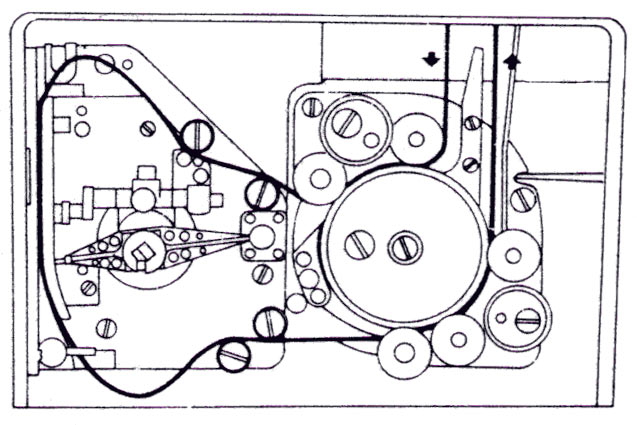
A Brief But Highly Ignored Introduction to the Bolex Camera

A Brief But Highly Ignored Introduction to the Bolex Camera


       Hello, if you are reading this that means you are probably taking Cinema Production 2, aka CP2. If you are taking Cinema Production 2 that mean you have probably taken Cinema Production 1, aka CP1. If you have taken Cinema Production 1 that means you have made movies on film. If you have made movies on film in Cinema Production 1 that means you have used a Bolex camera. But how much do you really know about this classic. You’ve probably used it at least two or three times. But beside its basic use and functions have you ever taken the time to learn about this marvel of the cinema camera world? Well let this post educate you.


       In 1927 a man named Jacques Bogopolsky, or as he was later on called Jacques “Bolsky,” invented a revolutionary camera called the “Bolex Auto Cine A.” The camera was self-named. Then in about 1930 he joined with the Paillard Co. and formed Bolex-Paillard. Together they continued to create both 16mm and 8mm cameras. The cameras were built with an internal spring clockwork system but later an electrical model was developed. By the early 1940s the Bolex 16mm model became the most popular film camera in the world. The camera has been used by many famous filmmakers to start their career in the cinema world.


(Jacques Bogopolsky)


WHY RESEARCH IS SO IMPORTANT TO MAKING A FILM

This weeks blog post may seem out of character of my usual avant-garde, conceptual, defense of something that cannot be defended blog post that I have become known for but I still feel that this topic is important to discuss none the less. I want to take this week to discuss the importance of...

RESEARCH!!!!!!!!!!

I don't mean research for a book report or essay, I mean research for film, specifically research before you go to shoot anything. This is important because everything that appears in the frame, at least in the classical Hollywood, narrative mode of production, is supposed to add to the verisimilitude of the world of the film. Verisimilitude, for those who are not familiar with the term, means the appearance of being real or true. As it relates to film, verisimilitude means how believable the world of the film is to the viewing audience. For example I am attempting to write something where Beyonce is playing a Marlene Dietrich type character and Lady Gaga is attempting to play a Marilyn Monroe type character. Well, we all know that Lady Gaga can play a Marilyn Monroe type because that is what she has done previously in career. However, Beyonce playing a more androgynous type is something that I needed to research because as we all know Beyonce is an ultra-feminine, beautiful woman who I wasn't quite sure could play an androgynous character. So I went to a Google image search of Beyonce in androgynous looks and this is what I found....


So clearly Beyonce is very capable of giving an androgynous look that still underscores her femininity just Marlene Dietrich gave throughout her entire career. 

This leads me to a question that I am sure you are all asking yourselves, Ted how do we do this research that you are demanding of us? Well I have an answer for you that will help you figure out where to start. Say that you were making a film about the alien sightings in the 1950's, where do you go for information or inspiration? Well there are two answers, one involves technology and the other does not. Those options are...
1) THE INTERNET

2)  LIBRARY    
In a library you will be able to read books and periodicals that relate to the time period that you need to find information on. 

On the internet you can find information more easily, in my opinion, then in a library. I create a folder on my computer and put images that help me lock into the style of the period that I am researching for and even if that might not directly relate to the style or look that I may want, I keep anything that helps me lock into ideas for what I want my film to look like. 

In conclusion, research is important and vital to insure that your film looks good. 

SO DO IT!!!!!

Friday, November 7, 2014

Drink Up Me Hearties, Yo Ho!

As a cinema production major people always expect my favorite film to be either some silent, independent, or incredibly artsy film.  My favorite film, however, fits into none of these categories.  So get ready, because my favorite film is (drum roll please) Pirates of the Caribbean: The Curse of the Black Pearl. 


When this film was first being written, many critics believed that it would be a flop, for pirate films had not been popular for a number of years.  The film, however,  has done so well that it has inspired four sequels, one of which is to begin shooting in Australia this February.  The characters of Captain Barbossa and Jack Sparrow were so popular that they were added back into the ride that originally inspired the movie.

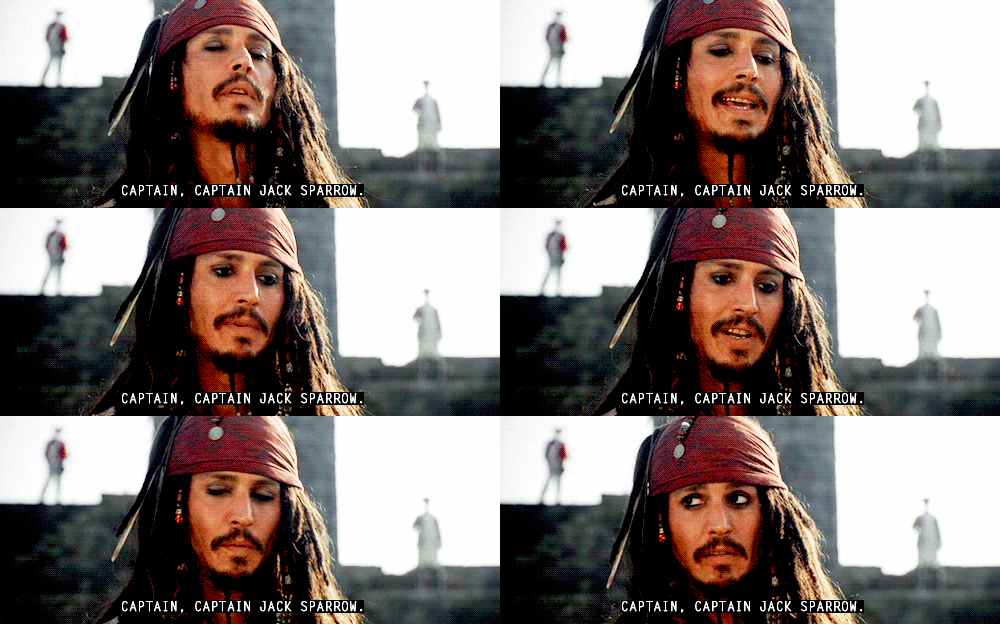
Sorry...Captain Jack Sparrow

There is something very cathartic about Pirates of the Caribbean.  It allows me to become something that I am not, and bring me back to a time period that I would have no access to otherwise.  When I watch this film, I feel like a total rebel.  I want to be a pirate.  I want to live that dirty swashbuckling life where it is okay to steal things, hunt for treasure, and do whatever you want to do just because you feel like it.  And hey, it would be so cool to just be able to be a salty old pirate.  Although the life of pirates is glorified in these films, I can’t keep from wondering what it would be like to be a pirate for the day.


One thing I enjoy about these films is that pirates are portrayed as heroes.  In a decade when superhero movies preach universal morals, the Pirates of the Caribbean films root for the bad guy.  These pirates fight against the law for the liberation of pirates while committing immoral or illegal actions the entire time.  Each of the protagonists‘ goals is motivated by selfish reasons.  Though the pirates are truly in the wrong in this situation, the government officials are the antagonists.

Even though the pirates break the law, the audience enjoys taking their side, for each of the protagonists has an incredibly strong character.  The best example of this is Captain Jack Sparrow.  He is charming and funny.  When he spills his heart to Elizabeth about the Black Pearl being his one true love, you can truly feel his heartache.  Elizabeth Swan, on the other hand, is a strong and independent young woman thrown into a world she has never seen before.  Will Turner gives his all and risks his life to save his true love.


The production design and costuming in this film is absolutely stunning.  A lot of research had to be done in order to procure the correct weapons that fit within the time period.  The costumes for both the pirates and the government officials are beautiful and also look very authentic.  When I watch this film, I feel as though I can almost smell the pirates.


And with that I leave you with one last question...Why is the rum always gone?