Showing posts with label Emmanuel Lubezki. Show all posts

Friday, February 26, 2016

Oscar Predictions:

This Sunday marks the 88th Academy Awards. It's the time of year when everyone argues what film was the best of the previous year and why is should win/have been nominated. For this week's blog post I thought I would give my predictions for what should and what probably will win in a few categories at the Oscars this Sunday.
No they won't all be Mad Max, a lot will, but not all of them,

BEST PICTURE

NOMINEES
-Bridge of Spies
-Mad Max: Fury Road
-The Big Short
-The Revenant
-The Martian
-Spotlight
-Room
-Brooklyn


WILL WIN: The Revenant.  While for a while it looked like Spotlight has this one in the bag, it seems that Inarritu's film about Hugh Glass will triumph, making him the second person to win consecutive best picture trophies. 

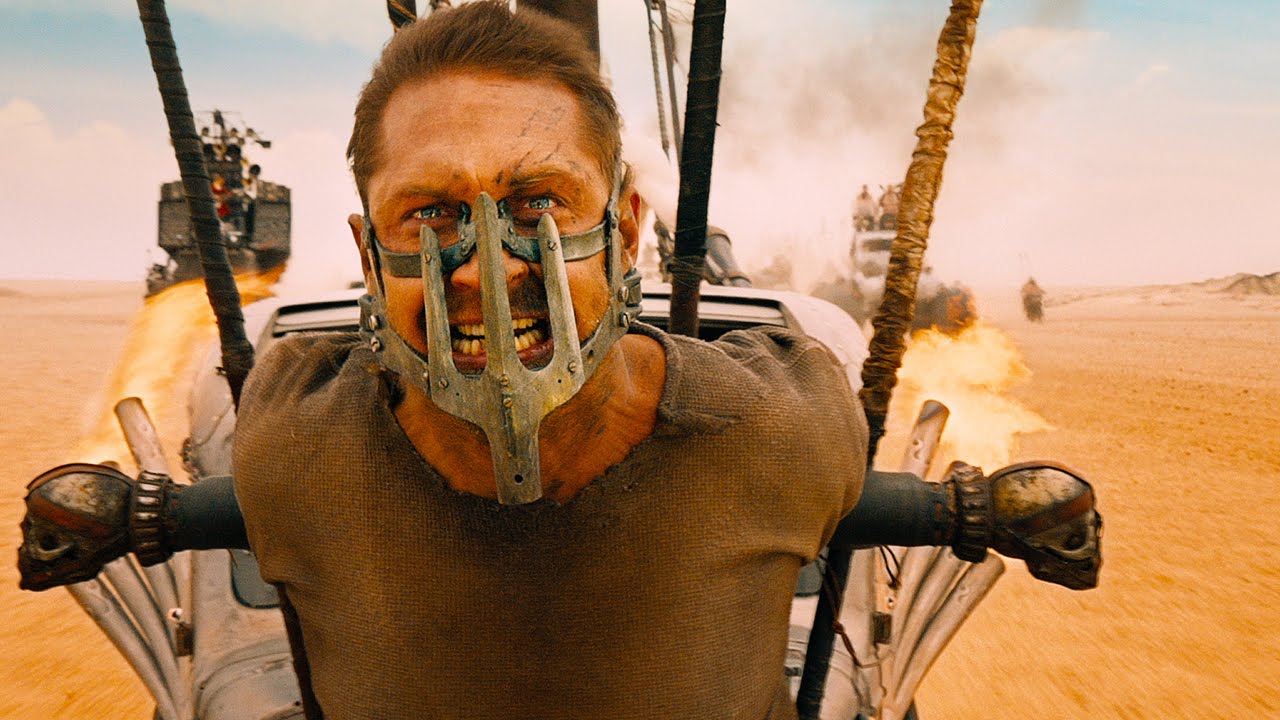
SHOULD WIN: Mad Max: Fury Road. As the subject of an earlier blog post, Fury Road was a near perfect film in every aspect. It's high octane action, beautiful cinematography, and feminist message, Fury Road excels in every aspect of the craft of filmmaking. One may sight the hardships of the lead actor and the crew as reason to sight the film's deserving to win the award but it's important to not confuse good filmmaking with a good film. 

BEST LEAD ACTOR/ACTRESS 

Leo and Brie Larson will take home the trophies for their respective categories.

BEST DIRECTOR

NOMINEES
-Mad Max: Fury Road
-Room
-The Revenant
-Big Short
-Spotlight


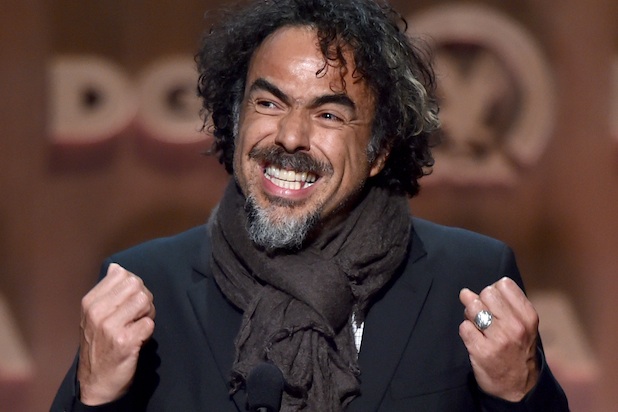
Will Win: In all likelihood this one will go to Alejandro Gonzalez Inarritu for The Revenant. Shooting chronologically using almost entirely natural lighting is certainly deserving of recognition. However there is a chance that George Miller will win this one for Fury Road. To make a two hour chaotic car chase work and be comprehensible makes Miller more than deserving to win this award. 
Should Win: Fury Road. See Above.

BEST ADAPTED SCREENPLAY

NOMINEES
-Big Short
-Steve Jobs
-Carol
-The Martian
-Trumbo


Will Win/Should Win. 

It looks like this is Adam McKay's award to lose. Based off the novel of the same name surrounding the 2007-2008 financial crisis. Any film that makes a confusing event and makes everything that happened clear deserves the win.


CINEMATOGRAPHY

NOMINEES
-Carol
-Hateful Eight
-Mad Max
-The Revenant
-Sicario


Will Win. It strongly looks like Lubezki will win for the third year in the row for The Revenant. Chock full of his signature tracking shots and shot using natural lighting, The Revenant is a gorgeous movie that will give Lubezki his well deserved third award.

Should Win: Fury Road. John Seale went against the typical ways of shooting a post apocalyptic and made his film explosively colorful instead of the usual grays that plague the genre. This causes the film to pop off the screen and make an already explosive film that much more impressive.




Tuesday, September 15, 2015

"The Revenant" might change the way movies are made, but at what cost?

Make no mistake, guys: I'm excited for The Revenant. It's got everything that I need in a movie right now, including camera work by my boy Emmanuel Lubezki, lots of people running around in bear-skin clothing, actual BEARS, and Leonardo DiCaprio in another intense role that he probably won't win an Oscar for, even though he completely deserves it. It's got Tom Hardy. It's got action, revenge, old-timey guns. I mean hell, it's got this trailer.

But it's also got Alejandro Inarritu. And yes, oddly enough, that might just be a bad thing.

Inarritu got a lot of recognition really quickly earlier this year when his little film "Birdman" won best original screenplay, best director, and best film at the 2015 Oscars. It was also, coincidentally, one of my favorite films of the years. Accolades aside, though (because let's be honest, awards mean nothing in the scheme of things) it was a really impressive film, both technically and in terms of the performances strangled out of its actors. The cinematography was just delightful to watch, and no other movie has made me said "woah, yeah, ok, Emma Stone can really act." It was great.

Fast forward one year and here we are, with another Inarritu film garnering buzz just as awards season lumbers towards us. This one is based on "actual events," and centers around the fur trapper Hugh Glass (played by DiCaprio) after he is mauled by a bear, robbed by his friends, and left to die. You had me at "actual events."

One of the big selling points for the movie, for film nerds at least, is that the whole thing has reportedly been shot using only natural lighting. A second look at the trailer shows that this just might be the case. Lubezki has also been utilizing more of the long takes that he so enjoyed in Birdman and Children of Men, so combined with the lighting, this movie seems like it was probably an ungodly pain in the ass to make... And that's the problem.

Reports from the set have literally called it "a living hell." And who could blame them. If even half of the stories coming off the set of the Revenant are to be believed, then it's time Inarritu stops, takes a deep breath, looks at himself in a mirror and says "what the fuck is the point of it all." The full report from the Hollywood Reporter is right here in all it's glory, but reports include: asking actors to go without hats and glove in -40 degree weather because it was supposed to be autumn in the film, dragging a naked character along the ground with debatable safety precautions, and cutting holes in the necks of wetsuits so that characters in water looked like were actually submerged.

A lot of blame has been thrown around, but it ultimately comes back to Inarritu and producer Jim Skotchdopole. Other issues with the film included scheduling dates (Hardy was forced to drop out of Suicide Six due to an elongated Revenant schedule), weather problems, and miscommunication. All of this leads me to ask: ultimately, at what cost are you willing to make a good movie? Right now, I'm sacrificing sleep and possible good grades in other classes so that I can do an extra bit of location scouting. I'm kind of sick, but whatever, I'll deal with it. But if we're to believe some of these reports, the crew of the Revenant were more than just a little uncomfortable or chilly: they were potentially in danger.

I've said this in past blog posts too, but I'll say it again; it's so incredibly important to put things in perspective. Yes, the Revenant may revolutionize the way movies are shot, and yes, maybe it'll end up being my absolute favorite film of the year. Maybe of all time. Maybe it'll finally get Leo that Oscar. But you can never forget, through it all, the things that really matter. Nobody in the film industry benefits from reports like these. Art is great, yeah, but never outstay your welcome.

Thursday, September 3, 2015

The Good, the Bad, and the Long Take

Long takes (or oners, or long shots, or whatever you feel like calling them) have been talked about endlessly among film buffs, film students, and really anybody that gives a shit about the aesthetics of film. If you know what a long take is, chances are you've got a favorite, whether it's Goodfellas or Gravity or Children of Men or Birdman or Episode 4 of the first (and only, as far as I'm concerned) season of True Detective. I'm pretty positive I even wrote a blog post last year around the time Birdman came out, fanboying over how sexy and cool the long take is, as a shot. By this point, just pointing them out is nothing new, though. They're there, they're good, and I won't talk about them any more.

While these shots should be praised for their creativity, determination, and, sure, length, I've recently gotten more interested in when it's acceptable to use one, and for what purpose. You might have seen this video about how Spielberg uses long takes in a far more subtle way than most directors; it's part of the really great Youtube channel "Every frame a painting," and it really dissects ways you can use a long shot to your advantage without calling attention to it. In particular, I think it's fascinating how you can essentially take a long shot and break it down into three or four basic shots: the Raiders of the Lost Ark scene stands out to me the most in that regard, with a wide, mid, close, and insert shot all being incorporated into a single take. It moves the scene along, keeps things interesting, and like the guy said, almost definitely saved time on set. 

What's the point of this though? Why not just do a scene four times and cover all your bases? This is just me conjecturing here, but I think every shot should elicit some kind of emotion from your audience. Don't just go about shooting everything willy-nilly: have a purpose. If a character feels isolated and alone, back that camera way up and make her look small. If someone is claustrophobic, slap that macro lens on and get in real tight. Make a powerful character more prominent in a shot than a weaker character, and switch this if their roles are reversed. All of these will, even if only subconsciously, help an audience to better understand whatever emotion you're trying to play up. 

So what emotion does a long take elicit? In short, all of these things, all at once. I know I said I wouldn't bring up Birdman again, but I lied, so deal with it. Birdman is filmed to make it appear as if the entire movie was all done in one take, using really clever transitions to cover up the cuts. It's about theatre and theatre actors, and throughout the film, you can't help but feel like you're watching a stage production instead of movie, mostly due to fluidity and lack of cuts. One of the intentions of this is to (probably) just let the actors take over and control the screen. This works, but only to a certain extent: the lack of cuts can sometimes be distracting, e.g. "oh, did they cut there? I think they cut there. But wait ok maybe not." 

This guy.
This brings us back to the subtlety of the Spielberg long take: it's long enough to let the actors act uninhibited from cuts and various camera angles, while still being short enough to not draw attention to itself. The "Every frame a painting" guy calls it "robust," and I think that's the perfect word for it. It's simple, gets a strong point across, and can free up time on set. Ideally, we'll find some way to incorporate it into our film this semester, and if we do it right, you might not even notice it.

Also, here's another great article about the evolution of long takes, both subtle and not-so subtle. Looking at you, Lubezki

Thursday, January 22, 2015

The Film 'Birdman' Looks to be One Long Continuous Shot

*No Spoilers, I will just go over the way this film was shot


Birdman was shot in a way where the entire movie felt like it was one long shot as well as one take.  After seeing all the Nominations and Awards this film is getting I decided to watch it for the first time over the weekend.  I have never watched anything like this before! I am amazed by the amount of preparation and practice it must have taken to pull this off so well.

Here is a scene from the movie so you can get a feel of how this was shot in an unorthodox way.


After doing research about how this movie was filmed I was surprised to find out that they shot the film within thirty days. They shot in portions of seven to fifteen minutes. 
Here are quotes by Star Michael Keaton that shows how in sync the cast and crew had to be for this film to work: 

"Anything—a misremembered line, an extra step taken, a camera operator stumbling on a stair or veering off course or out of focus—could blow a take, rendering the first several minutes unusable even if they had been perfect.  You had to be word-perfect, you had to be off script, and you literally had to count your paces down to the number of steps you needed to take before turning a corner," "Everyone would apologize perfunctorily if they messed up ... mostly because we were aware of how hard it was on the camera operators, and the camera operators didn't want to screw up because of us."

Read more: http://www.businessinsider.com/birdman-how-it-was-filmed-2014-10#ixzz3PVkiC100


Unfortunately the Director Alejandro González Iñárritu & DP Emmanuel Lubezki didn't give away too much about how they shot this movie so fluidly, but did mention they used quick "Pan" shots as their cuts.

Friday, September 19, 2014

Emmanuel Lubezki and Children of Men

The first time watching Children of Men, I was so struck by the visual language that you can get from the camera movements in this film. Unaware at the time, what really goes into filmmaking, I found the action happening onscreen extremely unique. Taking a look at the process of how some of the imagery was created in this science fiction adventure, can surely inspire. Emmanuel Lubezki, the cinematographer of the film, collaborated with Alfonso Cuaron, the director, in order to accomplish some of the many choreographed, long takes in this film.  There are more than three different long takes which are more than three minutes a piece, the longest of which is six whole minutes. During production, what has caused many problems, eventually paid out into a creative landmark. During an ambush sequence there was a special car rig for the camera, so that the camera could turn 360 degrees, and by allowing seats and actors to move, there was a floating-documentary style of capturing the story. Of coarse there are some instances with CGI aided effects to make seamless transition for the effect, but nevertheless Lubezki help create some really beautiful sequences.


Friday, October 11, 2013

Gravity: A Movie Out of this World

 
Cut to black. Credits roll. I usually stay through the credits when I see a movie. I mean, I want people to stay through the credits when my name is up there. But I didn't just stay through the credits. I stayed about ten minutes after the credits ended, until the man trying to clean up asked my friends and me to leave. The words spoken between us were few in that car ride home. We were actually speechless, completely shocked by what we just experienced. We needed to take it all in.

I knew Gravity would be incredible, but I did not expect to leave feeling the way I did. To be truthful, I've never left a movie theater feeling that way. I imagine it's how audiences, back in the start of cinema, felt when a train went by and they thought it was going to hit them. Or possibly how the audiences at the first Star Wars film felt. But this, this was unlike anything I have ever seen.

The story was nothing we haven't seen before. Astronauts up in space. Something disastrous happens. Stuck up there, trying to survive. Even down to the George Clooney character, Kowlaski, of the veteran astronaut in a state of nostalgia on his last mission to space. Nonetheless, I was sucked into this world. Completely captivated by the world Alfonso Cuarón created within minutes, I can only really describe the experience as an hour and a half long anxiety attack...in the best way possible, of course.

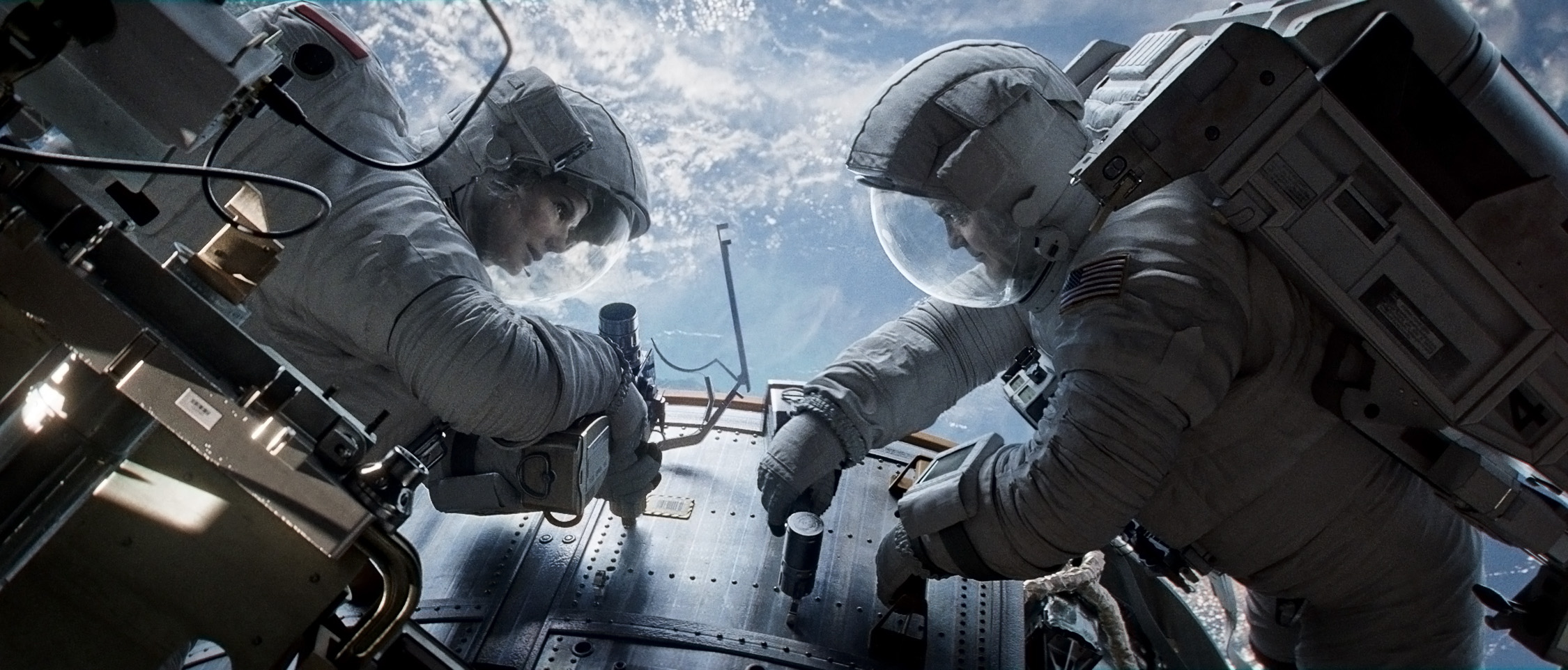
The movie is easily Sandra Bullock's best work. I so quickly felt connected to her character, Stone, despite barely being able to see her face through her spacesuit. Cuarón pushes her to new levels that we've never seen from her as an actress. She has my full support for the Oscar for Best Performance by an Actress in a Leading Role. But I could go on about how incredible Gravity is forever. So I'm sticking to the opening shot. The 17-minute take is an absolute masterpiece, shot by cinematographer Emmanuel Lubezki. Beware: spoilers of the first 17 minutes of the film lie ahead.

The film opens to a shot of earth from space, which is the most realistic earth I have ever seen. Slowly, signs of life begin to emerge, as we hear faint radio chatter and a distant space shuttle, satellite, and astronauts enter into frame. While Kowlaski jokes around with mission control, Stone clings onto the telescope, having minor health issues and struggling to fix a component. The camera weightlessly glides from each character, almost as if it drifts along in space with everything else.


The tranquil scene is disrupted when mission control tells them to abort the mission, explaining that debris from a broken satellite has created a domino effect. Before they get the chance to make it back to their shuttle, the debris arrives bringing a deadly hail of missiles towards them. The camera pans to the astronauts who try to evacuate, with debris flying past them, so realistic that I flinched.

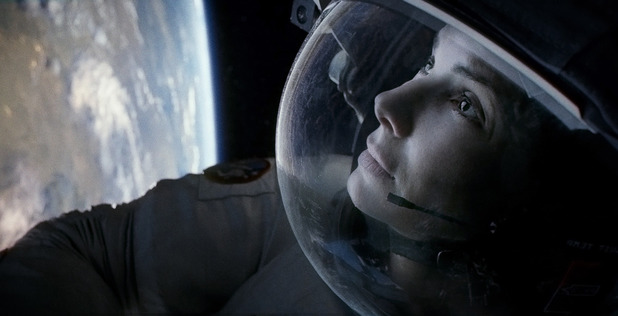
When something big crashed into the shuttle, it starts spinning, bringing Stone with it. The camera watches as she spins around and around with earth in the background. When something else crashes into the shuttle, the arm attaching Stone to the shuttle breaks off. The camera fluidly focuses in on Stone and begins to spin with her, close up on her terrified face. Then seamlessly, the camera turns, as if moving naturally in zero gravity, making its way behind Stone's glass. Now inside her space helmet, we see the background turn from space to earth to space to earth as we move with her. Over the radio, we hear Kowlaski tell her to detach herself before she gets too out of reach, so she does and the camera breaks away from her as she tumbles away from earth. She gets smaller and smaller until finally the camera cuts.


The genius of such a long, cinematically fascinating shot is that it brings the audience directly into the story. First, we are slowly introduced to the environment and then suddenly shifted right into the action. The cinematography of the long and thorough shot made you feel as though you were right there with these characters, experiencing this horror with them. Absolutely brilliant.

If you haven't already, you need to go see this movie. It is a revolutionary cinematic experience with groundbreaking special effects. Gravity might just be the most technologically impressive films ever made. It isn't often that you can walk out of a movie thinking, "How in the world did they do that?" You can place you bets on Gravity for all major awards in the categories of cinematography and visual effects. Go see it, and see it in 3D.

Lastly, the only negative reviews I have read of the film are about the scientific inaccuracy of some of the events. It almost angers me how stupid that is. If you're looking for a science lesson on space, go watch some informational documentary or rent a book or something. Nobody's going to this movie expecting to leave understanding outer space. This movie is made for entertainment. And truth be told, it is one of the greatest pieces of entertainment that society has ever seen. Gravity is out of this world. Pun intended.