In nonfiction media education, every student always gets asked the question of whether or not staging a scene from real life is still nonfiction. If you haven't asked that question - try it. Robert Fenton is the historical example of this question in action through his photography of the Crimean War.
One photo is the photograph right after a battle, while the other is a photograph right after Fenton placed a few canon balls in the road to make the scene more intense. The question is - which is true?
In documentary film, this question of half-truths becomes even more prevalent. A filmmaker could stage a subject in his room with a poster of half-naked women behind him or the filmmaker could stage him at his church for an interview. Which is true?
In my opinion, documentary film is a series of half-truths. At the beginning of my exploration into documentary film, my goal was always to bring the truth to life, to be an advocate of accuracy, a sultan of specifics. However, one quickly realizes that life is full of half-truths. Unfortunately, the human psyche does not exist on a binary of real and fake. Instead, our beings are made up of half-truths. Subjects in documentaries reveal, but they cannot reveal everything. But if what I see in every documentary is a half-truth, what's the other half? I don't believe its a half-lie. I don't believe it's half-fake. Documentary film can just only capture what the time and place allows. So rather than being half this or half that, a documentary is a product of circumstance.
Organization is easily one of the best ways to quickly get anything done in the film world. In most cases it can be almost impossible to get things done in a timely manner if you don't have organization. It's one of the major reasons there are so many different positions on a film set. There is too much to be done by one person. When everybody is organized and does their job well is when a film comes out its best.
Every area of a film needs to be organized. I've taken part in many different positions on a film set. To be honest when it comes to my daily life I tend to be very disorganized. Yet, when it comes to anything film related i become a complete neat freak. All of my camera gear is organized in a very specific way. In certain cases it has been extremely beneficial. In the world we live in inspiration can come from anywhere and the ability to quickly take out your camera and be ready to shoot is imperative.
My AC station on the film Before Your Eyes
Just the other day I was in my kitchen making dinner when I saw a hot air balloon flying just over the lake. I knew I had to get a picture of it. So in a boot I ran upstairs assembled my camera and ran outside and snapped some photos. I was able to do this all before my dinner started burning. Without my camera being organized in its bag there is no way I would have been able to get the shot in such a timely manner. I could have missed or worse, ruined my dinner.
The Picture I took while making dinner
my camera bag
Organization is most important to me when it comes to post production. You can have so many hundreds of files for a small project that if you lose the ability to stay organized then the project as a whole can suffer. Every project that I do has the same organizational process. The only thing that differs is the project itself. The folders stay the same. So if you want to succeed in the film industry start by cleaning up your act.
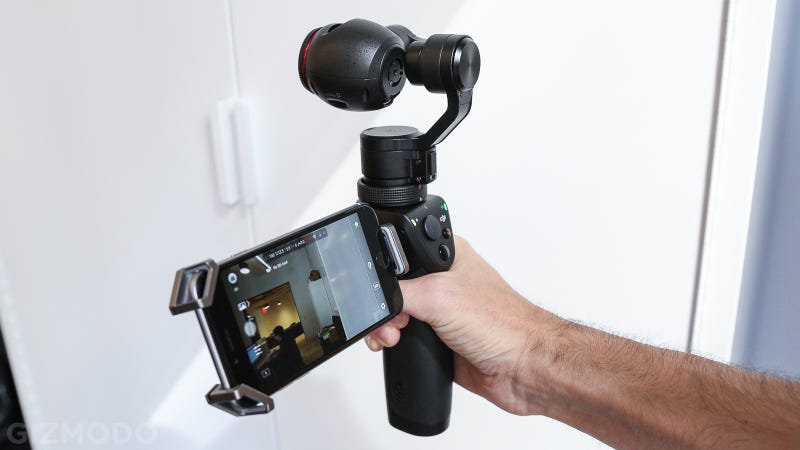
Needless to say one of the most up and coming camera companies is DJI. With their state of the art drones, portable 3-axis gimbals, and the new line of cameras they are releasing, they are changing the world of cinema as we know it. These kind of technologies create a more immersive experience and allow filmmakers to create new and unique shots. The newest item to their arsenal is the DJI OSMO, take a look at the video below to experience the magic.
As you can see it is quite the gadget. I see large resemblances of GoPro type features, including stills, variable frame rates, high resolution of 4k, and they even added a panorama feature which will be interesting to see results of. However, it doesn't seem that the OSMO is waterproof, this is the edge that GoPro still has going for them.
The gimbal is truly amazing as well. DJI is very good at combing all of their products together, and the OSMO is a fine example of this. Taking the gimbal features that were originally used with their drones and Ronin, and adding a true handheld design is amazing. The shots of the boxer in the video above took camera moves to a whole new level. The new Zenmuse cameras for DJI's drone series can also be interchanged on to the pistol grip OSMO to have the ability to change lenses and take advantage of the micro 4/3rds sensor. The additional viewfinder via iPhone is also genius. With cameras like the GoPro, the bluetooth signal to your phone is never strong enough and the LCD viewfinder is just too small. You can also change settings of the camera like shutter speed and ISO through the app on your phone.
This new device packs a powerful punch and I am interested in seeing how it is put to use within the next few weeks. The film industry is in a constant stage of progression and this is a clear example of what we are capable of and what is in the near future. Storytelling has never had so many resources available, now just to get out there and capture the moment.
I have a decent amount of friends from home who used to skate but have recently been branching off to find thrill in a different activity. Urbex. Short for Urban Exploring which wikipedia defines as "the exploration of man-made structures, usually abandoned ruins or not seen components of the man-made environment." Basically you go explore abandoned buildings, and you often get to see really cool stuff.
Unfortunately I have not had the opportunity to go on these adventures with my friends, but they have gotten extremely good at taking photographs that allow their audience to experience the adventure from behind a computer.
They've been able to take places that people have viewed for so long as run down, useless, abandoned buildings, and turned them into beautiful works of art. They've had many encounters with police, security guards, and even the homeless. Taking these photos requires them to travel light, because to get to these locations you often have to run, jump, climb etc. This most often means one camera body, one lens, and no lights.
Something that started out as an after school past-time has turned into future careers for my friends. They started just going and exploring these old buildings because they thought it was cool. Soon they started taking pictures to document the places they go. Now they are studying photography in school and have had art shows in Philadelphia featuring their work.
The first three photos were taken by Andrew Collins. More work can be seen here: instagram.com/andrewcollinssk8
The last photo was taken by Jon Sevik. More work can be seen here: instagram.com/jonsevik and flickr.com/photos/sevik
13 Going on 30 (known as Suddenly 30 in Australia and some countries) is a 2004 American romantic comedyfantasy film (hybrid film) written by Josh Goldsmith and Cathy Yuspa, and directed by Gary Winick. Starring Jennifer Garner, Mark Ruffalo, Judy Greer, Andy Serkis and Kathy Baker, the film was produced by Revolution Studios for Columbia Pictures and it was released on April 23, 2004. It follows a 13-year-old girl who dreams of being popular. During her birthday party, she engages in the party game Seven Minutes in Heaven. The game turns out to be a humiliating experience for her, and she refuses to come out of the closet. She even blames it on her best friend Matt (Matty) and doesn't talk to him anymore afterwards. When she eventually does emerge, she finds herself five days shy of her 30th birthday, uncertain to how she got there.
The film received generally positive reviews from critics, with most praising Garner's performance and its nostalgic environment. It was also praised for its humorous plot and self-empowerment message. The movie was also a commercial success, earning $22 million in its first week, and grossing over $96 million, becoming one of the year's biggest DVD rentals and sellers. The movie's soundtrack features songs spanning the 80's to the 2000s, with a range of hits from famous recording artists such as Billy Joel, Madonna, Michael Jackson, Pat Benatar and Whitney Houston. Additionally, the soundtrack charted inside the top-fifty on the Billboard 200 chart. Jennifer Garner's acting earned her nominations from both MTV Movie Awards and Teen Choice Awards, and the movie was also re-released in DVD in 2006 with a special packaging titled "Fun and Flirty Edition", and on Blu-Ray in 2009.
A girl who's sick of the social strictures of junior high is transformed into a grownup overnight because of a wish she made to be thirty, flirty, and thriving. In this feel-good fairy tale, teenager Jenna (Christa B. Allen) wants a boyfriend, and when she's unable to find one, she fantasizes about being a well-adjusted adult. She has always wanted to be popular, accepted, to be and look like the other girls, and all in all just grow up already! Suddenly, her secret desire becomes a reality, and she is transformed into a 30-year-old (Jennifer Garner). But adulthood, with its own set of male-female challenges, isn't as easy as it looks. She works as a magazine head at the company, Poise, who has been getting sabotaged by the magazine, Sparkle, for a long time. She finds that she is in love with Matty, makes a new face for the magazine, and has a wonderful time. It all crashes when Lucy stabs her in the back and sells her prints to the rival magazine, Sparkle. In the end, she is transformed back to her 13 year old self, and happily marries Matty when they get older.
This is such a feel good, fun movie to watch! It could be considered a chick-flick, but I think that it's a nice movie to watch if you want a laugh. It teaches you to enjoy life and don't try to rush it!
A few years ago I found a time-lapse video online that I watched at 2am and I was struck by so much awe and beauty I bookmarked the video and it's been on the top of my browser ever since. Give it a quick look... I promise you'll feel calmer in about 15 seconds:
The soundtrack is what I think really sells it. Even without the visual, the piano is so calming it makes me want to melt away like warm butter into a soft and beautiful sleep. Okay enough of this poetry-mush... let's get down to business. The first question is how do they get these beautiful steady shots over a period of time? For that, let us turn to the magical world of the internet, also known as the largest free education database in existence:
Okay, so now we all know how to create a stunning time-lapse videos. Good. But photographer Keith Loutit has taken it a step further and added another element to his time-lapse videos: tilt-shift.
Tilt-shift, for those less aware, is a stylistic type of blurring that can make large landscape pictures look like little miniature models. I grabbed these two pictures as examples... and even though these are normal real-life shots taken over a large area, this simple blurring effect makes them look very small.
So what happens when you combine this effect with a time-lapse video? Cool looking shit, that's what.
Check out Loutit's time-lapse over the skyline of Shanghai:
I was flipping through reddit.com the other day (like a good college student should) and I came across this really cool picture posted on r/pics. He strapped a flashlight to his chest and then took a long-exposure shot. The result was fantastic...
After being a little inquisitive, I found his personal website: DennisCalvert.net
He's posted dozens of amazing pictures here that he created with artistic lighting, but what I found most exciting was his tutorial section where he explains how he made several of his pictures.
Keep in mind that there is no serious photoshop work going on here. All of these were created with specific lighting tools to create really interesting designs. To see how he made any of these visually stimulating pictures, check out his tutorial page here.
Of course, this blog mainly focuses on films and not photography... so let me reel this in a little.
Because film can not take long exposure shots like photos can, the possibilities become a little more narrow unless you want to use special effects. However, there are still plenty of ways to artistically use lighting. By this point most of us understand the standard three-point lighting system like in this diagram:
When all of them are used, you get a nice looking shot like this one here:
It looks great, but the absence of one or more of these lights is when you can get a really interesting shot. Take for example this shot from There Will Be Blood:
In this shot there is only one light source on Daniel Day Lewis and he is blending right into the background. It really pulls our attention to his face and makes us wonder what his eyes are so transfixed on.
Here's another example from The Third Man, where one light is creating a dramatic contrast between the character and the environment.
I pulled all of these pictures from an album I found (on reddit... of course) which explains lighting and color temperature really well. Check it out here.
On a final note, I just want to say that we really do live in a world of free education today. You just need the motivation to find it!
Recently I was working on a project for Motion Graphics and Animation, my other class with Arturo. I was creating a title sequence set in space, with lots of interesting astronomical features. Before I started, I did some looking around, trying to find inspiration and get a feel for what space looks like, so I looked through a lot of the Hubble Telescope images, and other images published by NASA. The image above is fairly representative of these images. They are brightly colored and very detailed, and they look great. The problem is, they are not what you would see were you in space, and they are not even what your camera would see. They are a composite of lots of different light besides visible light; this image also has information about UV light and radio waves and other things invisible to the eye. The coloring is added later to distinguish this information. So while it is useful for astronomers and astro-physicists, it is less useful for getting a good idea of what it actually looks like.
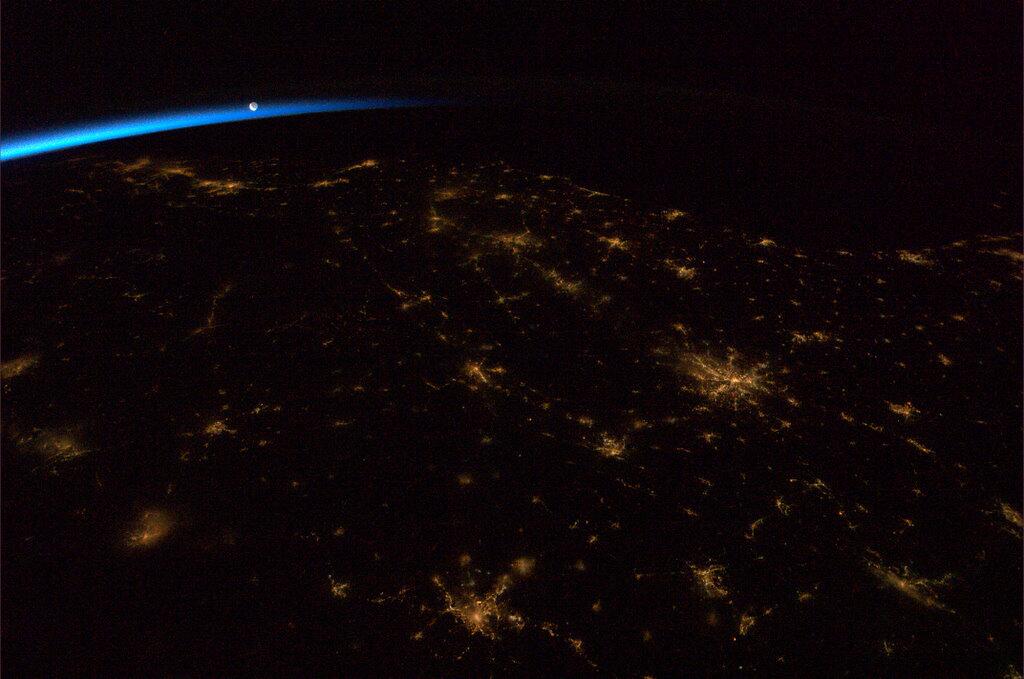
However, just yesterday I ran across this video, which shows astronaut Chris Hadfield on the ISS showing off how he takes photos from the international space station. I found the technical information about exposure values and such very interesting, and it was also enlightening to see what our planet looks like from outer space. And there's a perk to shooting from space: those giant lenses don't weigh anything. Here's an example of one of his amazing images:
Over the years I have always seen and been interested in beautiful landscapes and architecture in film and documentaries. Often times in documentaries these shots incorporate a time lapse to add to the beauty of the shot, visually show the passage of time, or to just add to the film's aesthetic. Recently I decided that I wanted to learn how to do time-lapse photography/motion sequences.
Although it is possible to create a "time-lapse" using a camera's video mode and speeding it up in post it is not the most professional way. I have found that in order to observe motion blur and to perform in low light areas taking still photographs creates a better end product.
What You Need:
-A Camera
-A tripod
-An external timer
Once you find a location you want to shoot you must set up your tripod exactly the way you want it and make sure it does not move. Next adjust you're camera settings. (since you are in photo mode you can adjust shutter speed below 1/30 to allow for motion blur). Next set your external timer to the interval or rate you want your pictures to be take. The interval you set should be directly related to the style you are interested in shooting as well as the speed at which what you are shooting is moving. Some general guidelines for hows long of an interval to set are as follows:
1second intervals for moving traffic, fast-moving clouds, and driving.
1-3secs intervals for sunrises and sunsets, slow moving clouds, crowds of people
15-30secs intervals for shadows, the sun moving across the sky (with no clouds), and stars in the night sky
90-120seccs intervals for fast growing plants
5mins-15mins intervals for building construction
How long these intervals last should be related to how long you want the finished product to be. In order to find out how long you need to shoot for to achieve your finished product there is a simple calculation.
How long you want your final product to be (in seconds)
X(multiplied by)
The rate you want to play the clips back (fps)
= the number of shots you need to take
then take this answer ^ and multiply...
The number of shots you need to take
X(multiplied by)
The time interval between each shot you set
= how long you need to shoot for
An example:
If you want a 15 second clip played back at 30fps with an interval of 2seconds between each shot. How long will it take you?
15 x 30 = 450
450 x 2 = 900seconds (the time it will take to shoot this scene)
900/60= 15mins
So it will take 900seconds or 15mins of shooting to get the end result you want.
After learning the basics for time-lapse photography I look forward to employing what I have learned in order to make more powerful and dynamic shots for future projects.
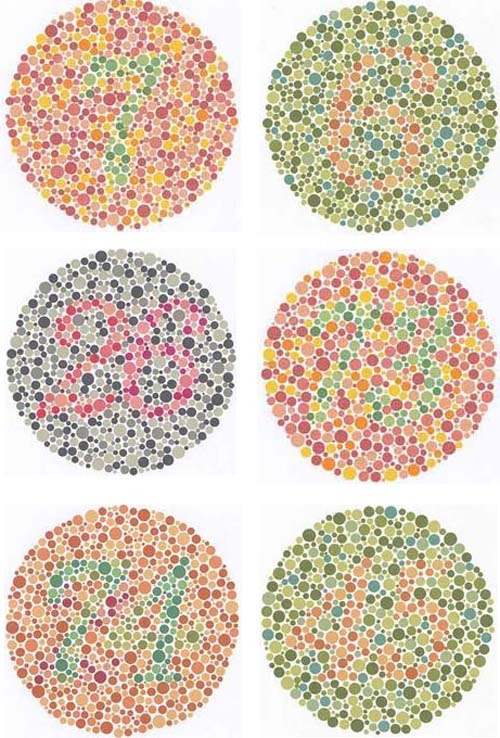
If you were unable to see one or more numbers hidden in the big circles, then congratulations! You are most likely colorblind. The number should be apparent.
If you are colorblind and in denial, this is the size of the numbers that you should be able to see.
So you are color blind, and if you work with photography, including video, this can be a major problem. Why? Well if you know how a camera works, you'd know that there are different light temperatures depending of the source of light that the camera can pick up more than our eye does. This results in different color tints on the picture than you want. And for a colorblind person it can be difficult to tell if the color os off, and how far off it is.
But have no fear! Someone found a way to color correct photos, even for a colorblind person in post-production. Colorblind photographer Chris Nicholson has developed a way to be able to color correct photos for colorblind people.
It is a little time consuming, but considering how much it can enhance/save a photograph it is completely worth looking at. This especially becomes true when it is used to earn a living. So from one colorblind person to another, thank you Mr. Nicholson, and I recommend everyone to check out this tutorial.
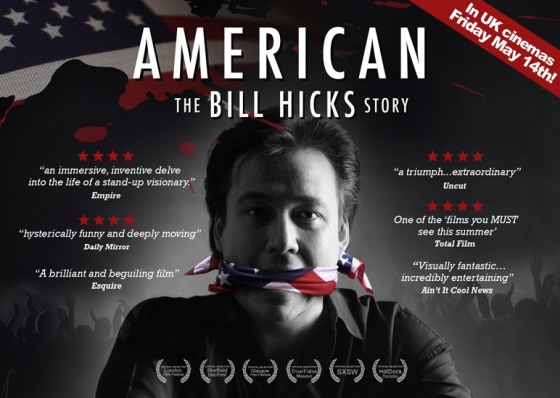
This week I watched American: The Bill Hicks Story for the first time. Several friends had been recommending it to me for a few weeks so one night before I went to bed I pulled it up on netflix and watched it. Coming from a background of limited knowledge about Bill Hicks I was excited to learn about the man who was referred to as the finest comedian America ever produced. The thing about this documentary that stood out to me the most was not the story, which was amazing, but the visual style. All of the narration is done over animated pictures of Bill and his friends throughout their lives. You don't even see the people talking until the end of the doc. Bill HIcks The visual style is stunning and draws you into the mesmerizing story. You feel like you know who Bill Hicks was as a person by the end of this doc. I would highly recommend this to anyone who is a fan of animation or comedy.
Over the past few weeks, some big name camera manufacturers came out with their cheapest full frame DSLR's. This includes Canon's 6D, Nikon's D600, and Sony's A99.
Nowadays many people have DSLR's, including almost every Park student. They are becoming a new way for amateur and professional filmmakers alike to enhance their movies. From a student production to The Avengers (which wrecked quite a few 5D's for their stunt shots), they are becoming increasingly popular for a few reasons. They are relatively inexpensive, produce crisp images, are small in size, and have a wide range of lenses that can be used on them. Not only that, but many DSLR's are now FX (or full frame) which makes them ideal for filmmakers who want to keep the 35mm sensor like all professional cameras have.
One downside to this is that everyone who owns a DSLR thinks they are a photographer or cinematographer. People overuse rack focuses and a shallow DOF. Sure anyone can make good looking images or shots, but that doesn't mean that it adds anything to a story or enhances it. I am glad though that everyone can have access to a DSLR because you never know who may be the next great Director of Photography. Who knows maybe it is someone here at Ithaca or in our class.
Back to the three new FX DSLR's that have been introduced recently, they are all in the same price range (being around $2,000 body only) and have similar technical specs including: megapixels, wifi capability, screen size and HD video formats and frame rates. No matter what brand of camera you already own or plan to buy, you will be able to produce very similar and comparable results. Canon vs Nikon vs Sony is like trying to compare three different types of apples. You can get the same result as the others. It is all about what you can do with the equipment that you have.
Yes, they are two completely separate beasts. One freezes a memory into a single frame while the other records its entirety.
Some schools of thought think that video triumphs all — you can view things in real time, never missing a single emotion. Others believe that photography is more traditional and can be more powerful if done right. Are these purists right? That depends who you ask.
I have worked with both photo and video for a fair amount of time (well, for being a 19-year-old that is): about nine years doing video and about three in photo. Ever since the third grade I have been mystified by video. I took classes in middle and high school to further improve my skills. I have learned how beautiful of an art videography can be, both by creating and consuming it for almost my whole life. I was 100% in the "video is better than photo" mindset.
Everything all changed once I purchased my first DSLR. I'll admit first off that I did not but my Canon T2i for photographic uses; it was all for video. Once I got rolling, however, I realized how majestic photography can be. Even going out into your backyard can bring about some amazing shots. This photo was one of the first I took with my camera. I love it: the flowers blooming from dead leaves, a bee precariously perched on the purple plant, everything. I'm not saying that video wouldn't be able to pick us these same things, but seeing it as a still adds some charm and pleasure to it. It's also easier to view it as a single shot, rather than in a video.
I do not think that one is superior to the other. Both photo and video have their strengths and weaknesses. Knowing about one can really help you with the other. Getting interesting angles, correcting white balance, and adjusting exposure are needed in each. Knowing where to look for the perfect shot is something that I personally found helpful in my transition to photo from video (I still do both currently, in a matter of fact).
Video was born from photo, and its silly to argue over the superior one (if that argument even exists). I look forward to expanding my skills and both, and translating the skills gained from one to the other.
A lot of people, when I talk to them, think that in order to be visually engaged something must be moving. A car exploding, a person running from police, or even just a conversation between friends. This idea however neglects the amazing storytelling abilities of still images. A single image can capture emotion and explain an entire story. The frame is what makes work difficult for both still photographers and videographers. A photographer has to capture the moment in just one frame, known as the decisive moment, a term coined by Henri Cartier-Bresson. On the other hand a videographer has to fill 27 frames a second with interesting imagery that helps tell the story. Personally I think both are difficult to accomplish successfully. However I find telling a story in a single frame much more challenging. The Concord Monitor did an excellent job at telling a story that is engaging and emotionally involved with only still images and words. Their work will not be seen by the masses nor win an Oscars, but the quality of storytelling is just as powerful. This is the quintessential example of great stories without motion.
Thanks to Travis for the link. This is an HDR photo by dacoach89_89 which I find pretty cool. I like the entropy that wrestles everything to dust again!
So, if I wanted to insert a 3D object or character into this background I could use the picture itself as an illuminating source, so that the 3d character would perfectly fit in that environment as if it had been actually there.
I quote from the Maya documentation: With image-based lighting, you use an environment texture (an image file) to illuminate the scene. Typically, the image is a photograph of a real environment, either a panoramic image or a photograph produced by taking pictures of a chrome ball (to capture the surrounding environment).
This is a technology developed by Paul Devebec, a USC researcher who is best known for his work in high dynamic range imaging and image-based modelling and rendering. He was awarded (along with Tim Hawkins, John Monos and Mark Sagar) a 2009 Scientific and Engineering Award from the Academy of Motion Picture Arts and Sciences for the design and engineering of the Light Stage capture device .
You have seen or can see his work in some of these films: The Matrix (1999), Spider-Man 2 (2004), King Kong (2005), Superman Returns (2006), Spider-Man 3 (2007), and Avatar (2009).
Image from HDR Shop, an HDR image processing and manipulation tool that you can download HERE , unfortunately Windows only:-(
I was exploring on flickr when I came across some interesting photos. I did a little research and found out they were done using a technique called HDRI (high dynamic range imaging) or HDR for short. Basically what you do is take multiple shots of the same image; one with a normal exposure, one underexposed, and one overexposed. Then you bring the images into some editing software (something like photomatix) and put the images on top of each other. The result is a single image that supposedly has a higher dynamic range than the human eye. I think the pictures look a lot like video game images only more realistic. You can do this with digital or film and it can be done with video. The video link is in the title. Here is a link for some HDR still images:
I am a huge fan of Stanley Kubrick films, the photography in his movies is absolutely amazing. I know he got his start in still photography and it influenced many of his film projects. In my opinion it's a good idea for people interested in filmmaking to study photography (even just casually) the practice can help you set up effective storytelling shots. One good example of Kubrick photography is his 1957 film Paths of Glory.
Arturo had a good idea for our GD where we play with the color corrector and video style of the movie to make the surroundings of our main character look dark and gritty while allow her to be bright and cheerful, emphasizing the point that she doesn't belong at this food company. On idea I had was using that effect--most often used in photography--where everything is de-saturated in color while a select one or two colors is bright and rich. That way, we could have our main character stand out by dressing her in a specific color not used in the background and then making all the other color de-saturated except that one, giving the video an interesting clash. My only problem is that I don't know what the effect is called, though I'm sure everyone knows what I'm talking about. Does anyone know what that effect is called or whether or not it is in Final Cut Pro?
View from the Window at Le Gras, Joseph Nicéphore Niépce
To quote Hamlet on the Holodeck:
"...the inevitable process of moving away from the formats of older media and toward new conventions in order to satisfy the desires aroused by the digital environment."
How long does it take for people to start using the peculiarities of a new medium creatively?
Digital media is so new and moves so fast that we cannot even begin to recognize the difference with what has come before, because of the fact that digital media is itself an eternally shifting and morphing media.
When photography came into being all photographers could do to cope with such technology was to borrow from the portrait or landscape painting of their time. It took visionaries like Christian Schad, Man Ray, and Laszlo Moholy-Nagy, almost a hundred years since Nicéphore Niépce captured the view from his attic in 1826 to break away from the convention of the borrowed and explore the potential of the medium, but alas, it was short lived because the masses demanded their likeness more than that which they could not understand.
Then came film, which borrowed the narrative of theater (I am simplifying of course) and continued with the tradition of recording "reality" (that word...) while in fact it was, and always has been a mere optical trick and a little more that is hidden from the viewer
So now, when digital media arrives, we seem to be unable to grasp the potential, and how could we, if we look to the past instead of the future? Why does SL or any other VR looks as pedestrian as a mall, a battlefield, an airport, a castle, a house? What is it that we need that prevents us to discover the new?
The capability of Machinima was unprecedented in the world of Media, until the advent of FPS games. In a way it is similar to the advent of 8mm and then Super8 in the 60's. Lot's of people started making movies and that led to some interesting careers since some of those people are now known filmmakers.
One problem, that can be seen as an advantage as well as a step backward is that precisely the fact that production can be made on the cheap (or "free) and that anybody can swing a "camera" around makes for very poor end product. Machinima, despite its potential as a cheap story-telling medium or prototyping tool, an animatic of sorts (and I am interested in those aspects myself I should say), is that it also misses the point and becomes comfortable with emulating the rich uncle. Understandable though, since it lives and has grown precisely in that protected environment where the fascination with the new becomes very quickly a reflection of the old.
There is the chance of being one of those pioneers who dared to see outside of the box, if only for a short window of opportunity before it fossilizes into the same old crap dominated by corporations and transnationals to keep you under their control.
I think it is very exciting possibility to be one of those pioneers.