ENJOY
Showing posts with label film. Show all posts
Showing posts with label film. Show all posts
Wednesday, April 27, 2016
Weird Sound People
Although I am interested in pursuing a career in music and media, one aspect of film I will never forget learning is sound. Especially when it comes to foley, I really feel like I can connect with creating sounds that aren't coming from the physical object itself, but ones to enhance the sound itself. This video is about a foley artist working for SkyWalker sound and his experience in working in a giant foley pit. From ET, to Interstellar this guy is truly a magician when it comes to sounds. Also another cool fun fact, did you know that there are more astronauts in the world than there are foley artists.....
ENJOY
ENJOY


Friday, April 22, 2016
NOWNESS making beautiful things
I discovered a trove of video treasures today. I've been on NOWNESS.com before but never had the time to sift through its content beyond browsing video titles and thumbnails. NOWNESS is the digital video platform of Dazed Media, which also publishes one of my favorite online creative/news outlets, Dazed and Confused Magazine. "Celebrating the extraordinary of the every day," NOWNESS hosts hundreds of videos under the categories Art & Design, Music, Culture, Food & Travel, and Fashion & Beauty. While covering vastly different subject matters, the videos are all aesthetically striking and similar in reverent tone. Just uploaded today:

 Here, artist Tauba Auerbach exhibits her new "tome" aka glorified pop-up book. There is no dialogue but instead an almost-uncomfortable focus on the sounds of the package's tape being slit, the book sliding out of its shell, etc.
The following two frames are from a sense-assaulting "Scratch n Sniff" and awe-inspiring "The Man Who Sails with the Stars," respectively. I find both videos, as I do the rest of the website's collection, painfully beautiful. Its components are not only well-executed (i.e.well-filmed and edited), but NOWNESS is expertly curated. I will definitely be spending more time here in the future.


The following two frames are from a sense-assaulting "Scratch n Sniff" and awe-inspiring "The Man Who Sails with the Stars," respectively. I find both videos, as I do the rest of the website's collection, painfully beautiful. Its components are not only well-executed (i.e.well-filmed and edited), but NOWNESS is expertly curated. I will definitely be spending more time here in the future.

Thursday, April 21, 2016
Another Lesson Learned
In my last blog I talked about some major lessons I learned filming my senior thesis music video. Now I want to elaborate on some more important lessons about music video and film in general. We always hear the expression "a picture is worth a thousand words," that is especially true in framing. Sometimes we loose focus on how powerful we can make every shot just by aligning everything in the foreground and the background RIGHT. Take my music video for example, sometimes we had to rush the shot that the framing was not exactly what it should have been. Especially in the beginning of the video. In the script its supposed to be such a shitty day so that it would contrast his time in Miami. Most of the time, the framing looks really nice. Things are put together in the scene, but it wasnt supposed to be that way. Its amazing how a story can be told from just one shot. Check out this dope video talking about pictures that immediately tell a detailed story.
Thursday, April 14, 2016
Top Five
When
making something like a thesis film, it's easy to get caught up in all of the
bullshit and forget about why you wanted to make the film in the
first place and what the film is actually about. That is why, this week, I
decided to take a step back and list my top five favorite movies and really
think about why I enjoy watching them over and over again and why they
give me with such an emotional response.
1) Shaun
of the Dead (my favorite movie of all time)

Shaun of
the Dead is about two slacker roommates in their late-twenties that struggle to
survive a zombie apocalypse that terrorizes their small town in Great Britain.
This movie is a comedy/horror. It’s funny because it follows two very unlikely
heroes as they try to protect the ones they love from a zombie apocalypse. In a
particular scene, the survivors pretend to act like zombies to “fit in” with
the undead as they make their way to a safe place. Though this movie has a
ridiculous plot with ridiculous characters, it’s filled with many messages. One
of the main messages is the message of love and friendship. When everything
goes to hell, the main character, Shaun, who never had much responsibility in
his life prior to the zombie invasion, must protect his mother, his girlfriend
and his best friend. Even through the hardship, Shaun must step up and leave
behind his everyday slacker desires to keep everybody safe.
2) Cool Hand Luke
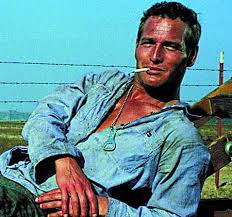
Cool
Hand Luke is about a misguided war veteran who is arrested and sent to a prison
camp where he refuses to conform to the prison life. This movie is very moving
because, as the viewer, you fall in love with the main character, Luke. Luke is
a free spirited rebel that inspires hope in the other inmates. The scene where
the guards make the inmates pave a dirt road is particularly uplifting because
Luke turns it into a game. Normally a physically demanding job, the inmates
have fun paving the road as each side races the other side to finish first. Cool
Hand Luke explores hardship and adversity but making the best of it. Though the
inmates are put to hard work, Luke keeps everybody’s spirits high showing that
even through a horrible experience, there is still light.
3) The Producers

The
Producers is about a washed up producer who teams up with an
accountant to over-sell shares on a Broadway play that’ll surely flop to make a
large profit. The play that the producers choose to finance is called
Springtime for Hitler. It’s supposed to be extremely pro-Hitler and offensive
but the actors in the play turn it into a hilarious mockery that everybody
loves. The message in this film is that though the main characters may have had
a bullet proof plan to get rich, the plan was illegal, which eventually led
them to jail. Though they may have had everything planned out, there were still
some aspects that they couldn’t predict which led to their downfall.
4) The Dark Knight

The Dark
Knight is about the iconic super hero Batman as he struggles to defeat his most
prominent villain – the Joker. This movie is a psychological thriller because Batman
must deal with the Joker: a villain notorious for his erratic and unpredictable
behavior. The scene where Batman is in the interrogation room with the Joker is
extremely unnerving because it’s the first time we see Batman lose his temper.
Batman is usually calm, collective, and focused but the Joker is able to get
into his head and take advantage of him. There are many messages in this movie.
The Dark Knight focuses heavily on the grey area of right and wrong. Batman
typically overcomes his difficulties in a black and white way, but with the
Joker, he needs to go against his moral code in order to defeat him.
5) (500) Days of Summer

(500)
Days of Summer is about a young man who falls in love with a girl who doesn’t
believe in love. The movie is a romantic comedy. The scene where the Tom, the
main character, visits Summer, the girl he falls for, at a party shortly after
they broke up is particularly funny because it split screens the harsh
“reality” that Tom is undergoing and the uplifting “expectations” that Tom
fantasizes about. Though it may be a depressing scene, it is presented in a
light and comedic way. (500) Days of Summer explores the messiness of love. The
main character falls for this girl that ultimately breaks his heart and he
feels like he has lost his soul mate. He’s convinced that there isn’t another
girl out there that suits him better. But he eventually learns that it isn’t
the end of the world and he can move on and be happy.
Thursday, April 7, 2016
Documentary: Real Life or Half-Truth
In nonfiction media education, every student always gets asked the question of whether or not staging a scene from real life is still nonfiction. If you haven't asked that question - try it. Robert Fenton is the historical example of this question in action through his photography of the Crimean War.


One photo is the photograph right after a battle, while the other is a photograph right after Fenton placed a few canon balls in the road to make the scene more intense. The question is - which is true?
In documentary film, this question of half-truths becomes even more prevalent. A filmmaker could stage a subject in his room with a poster of half-naked women behind him or the filmmaker could stage him at his church for an interview. Which is true?
In my opinion, documentary film is a series of half-truths. At the beginning of my exploration into documentary film, my goal was always to bring the truth to life, to be an advocate of accuracy, a sultan of specifics. However, one quickly realizes that life is full of half-truths. Unfortunately, the human psyche does not exist on a binary of real and fake. Instead, our beings are made up of half-truths. Subjects in documentaries reveal, but they cannot reveal everything. But if what I see in every documentary is a half-truth, what's the other half? I don't believe its a half-lie. I don't believe it's half-fake. Documentary film can just only capture what the time and place allows. So rather than being half this or half that, a documentary is a product of circumstance.
Thursday, March 31, 2016
Boss Man at Tribeca
Last semester I had the opportunity to work for one of the most incredible minds in the music industry, Steve Aoki. With Steve's meteoric rise to fame and recent take over of the EDM scene and beyond, it was only a matter of time before he received his very own feature film. Lucky for dance music fans in the New York area, that day will soon be here. On April 15 at the Beacon Theatre, a new documentary centered on the life and pursuits of Aoki will be premiered at the esteemed Tribeca Film Festival. I’ll Sleep When I’m Dead will follow his timeline from the very beginning, when Aoki remembers his father founding the popular restaurant chain Benihana, until the near-present when we played his biggest career showcase at New York’s Madison Square Garden. I'd love nothing more than to be there to get an even better glimpse into Steve's life but I'm sure it'll be well received regardless.

Learning What Not To Do
Confession: I used to hate watching documentaries. People used to ask me if I had seen a certain documentary and I would usually tell them no, I don't like watching documentaries. "But you're a documentary studies major," they would usually say in response. That's when I would explain to them that I'm always picking out the flaws in documentaries and that's why I stopped enjoying watching them. Then, this year, I realized how ridiculous I was being.

One of the best ways to learn is by learning what not to do. It's important to watch documentaries that are really well made in order to gain inspiration, but it's just as important to see what doesn't work so great in films. In order for a doc to be really great, you have to incorporate the good and keep out the bad. You can use some really awesome techniques, but if you also use bad ones it can completely break the entire film.

Sure, I sometimes long for the days when I could absentmindedly watch a film without being hyperaware of where the lighting is coming from, how many cuts are in a specific scene, or why a director made a certain production decision. I think that for a while, I resented the fact that it was hard for me to sit and enjoy a film like most spectators do, so I decided to stop watching them all together. Now I realize though, that I'll never grow as a filmmaker if I don't study and pay attention to what other people do. I try, in life, not to make the same mistake twice. What I've realized now, is that by seeing other people's mistakes, I can avoid making certain ones from the start. I can't watch documentaries like I used to, but I'm finally realizing that's a good thing.
One of the best ways to learn is by learning what not to do. It's important to watch documentaries that are really well made in order to gain inspiration, but it's just as important to see what doesn't work so great in films. In order for a doc to be really great, you have to incorporate the good and keep out the bad. You can use some really awesome techniques, but if you also use bad ones it can completely break the entire film.
Sure, I sometimes long for the days when I could absentmindedly watch a film without being hyperaware of where the lighting is coming from, how many cuts are in a specific scene, or why a director made a certain production decision. I think that for a while, I resented the fact that it was hard for me to sit and enjoy a film like most spectators do, so I decided to stop watching them all together. Now I realize though, that I'll never grow as a filmmaker if I don't study and pay attention to what other people do. I try, in life, not to make the same mistake twice. What I've realized now, is that by seeing other people's mistakes, I can avoid making certain ones from the start. I can't watch documentaries like I used to, but I'm finally realizing that's a good thing.
Thursday, March 24, 2016
B&W Bananas
While filming we learned that St. Lucian violence can be traced to its history as a colony of plantation systems. In order to illustrate this aspect of Caribbean history, we're looking into archive video footage to supplement our doc. I've had luck with the Prelinger Archives, the Kino Library, and Travel Film Archive thus far. What makes the search process difficult is the lack of tags attached to some videos, which renders them impossible to find without looking through droves and droves. What makes it cool is how eccentric and obscure the found footage involved can be.
One of my favorites is this video, "About Bananas," which is a silent black&white film about, well, bananas. See here: https://archive.org/details/AboutBan1935

One of my favorites is this video, "About Bananas," which is a silent black&white film about, well, bananas. See here: https://archive.org/details/AboutBan1935
Banana export was St. Lucia's largest source of income until recently, when shifts away from St. Lucia in the international trade put local banana growers out of work. Instead of being able to make a living on their land with their family, many Lucians now have to commute to work at the island's many tourist resorts, resulting in time away from home, money spent on transportation, children being left unsupervised, etc. This is one example of a riff that history has torn through St. Lucia and something we're going to work very carefully--with the help of archive footage--to visually explain.
Thursday, March 10, 2016
Use film commisioners
Something often overlooked for student filmmakers. Use film commissioners - especially if you are not in the middle of New York City or LA. Each country has their own commissioner who often will not get many phone calls or requests. If you present yourself professionally they will be more than willing to spend their time working for you. I mean it, they will literally help you with preproduction and they have connections. They can get you locations, sets, crews, equipment, etc. Usually for no to little cost.
I should have used this resource earlier. It has helped me immensely for preparing to shoot my thesis. I got location I thought were impossible for little cost.
Wednesday, March 2, 2016
Amy: An Uneasy Review
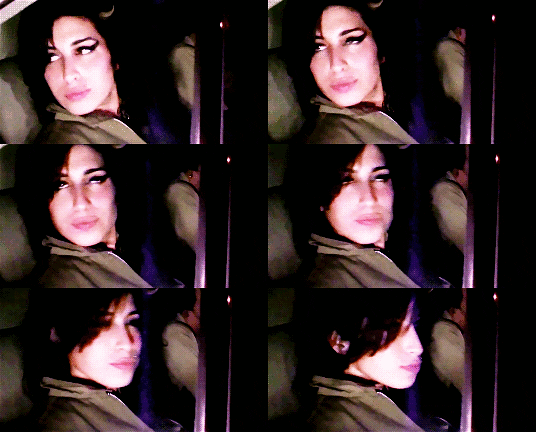
Since "Amy" won best documentary feature this past weekend, I decided it was time to watch it. As I sat and watched the film, I couldn't help but viscerally react to what I was seeing. At the time, I figured that was the point: we were supposed to be uncomfortable. As Manohla Dargis put it in a New York Times review of the film, "This discomfort is crucial to the movie’s complexity and is why it works as somewhat of an ethical and intellectual provocation. With “Amy,” Mr. Kapadia isn’t simply revisiting Ms. Winehouse’s life and death, but also — by pulling you in close to her, first pleasantly and then unpleasantly — telling the story of contemporary celebrity and, crucially, fandom’s cost." So I finished the doc and went to sleep, still feeling a bit unsettled, but figuring it would pass in the morning.
But then I woke up this morning and I suddenly realized why I felt so uncomfortable. In a way, the film is everything it is criticizing. The film claims to present the Amy that the public did not get to see, but they can only achieve this through archival footage and by having the people close to her describe her. We don't actually get to see the real Amy Winehouse, the person she was when no one was around, we only really get to see the person she was when she was around other people and in front of cameras. Sure, it's a more intimate look at her life than we had previously seen because it is told by a more private sphere than the media, but I can't help but feel like it's still not authentically her. It can't be.

Furthermore, as Dargis points out, the film tells the story of contemporary celebrity and its cost. The film does not hesitate to show their distaste for the paparazzi, yet a solid chunk of their footage is taken by paparazzi. How can you criticize and utilize something at the same time? Let's face it, the latter half of the documentary would not have been as powerful if the paparazzi footage wasn't present, so Kapadia is benefiting from the same thing he is criticizing.
"Amy" did really well in the Box Office as far a documentaries are concerned, which makes me feel even more uncomfortable. The documentary can be seen as a scathing view of how we treat celebrities, but it's been capitalizing off of the life and terrible death of Amy. Is the documentary really much better than the people and industry that it is critiquing? While it may be a critique, it still turns her into a spectacle. After watching the film I can't help but think that Amy would be disgusted if she knew it existed.

Considering the film won an Oscar, I'm sure I am one of the only people who feel this way, but I had to get it off my chest.
But then I woke up this morning and I suddenly realized why I felt so uncomfortable. In a way, the film is everything it is criticizing. The film claims to present the Amy that the public did not get to see, but they can only achieve this through archival footage and by having the people close to her describe her. We don't actually get to see the real Amy Winehouse, the person she was when no one was around, we only really get to see the person she was when she was around other people and in front of cameras. Sure, it's a more intimate look at her life than we had previously seen because it is told by a more private sphere than the media, but I can't help but feel like it's still not authentically her. It can't be.
Furthermore, as Dargis points out, the film tells the story of contemporary celebrity and its cost. The film does not hesitate to show their distaste for the paparazzi, yet a solid chunk of their footage is taken by paparazzi. How can you criticize and utilize something at the same time? Let's face it, the latter half of the documentary would not have been as powerful if the paparazzi footage wasn't present, so Kapadia is benefiting from the same thing he is criticizing.
"Amy" did really well in the Box Office as far a documentaries are concerned, which makes me feel even more uncomfortable. The documentary can be seen as a scathing view of how we treat celebrities, but it's been capitalizing off of the life and terrible death of Amy. Is the documentary really much better than the people and industry that it is critiquing? While it may be a critique, it still turns her into a spectacle. After watching the film I can't help but think that Amy would be disgusted if she knew it existed.
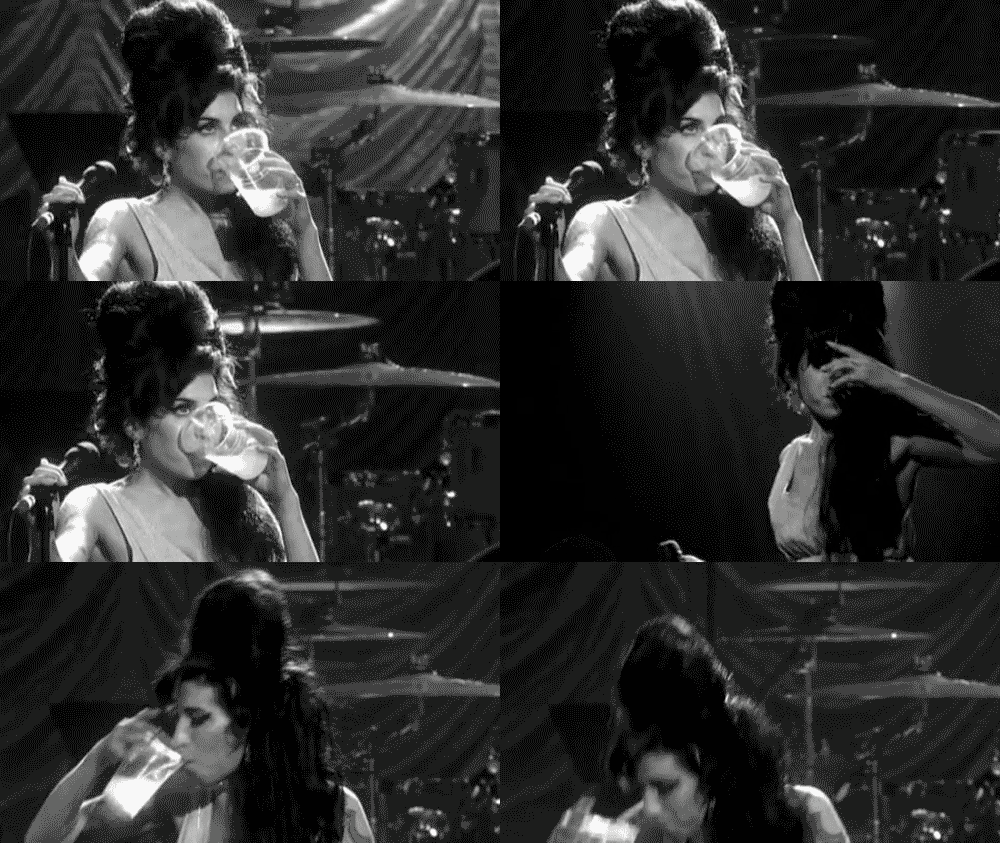
Considering the film won an Oscar, I'm sure I am one of the only people who feel this way, but I had to get it off my chest.
Thursday, February 4, 2016
How Birds are the Embodiment of Film
Watch this bird:
This is film in a nutshell. And I will explain why.
If you were to describe a bird in three adjectives, which would you use? Precise? Elegant? Free? Birds are beings of freedom and grace. The miracle of flight is something spectacular to observe. The first time in your life that you truly analyze flight, you are in awe. The miracle of flight mirrors the miracle of film.
Film is in every sense of the word, a miracle. To capture the motion, the emotion, and the reality of life on film is incredible. The first time you look at film in an analytical way, you realize how truly unbelievable it is.
Like a bird in flight, the filmmaker explores new avenues, using creativity to venture through space and time to achieve his/her goal.
In the video, at 11 seconds, another bird flies in front of the main bird. Every bird is influenced other birds. You can observe this in "bird V's". Each bird follows the birds before themselves, but take slightly different paths.
Just like these birds, filmmakers are influenced by the filmmakers before them. They draw influence and create their own paths based on the filmmakers of old.
An observer of birds is an observer of film, and I strive to be both.
If you were to describe a bird in three adjectives, which would you use? Precise? Elegant? Free? Birds are beings of freedom and grace. The miracle of flight is something spectacular to observe. The first time in your life that you truly analyze flight, you are in awe. The miracle of flight mirrors the miracle of film.
Film is in every sense of the word, a miracle. To capture the motion, the emotion, and the reality of life on film is incredible. The first time you look at film in an analytical way, you realize how truly unbelievable it is.
Like a bird in flight, the filmmaker explores new avenues, using creativity to venture through space and time to achieve his/her goal.
In the video, at 11 seconds, another bird flies in front of the main bird. Every bird is influenced other birds. You can observe this in "bird V's". Each bird follows the birds before themselves, but take slightly different paths.
Just like these birds, filmmakers are influenced by the filmmakers before them. They draw influence and create their own paths based on the filmmakers of old.
An observer of birds is an observer of film, and I strive to be both.
Thursday, January 28, 2016
Adult World: Quirky, Funny, and Incredibly Relateable
Surfing through Netflix's recent releases section I stumbled upon "Adult World", and boy am I glad I did! This quirky, coming-of-age comedy hits a little too close to home for me, as I'm sure it does for many soon to be or post-college graduates. The story follows Amy, a naive Syracuse graduate who believes she is destined to be a great poet. Things don't work out initially and she eventually accepts a job at a local sex shop while she pursues a mentorship with her idol writer, Rat Billings. The dialogue is quirky and off beat, reminiscent of works by Diablo Cody (Juno, Young Adult), but somehow in that off beat oddness there is the raw truth of finding oneself during an awkward time.

The cast includes Emma Roberts, Evan Peters, and John Cusack. Adult World was filmed in 22 days in Syracuse, NY.

The cast includes Emma Roberts, Evan Peters, and John Cusack. Adult World was filmed in 22 days in Syracuse, NY.
Documentary for Social Change
Most people that I've encountered that hope to make it in the documentary world have some form of passion for social justice. Of the many news outlets and organizations I've encountered, the most effective at producing social change has been Witness. With tag of "See It, Film It, Change It", the organization works to train citizens to be active in social movements through the power of film and photography. Citizen journalism that is collected is often turned into larger films that are used as evidence in international cases. I find their series on Gender Based Violence to be highly effective. The cover issues from sex worker safety to feminicide to equal pay in a range of countries. The series is worth watching not only because they are great short films, but also because they are giving agency back to the people of these areas. Oftentimes documentaries for social change take a distant gaze and a bias based on the filmmaker's history. Instead these films bring you into the minds of the women, making them the agents of social change. This story is interesting about the differences in women's work.
What is a documentary?
The other day my professor asked our class to define the word "documentary." The whole class sat there stumbling over words and trying to find the correct answer. As a documentary studies major, I came into Ithaca College thinking that I knew the answer. As my time at IC has passed however, I am now more unsure than ever; is there a firm definition that explains documentary?
I typed "documentary definition" into a Google search and the response was,"a movie or a television or radio program that provides a factual record or report." Thinking back, that probably would have been my definition when I first started college, but I now realize there is one major flaw in that definition... the word "factual."
After taking several different documentary courses, attempting to understand what makes something factual sends me into a mild existential crisis. Due to human nature, everyone sees facts and truths differently. As humans, we are inherently subjective rather than objective, therefore can a documentary ever be completely objective and factual? What may be the truth for the producer, may not be the truth for other people.
Let's say, for example, I produce an entire documentary about the positive impacts of refugee communities in the United States. Then, after the film is finished, someone (Donald Trump?) states that my portrayal is completely inaccurate and refugee communities actually have a negative impact on U.S. society. Since someone disagrees with what I have portrayed, does that mean my film is not factual and therefore not a documentary? I would argue no, but other people may disagree.
The word "documentary" may seem pretty straightforward at first glance, but it is really quite complex when people take the time to think about it.
How would you define documentary?
I typed "documentary definition" into a Google search and the response was,"a movie or a television or radio program that provides a factual record or report." Thinking back, that probably would have been my definition when I first started college, but I now realize there is one major flaw in that definition... the word "factual."
After taking several different documentary courses, attempting to understand what makes something factual sends me into a mild existential crisis. Due to human nature, everyone sees facts and truths differently. As humans, we are inherently subjective rather than objective, therefore can a documentary ever be completely objective and factual? What may be the truth for the producer, may not be the truth for other people.
Let's say, for example, I produce an entire documentary about the positive impacts of refugee communities in the United States. Then, after the film is finished, someone (Donald Trump?) states that my portrayal is completely inaccurate and refugee communities actually have a negative impact on U.S. society. Since someone disagrees with what I have portrayed, does that mean my film is not factual and therefore not a documentary? I would argue no, but other people may disagree.
The word "documentary" may seem pretty straightforward at first glance, but it is really quite complex when people take the time to think about it.
How would you define documentary?
Thursday, October 29, 2015
Relitivity Post Complaints
We have officially begun post production on Relativity, and I can say that I'm so excited to get back into this project. Although I've taken a few weeks off to work on other projects it's time to get back into this one.
And of course something is going wrong.
I've made several films at Ithaca College, and I haven't had one go to post without hitting one glitch or another. This time it's sound (again, for that matter) which is... Terrible. Our recordist recorded everything below -30db, and even boosting it isn't going to save this sound. I've begun syncing and working with the sound during this edit, and there is nothing worse than cutting with poor sound. I just thank my lucky stars that I have a solid post sound artist, because this project is going to be a lot of work.
I suppose it wouldn't be a film without some sort of issue.
Thursday, October 8, 2015
Doc Work

During Monday’s lighting workshop with Chris Scarafile, he
said something toward the end that really stuck with me. When someone asked him whether he enjoyed his
fiction work or his documentary work better, he answered that without,
documentary was where he his heart was. It’s the part of media creation where
he can really make a difference, to tell real stories about people and places
we otherwise would never be aware of. As he talked about the photos he had, the
certainty in his voice made that very clear.
While I had never been much into documentary work myself, a
few years ago I came across a small production company called Gnarly Bay. It’s
a small group of five young filmmakers who aim to inspire people and tell
stories that are worth giving people pause and spread positivity. I didn’t
realize it in the moment but the short videos and films I had been watching on
their website were documentaries or sorts. The sorts that I began to get really
into.
This past Summer, I spent a lot of my free time walking the
nature trails in Ithaca and listening to podcasts, two in particular: Radio Lab
and Invisibilia. Both of these podcasts tell extremely fascinating stories in a
way that is both entertaining and inspirational. It was through these podcasts
that I began having the realization that there are so many amazing,
heart-wretching, inspirational, shocking, and otherwise fascinating stories out
there happening everyday, and if told right, can empower people to change the
way they think and to take action. All of these stories floated around my head
and I continued to find myself surprised and inspired. It wasn’t until our road
trip to Virginia a few weeks ago that I realized my own new passion.
As we drove and talked about the film that were driving to
shoot for, Shai said something to me that put to words what I had been feeling.
“I want to use media to make people care about people.” That’s it. That’s what
all of these videos, these podcasts, these documentaries were doing. They were making
people see each other differently. When Chris Scarafile told our class that his
heart lay in documentary work because of the real impact it had on other
people, I didn’t need the pictures or his voice to convince me that he was
telling the truth; I was feeling the same thing and just didn’t know how to
express it. This semester, Shai and I are working on a short documentary that’s
sole intention is to remind people to reach out and help each other every day in
whatever capacity they can, to remind people that others are doing good things
despite the terrible news stories and the tragedies that fill our newsfeeds.
Shai, Chris, and the guys from Gnarly Bay are right; there are a lot of stories
out there that need to be told and documentaries are a great way to do it. As
we continue to work on this project, I am realizing more and more that while I had
never been much into documentaries before, I’s never too late to realize
another passion. I’m glad I still have this opportunity to get my feet wet in
this field of work before I graduate because at this rate, I may end do much
more documentary work after school than I ever would have thought a few years
ago.
The DJI OSMO
Needless to say one of the most up and coming camera companies is DJI. With their state of the art drones, portable 3-axis gimbals, and the new line of cameras they are releasing, they are changing the world of cinema as we know it. These kind of technologies create a more immersive experience and allow filmmakers to create new and unique shots. The newest item to their arsenal is the DJI OSMO, take a look at the video below to experience the magic.
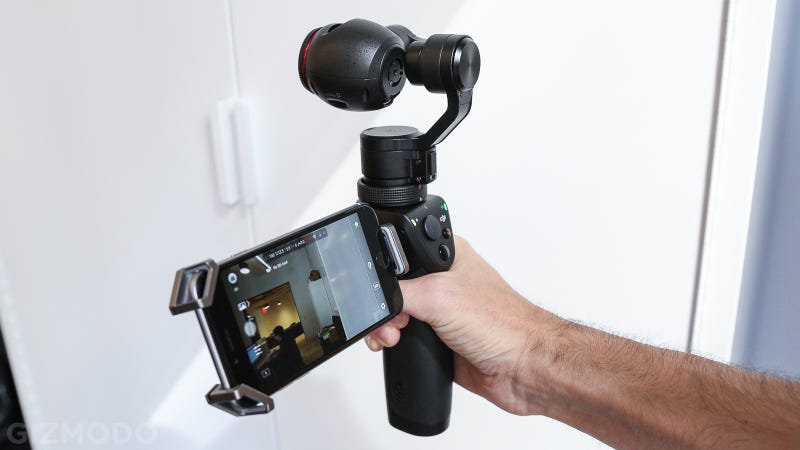
This new device packs a powerful punch and I am interested in seeing how it is put to use within the next few weeks. The film industry is in a constant stage of progression and this is a clear example of what we are capable of and what is in the near future. Storytelling has never had so many resources available, now just to get out there and capture the moment.
Tuesday, September 15, 2015
A Revolutionary Gimbal For Now
As filmmakers we are always trying to get the shot no one else can get, the smoothest footage, the money shot. Recently, numerous 3-axis gimbal stabilizers have been released which have thought to be the replacement of the Steadicam. While there is a lot of controversy about this topic, a new piece of equipment has been released that might throw all we know about stabilizers out the window.
As you see in the video, Sachtler has combined the brilliant gimbal benefits, that are available through use of devices like the DJI Ronin and the Movi, and the steadicam, which has long been the go to method of tracking shots. The movie "Goodfellas" has a historic tacking sequence all thanks to our beloved steadicam. This amazing idea provides a whole new style of filmmaking. As mentioned in the video above one shot that has been created through this system is being able to peak around corners with the camera. This could be great for giving a shot the feeling that someone is watching a character in a film. Being able to invert the camera as well makes this tool that much more versatile. Low angle shots were not attainable with former steadicams. Due to this item being brand new, there are limited visuals of real world applications so far, but by combining both of these amazing stabilization systems, the world of filmmaking just got a little crazier.

Having used the DJI Ronin quite extensively, as well as owning a Glidecam, I have experience advantages and disadvantages of both systems. First off the Ronin is electric and must be calibrated for the specific weight load that it is carrying. This is frustrating because with my Glidecam and many other traditional Steadicams, all weight adjustments are done through physical weight distribution adjustments. With my Glidecam the weight distribution does not have to be perfect either to still get a smooth shot, this is great for run and gun when you can't always count on a motor holding up for the entire shoot. The motor also is very susceptible to the cold due to the intricate mechanics of the system.
The Ronin however does trump the Glidecam in certain ways though. Getting low angle shots is extremely hard when the weights on the bottom of your Glidecam are hitting the ground. The Ronin is great for these types of shots because you are almost using your body as a crane and you can control the height of the Ronin to a much more specific point. The motor of the ronin, while running haywire occasionally, does however help with any bumpy steps you are taking as well.
Sachtler having combined these two amazing tools is really on to something. As mentioned earlier a new age of filmmaking with emerge from this system, but it is also costs about 15,800 Euros at the moment and the price truly makes it a professional piece of equipment. I previously thought the Movi would be the top stabilizer in the industry for sometime, however this industry changes faster than you can adjust and I'm sure this currently revolutionary equipment will soon be outdated and the bigger and better stabilizer will be running the streets soon.
As you see in the video, Sachtler has combined the brilliant gimbal benefits, that are available through use of devices like the DJI Ronin and the Movi, and the steadicam, which has long been the go to method of tracking shots. The movie "Goodfellas" has a historic tacking sequence all thanks to our beloved steadicam. This amazing idea provides a whole new style of filmmaking. As mentioned in the video above one shot that has been created through this system is being able to peak around corners with the camera. This could be great for giving a shot the feeling that someone is watching a character in a film. Being able to invert the camera as well makes this tool that much more versatile. Low angle shots were not attainable with former steadicams. Due to this item being brand new, there are limited visuals of real world applications so far, but by combining both of these amazing stabilization systems, the world of filmmaking just got a little crazier.
(GlideCam)
Having used the DJI Ronin quite extensively, as well as owning a Glidecam, I have experience advantages and disadvantages of both systems. First off the Ronin is electric and must be calibrated for the specific weight load that it is carrying. This is frustrating because with my Glidecam and many other traditional Steadicams, all weight adjustments are done through physical weight distribution adjustments. With my Glidecam the weight distribution does not have to be perfect either to still get a smooth shot, this is great for run and gun when you can't always count on a motor holding up for the entire shoot. The motor also is very susceptible to the cold due to the intricate mechanics of the system.
The Ronin however does trump the Glidecam in certain ways though. Getting low angle shots is extremely hard when the weights on the bottom of your Glidecam are hitting the ground. The Ronin is great for these types of shots because you are almost using your body as a crane and you can control the height of the Ronin to a much more specific point. The motor of the ronin, while running haywire occasionally, does however help with any bumpy steps you are taking as well.
Sachtler having combined these two amazing tools is really on to something. As mentioned earlier a new age of filmmaking with emerge from this system, but it is also costs about 15,800 Euros at the moment and the price truly makes it a professional piece of equipment. I previously thought the Movi would be the top stabilizer in the industry for sometime, however this industry changes faster than you can adjust and I'm sure this currently revolutionary equipment will soon be outdated and the bigger and better stabilizer will be running the streets soon.
Wednesday, September 2, 2015
Color and Why not
Over the course of this summer I shot thousands of photos over a two month period in Ghana. On my arrival home I realized I had enough portraits to make a series. So I set out sifting through and picking the very best of the photos. There were a few decisions I had to make when going into post processing. My first decision was to have them in color or black and white.
Of course I could have both but I wanted a certain consistency to extend through the series. Unlike many of my peers my roots in photography began in a darkroom. I shot on 35mm black and white film for the first two years before I switched over to digital. Because of this I tend to lean towards black and white over color in many of my photo editing decisions. The lack of color in many cases makes some of the photos more tangible to me. The image is less distracting and focus is more on the subject. Especially in portraits. My usual plan is to look at the un-edited photo with and without color. If I feel that the color doesn't add anything to the photo then it becomes black and white.
In the film world of today I feel as if we are seeing less and less black and white films and even less television without color. With newer cameras expanding dynamic range and colorspace at an alarming rate, black and white seems to many people an unviable option. In certain cases its seen as cliche or "retro". I disagree with these statements but I agree that b&w in video is much more of a difficult decision than in photography. In the end it comes down to the decision of the director and what you think will best help tell your story. Choose wisely.
Released in 2013 Ida was an Oscar nominated film in the Best Achievement in Cinematography category
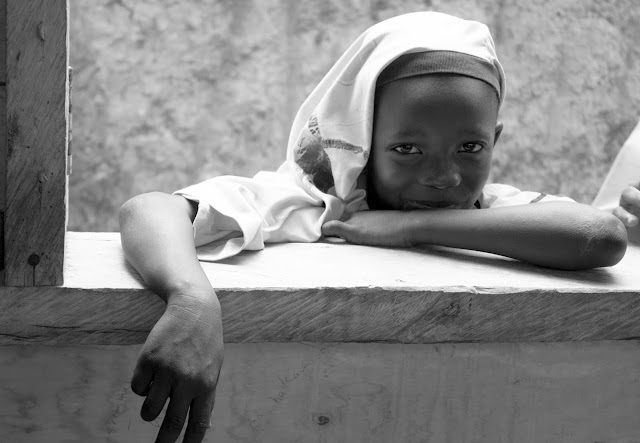


Of course I could have both but I wanted a certain consistency to extend through the series. Unlike many of my peers my roots in photography began in a darkroom. I shot on 35mm black and white film for the first two years before I switched over to digital. Because of this I tend to lean towards black and white over color in many of my photo editing decisions. The lack of color in many cases makes some of the photos more tangible to me. The image is less distracting and focus is more on the subject. Especially in portraits. My usual plan is to look at the un-edited photo with and without color. If I feel that the color doesn't add anything to the photo then it becomes black and white.
In the film world of today I feel as if we are seeing less and less black and white films and even less television without color. With newer cameras expanding dynamic range and colorspace at an alarming rate, black and white seems to many people an unviable option. In certain cases its seen as cliche or "retro". I disagree with these statements but I agree that b&w in video is much more of a difficult decision than in photography. In the end it comes down to the decision of the director and what you think will best help tell your story. Choose wisely.
Released in 2013 Ida was an Oscar nominated film in the Best Achievement in Cinematography category
These are some of the photos in my upcoming series.

Wednesday, August 26, 2015
Music makes the musical... Or any film really...
One of the many things that gets reiterated time and time again at film school is this: "Please don't forget that audio is just as important as camera". This is something that I firmly believe can't be stated enough. Yes, we ARE going to hold for room tone. Yes, we ARE going to spend that much money on the proper composer. It really does matter. On our last project, "Before Your Eyes", we took these notions and really ran with them. Our score was as critical to the film as the camerawork (okay Skyler... fine... maybe not quite as critical...). The composer we worked with was out of the UK, his work can be found here and while I do get tired of the film, I never tired of listening to the music. That film had almost no dialogue and was largely motivated by the music, which was incorporated into a beautiful soundscape/design. One of the major criticisms that project received was actually a lack of dialogue. People felt really uncomfortable by the lack of it. To be honest, I'm still not certain if we overdid the lack of dialogue, some loved it, some hated it, but that's filmmaking. That project really hit home for me how music can speak just as effectively as dialogue.
Between a summer in NYC and my return to IC, I spent a quick weekend in my hometown in Western MA. While there, I was able to visit Tanglewood. You don't need to know much about this place, other than that it is a beautiful outdoor concert venue which also houses the Boston Symphony Orchestra during the summer months. I'm not usually one for what this venue puts forward, but the night I went was a night that is very near and dear to my heart: John Williams' Film Night at Tanglewood. To give you a sense of that. It is hours of John Williams conducting the BSO in not only his own music, but the music of other famous film composers. At some points they show films on the screen with the score omitted, so that portion can be played live. This year the highlight in that sense was the opening scene from Star Trek Into Darkness:
If you haven't seen the entire film, I highly recommend it (J.J. Abrams is a genius). Regardless, this scene is incredible as a standalone scene, so give the 9 minutes a watch. If you play as close attention to the score as I did on film night at Tanglewood, you'll see just how critical it is to the scene. The main theme that pops up near the end is this one here. It is unique and beautiful. That theme is as much the calling card to this rebooted franchise as Chris Pine or the tricked out Enterprise. If you have seen these movies and you hear this track, your mind goes there. Michael Giacchino did a brilliant job of repurposing the original Star Trek theme to something that is modern and gorgeous in its sound (and a sight better than this old clunker)
So where the hell am I going with this? Well now we are making a musical! Just as much as the last one, music is still key! This time it might be even more key! Not only is the music enforcing the plot, it is plot! Major things will be happening during musical numbers. This is one of the hugest differences between the films of freshmen and the films that come out of thesis, music. If you haven't already done so, shop around for your composer, that person will help define your film.
Subscribe to:
Posts (Atom)