Showing posts with label comedy. Show all posts

Thursday, April 28, 2016

Inherent Vice

Inherent Vice is a film, that at some level, defines definition. The Wikipedia blurb calls it a "2014 American stoner crime comedy-drama film." An adaptation by Paul Thomas Anderson elusive picture comes from a similarly elusive author, Thomas Pynchon. It was rumored Pynchon had a cameo in this winding film starring a hippie named Doc, portrayed by Joaquin Phoenix. However it's unclear where the cameo comes in as nobody knows what Pynchon looks like in 2014.


     Shot by Robert Elswit, who collaborated with Anderson on Boogie Nights and Punch Drunk Love among others, creates a beautiful and elaborate  aesthetic that matches the flow of Pynchon's prose.

The plot is entirely convoluted and complex, but the story is pretty simple. Doc's ex girlfriend, Shasta Fey, is mixed up with some bad people. Doc, a private eye, tries to crack the case. All under the constant supervision of the straight-laced hippie hater Lt. "Bigfoot" Bjornsen breathing down his neck. All while Doc is really, really high. Which is a lot of fun.
 Vice could be a straight laced drama if it weren't for the lyrical prose of Pynchon. The difference between comedy and drama is surprise, which Anderson works with well. Whether it's Doc's reaction to the stillborn baby of heroin addicts or it's Owen Wilson coming out of the fog or the fact that Benicio Del Toro plays Doc's lawyer who is an expert in maritime law.
Paul Thomas Anderson leads us to the resolution of the case. But like the novel, the film is more about the journey than the destination. The case falls by the wayside as the story shows more of Doc's struggle with finding love. Shasta Fay is a catalyst for the mystery but also for Doc's regret. Anderson does a masterful job of portraying all this complex human emotion while surprising the audience.
Surprising and beautiful enough for this to be the best stoner crime comedy-drama of 2014. 

Thursday, April 21, 2016

It's Always Sunny...


What is comedy? What makes people laugh? Comedy, especially in television, is an extremely hard concept to master. Everybody has a different sense of humor so finding an audience can be very difficult. The show It’s Always Sunny in Philadelphia is a special sort of comedy. Being one of the top rated shows on the cable network FX, It’s Always Sunny in Philadelphia (or “It’s always Sunny” for short) branches out to all different types of audiences with it’s offensive, narcissistic sense of humor. By taking on controversial subjects like abortion and gay marriage throughout the series along with just straight-up twisted plot lines, the show finds its unique and bizarre style and takes it to new lengths that satisfy all audience members.


The show is about five characters: Mac, Dennis, Charlie, Sweet Dee, and Frank who all own a subpar bar in Philadelphia. The show consists of these characters trying to one-up each other, take advantage of each other, and screw each other over in any way they find suitable to benefit themselves. Watching these delusional characters work off of each other in the cruelest of ways adds to the laughs - but it’s only half of the fun. Then they bring in serious topics to focus on. For example, the episode shown in class demonstrations how these characters pretend to be handicapped to get girls (or in Sweet Dee’s case, to get guys). This is where the other half of the laughs comes from. All of the characters are so over-the-top offensive that nobody can believe that they exist, which is why they can get away with bringing up edgy topics like disabled people. But the dialogue is so natural and conventional (due to the half-improvisation/half-scripted style of the show) that the viewers can believe that these characters actually do exist. This contradiction explains why the show is so popular today.  People are able to relate to the real life emotions that these characters portray but when people watch these characters act upon these emotions in the most illogical and offensive ways possible, it creates the rambunctious fun that the show is known for.

The story telling and characters are great in the show, but not many people notice the brilliantly simple camera shots and stage lighting that the show offers. As you watch It’s Always Sunny, you can clearly see how there are no use of special camera angles and no use of special lighting. The directors and producers do this purposely. They want the viewers to feel as if they are hanging out with the gang at the bar and going on an absurd adventure with them. This personal aesthetic adds to the comedy to the show and here’s why: Let’s say I told you a story that I thought was hilarious. But after you’ve heard my story, you don’t share the same enthusiasm that I do. My response would probably be, “Oh, you just had to be there to think it was funny.” The producers use this technique in It’s Always Sunny with the personal and natural camera shots and lighting, where it seems as if you’re in the show experiencing everything that these characters are experiencing.

There are many elements to this show that make it a successful comedy. But the reason why I like this show so much is the fact that the actors just have fun with it. The actors on the show, who also write and produce the show, are all friends behind the scenes and share a similar sense of humor. When they are on screen, the viewers can obviously tell that the actors are having fun and not taking their characters too seriously.  This authentic atmosphere that the actors create on the show is unlike any other television show and if they continue to bring forth this energy, they will continue to be successful.


Thursday, April 7, 2016

The Darjeeling Limited

    King of the Sadbois, Wes Anderson generates stories that are unique visually and, especially earlier in his career, walked a line between amusingly absurd and deeply troubling. The Darjeeling Limited is his most perplexing and exotic film. 


     The film stars Owen Wilson, Adrien Brody, and Jason Schwartzman as brothers who are taking a train ride through India to reconnect after the death of their father. The characters deal with complex relationships that center around the mental health issues their patriarch's passing has caused. 


     Like any Wes Anderson film, the visuals seem almost like a picture book. Robert Yeoman composes the shots so they are symmetrical and balanced and the characters seem to move along distinct planes. What makes this movie slightly different from his other works is that a lot of the film is extremely crowded. 

     The train is a naturally confining space which pushes and compresses the brothers closer together. Additionally, Anderson consciously burdens the scenes by putting all three brothers in the frame at the same time. 
     The Darjeeling Limited has the most distinguishably production design of any Wes Anderson film, the colors are almost entirely blue and orange.
     Until the very end and the emotional climax when Anderson switches to a more neutral green. 

     This may be Anderson's most strikingly pretty film. However, it fails to be his best due to story and structural failings. There are several obstacles that the brothers face that could be considered end of Act Two moments. Whenever the brothers are faced with conflict they back down and when they are offered an option to leave they turn around and go back. This creates a meandering journey in which each brother has his own emotional climax rather than the family having an emotional climax together. Additionally there is a long flashback scene that doesn't add to the plot or the character development.


     The Darjeeling Limited is not Wes Anderson's best film but is one of the most poignant. Complex characters and visuals create a interesting dynamic. However, its structural issues bring the movie down. Wes Anderson, instead of doing his usual and making an amusing movie that is also sad, makes a sad movie that is amusing.


Thursday, March 31, 2016

The Most Depressing Show About an Animated Horse

Imagine there are two shows. One is a cartoon comedy about a horse who is friends with a dog and a cat. The other is a drama about a washed up former 90s sitcom who is now a depressed alcoholic trying to get his life back on track while continuing to self destruct. What if I told you that both of those were the same show? They are, and that show is BoJack Horseman.
BoJack Horseman follows Arrested Development arnett Will Arnett as the titular anthropomorphic horse trying to get his life back together. The show takes place in a world where humans and anthropomorphic animals live side by side. What makes it interesting is that BoJack Horseman is much less of a comedy than it seems to be. The show is actually a dark character study of a group of deeply unhappy people dealing with depression and other mental health issues.  BoJack seeks happiness while trying to move past his dark childhood and overbearing, unloving parents. 
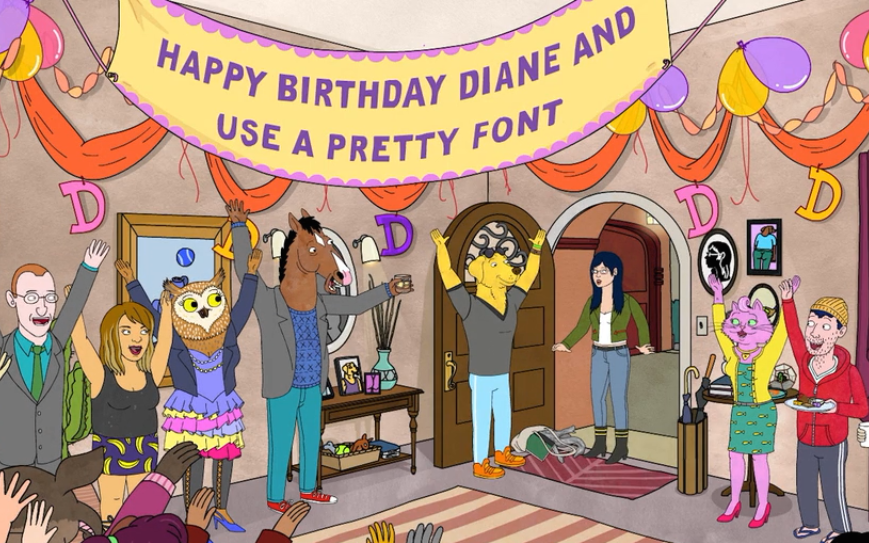
Most of the humor that is present in the series is derived from the background jokes and animal puns that are present while the drama takes place within the characters. The background of every scene is chock full of gags that require multiple viewings to catch. 

There are so many more

The shows first season was given mixed reviews mainly based off the show's first five episodes. However critics agreed that once the show found its footing it became critically acclaimed. Season two was highly praised as being one of the smartest shows on television. I highly recommend watching this show and giving it at least the first season to really get you hooked. Watch this show.


Thursday, March 24, 2016

Master of None and Organic Dramedy

    Last year Aziz Ansari stepped out of stand up comedy and became a showrunner. He released the first season of his Netflix show Master of None which focus on a fictionalized version of Aziz's life. Aziz plays Dev, an actor who predominately does commercial, who deals with a slew of social issues.   
The show features a diverse cast. Main characters include a black lesbian and an asian best friend. The only established name, besides Ansari, is Eric Wareheim. Eric, of Tim and Eric, brings an oddity to the show that mostly sits in reality. The romantic lead, Rachel, is played by Noel Wells, who was on SNL for a season.


The show is structured interestingly. Each episode stands on it's own for the most part and each deals with a social issues. Episode titles range from "Grandparents" to "Plan B". Dev talks about the first Indian person he saw on tv was actually a white actor in brown face. There are two plot lines that weave throughout the series: Dev has a small role in a major action film called The Sickening and Dev and Rachel's relationship.
Dev and Rachel's relationship is a microcosm of what the show makes the show so good. Dev and Rachel meet and hook up and after a condom malfunction they go to the pharmacy and get plan b. They meet a few months later at a party but Rachel has a boyfriend. This sort of complicated relationship beginnings are common today. It is these awkward realities that create comedy. It is also these realities that create drama. Dev and Rachel take a date to Nashville which showcases the couples' ability to work together and Dev's flaws. There is an episode the exists entirely in Dev's apartment that spans the stretch of time from when Rachel moves in until when she decides to move out. 


     Master of None takes issues of social justice such as minority and female representation and shows them in as a realistic light as its relationships. It's this reality that makes Master of None so funny and so sad. I think this blend of comedy, drama, and social awareness makes for something very powerful in just how real it can be. It's my favorite show on Netflix and a very promising start for a young showrunner/stand up comedian.


Thursday, March 10, 2016

We're All Animals

     Animals is a new HBO animated comedy executed produced by Mark and Jay Duplass. The mumblecore duo promotes the work of Phil Matarese and Mike Luciano, two unknown comedy writers who submitted Animals as a short film to Sundance in 2015. HBO picked up Animals at the festival and streams it exclusively on HBOGo, their mobile streaming platform. 
     

     Animals is a really good idea on paper. Human problems and stories as explained by animals who act human. Plus the animated element means that really anything can happen. If you look at the cast it's a list of alternative comedies biggest names such as: Eric Andre, Aziz Ansari, Jason Mantzoukas, Nick Kroll, and Scott Aukerman. Mark and Jay Duplass are indie stars and them promoting a young comedians work it must be good for them and the comedians.

However Animals has gotten mixed reviews at best. Maureen Ryan at Variety said, "It is unfunny, its animation is unexceptional and the studied banality of its dialogue is excruciating." It has a 60% on Rotten Tomatoes and a 6.8 on Imdb. 
But why the intense hate. Even Mark Duplass is a little confused, "Animals is the first time in history that people have gotten angry with us about something we’ve made." To be fair the show is weird. Very weird for HBO. Structurally the show follows one main plot but has several vignettes. 
     These vignettes aren't even necessarily non sequiturs, often these smaller sketches are tangentially related to something that happened earlier in the episode. For example in the first episode the main characters, a pair of rats that are obsessed with making babies, watch a couple have sex. Later in the episode the woman having sex is taken out in a stretcher which starts a sketch between two police horses which cuts back to the mice. 

Duplass says it's because the show was created separate from HBO. That they did it their own way and that might be why people are not responding to this like they would a traditional HBO comedy. 


     As a comedian who hates restrictions I have to side with Duplass. While Ryan is right at points the show becomes tedious and drags, often Animals shows a unique and funny perspective on mundane things in life. I'm excited that the show is weird and with this show being streaming only it is a good example of the future of tv. Shows made by unique people for a niche audience. While Animals might not be for everyone, I enjoy Animals and hope to watch the second season HBO ordered at Sundance. 


Thursday, March 3, 2016

My Life: The Tragedy

So, I've been thinking a lot about the main character of my film, Flex the Clown. He's a walking tragedy. He tries and tries and tries but rarely succeeds. In a real life setting, this is quite depressing. But when an audience watches on screen, it's quite comical.

Tragedy is a type of comedy. And it's my favorite type of comedy. 

But if you want inspiration for tragedy, you have to dig up those memories you've tried so hard to forget. 

So let's get personal. (Everything about to be disclosed is 100% true)

In fourth grade, when I was taking the state board exams, in a silent classroom, I farted so loud that it literally scared everybody that was present, including the teacher. It was a loud fucking fart. And I wasn't even that humiliated. I thought it was funny. But what was so horrible was that after the test, Emily Kasta, my "girlfriend" at the time, dumped me because of the fart. I even remember asking her, "was it because of the fart?" And she said, "no," but I knew that was a lie. If I never farted, I probably would have married Emily. I cried like a little bitch on the bus all the way home.

Growing up, I always resented my younger brother because he was always better at sports, school and being a decent human being. But one time, in fifth grade, during summer camp, my brother was getting bullied by Tony Cullen. So I pushed Tony and told him to "fuck off." Tony then told the counselors that I pushed him and that I said the f-word. I really hated that guy Tony. So, after that, the counselors made me do 100 pushups (for the pushing and the cursing) in front of the entire camp. Everybody was laughing at me, calling me names and making me feel worthless, including my younger brother that I was originally trying to help out. Last time I help that little shit. 

So, in high school, we used to play this game in the basement where one person would jump off the wall and try to see how far out into the room that person could land. So, one time, when I attempted to jump off the wall, my foot went right through the wall. I made a big fucking hole in the wall. I immediately knew that I would have to pay for it and I would probably get in a lot of trouble. So, I pretended that my foot was broken. I played it so well, too. I yelled, and cried in pain, but I didn't over-do it so it seemed unbelievable. Until, my mother (who is a doctor) took me to get x-rays. After the x-rays, my mother told me that I never broke my foot and it was okay. I tried telling her that my foot probably just healed. She didn't believe my bullshit and made me pay the four hundred dollar fee to  fix the wall. 

The first time I went down on a girl, she literally stopped me, told me it was the worst thing she had ever experienced, and walk out. That was fun. 

And there's many more where that came from...

So why am I sharing these stories with you?

Because  (I believe) in order to make something funny, and I mean actually funny, there needs to be some truth behind it. Larry David, writer of Seinfeld and Curb Your Enthusiasm, takes ideas from his every-day experiences. And he creates such honest, real, and funny television. I feel, in any kind of comedy, there needs to be some sort of truth behind it. And that's why I decided to share these personal, and humiliating stories. Because, now that I look back at them, they're hilarious. They're tragically hilarious. And that's what I want my film to be like.


Thursday, February 25, 2016

Louis CK's Horace and Pete

     Louis CK is a busy guy. He's both an acclaimed stand up comic, who's the only comedian to sell out Madison Square Garden three nights in a row, but he also writes, directs, and edits a critically acclaimed tv show Louie. He hasn't stopped there. Instead Louie has put out another self created show called Horace and Pete.


    Horace and Pete is a pretty experimental project even for a creator whose show is often described as surreal. H&P is only available on Louie's website and are pay per view. The first episode runs 67 minutes and costs $5. Each remaining episode runs progressively 10 minutes shorter and costs $3. Stylistically the show is a strange set up for television in 2016. The set is plain and the lighting is flat and it's clearly a multicam but there are never any shot reverse shots, only different angles. This lack of cutting and this open set design makes the show feel more like a recorded play than an episode of television.
                          
The show is about a bar in New York called Horace and Pete's which was founded 100 years ago by a Horace and operated in conjunction with his brother Pete. It has passed down for generations to the current Horace and Pete's, Horace portrayed by Louis CK and Pete portrayed by Steve Buscemi. 
The cast is filled with older comedy and drama stars: Alan Alda plays a curmudgeonly Uncle Pete, Steven Wright plays a bar patron, Edie Falco plays Horace's sister, and Jessica Lange as the dead Horace's old girlfriend. All the actors obviously have the entire script memorized and their are no cuts to help with lines or no close ups to convey emotion.
     Thematically the show is sort of an anti-Cheers. There is a surprising amount of topical discussion, in the first episode the bar patrons discuss Trump and the coming election and the Super Bowl. However this banter is the only place, if any, the jokes lie. Steve Buscemi's character is the only one that seems likable and he's having a mental breakdown. The family drama hinges on keeping with the old and going with the new and none of the characters seem to like each other very much. If Louie is a surrealist comedy, Horace and Pete is a tragic play.
      
     I wrote about Horace and Pete because it's something I'm trying to do with this thesis. I usually make comedies, between stand up and sketches that's what people know me for. I, like Louie, want to try something new and more realistic. But I'm not sure I like Horace and Pete. It's draining and gives me a sense of anxiety as all the characters fail to get along. Hopefully I can make a film that is emotional significant, yet not emotionally taxing.


Thursday, February 18, 2016

Hail, Caesar!

    This last spring I was lucky enough to sit in for a Q&A with Joel Coen. The Coen Brothers are one of my favorite directors and I reference them often in this blog. So when asked about his next project and Joel described a movie called Hail, Caesar! about George Clooney being abducted by a group of extras, I was thrilled. I finally saw Hail, Ceasar! last weekend on a Valentine's date with my Mom. I was not thrilled.


    So let's get this clear. The movie is not awful. It's not Battleship or some other Hasbro garbage. But is not a good movie for them and is one of my least favorites by them. I like the visuals, the jokes, and the acting. But there were some key story elements that did not happen. For example, there's a plot line that involves a dastardly act George Clooney's character did on his first Hollywood film. The act was revealed at the end of the movie in an offscreen conversation and written out quickly. Additionally a lot of the characters don't have purpose or a desire, other than create work for Josh Brolin's character Eddie Mannix.


                                                            Mannix is the protagonist of this twisty, seemingly meaningless comedy-drama. That description in itself shows how scattered the characters are. Huge stars like Ralph Fiennes, Tilda Swinton, and Scarlett Johansson pop in and out of the story with very little to do and loose ends that get tied up by a simple walk and talk with Eddie Mannix in the last five minutes.
The only actor who is given any other meaningful screen time is Alden Ehrenreich who gives a marvelous performance as country good ole boy Hobie Doyle. Hobie is a stud with horses but is brought into a adapted play directed by Ralph Fiennes' Lawrence Lawrence. The scene provides the only true moment of comedy of the whole film with an endearing Hobie and the artist Lawrence. 
  
     Now at the Q&A I learned about Hail, Caesar! before while it was shooting. This could be me only hearing what I wanted to hear but I could have sworn that Joel Coen said that Hail, Caesar! was going to be a musical.


     It fits with the current cut of the movie. There are large musical interludes with Channing Tatum, Scarlett Johansson, and Alden Ehrenreich and music and old Hollywood is a big theme. Additionally the explanation of major off screen plot points through dialogue would make sense if these were originally supposed to be shown in a musical number. Channing Tatum's character is given a full length musical number and then has no dialogue until what seems to be the climactic scene. And this climactic scene has absolutely no context. 


     I think Hail, Caesar! was supposed to be in a musical and somewhere in the production that was cut. What was left was a hodge podge of actors, characters, and story lines tied together by Eddie Mannix and Roger Deakins.

Thursday, February 11, 2016

The Dude Who Abides


    The Big Lebowski, labeled a cult classic, is a comedy crime film written and directed by the Coen Brothers team.
    The film centers around a character known as The Dude. The Dude doesn't do much. When police ask him what he does for a living he responds that he's currently unemployed. He mostly lays in the bath tub and gets high. And he goes bowling.
 Jeff Bridges' character, who gets confused with a businessman also named Lebowski, is given a desire. He wants to fix his rug. It's one little want. It's one little need. The Dude is mostly propelled through the movie by the plans and schemes from business men to nihilist. But the promise of the rug, the one that pulled the room together, that keeps The Dude moving. It's relatable. Viewers are lazy. We don't want to do things.
    I added The Big Lebowski to my lookbook for a few different reasons. Firstly I love Roger Deakins and think he creates beautiful images out of simple character placements. Secondly, The Dude doesn't do a whole lot. Rather, like Andrew, things are mostly done to him. And for whatever reason this tires him out. Even though he's along for the ride he hates the journey. 
     Plus the Dude learns from his surroundings. He repeats the things other characters say. And he the solution to his problems come in a drug laced dreamed sequence. Which is an effective form of visual storytelling.

The Big Lebowski is a cult classic because each time you watch it there's a new joke. The high stakes create a lot of tension and juxtaposition of the calmness that often follows. The Coen Brothers show us a dramatic money hand off that failed. They ostensibly cut from John Goodman jumping out of a moving car to Steve Buscemi bowling. The Dude's enemies include nihilists and Jesus the bowler. The movie sets up and deceives are expectations, the hallmark of comedy.
    The Big Lebowski is about a man just trying to get vengeance for his rug. He's The Dude.


Thursday, February 4, 2016

All About Eve and Good Backstage Drama

     With actors involved there's always drama. All About Eve is a backstage drama written and directed by Joseph L. Mankiewicz centering around an aging theater star. Bette Davis plays Margo Channing, a snide actress on her way out who takes a young girl named Eve under her wing.


     The movie begins with Eve, played by Ann Baxteraccepting an acting award. We don't know who she is or why she's won, we just know that the guild loves her. And we meet Margo and her friends who don't applaud at the acceptance ceremony.        Eve, is young with no connections. When a friend of Margo's introduces them Margo is warmed by Eve's love of the theater and her love of Margo as an actress. Margo allows Eve to work for her as her assistant and the two strike up a friendship.
     Quickly though Margo grows tired of Eve. She's always around and sometimes she makes important personal decisions, like telephoning Margo's boyfriend, without consulting her first. Margo drops Eve and feels excluded by her friends who are all smitten with her.
   As things begin to unravel it becomes clear that Eve is more than she appears to be. She is manipulative of everyone in the film. Eve is an actress and a damn good one. She's put on a different face for every person that she meets.


     All About Eve is an Oscar winning film for one reason. It created a character who wanted something and showed to the lengths in which they would go to get that. The conflict of Al About Eve isn't terribly complicated, the cinematography isn't out of this world. But it's simple storytelling that makes the film so effective. That and Bette Davis in full form.