Showing posts with label Paul Thomas Anderson. Show all posts

Thursday, April 28, 2016

Inherent Vice

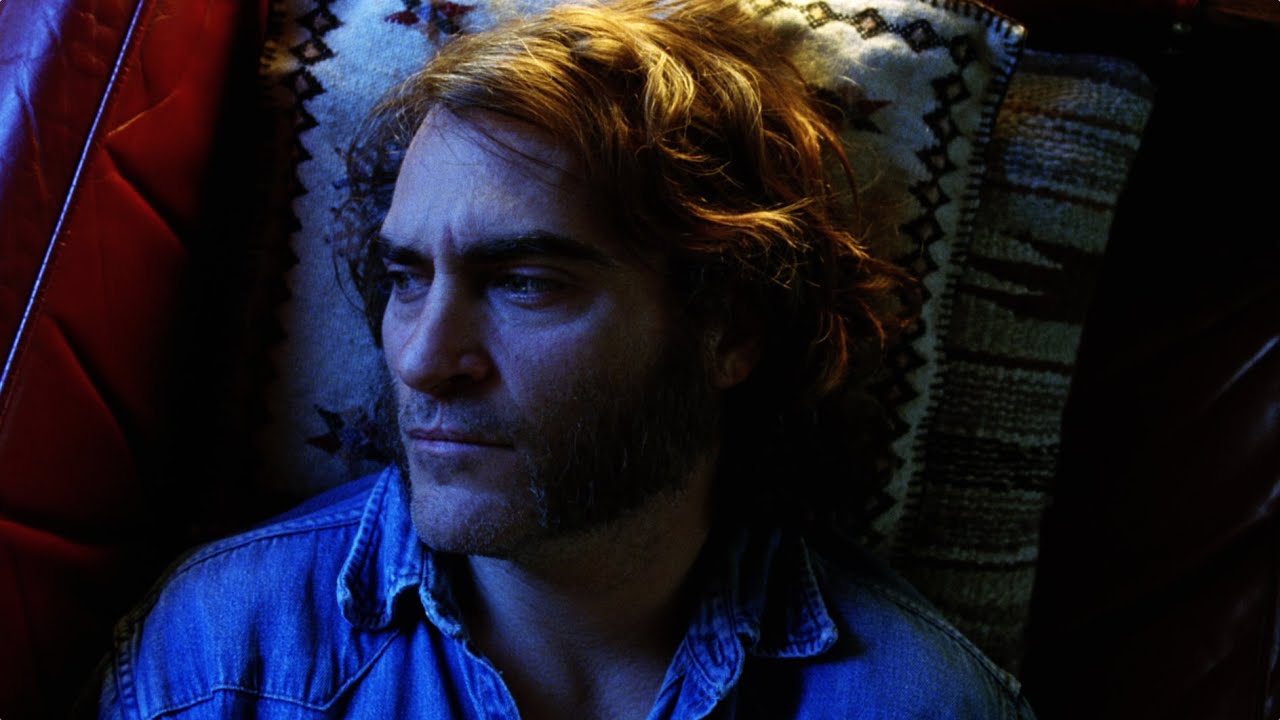
Inherent Vice is a film, that at some level, defines definition. The Wikipedia blurb calls it a "2014 American stoner crime comedy-drama film." An adaptation by Paul Thomas Anderson elusive picture comes from a similarly elusive author, Thomas Pynchon. It was rumored Pynchon had a cameo in this winding film starring a hippie named Doc, portrayed by Joaquin Phoenix. However it's unclear where the cameo comes in as nobody knows what Pynchon looks like in 2014.


     Shot by Robert Elswit, who collaborated with Anderson on Boogie Nights and Punch Drunk Love among others, creates a beautiful and elaborate  aesthetic that matches the flow of Pynchon's prose.

The plot is entirely convoluted and complex, but the story is pretty simple. Doc's ex girlfriend, Shasta Fey, is mixed up with some bad people. Doc, a private eye, tries to crack the case. All under the constant supervision of the straight-laced hippie hater Lt. "Bigfoot" Bjornsen breathing down his neck. All while Doc is really, really high. Which is a lot of fun.
 Vice could be a straight laced drama if it weren't for the lyrical prose of Pynchon. The difference between comedy and drama is surprise, which Anderson works with well. Whether it's Doc's reaction to the stillborn baby of heroin addicts or it's Owen Wilson coming out of the fog or the fact that Benicio Del Toro plays Doc's lawyer who is an expert in maritime law.
Paul Thomas Anderson leads us to the resolution of the case. But like the novel, the film is more about the journey than the destination. The case falls by the wayside as the story shows more of Doc's struggle with finding love. Shasta Fay is a catalyst for the mystery but also for Doc's regret. Anderson does a masterful job of portraying all this complex human emotion while surprising the audience.
Surprising and beautiful enough for this to be the best stoner crime comedy-drama of 2014. 

Thursday, January 22, 2015

It's Actually Pretty Groovy To Be Insane

      Inherent Vice is the first ever Thomas Pynchon novel to be adapted into a screenplay. The fact I have to say that is pertinent to the creation, outcome, and reaction to the movie. Thomas Pynchon is a modern literary giant. He is well respected, reclusive (as artist are portrayed), and has created a modern classic. Some call it The Modern Classic. Regardless, one of critics most loved filmmakers in Paul Thomas Anderson has taken on the great challenge of adapting one of critics most loved writers. He did so by writing the whole novel out as script and then cutting out what he felt was unnecessary.


     Inherent Vice, a movie based on the 2009 novel of the same title, is a drug-filled noir set in the 1970's. The main story follows "Doc" Sportello, played by Joaquin Phoenix, a private investigator and dirty hippie. The story is jumpstarted when Shasta Fay Hepworth, an ex lover of Doc's, comes into Doc's home with a hunch that the new hot shot real estate tycoon she's with, well his wife and her boyfriend are planning to send him to the loony bin. She thinks.


     Doc begins his journey and immediately bumps into characters such as a Black Guerilla Family member, a woman who thinks her husband may not be dead, and a prostitute Jade. Like a noir film Doc has a particular distaste for the formal police, particularly Josh Brolin's character nicknamed "Bigfoot."
     
     Detective Bjornsen is the antithesis of Phoenix's doping Doc and their unwillingness but need to work together to solve the case creates a lot of the tension and comedy in the film. 


     To try to summarize the rest of the plot would do a disservice to both the movie and Pynchon's style of writing. The movie is complex, surreal, and elaborate. All the characters relate and the solving of one mystery just leads to more questions. That is to say, it watches as a Pynchon novel would read. The cast is humongous and star studded, leaving me to look over several times to a friend throughout the film and remark "Oh my god I didn't know they were in this movie." 

    Critic review of the film has been inherently positive while audience left the theatre "confused." I too left confused and spent most of the remainder of the night trying to piece together the plot. I think the story would work better in it's original format, as a novel. That's not to say I didn't like the film. I really liked the film. The more I write about it the more I liked it. It's a flawless adaption of a Pynchon novel. Tonally the movie was perfect and, dare I say, groovily insane. 


Friday, October 17, 2014

Interstellar and the Fear of Non-Digital Projection

As of right now, we are just three weeks away from getting the chance to see Christopher Nolan's highly anticipated space adventure, Interstellar. Already drawing 2001 comparisons from the few that have seen the film, it appears to possibly be marrying the technical wizardry and ambition of Kubrick with the sentimentality of Spielberg (who was originally attached to the project). A series of cryptic, but visually stunning trailers have stirred the hype and major Oscar buzz is flying.  
However, what I want to talk about here has nothing to do with story specifics or awards prognostication. Not too long ago, it was announced that Interstellar would open two days early with 35mm and 70mm screenings in select theaters. It's an exciting proposal and a rare one for a big studio like Warner Bros. to make. Nolan is known to be a strong advocate for film preservation and with the kind of clout he has in Hollywood these days, the fact that he is using the podium to draw attention to film quality should not be surprising. The special screenings are sure to be popular with fans, but it is proving to be a point of concern for some theater owners.

In a recent article by Kevin Jagernauth of The Playlist, it was found that a sizable number of theater owners view the early release as "devaluing the digital push," with one CEO making the claim that "It makes no sense to step back in time."

The reactions are a sad indication of the film business we live with today. While the artistic community celebrates and treasures film showcases such as this one, the suits and moneymen look askance. Now, to be fair, much of the derision is coming from those who did away with old projectors and recently went full digital at the not-so-subtle suggestion of the studios, so the prospect of missing out on a major pre-release must be frustrating. However, to say that this move "devalues" the digital push seems a bit hyperbolic and misguided. No matter how big the early numbers for Interstellar are, there's no way it's going to turn the tide back to traditional projection. It's about the expression of the artist and I feel like some of these folks need to see past the dollar signs and recognize that.

Digital is here to stay, period. Of course, that is until the unfortunate day when theater viewing becomes obsolete and everything (including physical media) instantly goes to streaming and VOD, but for now, digital is firmly set in place and as film lovers, we need to champion the few directors (Tarantino, PT Anderson and Scorsese to an extent) that still flash the extra cash for the privilege of working with film. It may just be ladling water out of a rapidly sinking ocean liner, but I'm glad that some big names are standing up for the format.

Friday, September 12, 2014

I Love Tracking Shots


I have always loved tracking shots. When done right, the fluidity of the camera movement, the timing and work that goes into them results in cinematic magic. Some however are more successful than others; here is a list of my personal favorites.


 Kill Bill Vol. 1
The first time I think I was ever really aware of a tracking shot was in in my all time favorite move Kill Bill. I first realized I liked the shot well before attending film school, and before I even knew what a “tracking shot” was. The almost 2 minuet shot is relatively short compared with some of the other more famous ones, but still worth mentioning. The ambitious shot was done after 17 takes, but was completed in one day. “I got bounced around pretty good,” said Larry McConkey the veteran steadicam operator, “I never actually hit the ground, but I hit just about everything else.” 

Goodfellas
This is perhaps the most famous shot on the list, and the most well known. This iconic opining shot was however actually an accident. At this time in Scorsese didn’t even like to use steadicams, however when he was not allowed to go through the front door, he had to improvise. He decided to do the long shot through the back door to “symbolize Henry’s whole life being ahead of him, doors opening to him. It’s his seduction of Karen and it’s also the lifestyle seducing him.” This shot took eight painstaking takes to get right. 

3


Boogie Nights
This film has two iconic tracking shots, the first taking a page form Goodfellas. It takes us around the Club and introducing us to many of the main characters in the film in a 3 minuet seen. Then next shot was later on in  the movie during a house party, it follows William H. Macy looking for his wife, and ends with the double murder of his wife and her lover, and his suicide. 

Friday, May 2, 2014

Two Masters Talking

So after last week's gratuitously long blog post, I will attempt to keep it concise this week. One of my favorite film directors of all time is Martin Scorsese. Another one of my favorite directors of all time is Paul Thomas Anderson. And lo and behold, here is a talk between them!


In terms of people I look to learn from on a variety of levels (Writing, composition, camera movement, kinetic nature of editing), there are few film makers I try harder to aspire to. Any words from these men (I'd listen to these guys rattle off their grocery list) are gems of insight and it is amazing that there is video of a talk of them speaking with each other. So watch it and learn!!!

Friday, September 28, 2012

Coffee, No Cigarettes (we're quitting)

Initially, I wasn't excited about watching "Cigarettes and Coffee"; I'd had an awful day and just didn't want to deal with anything else (seriously, life, stop throwing me shit). But, I did it any way, happily cocooned in my multitude of blankets, and it actually wasn't half bad. As a matter of fact, I was moderately impressed with some of the acting, simply for how spot on the characters were (and for that kind of thing coming from the early nineties). See, having been in several of those positions, though not that of Bill, I understand what they should feel and how they should react. In short, I believed their performances.

I don't know what Anderson told them to do, the bickering couple or the upset friends, but it worked; I felt their emotions through the screen, and thought along with the scene as it progressed. Maybe that makes it predictable, but I didn't mind it whatsoever. It's an interesting idea of having five lives interconnected and somehow in the same diner at once, and makes for some intriguing filming and transitions (ex: shifting between booths).  I'd definitely be game to try something of that sort myself; it takes some planning, sure, but that's half the fun.

Also, an aside: I watched the Fifth Element for the first time during the week...actually not bad, considering what they had to work with at that time, but that's another blog post entirely.

Friday, September 21, 2012

The Master

Paul Thomas Anderson has just released a new movie. The film, starring Joaquin Phoenix has made quite the stir in the press as of late because of it's take on scientology. At first I was under the impression that this film would only be able to be seen in large urban areas due to it's limited release, but upon finding out that Cinemapolis would be showing the film this weekend I was ecstatic to say the least. My cousin was able to see an advanced screening of The Master about a month ago and has been raving about it, he kept talking about the sheer brilliance of the colors in the film. As a person who has the utmost admiration for cinematography, hearing about the aesthetic beauty of the film has made me even more excited. The only other Paul Thomas Anderson movie I have seen is Boogie Nights, which I truly enjoyed. This combination of Anderson and Phoenix should be a knockout, or at least that's what I'm hoping for. I am captivated by Joaquin Phoenix for a number of reasons, but most recently because of his  PR stunt to promote "I'm Still Here" his mockumentary/performance art piece about him pursuing a hip hop career. Despite the fact that the film was a flop I grew to respect his commitment to a role greatly, which is what I hope to see in "The Master." The trailer I have included is a good indication that my expectations will be met.