This week I watched HBO's documentary film "Vito", which tells the story of Vito Russo, a gay man from NYC who found his voices as an gay advocate in the aftermath of Stonewall. He was an active critic of LGBT portrayals in the media. In the 80s he published his book called "The Celluloid Closet", the first major book to critique these portrayals in Hollywood. When the AIDS epidemic shook the gay community, Vito formed ACT UP, an advocacy group for justice, before his death from the disease in the 90s.
The film is a classic-style documentary: a blend of historical images, clips, and interviews by those who new the subject best, but what makes it so captivating is it's relevance almost 50 years later. I was left wondering at the end of the film what Vito would think of the amount of progress we have made for LGBT individuals since, but also the amount of work we still have left to do--particularly when it comes to visibility and representation in the media.
Animals is a new HBO animated comedy executed produced by Mark and Jay Duplass. The mumblecore duo promotes the work of Phil Matarese and Mike Luciano, two unknown comedy writers who submitted Animals as a short film to Sundance in 2015. HBO picked up Animals at the festival and streams it exclusively on HBOGo, their mobile streaming platform.
Animals is a really good idea on paper. Human problems and stories as explained by animals who act human. Plus the animated element means that really anything can happen. If you look at the cast it's a list of alternative comedies biggest names such as: Eric Andre, Aziz Ansari, Jason Mantzoukas, Nick Kroll, and Scott Aukerman. Mark and Jay Duplass are indie stars and them promoting a young comedians work it must be good for them and the comedians.
However Animals has gotten mixed reviews at best. Maureen Ryan at Variety said, "It is unfunny, its animation is unexceptional and the studied banality of its dialogue is excruciating." It has a 60% on Rotten Tomatoes and a 6.8 on Imdb.
But why the intense hate. Even Mark Duplass is a little confused, "Animals is the first time in history that people have gotten angry with us about something we’ve made." To be fair the show is weird. Very weird for HBO. Structurally the show follows one main plot but has several vignettes.
These vignettes aren't even necessarily non sequiturs, often these smaller sketches are tangentially related to something that happened earlier in the episode. For example in the first episode the main characters, a pair of rats that are obsessed with making babies, watch a couple have sex. Later in the episode the woman having sex is taken out in a stretcher which starts a sketch between two police horses which cuts back to the mice.
Duplass says it's because the show was created separate from HBO. That they did it their own way and that might be why people are not responding to this like they would a traditional HBO comedy. As a comedian who hates restrictions I have to side with Duplass. While Ryan is right at points the show becomes tedious and drags, often Animals shows a unique and funny perspective on mundane things in life. I'm excited that the show is weird and with this show being streaming only it is a good example of the future of tv. Shows made by unique people for a niche audience. While Animals might not be for everyone, I enjoy Animals and hope to watch the second season HBO ordered at Sundance.
Some people truly have a knack for seeing a bigger picture. According to the video below, snow art is a thing. Snow art is mapping out a drawing and steps you need to take in order to make it with the actual snow. Because Game of Thrones season 6 is coming up, I thought it would be super appropriate to post this video! ENJOY
Who is your favorite actor? Tough question I know. And with a never ending range of options it's a pretty difficult thing to answer. But back in my youth, there was a simple and easy response: Will Ferrell.
It's not easy to sell Will Ferrell as the best actor around, and today I'd give a different answer, but back in my younger days he was my top choice. The reason was pretty simple, everything he did made me laugh. I can't tell you how many hours my brother and I spent locked in our TV room watching "Anchorman" or "Old School" or his SNL best of DVD. When it came to Will Ferrell we just couldn't get enough. As I've gotten older my taste has matured somewhat and I've somewhat moved on from the brand of comedy that filled my youth. It's part of growing up and everyone leaves parts of their childhood behind. However, with Farrell there's an element of nostalgia, that keeps me invested in his career.
Most recently Farrell stared in a 50 minute HBO Baseball mockumentary entitled, "Farrell Takes The Field." The special had Farrell playing 10 different positions for 10 different Major League Baseball teams, a record first achieved by Bert Campaneris in 1965. As a big fan of baseball and Will Farrell, I was immediately intrigued by the idea. Last March, Farrell filmed the special in Arizona playing briefly in 5 different games. Because he filmed it during spring training I was actually able to follow each game online with exclusive footage provided by MLB. The glimpse I got was hilarious and I had high expectations going into Saturday's premiere.
While it was a pleasant 50 minutes of content, I was overall disappointed with it. They shortened some of my favorite moments from the day and it felt like they cut some great content in order to carry on jokes, that didn't quite hit. While I wasn't completely satisfied with the special as a whole, I still admired Farrell's performance overall.
One of the things that has made Farrell great throughout his career is his unwavering commitment to a role. Even when the premise of his piece is ridiculous he is completely committed to taking it seriously. In the HBO special, Farrell goes through the games as though he is trying to secure a spot on each team and although it is obvious to everyone involved that it is a joke, Farrell never drops from character. His interactions with the players and the coaches read like a utility infielder trying to fit into a new situation after every trade. And regardless of how the mockumentary came out, all the proceeds raised during the special went to a cancer foundation that Farrell started and that's something everyone can get behind.
While Farrell's movies haven't exactly hit it big the last few years, he has always done a great job of staying relevant through all the different medias that are available to us. Whether he's appearing in random Milwaukee Beer commercials, or creating and posting Funny or Die videos, he has found a way to stay current. And in each ridiculous video, his complete devotion to the comedy can be seen. Regardless of of your thoughts on Will Ferrell, it's hard not to appreciate his dedication to his craft. His unwavering commitment to each role is something every actor can learn from.
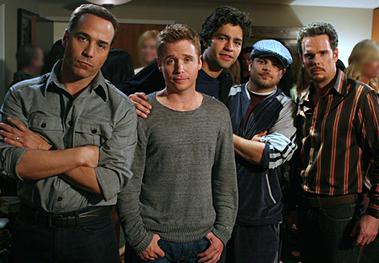
This past summer I finished watching Game of Thrones and moved my focus towards Entourage, the HBO series that follows movie star Vincent Chase and his group of friends. The show is loosely based off of executive producer Mark Wahlberg's life as a rising film star. As a movie star, Vince's life revolves around his friends Eric Murphy or "E", Johny "Drama" Chase (Vince's older and less talented brother), Turtle and Vince's agent, Ari Gold.
I can't get enough of this TV show, which is hard now that classes have started! Each episode runs for 30 minutes, and it makes a great show to binge-watch easily. Since I started watching it a few weeks ago, I've already finished the first half of season 3, which is a sad accomplishment now that I'm already halfway through the second part of the season.
Entourage brings forth two main themes throughout the series. The most prevalent and thus easily noticed are the heavy undertones of male friendship and machoness. Entourage boils down to a bro-tv show, of four friends and the endless fun that being rich in Hollywood brings you. Because of the high stakes of such a lifestyle, this bravado brings out the testosterone. Throughout the series, this can mainly be seen with Vince's agent, Ari Gold. Dealing with clients and studios often leads Ari to act...angrily...often his phone is thrown, or someone is yelled at, like Lloyd, oh poor Lloyd. The second theme, if we'll call it that, (probably more of a characteristic of the show) is the embracing and focus of the lifestyle of the rich and famous in Hollywood. There are scenes where we see Vince buys his friends $10,000 watches, Aston Martins (I don't even want to know the price) and countless other expenses that add up to an enormous credit card bill. The group frequents expensive restaurants, Rodeo Drive, flies in a helicopter and take private jets wherever they need to go. This all goes along with countless parties, clubs, drugs, and alcohol.
All-in-all Entourage is an excellent show that warrants a look for someone searching for a new series to watch.
As always, Game Of Thrones is back and better than ever. Season five kicked off just three weeks ago and the show continue to blow me away. Every aspect of this series is executed flawlessly, from its cinematography down to its titles. I would go as far as to say that this is the best TV series ever made.
Not only is the production quality of the show outstanding but so is the cast. There are few actors in the series that i recognize from other films however after every episode i am blown away by all of them. And there is a lot of them. The show is extremely deep and follows countless characters, and storylines.
On top of that there are Dragons... Who doesn't like watching shows that have giant man eating winged lizards? The CGI is another aspect of the show that is phenomenal. However, the CGI of the dragons is so expensive that the show can only have them on for a limited amount of screen time. Animations can really rack up the bills fast, however I am glad that they dont over due the dragons so in the long run I'm happy with it.
If you haven't started watching Game Of Thrones I highly recommend that you start. It will take you by surprise.
True Detective is an HBO original drama series that first premiered in January of 2014. This show, created and written by author Nic Pizzolatto, is designed as an anthology, or a series that changes plot and cast in between every season. The first season consists of eight episodes, costarring Woody Harrelson and Matthew McConaughey as partner homicide detectives.
McConaughey plays "Rust" Cohle, a very intelligent detective that, due to his own ethics, is compelled to ravenously pursue a serial killer even though it brings great danger to his own well being. Rust suffers from depression, insomnia and alcoholism, all of which stem from the untimely death of his young daughter followed by the divorce of his wife. While Rust may be a flawed character who does not believe in or follow the norms of society, he still acts as the moral epicenter of the show.
Harrelson plays a decorated and veteran detective named Marty Hart. Marty has a troubled relationship with himself, his partner, and his family that eventually leads up to many of the troubles within his character. Marty's demons eventually get ahold of him before he turns to alcohol and divorces his wife. While Marty and Rust are partners they do not necessarily get along, this leads them to disagree on much of the morality of humanity and the human existence.
The plot of True Detective jumps between the years 1995, 2002, and 2012 while Marty Hart and Rust Cohle are delivering the tale of a previous homicide investigation that they both worked on. All previous information on the case was tragically lost in hurricane Rita, so the two characters were asked by investigators to recount their professional relationship, separate home relationships, and affiliation with the Dora Lange murder case. We bounce between the past and present while we progressively learn more about our character, the case, and that the perpetrator may still yet be at large.
I would highly recommend that everyone check out True Detective at some point. It is a show that is shot beautifully with an amazingly interesting story. The first time I watched it I was bored during the first episode and gave up on it; however, after I got to the third the show greatly increases in pace. The show is also scheduled to release a second season coming up in June of 2015.
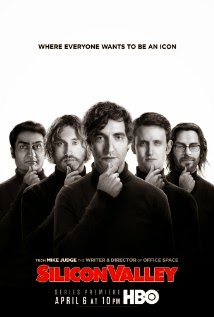
A sign of a good serialized tv show is that the premise is not what the show is about. Silicon Valley on HBO, as one can imagine, is about a small start up in California's technology cradle. The show follows Richard, played by Thomas Middleditch, a geeky and soft spoken programmer who has developed an algorithm that compresses files at an alarming rate. With his programming friends Richard develops this company, Pied Piper,
Silicon Valley is set in the world of technology but it's about finding confidence and reaching success. Richard has to balance working with his high strung, out of touch boss Peter Gregory and his competitor Gavin Belson of Huli. Belson being a thin caricature of Steve Jobs and Huli being an amalgam of Google and Apple.
The main cast is mostly comprised of comedians in acting roles. They truly do a great job, the show is ridiculous but not slapstick. Points of tension arise because of characters desires rather than whacky antics. People familiar with comedy will recognize Middleditch and costars Kumail Nanjiani, and TJ Miller as up and coming stand ups. It's only fitting they get their first major acting roles as start ups.
The production quality is high and showrunner Mike Judge, of Office Space fame, has said it's based off his own experience in Silicon Valley in the late 80s. The series is funny and entertaining and is everything you would want from a situational comedy. Plus it has the best dick joke in the history of television.
Silicon Valley is an American sitcom that was released in early April 2014. This show, created by Mike Judge, John Altschuler and Dave Krinsky, is an HBO original series that follows six roommates that attempt to start up a company in Silicon Valley. This show received exceptionally positive reviews after the first season due to being a fantastic and contemporary tale about the technology industry, as well as a look into the lives of those who run the industry. Most all of this show is influenced by Mike Judge's real life experience in the industry.
In the first season of Silicon Valley follows character Richard Hendriks (Thomas Middleditch), a socially awkward and anxious man working in Silicon Valley. What he lacks in people skills, he makes for in technological genius and amazing coding ability. Richard lives with a group of five other men, one of which owns the home (T.J. Miller), allowing them all to reside in the house for a small percentages of any code they write. One day Richard discovers that, by accident, he created an amazing compression software that has the potential to completely change the world and how data is used. Soon every major technology company is either out to buy Richard's code or is out to destroy his company and steal their work. The majority of the show follows the group of men as they struggle to adjust to a new life of luxury and fame.
Overall, I think that this show is phenomenal. It is extremely funny and original. The story is very unpredictable and, due to the fact that it does not take itself too seriously, thrives off of the ridiculousness of the plot and characters. All of the actors in the show are very enjoyable to watch. Each character has a very unique personality, the interactions between the characters are very odd and awkward which make every conversation interesting to watch.
The second season premier just kicked off April 13th and has already been picked up for a third season. I would highly recommend this show to anyone who has access to HBO and is looking for a new comedy to follow.
The showrunners for Game of Thrones made an announcement this weekend, and readers of the books are outraged.
Fans of author George R.R. Martin’s series “A Song of Ice and Fire” are some of the most dedicated fans to any current literature, and an announcement from Game of Thrones show runners D.B. Weiss and David Benioff this weekend confirmed that the show will catch up to the books in season 5, pass the books in seasons 6 and 7, and spoil the ending in season 7. George R.R. Martin has been working on “A Song of Ice And Fire” since 1991, with the first book in the series being published in 1996. To date, the first 5 books in the series have been released, and the sixth book is soon to come. Fans of the books hoped that Martin would be able to release the sixth book before the television series caught up and began spoiling elements of the plot, but that is looking less and less likely as Martin’s writing continues to move at a glacial pace. Season 5 of Game of Thrones begins to air on HBO starting on April 12, and will cover the ending of books 4 and 5. Unless Martin can seriously expedite the rest of the sixth book, the show will begin its sixth season next year and begin spoiling the plot.
There has already been some deviation between the books and the television series. There have been characters added and removed, deaths changed, and plot elements added and skipped. This deviation from the book series is likely to increase drastically in season 6, as Martin has shared with the show’s creators relatively few details about what is to come. In a quote from showrunner David Benioff this weekend, fans now know that “[the television series will] meet up at pretty much the same place where George is going; there might be a few deviations along the route, but [the show is] heading towards the same destination”. Even if Martin does manage to finish the sixth book in the series before the sixth season of the show airs, there really is no hope left for the ending of the story. Martin is taking, on average, about 4 years per book, and the makers of the show are not going to wait that long to produce their final season. Therefore the show and books will have (basically) the same ending, but the show will spoil it for the dedicated readers of the books.
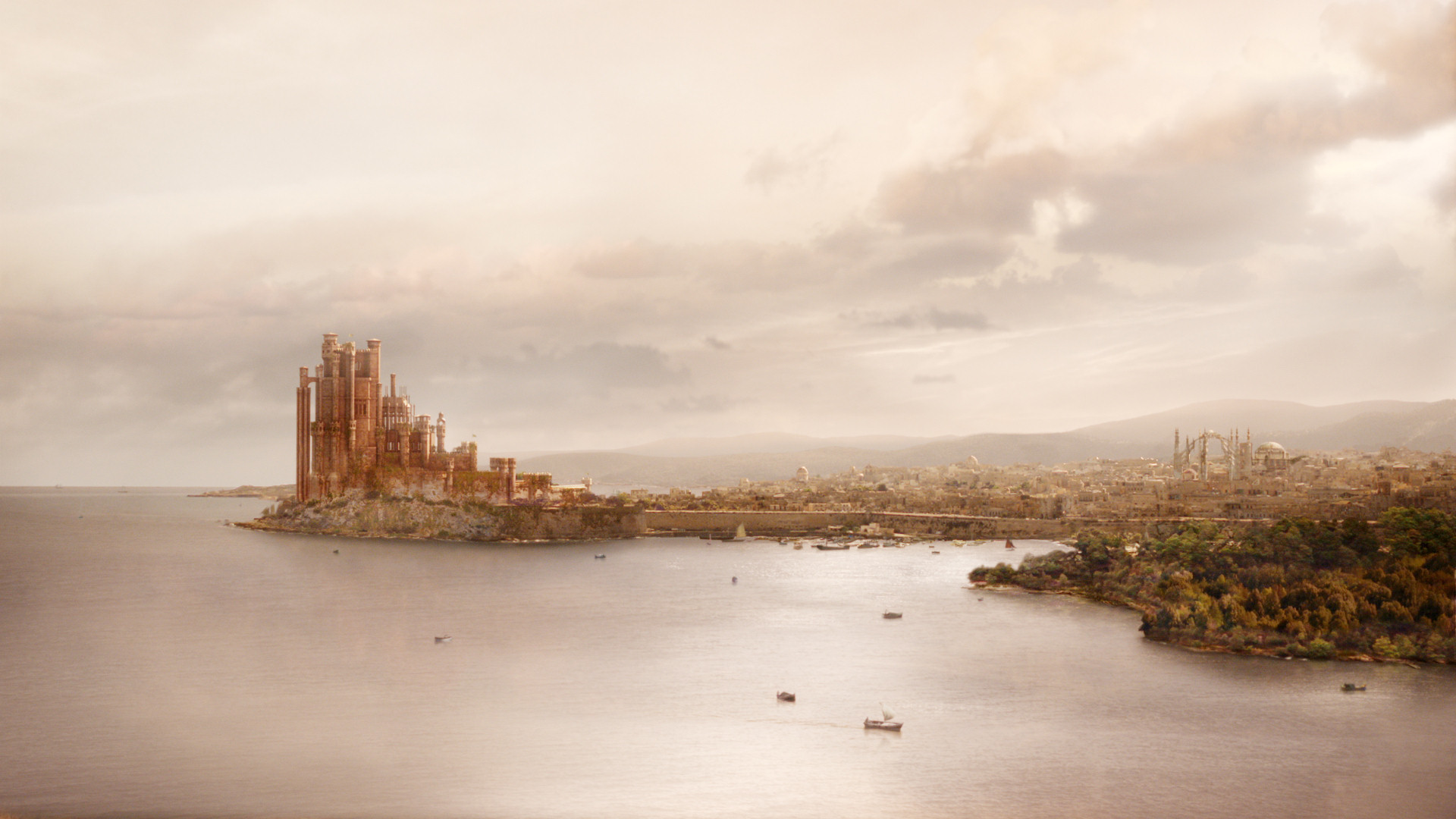
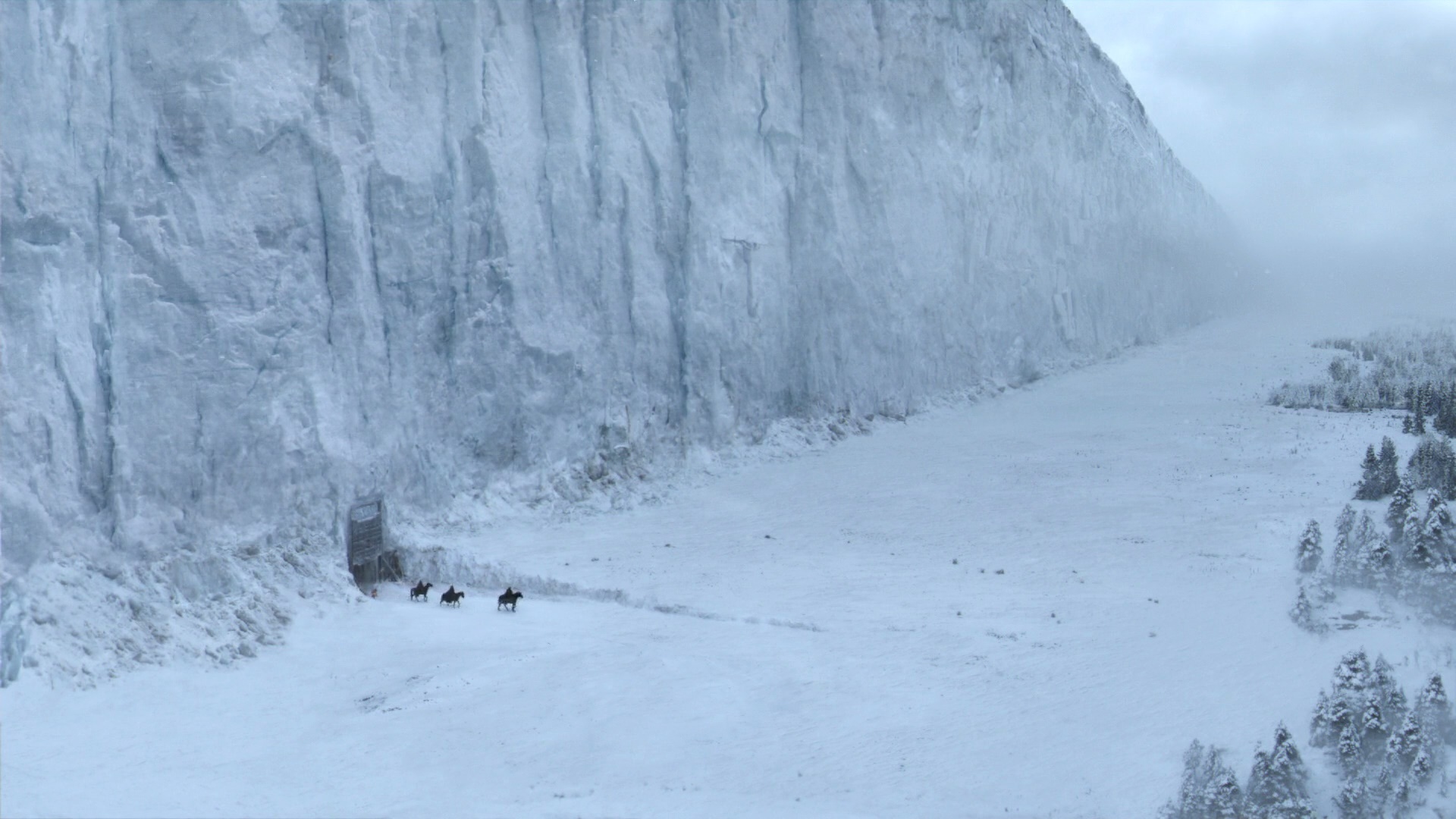
Sticking with our class theme of lighting today, I decided to analyze the lighting of the series I am currently binge-watching — Game of Thrones. The majority of scenes in Game of Thrones take place in three places: Essos (a desert-like continent), King’s Landing (a well-developed coastal town), and The Wall (a city in the frozen tundra of the North). The lighting in the scenes from each place changes dramatically, and perfectly matches the mood and tone of the storylines that take place in each location.
The first location I’ll discuss is Essos, the desert continent. This story line follows one of the show’s main protagonists, Daenerys, as she travels from city to city freeing the slaves and killing their masters, recruiting former slaves who wish to join her army. In the beginning of the series, Daenerys is given to a barbarian-like race called the Dothraki and is made “khaleesi” (queen) of one of the tribes. Her only purpose is to give the “khal” (king) a baby, and she is mistreated as many women in the series are. These scenes are very dark with lots of shadows and warm colors, which does a good job of portraying the mood of the scenes. As time goes on though, Daenerys gains power and begins to form an army. She fights for a good cause and is a very positive character, so her scenes change to being lit with soft, warm light. Daenerys has bleach blonde hair and wears very bright colors, which contrasts the dark, plain colors worn by the slaves she frees. As she gains power and her army grows, the colors lighting in her scenes gets brighter and brighter with less shadows.
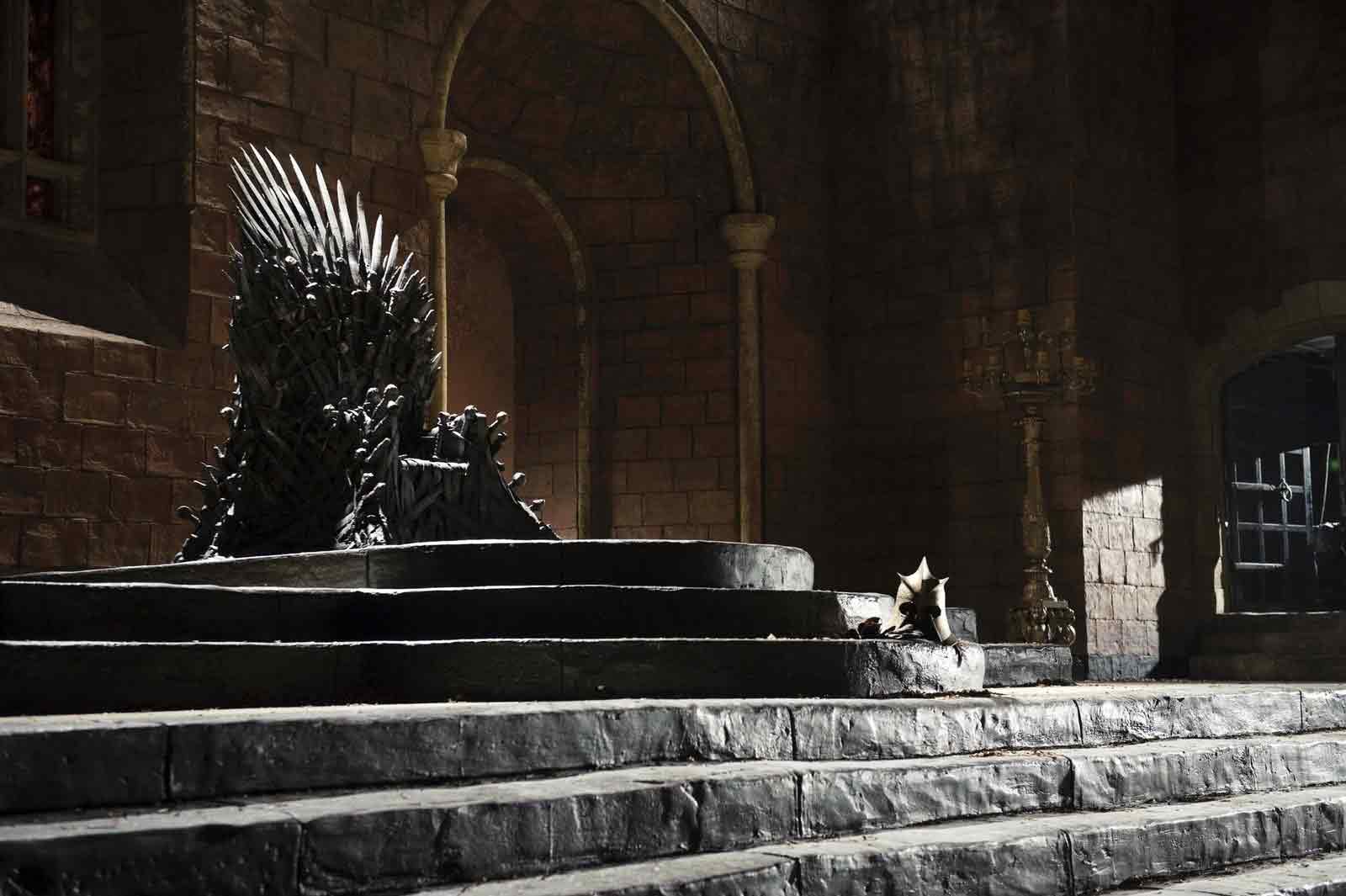
The second location, where much of the show takes place, is King’s Landing. As the name suggests, this is where the King and the royal family lives. The storyline in King’s Landing follows two families: the Starks and the Lannisters. Sansa Stark is another one of the series main protagonists, but she is forced to marry into the antagonist Lannister family. While some of the happier scenes take place outdoors with bright colors and full, soft light, the dark and twisted scenes take place inside the castle and are much darker. Since there is no electricity in the time period/world that the show takes place in, everything is lit with candles. The show does a great job of targeting light to make it appear that each room is lit only with candles since there are rarely windows inside the castle, even though the number of candles shown couldn’t possibly create enough enough light to actually show what’s happening. It is interesting watching these scenes, and the lighting is always impressive.
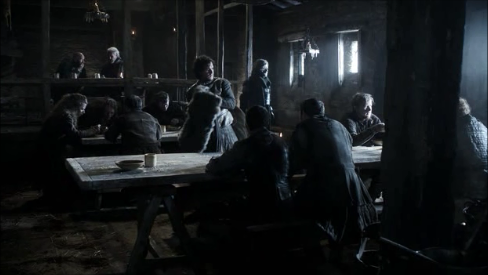
The last major location of the show is along “The Wall”, a giant, 700 foot tall ice wall in the North that travels 500 miles from coast to coast. The main character here is Jon Snow, the bastard child of Ned Stark, father of the Stark family. Jon Snow is a member of the “Night’s Watch”, the defenders of The Wall who give up their life for the brotherhood. Since the North is a tundra-like environment, the outdoor scenes have no shadows, imitating how clouds diffuse the sun when it snows. The indoor scenes are VERY dark, lit with very few candles, and the color palette is always very dark. Jon Snow has lots of personal struggles, and the mood of the storyline at The Wall is usually dark and depressing. The lighting and color palette matches this mood, with all colors either being pale white like the snow or dark brown like their furs/clothes.
Boardwalk Empire is an HBO show created by Terence Winter. It is an American period style show based around the prohibition era of the U.S.A. It follows a group of characters that are involved in the illegal sale of alcohol throughout the New York/New Jersey area.
The show aired from September 19, 2010 to October 26, 2014 having five seasons. I have not completed the series as of now, but am in the middle of the second season. I personally love the show. It is unique and the writers have done a good job crafting creative characters for the audience to interact with. My favorite character is Jimmy, played by Michael Pitt. Jimmy is a Young man that does what needs to be done, and also has an interesting past that is unknown to him in the first season.
The show also incorporates real characters from history such as Al Capone played by Stephan Graham.
The show expands on american history to help tell a fictional story that keeps its audience on the edge of their seat and wanting more with each episode.
HBO invested a lot into this show. The pilot episode alone cost around 18 million dollars according to wikipedia, and in my opinion it payed off. The series ended up winning 2 Golden Globes and 4 Emmy's.
While watching Season 1 Episode 3 of The Wire this week, I noticed a camera movement that made me feel slightly uneasy. The scene shows a group of drug dealers sitting around in the projects, and one of them is telling a story.
In order to capture the perspective of each person listening to the story, the camera was trucked right while panning left to make the audience feel like they are rotating around the scene’s main character. However, as the story progressed and the situation he was describing got worse, a slow dolly zoom was introduced. This camera movement stood out to me for two reasons: first, it stood out to me because I can appreciate how difficult it must have been to accomplish this. Trucking right and panning left while dollying out and zooming in is not something that just anyone can pick up a camera and do. I was really impressed with the shot and the work of cinematographer Uta Briesewitz. As impressive as the shot was though, I felt it stood out to me because it wasn’t really necessary. The dolly zoom is a very dramatic effect, and can be great for communicating disorder or chaos when used correctly. But while simply telling a story like this scene in The Wire, it struck me as odd and out of place.
With my interests regarding dolly zooms piqued, I took to the internet to find more examples of times that dolly zooms were used effectively. I ended up finding this video on Vimeo that takes a look at the history of dolly zooms in movies, starting with Vertigo in 1958 and continuing to a couple films from 2005. Alfred Hitchcock’s Vertigo was one of the first times, if not the first time, that a dolly zoom was used in a widely popular movie. Because of this, the combination of dollying in/out and zooming the opposite way was was given the nickname “The Vertigo Effect”. The dolly zoom’s second most famous appearance come in 1975 with Jaws, giving it another nickname: “The Jaws Effect”.
After seeing all these cool examples of dolly zooms, I decided to take out my camera and try it for myself. Seven takes later, I came to a conclusion: a dolly zoom is tough to pull off (without tracks to smoothly dolly on). And although it might not have fit very well in the scene I first saw it in on The Wire, it made me appreciate the experimental camera work that past cinematographers have done to get the dolly zoom to where it is today.
A show with a truly captivating story and cinematic style, True Detective, which aired in 2014 for HBO, blew me out of the water. Matthew McConaughey and Woody Harrelson give an extraordinary performance in which they play dark mysterious detectives trying to discover a serial killer in Louisiana. The show is just as much about the relationship of the two detectives as it is wrapped around the case. The philosophical narration of Chole's character gives an interesting dialogue in this thought provoking series.
True detective contains some of the most elaborate cinematography for a television show, which is able to creatively portray the setting of Louisiana. This is one of the first times such a long take might have even been considered for TV. At over 6 minutes, this intense long take is one you should check out:
In honor of David Fincher's new film Gone Girl, lets take a look into the sense of style in his direction that has put him into the forefront of Hollywood. After working a couple years with Industrial Light and Magic Fincher left to direct music videos and commercials. It wasn't until 1992 when he made his first feature Alien 3 that we got a glimpse into his talent. It's an odd film to go back and look at after knowing all the films he has made now but it's still great to check out. The crazy thing about David Fincher is that you can see him grow throughout each film he has made, either toning his style or tweaking his sense of direction.
That green and blue.
From there Fincher would make two amazing films Se7en and Fight Club, and these two films would turn him into one of the biggest directors today. You can see in Se7en the way he directs just two or three people talking and then turns just that into something cinematic and intense. Fincher is known to not really use handheld shots and always keep the camera locked onto a tripod or a track. He knows when to cut and which shot to use to build up tension until it all falls. You can clearly see this throughout Zodiac and the anxiety you get from watching the film. Throughout the film Fincher uses some beautiful insert shots of detectives scrambling through notes and puzzles left behind by the killer. And you can see how that carried over to Netflix's House of Cards and in an odd way there's also a serial killer in that show too.
As time passed Fincher further toned his style but this time through his production design and the colors used in his films. Starting with Panic Room in 2002, Fincher's films started to get this green and blue tint. This was only expanded when he made The Social Network, The Girl With the Dragon tattoo, and now Gone Girl. Fincher combines these elements and just from watching his films you know exactly what he wants, and no matter how many takes it takes, he will get it.
Over spring break I started watching The Sopranos, and I was instantly addicted.
The show is about a mafia family in New Jersey, led by the Soprano family. The opening sequence that plays at the beginning of every episode introduced the setting, New Jersey, and then the protagonist, Tony Soprano.
I am a huge editing nerd, so interesting editorial choices grab my interest quickly, and montages and opening sequences are my favorite things to watch and edit together myself. I loved that the camera was never completely steady and that it was shot while Tony was on the move, driving on the turnpike and through the town. Tony is always on the move, and there are always a lot of things happening with each one of the several characters on the show. An opening sequence that was very steady and calm would not fit with the movement and the dynamics of the show.
Directly after the opening sequence in the pilot episode, it cuts to a very still and quiet shot of Tony Soprano in a psychiatrist's office. This greatly contrasts with the feel of the opening sequence, but it grabs your attention because it is unexpected. Opening in the psychiatrist's office was an excellent choice, because it introduced you to the character of Tony Soprano, and because his appointments and relationship with the psychiatrist are some of the most important aspects of the first season.
The characters and the relationships between them are critical to any show, but they do it extremely well on this show. On a show with this many characters, character development is important. If a character isn't developed fully in a reasonable amount of time, he or she will get lost and seem irrelevant. In this show, each character - each member of the mafia family, each member of the Soprano family, the psychiatrist, and each short-term character - is there for a reason, and their personality and their relationship to each character they interact with is critical to the story.
Coming from an Italian family, I may be biased toward the show because I understand and enjoy the culture of an Italian family and the language they use in the show. However, even without knowing what certain words mean and without understanding every cultural aspect of the families, the characters and the storyline are so well-developed that the show is still completely enticing and addicting.
Vice is a documentary television series that explores a variety of groundbreaking stories around the world. There are different hosts depending on the topic and segment, including the shows founder Shane Smith.
Vice takes a unique and personal approach to political and cultural topics. Rolling Stone wrote that it "feels a little like your buddy from the bar just happened to be wandering through eastern Afghanistan with a camera crew." The audience can truly feel the raw emotion being captured on screen. The topics range from child suicide bombers to the world's most dangerous drug, scopolamine. Each episode is so enlightening, and honestly, incredibly risky. The camera crews aren't always welcomed, and these men risk their lives in their attempt to show us what life is really like on the other side.
Vice began as an HBO documentary series, but luckily is now available for free via YouTube.
Choosing my
favorite TV character is such a difficult task for me. I feel like I
emotionally connect with the characters on my favorite shows and I usually have
a feeling of friendship with them if I really think that they are a good
character. This past summer though, I was fortunate enough to have the time to
watch all three seasons of Game of Thrones. While thinking about who my
favorite TV character was, Daenerys Targaryen stood out from the other TV
characters. I’d have to say that she is my favorite out of all of the TV
characters that I have had the pleasure of being acquainted with.
One of the major
reasons why Daenerys is my favorite characters is that I admire her. Her
character has transformed from a small, obedient girl to a strong,
self-sufficient woman. She has been through many traumatic events in the show
and she always learns from her mistakes and always grows stronger and more
confident. I really enjoy her character because you don’t see many female
characters that are as poised and resilient as Daenerys. She plays a character
that is honest in her intentions of wanting to reclaim Westeros as her own and
rule the iron throne, but she has an undying compassion for the wellbeing of
the innocent. She frees slaves and punishes (quite harshly, I must say) the
people who do her or other people wrong. That amount of compassion for those
who are innocent is very admirable. It is unlike a conqueror to have that
compassion for people that they have conquered, but she manages to do so, and
thus only receiving more support.
She is also my
favorite character because she is just plain awesome. She has three dragons and
she has the admiration of all of her followers. She also has a huge army and
she has beauty and brains. I always want to see more of what she does in the
episodes because her wit and her strength always manage to surprise me.
Daenerys Targaryen is just undeniably a fantastic character.