The Hollywood debate over whether to use real birds or CGI birds is a heated one.
Some people say they can tell the difference between real and CGI birds and some say they can't. Can you tell which of these pictures of birds is real and which is CGI?
Exhibit A:
Exhibit B:
Which one is real? Exhibit A, or Exhibit B?
I asked my two roommates to see what they thought. One of my roommates guessed that the second picture was the real one and my other roommate said that he thought it was a trick question and that both pictures were real.
You might be as surprised as my roommates to find out that it was in fact a trick question, but the trick was that they were both CGI!
CGI birds are very convincing in Hollywood these days, but filmmakers have a history of staying away from CGI, especially CGI birds. One of the most famous examples of movies that used non-CGI birds was Hitchcock's The Birds (1963)
Hitchcock didn't know what he was getting into when he wrote the script for this movie, but with the help of his animal-trainer/friend Ray Berwick, he was able to pull it off. Hitchcock had planned to use machines in place of birds for shots but quickly realized that if he wanted his movie to look realistic he would need to use real birds.
One tactic he used to train his cast was to put them in giant cages the week leading up to filming and literally throw birds at them to get them used to it, meanwhile training the birds to do certain moves to get ready for filming.
Nowadays, we have the ability to use real birds but often use CGI because it looks so good and it's so hard to train a bird. Animated movies have still decided to abstain from using real life, practical birds in their movies. It makes sense from an aesthetic point of view but I can't help but imagine how much money they could save by using real birds at least some of the time.
"A parrot walks into a bar and asks for a scotch on the rocks, after knocking back the drink, he ask for the same again. This is also downed in one gulp, and he points his wing at the empty glass. This time the barman ask for some payment, to which the parrot replies - put it on my bill"
If you didn't find that funny, then you probably don't enjoy birds.
Congratulations, you fall into the 85% of American's who don't enjoy birds as well. To most, birds are a nuisance, inferior vertebrate that poop all over everything and ruin crops. The worst part about birds is that they are in a way, "above" us, soaring over us in places that we can't reach without the aid planes, or jetpacks, or even ladders. This fear of inadequacy hunts us to our core, and it is this exact fear that has produced some of the scariest movies in Hollywood.
The Birds (1963)
Alfred Hitchcock
A perfect example of the aeronautical capabilities of birds combined with a human's natural fear of birds. Alfred Hitchcock was able to capitalize on this fear in his film The Birds. A film about a wealthy San Francisco socialite who goes to pursue a potential boyfriend to a small town in Northern California when things take a bizarre turn after birds of all kinds suddenly begin to attack people.
Pterodactyl (2005)
Mark L. Lester
Another prime example of being spooked by birds. Mark L. Lester takes things to a whole new level when he introduces the Pterodactyl, the scariest kind of bird, to the silver screen. Nothing is scarier than a bird that eats meat, especially a BIG bird. Lester sends shivers up his audiences' spine with this horror about a dormant volcano deep in the Turkish forest that holds within it a deadly secret, that being a perfectly preserved nest of pterodactyl eggs ready to hatch
Both movies pushed the boundaries of horror and what it means to truly be scared. To this day, I am still waiting for the next Pterodactyl, a chance for me to really be taken out of my element, a chance to be chilled to the bone.
While watching Season 1 Episode 3 of The Wire this week, I noticed a camera movement that made me feel slightly uneasy. The scene shows a group of drug dealers sitting around in the projects, and one of them is telling a story.
In order to capture the perspective of each person listening to the story, the camera was trucked right while panning left to make the audience feel like they are rotating around the scene’s main character. However, as the story progressed and the situation he was describing got worse, a slow dolly zoom was introduced. This camera movement stood out to me for two reasons: first, it stood out to me because I can appreciate how difficult it must have been to accomplish this. Trucking right and panning left while dollying out and zooming in is not something that just anyone can pick up a camera and do. I was really impressed with the shot and the work of cinematographer Uta Briesewitz. As impressive as the shot was though, I felt it stood out to me because it wasn’t really necessary. The dolly zoom is a very dramatic effect, and can be great for communicating disorder or chaos when used correctly. But while simply telling a story like this scene in The Wire, it struck me as odd and out of place.
With my interests regarding dolly zooms piqued, I took to the internet to find more examples of times that dolly zooms were used effectively. I ended up finding this video on Vimeo that takes a look at the history of dolly zooms in movies, starting with Vertigo in 1958 and continuing to a couple films from 2005. Alfred Hitchcock’s Vertigo was one of the first times, if not the first time, that a dolly zoom was used in a widely popular movie. Because of this, the combination of dollying in/out and zooming the opposite way was was given the nickname “The Vertigo Effect”. The dolly zoom’s second most famous appearance come in 1975 with Jaws, giving it another nickname: “The Jaws Effect”.
After seeing all these cool examples of dolly zooms, I decided to take out my camera and try it for myself. Seven takes later, I came to a conclusion: a dolly zoom is tough to pull off (without tracks to smoothly dolly on). And although it might not have fit very well in the scene I first saw it in on The Wire, it made me appreciate the experimental camera work that past cinematographers have done to get the dolly zoom to where it is today.
“The main thing I’ve learned over the years is that the MacGuffin is nothing. I’m convinced of this, but I find it very difficult to prove it to others.” –Alfred Hitchcock
Other wise known as McGuffin or maguffin, a MacGuffin is a plot device that is usually given little or no narrative explanation. It can be in the form of a goal, desired object, or other kind of motivator, and can be either a person, object or place. Sometimes, you might not even notice what the MacGuffin is in a film, but it's always there, and it's the driving force behind the main character's actions in a film.
Alfred Hitchcock is famous for using this term throughout his films.
MacGuffin use in Hitchcock films
Vertigo: Carlotta Valdes' character never appears in the film, and her death isn't important at all to the audience. However, because she is apparently possessing Madeleie Elster, it starts the case for Scottie to investigate and drives the entire film's plot. Some also have noted that the necklace or Scottie's vertigo is also a MacGuffin.
The 39 Steps: Mr. Memory's memorization of plans for an airplane engine.
Rear Window: the "murder" committed by Lars Thorwald.
Notorious: the uranium ore that is in all the vintage wine bottles.
The Birds: the reason why the birds are attacking everyone.
Psycho: the $40,000 in the envelope.
His famous method has also inspired other films to use this method in their films. Some examples are:
Art comes in a lot of different forms. Film and television are some of those forms. They are the art of storytelling. I strongly believe in the preservation of art. I'm not talking about old films from 1910, although I do wish more films from that time survived. I'm talking about respect for the art of storytelling. Marketing, and really the industry, seems to to lack that respect. They see money as more important than conserving this art. Storytelling has been jeopardized by trailers and sneak peeks that are used to advertise and up their ratings. The currently system used to advertise is an insult to the work it is advertising.
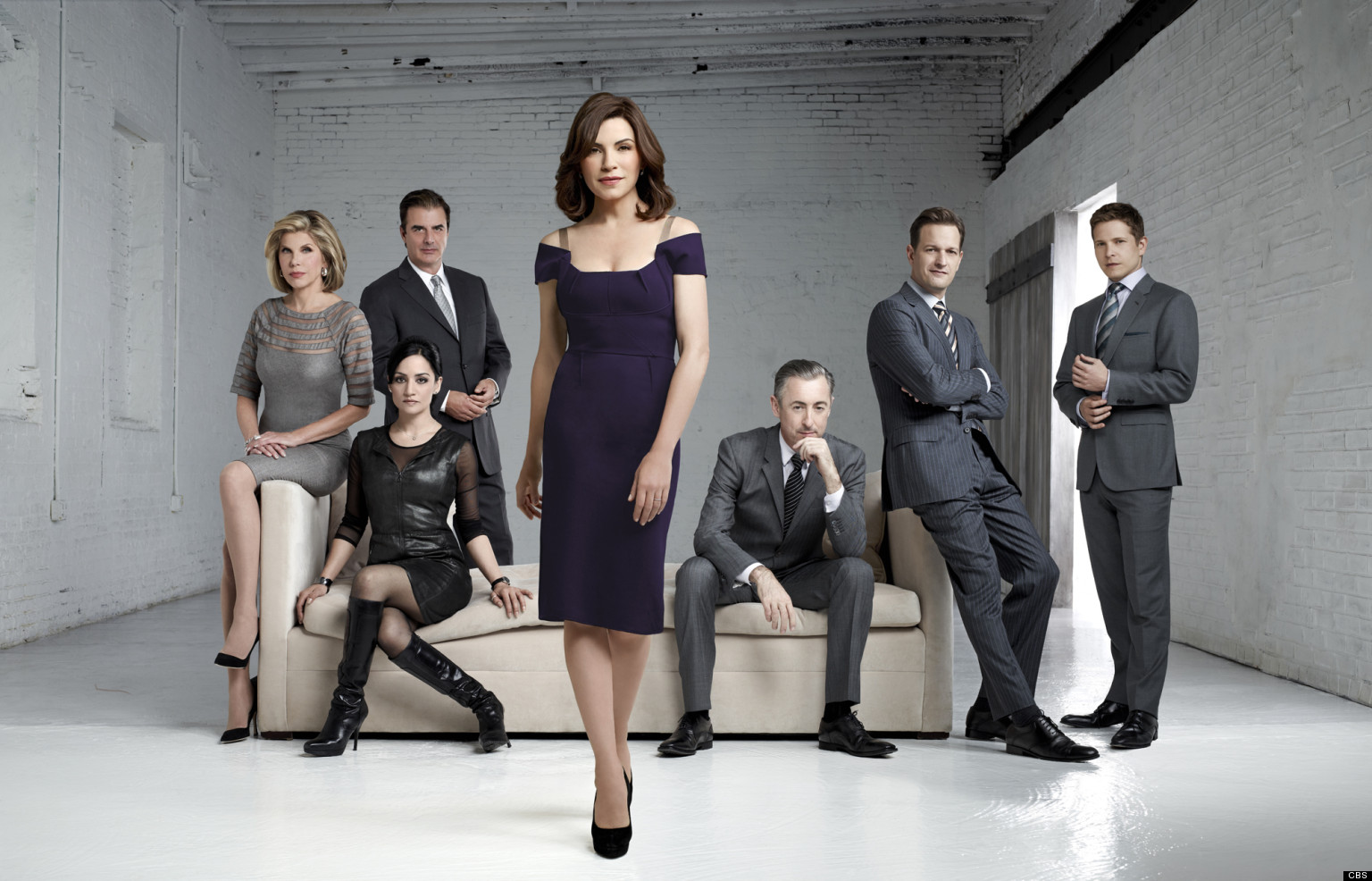
I'm only writing about it now, because of recent advertising that upsets me. CBS's The Good Wife is currently my favorite show (tied with Showtime's Shameless). It is easily the most well rounded show I know of. It's a political drama, a lawyer drama, and a family drama all at once. The amount that happens in one episode is equivalent to probably an entire season of Breaking Bad...or more. And still, while juggling so much, they never drop the ball. There is not a dull moment and nothing is ever predictable. For example, the season four finale was unbelievably incredible. In the fifty-ish minutes, there were over a dozen unexpected twists and turns. You thought you were following the story until the last shot of the episode, where you learned you were completely wrong and misinterpreted everything and were left with wide eyes and jaw dropped as you realized that nothing on this show will ever be the same.
I can talk about how phenomenal The Good Wife is forever, but that's not why I'm writing this. Back to my point. Here we are. Four episodes into the fifth season, with episode five coming out on Sunday, and it already feels like this next episode should be a season finale...or season premiere. No other show can tell a story as well as Robert and Michelle King. Their art speaks for itself. Example, as soon as last week's episode ended, I yelled to my roommate, "And that is what it looks like when shit hits the fan." I found out the day after that the next episode is actually called "Hitting the Fan." So why am I talking about this? Because CBS and The Good Wife have been really trying to create buzz about this Sunday's episode. I don't blame them, the entire world needs to see how great they are at their art. However, it's their methods that I'm honestly so appalled by.
At first, I came across a Buzzfeed article: http://www.buzzfeed.com/jacelacob/the-good-wife-hitting-the-fan-review. This came out the day after last week's episode, but it is a review on next week's episode. I thought maybe he got the title wrong, so I read it. He didn't get it wrong. CBS screened the episode for critics ahead of time to create buzz. I quote and agree with Jace Lacob, "I’m not one of those Good Wife adherents who qualifies their
passionate engagement with the Robert and Michelle King-created drama by
adding “on broadcast television,” as the show shouldn’t be forced to
carry such a backhanded compliment." The Good Wife is without a doubt one of the best television shows, period. Despite this, the ratings are not doing very well. My age group is extremely important when it comes to ratings, and nobody my age watches this show. The only people I know that watch The Good Wife are my roommate and my best friend, and that's only because I made them. I fear this is the last season of the show, as a result of their ratings. For that reason, I gave them some slack and didn't get upset about early reviews.
Then, the show released four sneak peeks on YouTube. They have been posting the videos like crazy on Facebook, Twitter, CBS's website, and whatever other social media networks. I do understand the need to keep their ratings up. However, those four sneak peeks add up to 7 minutes and 24 seconds of footage, from let's assume a 52-minute program. Now that pisses me off. Why is the solution to give things away, spoil parts of the next chapter, and insult your art? There has to be another way. The last scene of the latest episode contained a pivotal moment of the story. To keep this spoiler-free, let's just say it left us with one of the characters finding out that he is being betrayed by the last person he ever expected. Clearly, the entire next episode will be able how he reacts and how everything plays out. Now that's something I could spend an entire week thinking about, freaking out about, and waiting to learn about. However, there's no need to wonder how he will react. Just check out the sneak peek. No. Absolutely not. That is rude and offensive to character development, and I personally, as a fan, find it irritating that my experience of the story has been compromised.
Another example of this was the season eight trailer for Showtime's Dexter. My brother somehow convinced me that it didn't spoil anything, and I stupidly trusted him. SPOILER ALERT - The previously season ended with Dexter's sister Deb about to shoot him, then instead shooting a co-worker to save Dexter. If you watched the show, you'd know this is extremely unexpected of Deb, just completely out of character. There couldn't be a cleaner, more hard-working cop. She would never kill an innocent person. With an ending like that, the viewer is left wondering what happens next. Does Deb join Dexter as a serial killer? Does she turn herself in? Is she unable to live with herself? Here's the trailer to season 8:
How my brother thought that didn't give anything away is beyond me. Things I learned in that trailer that I shouldn't have: Deb turns to drugs, lots and lots of drugs, Dexter is safe, nobody knows that Deb killed LaGuerta, Deb blames and hates Dexter for what she has become, Deb wishes she shot Dexter instead of LaGuerta, there's some new character named Evelyn Vogel who is an expert at psychopaths and is a potential threat to Dexter, Deb is getting DUIs and getting into car crashes. Now my brother argues that all those things happen in the first episode of two anyways so it doesn't matter. I very much disagree. Every episode is important when telling a good story. Every scene is significant to the world that has been created. Deb's character change, like Will's in the next episode of The Good Wife, is a definitive moment and a game changer. Sneak peeks and trailers do not display critical moments properly. They ruin them.
Similar to my feelings towards trailers and sneak peeks, I despise the "Next week on (insert television show that I'm about to spoil)" that comes at the end of every episode. My only exception to this is "On the next... Arrested Development." At the end of every Arrested Development episode, there is an epilogue segment in which lingering stories are wrapped up or extended humorously. The scenes in this segment rarely appear in the next episode, but instead further ongoing jokes.
Most shows use a "on the next" or "next week on" to show mini clips of what will happen in the next episode. It is a pathetic attempt to get the viewer to tune in next week. If do you do your job correctly, engage the viewer, and end at a place where they would like to see the next part of your story, then they will tune in next week. I now know what direction they are taking the next step when I shouldn't. I want to know when I am supposed to know, which is when I would find out in the story. I used to have to run out of the room and down the hall when an episode of Walking Dead ended to make sure I heard nothing. Then I would come back, wanting to talk to my friends about what think Rick is going to do. Only all of them knew already that he would meet with the Governor. I find it aggravating that it's an option for people to hinder their viewing experience like this.
All my examples have been on television, but movies are even worse. Trailers give away every good part of a movie. Let's start with comedies. Go watch the trailer of a comedy that you have seen a dozen times. Try to tell me that the funniest lines, the ones you quote weekly, aren't in that trailer. Lies. They are. Moving onto action films, go watch the trailer of your favorite action movie. It probably showed every explosion, car chase, fight or battle scene in the movie. It isn't as cool to see that slow-motion bullet-dodging badass move in The Matrix (you know what I'm talking about) when you already knew it was coming.
The amount that is spoiled in a trailer is a major flaw of this industry. Why are we showing all of our cards? It isn't just that trailers spoil the funny lines or the big explosions. They're guilty of bringing you way too far into the story. It would be one thing if they set the stage, showed you life pre-initial plot point. It would be one thing if they revealed the first plot point that changes daily life. Either of those would be understandable. Trailers do more than that, though. They show key points in rising action and often show clips from the climax of the story. It is absolutely ridiculous.
My favorite trailer of all time is that of Hitchcock's Psycho. I'm warning you, it's long. Six and a half minutes long. I think it's wonderful though. Alfred Hitchcock gives you a tour of the set of the film. He brings you to different rooms where important scenes in the film take place. He almost talks about the action that takes place in each place, but repeatedly brushes it aside. By never revealing the action, he teases the viewer and draws their curiosity. I am not saying it's perfect, but I prefer this style of trailer to the ones that ruin key parts of the story.
Another great trailer is the one for Orson Welles' Citizen Kane. Welles himself narrates this trailer, similar to Psycho and Hitchcock. He introduces each key actor, then asks the characters (not actors) of the film what they think of the protagonist, Kane. Without a single second of footage of the actual film itself, Welles reveals what a complex character Charles Foster Kane is and invites the viewer to see the film and form their own opinion of the man. Again, I would love to see trailers more like this. Citizen Kane and Psycho both have trailers that honor the story being told. Hitchcock and Welles showed their respect and confidence in their art by advertising in this fashion.
I realize that it is my choice to watch a trailer or sneak peek or "next week on," and as you can assume, I choose not to watch those things. However, I believe it shouldn't be my choice. I respect the art of film and television and storytelling, because this art is my life. Not everybody thinks this way though. They don't care if things get spoiled and I have a problem with that. It's our responsibility as artists to preserve the art of storytelling and give our viewers the experience intended for them. It's time we find other methods to advertise movies and television shows, one that doesn't compromise the art.
This week, I watched my first Alfred Hitchcock film, Dial M for Murder. It's basically about a guy who finds out that his wife is cheating on him and comes up with an extremely elaborate plan to kill her as way of revenge. I don't want to ruin the movie but the story is absolutely brilliant. There are so many plot twists and elaborate schemes that you constantly find yourself thinking one thing is going to happen and then something else happens. I constantly had to remind my self that this film was well over twice as old as I am, yet it was done so, so well. Hitchcock was way ahead of his time in his storytelling. From a video shooting/editing/aesthetic aspect, it was pretty bare bones in my opinion. Everything was what it was supposed to be, and nothing more. There were plenty of shots that we consider cheesy now, but they were almost necessary back then. I absolutely was hooked watching this film. I definitely plan on watching more of his films from now on.
What annoys me more than awful sequels/ trilogies is when a motion picture studio decides to make a "remake" of an original movie that came out years ago. Like sequels/trilogies, there are few good remakes, but most ruin the reputation of the original film. It makes audiences appreciate the original movie that came out years ago. There is nothing like a huge slump in the box office when the oldest edition of a film does better than the newest edition. Below are 2 of the many remakes that I left thinking "Really!!! Come On"
1. Total Recall
Before I watched this years newest edition of Total Recall with Colin Farrell, I watched the 1990 version with Arnold Schwarzenegger. While I thought this was a decent film to sit through, after leaving the theater I thought the 2012 was nothing compared to the original. Ok maybe the special and visual effects were much more advanced, but I followed the story and characters better in the original story. Here is what I want to emphasize about above when I said "slump in the box office." In 1990 when Total Recall, it made an overall gross of $119 million with $26 million opening weekend. 22 years later, the Total Recall's overall gross slumped down to $59 million with the same opening weekend around $26 million.
2. Psycho.
After watching Alfred Hitchcock's Psycho, I literally peed myself and couldn't take a shower with the curtain closed. I thought Anthony Perkins played an excellent Norman Bates and I thought the overall quality of the film, despite in black & white was overall well done. After watching the 1998 film directed by Gus Van Sant starring Vince Vaughn and Anne Heche, I was in utter disgust of how they remade this movie, ESPECIALLY in color. I thought it gave it a more terrifying film in black &white. Talk about a slump, the first Psycho made a total gross of $32 million while the 1998 film made a total gross of $21 million.
In all, I feel remakes are an enormous waste of production money and we as audiences don't need to watch movies a lot of us have already seen. However, I cant say that about all remakes because some have actually turned out quite well and have done a great job in the box office.
Recently, I revisited the movie Unbreakable (2000, M. Night Shyamalan). The movie is centered around David Dunn (Bruce Willis) and Elijah Price aka Mr. Glass (Samuel L. Jackson). M. Night Shyamalan is not my favorite director due to some of his poorly executed works (ex. Devil) but some of his movies, such as The Sixth Sense (1999) and Signs (2002), are my favorite films. Samuel L. Jackson hasn't exactly been in the best movies but when he is in a well directed and well written movie, he does an amazing job (ex. Pulp Fiction). Bruce Willis has been in multiple movies that include Samuel L. Jackson but he is also an actor that seems to waste his talent in nonsensical blockbusters that include corny one liners and gratuitous explosions. Unbreakable highlights Willis's and Jackson's talents and is unlike any super hero movie I've ever seen.
The movie starts by showing the unusual birth of Mr. Glass, followed by the title sequence, and then shows Bruce Willis in a train. He removes his wedding ring as an attractive woman sits in the open seat next to him, indicating that his relationship with his wife is disintegrating. He tries to seduce her but he says all the wrong things and she moves to another seat. The train starts to make strange noises and speed up and the scene cuts abruptly indicating a crash. The first shot is a one shot sequence and is about ten minutes long. The next shot is of Willis in the hospital and the doctor explains that he was the only one to survive on the entire train and walked away with no injuries at all. Willis leaves the hospital and passes all the families in the hospital mourning their lost ones. This sequence is one of my favorite shots ever.
The movie is about David Dunn (Willis) being indestructible and having super strength and Mr. Glass (Jackson) is extremely fragile and breaks bones often. Mr. Glass works in a comic gallery and when he hears about David Dunn surviving the train wreck, he finds him and explains that he believes he is a superhero. Dunn denies it and thinks that Mr. Glass is a freak. Dunn has the ability to sense what people have done wrong in the past by touching them and is able to bench press upwards of 600 pounds. He looks into his past and discovers that he was the only one to survive a car accident, a fire, a plane explosion, and has never been sick. The only incident where Dunn almost died is when he nearly drowned in a lake as a child. Dunn ends up saving a family from a murderer but almost dies when the murderer pushes him into the pool (water is his only weakness). Jackson's character is obsessed with Willis's. At the end of the movie, the audience learns that Mr. Glass (Jackson) has been following David Dunn (Willis) for his entire life and caused all the catastrophes to prove that David Dunn is truly "unbreakable."
Many shots in the film are long one shot scenes. Shyamalan also includes many indirect reflection shots such as a long shot pointed at a TV that shows the reflection of the characters in the room. Shyamalan also idolizes Alfred Hitchcock and pays homage to him by making a short appearance on screen. In Unbreakable, he plays a man that is suspected of selling drugs and says only three lines to Willis's character.
Unbreakable is by no means a traditional superhero movie and each character is unique and well developed. Shyamalan's cinematography is exceptional and unique and it is obvious, through each shot sequence, that he idolizes Hitchcock's style. There is no ridiculous action scenes and it focuses on the personal life of an unlikely superhero. Watch Unbreakable.
I watched a documentary the other day titled Easy Riders, Ragings Bulls. It was really good and went into how the film industry in the 60's saved Hollywood. It looked into how Francis Ford Coppola got his start, other filmmakers in the 60's who were making B rate movies, and how the drugs and rock era saved the art of filmmaking. At one point in the movie one of the directors was talking about how they went to a ceremony where Alfred Hitchcock was being honored. In the bathroom there were 2 stalls and in each stall there were 8 pairs of legs. The people in the stalls were sniffing cocaine so load that it sounded like pigs feeding at a trough. So, if your into cocaine or movies check this doc out its worth a watch.