Showing posts with label horror. Show all posts

Thursday, February 4, 2016

Birds: An Under Utilized Scare Tactic In Film


"A parrot walks into a bar and asks for a scotch on the rocks, after knocking back the drink, he ask for the same again. This is also downed in one gulp, and he points his wing at the empty glass. This time the barman ask for some payment, to which the parrot replies - put it on my bill"


If you didn't find that funny, then you probably don't enjoy birds. 
Congratulations, you fall into the 85% of American's who don't enjoy birds as well. To most, birds are a nuisance, inferior vertebrate that poop all over everything and ruin crops. The worst part about birds is that they are in a way, "above" us, soaring over us in places that we can't reach without the aid planes, or jetpacks, or even ladders. This fear of inadequacy hunts us to our core, and it is this exact fear that has produced some of the scariest movies in Hollywood.

The Birds (1963)
Alfred Hitchcock 
A perfect example of the aeronautical capabilities of birds combined with a human's natural fear of birds. Alfred Hitchcock was able to capitalize on this fear in his film The Birds. A film about a wealthy San Francisco socialite who goes to pursue a potential boyfriend to a small town in Northern California when things take a bizarre turn after birds of all kinds suddenly begin to attack people.

Pterodactyl (2005)
Mark L. Lester

Another prime example of being spooked by birds. Mark L. Lester takes things to a whole new level when he introduces the Pterodactyl, the scariest kind of bird, to the silver screen. Nothing is scarier than a bird that eats meat, especially a BIG bird. Lester sends shivers up his audiences' spine with this horror about a dormant volcano deep in the Turkish forest that holds within it a deadly secret, that being a perfectly preserved nest of pterodactyl eggs ready to hatch

Both movies pushed the boundaries of horror and what it means to truly be scared. To this day, I am still waiting for the next Pterodactyl, a chance for me to really be taken out of my element, a chance to be chilled to the bone.

Thursday, March 26, 2015

It Follows

                                          "It doesn't think. It doesn't feel. It doesn't give up."


The new horror film It Follows has recently been receiving a lot of attention from both critics and viewers since release. Argued to be one of the scariest films released in years, this movie tells the story of a teenage girl that is chased by an unexplicable force after she has an abnormal sexual encounter after a date. Directed and written by David Robert Mitchell, this film has been said to be extremely original in both its story as well as its lingering psychological effects on the audience.


Maika Monroe plays the main character Jay, our main character that contracts the supernatural being after her sexual encounter with a boy named Hugh, played by Jake Weary. The premise of this film is that there will forever be a monster slowly moving closer and closer to Jay, solely because she had sex with Hugh. The monster can take any form that will help it to get close to her: a friend, a family member, or the form of a fear of hers. It can only walk, but it always knows her exact location. During the course of the film we follow Jay as she and her friends attempt to escape the monster as well as figure out the origin of the disease.


Although I am usually someone who greatly dislikes watching horror films, I actually loved It Follows. I find horror films that rely mainly upon jump scares, quick cuts, and sporadic camera movement to be scary are usually cliché and predictable. While Mitchell did use some of these tactics, the terror in this film comes from the acting, the well developed plot, and the terrifying premise. This film has clear symbolism of how sexually transmitted diseases act as a burden, forever following and shaping your actions. The horror of this film comes from this sense of always being followed, or having to look over your shoulder and watch every step you take. Instilling a feeling of paranoia in the viewer gives It Follows a different horror factor than most other films. I highly recommend that everyone take time to see it in theaters to achieve its full affect. 8/10

Friday, February 20, 2015

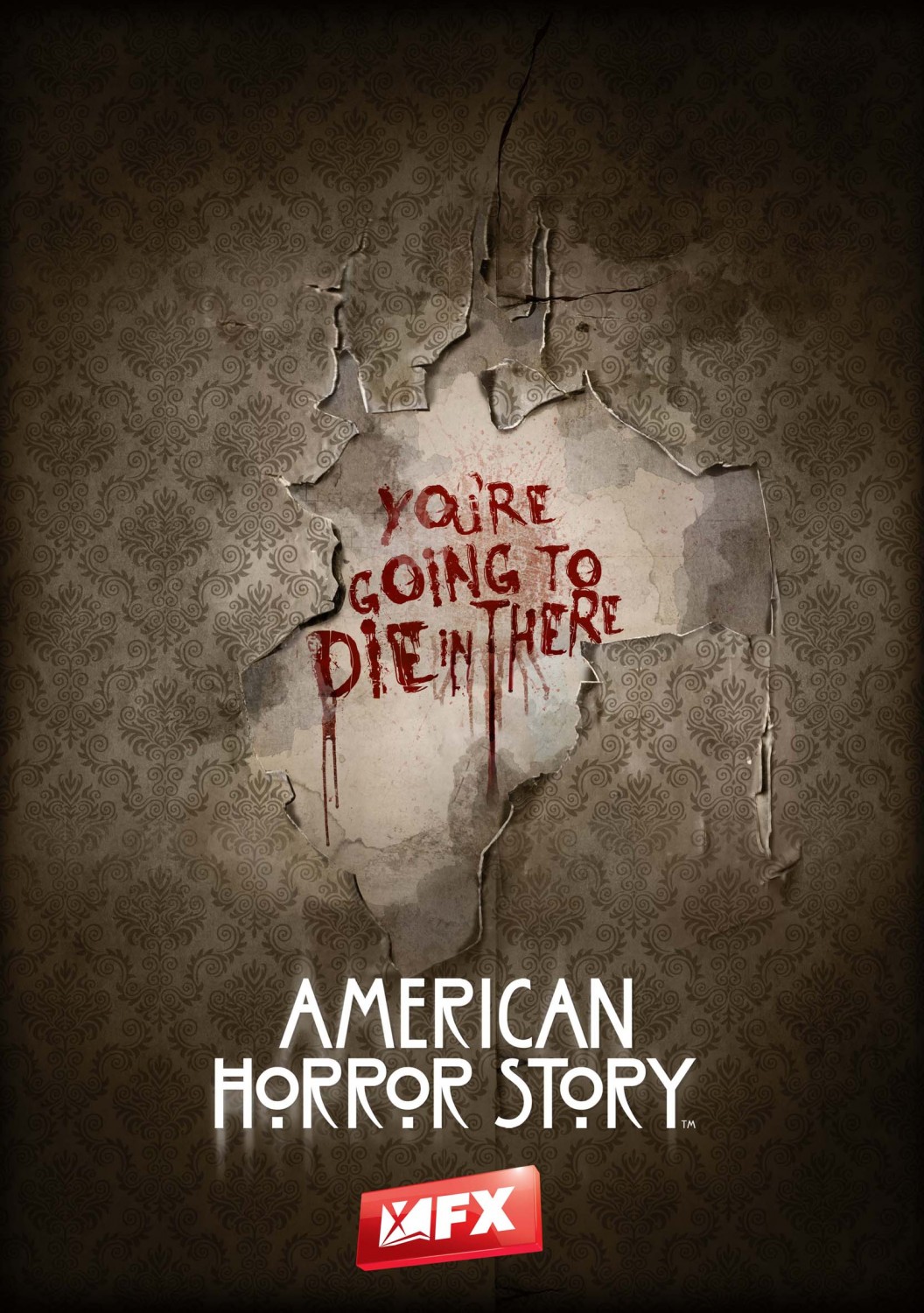
American Horror Story: Murder House


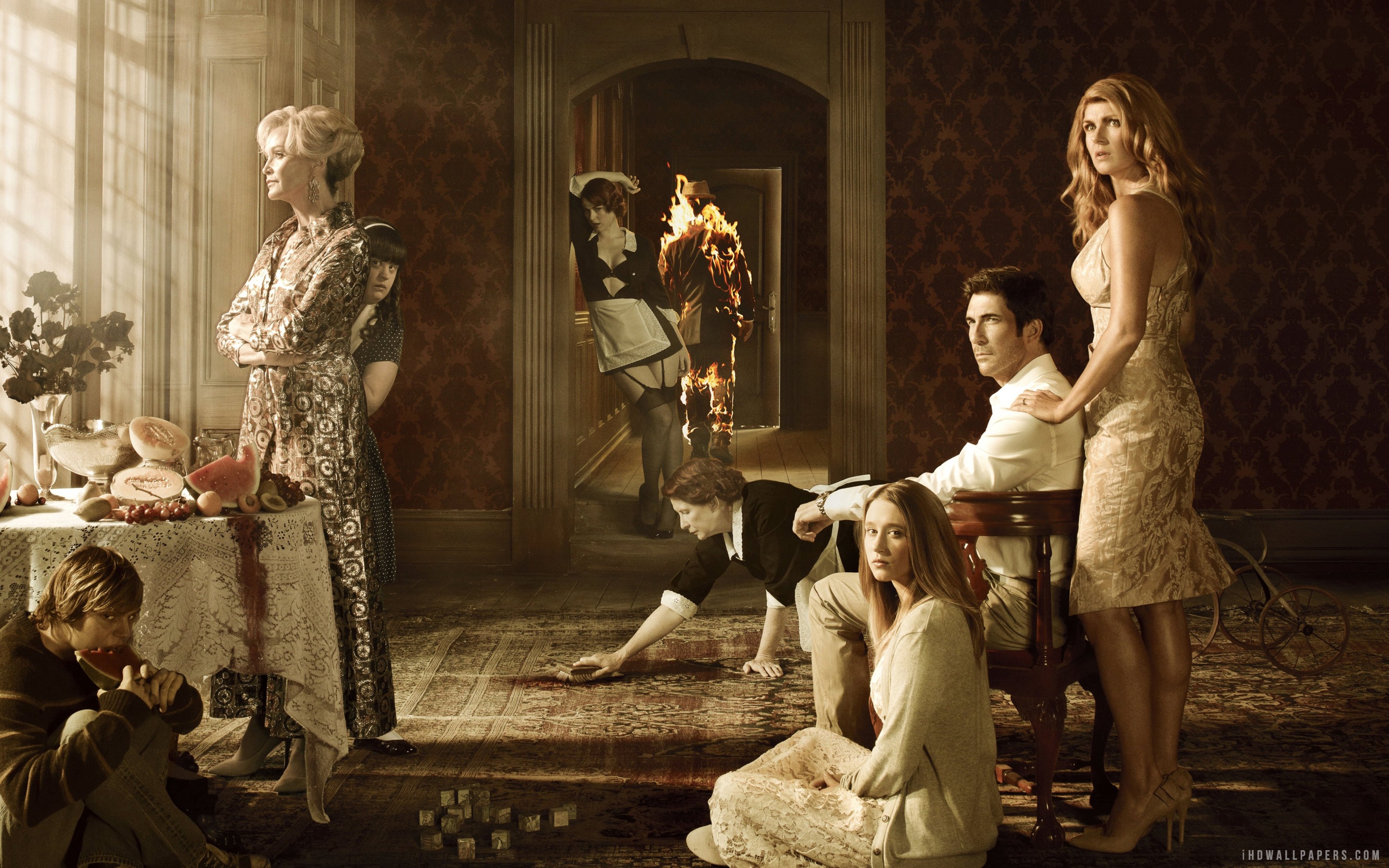
American Horror Story: Murder House is the first season of the FX television series American Horror Story aired between October 5, 2011 and December 21, 2011. The season was produced by 20th Century Fox Television, and the executive producers were Dante Di Loreto and series creators Brad Falchuk and Ryan Murphy.


The season centers its focus on the Harmon family: Ben, Vivien and their daughter Violet, who move from Boston to Los Angeles after Vivien has a agonizing miscarriage and Ben has an affair with one of this students. They move into a restored mansion, unaware that the home is haunted by its former inhabitants, most of which were murdered in the house.


The first season of American Horror Story was well received and praised by television critics and fans. The cast was generally praised, particularly Jessica Lange and Frances Conroy. The series drew consistently high ratings for the FX network, ending its first season as the biggest new cable series of the year. The first season was nominated for various industry awards, including the Golden Globe Award for Best Television Series- Drama. In addition, Lange won many Golden Globes for Best Supporting Actress, The Screen Actors Guild Award for Outstanding Performance by a Female Actor in a Drama Series, and the Primetime Emmy Award for Outstanding Supporting Actress in a Miniseries or a Movie.  Conroy was also nominated for the Supporting Actress Emmy. The main cast includes Taissa Farmiga, Connie Britton, Dylan McDermott, Evan Peters, Denis O'Hare and Jessica Lange.


*Spoiler Alert* 
The entire series is one thick plot unraveling itself and the Harmon family discovers the horrors and secrets of the house.  They try to get out and move from the house, but they are doomed from the start.  Ben sees patients in an office in the house, most of the patients he treats are spirits of the house trying to cope with their psychological problems.  Vivian is raped, and then carries for most of the season twins, one of which is her husbands, and one of which is her rapists son.  Violet, their daughter, who is the first of the family to die in the house, suffers from depression, and is in love with Tate, a spirit in the house, and little does she know, is her mother's rapist.  The sickening story unfolds with scary scenes and complex character development.


I highly recommend watching all seasons of this show.  I think that it is well made and executed terrifically.  

Thursday, February 5, 2015

The Babadook

"If it's in a word or it's in a book, you can never escape The Babadook"


The Babadook is a psychological thriller released late November in 2014. Directed by Jennifer Kent, this film follows a mother (Essie Davis) and her young boy (Noah Wiseman) as they are terrorized by a monster known as the Babadook. Essie Davis plays a single mother, named Amelia, who tragically lost her husband and is trying to raise her son as he begins displaying more and more sporadic behavior.


One of the strongest aspects of this movie is the symbolism behind the monster the Babadook and what he represents. The Babadook is a physical representation of grief and how, if one does not come to terms with grief, it will eat away at them. When I first watched the film it was difficult for me to pick up on this symbolism; however, at the end of the film there is a scene that make it very apparent. It is not until our main character Amelia accepts that the Babadook will never go away, or that grief will never go away, that the monster stops attacking her. Amelia is then seen feeding worms to the monster, or feeding into and acknowledging the grief she has for the loss of her husband, that she is able to move on with her life.


There are few aspects of this film that I have a problem with. The Babadook is introduced through a children's flip-book that is, one day, randomly found in the families basement. While having a basement leading to horror aspects in a film is incredibly cliché, the art design of this flip-book was amazing.


Every scene that contained this book left me feeling creeped out and uncomfortable. My only complaint is that the monster was not nearly as frightening as the monster in the book. The Babadook is merely a tall man in all black with some white face paint and silver contact lenses. Also the same effects used in all horror movies to create tension and panic are used in this film: quick cuts, shaky camera operation, and dark lighting.


Overall, while I did not find this film to be that frightening I did enjoy watching it. I think that it was well shot, well written and had strong underlying symbolism. If I had to give it a rating I would give it a 7/10 and would recommend giving it a chance.

Thursday, November 20, 2014

What Has Happened to Horror?

Apologies in advance for cluttering the blog with yet another post on horror cinema, but I attended a screening recently that reminded me of a topic that has been bouncing around in my head for some time now.
So, in my last post, I mentioned that I would be seeing The Exorcist at Cornell Cinema on Saturday. It was my first time experiencing the horror classic and it should come as a surprise to no one that I thought it lived up to the hype. The film was extraordinary- a slow burn character drama with a heavily atmospheric supernatural spin. However, despite being impressed, I never found myself to be scared, at least not in the way I expected to be. Having seen the endless parodies and copycats produced since the film's release, I was desensitized to the terror on screen, but still drawn to it, fascinated, studying how it worked. Compared to modern mainstream horror, the pacing was unnatural and the beats were unusual. There was a distinct absence of jump scares and the thrust of the film was clearly toward its tragic narrative and the complex characters that inhabited it. How radical that must seem now, as Hollywood appears to have it the other way around these days.
This all leads to the question: "What has happened to horror?" Obviously, the genre is still thriving and will continue to thrive as long as cinema exists and people still have the capacity to be afraid. No, what I'm getting at is the exact nature of contemporary horror, at least as far as Hollywood is concerned. It may be unfair to say this, but: Where has the creativity gone? What has become of the genre's formerly radical position? Every year, plenty of horror films come out of the the studio system, but rarely do they have something new to offer. When it isn't the same possession film we've seen a million times (The Last Exorcism, The Devil Inside, Devil's Due, Deliver Us From Evil, The Rite, The Possession), it's another derivative, unnecessary found footage attempt (Apollo 18, Chernobyl Diaries, As Above So Below) or worst of all, yet another remake, reboot, sequel or prequel to a beloved horror series (Too many to list). How many times must we revisit The Texas Chainsaw story? Does Michael Myers need to be resurrected again? Did anyone ask for a prequel to The Thing or a sequel to The Blair Witch Project?
The last horror icon?
How about some new icons of slashers and chillers? I know it's easier said than done, but I'd appreciate the effort at the very least. When was the last time an iconic character was created in the genre? Jigsaw? That was 10 years ago! Captain Spaulding? 11 years ago. And before that? Ghostface (18 years back)? Chucky (26 years)?

I think it's time we stop re-doing and ripping off old classics. Take a chance, Hollywood! Horror is possibly the cheapest type of film to make precisely because of the absence of stars, elaborate sets and big-time effects. In this day and age, it's rare for a horror movie not to make a profit because most of them are made for almost nothing. Look at the recent film, Oujia, for example. Critics hated it and I have yet to speak to a single general audience member who liked it, but financially, it was a huge success because it was made on $5 million, eventually grossing almost 10 times that figure. As Above So Below was made for the same amount and opened to mediocre reception from audiences and critics...it made 8 times its budget. Do I need to go on? Last year's Dark Skies made $26 million at the box office. That would be a fairly sad number for most films, but when your production cost $3.5 million, it's pretty fantastic. What I'm saying is: there isn't much room for a loss, so why don't studios take a chance on more original material? Some of the genre's biggest game-changers were made for nothing and went on to become enormous hits (A Nightmare on Elm Street, The Texas Chainsaw Massacre, The Blair Witch Project, The Evil Dead, Saw, Paranormal Activity...all made for less than $2 million, most for less than $1 million).
Last to mention is a type of horror cinema that seems to be going extinct in Hollywood. About two months ago, I watched The Changeling. Made in 1980 and starring George C. Scott, it was a solid haunted house film rooted more deeply in its storytelling and grief-stricken main character than the scares it produced (Kind of like the approach The Exorcist had). Unfortunately, films like The Changeling are barely attempted anymore and when they are, it's done by independent filmmakers, their work only occasionally picked up for wide distribution (See: this year's Oculus or The Babadook). Is it just to be expected that our rapid consumption, instant gratification-based society would not be able to handle such internal, psychological material? I'd like to think that isn't the case. Even with the dominance of "quiet, quiet, boo scares, " I want to believe that if The Exorcist opened today, it would still be a hit, but then again, maybe people would call it "boring" and "slow" and it would fly under the radar...Food for thought, most definitely.

Friday, November 14, 2014

2014 Ithaca International Fantastic Fest


Just a short post this week, but it's on a very relevant topic. This weekend, Cinemapolis and Cornell Cinema will be hosting Ithaca's 3rd Annual International Fantastic Film Festival. Halloween may have been two weeks ago, but this encompasses all things horror anyway. New films from around the world as well as recognized classics will be screening, with a special focus put on the theme of witchcraft.

I've never been to a film festival of any kind and despite this being a far cry from the likes of Cannes, Venice, Sundance or TIFF, it remains a reason for excitement. The occasion aligns with a weekend of relatively little work, so there will be plenty of time check out what the fest has to offer, retrospectives and unreleased works alike.

As for a schedule, my plans are not set in stone, but here's what it looks like at the moment:
 First up is Cold in July. It's not exactly a horror film, more like a crime thriller, but a second chance to see it is very welcome. The film had a far too brief release this summer and I've heard good word across the board. Tension, violence and a terrific trio of performances by Michael C. Hall, Sam Shepard and Don Johnson is expected. The film screens Friday at Cornell Cinema.
 Saturday will be throw-back day, with a double feature of The Wicker Man (the original of course!) and The Exorcist at Cornell Cinema. Somehow I've never gotten around to seeing either of these. Exorcist is less excusable, but blindspots are blindspots. Two horror classics released in 1973, one concerning cults and the other, possession. Should make for a spooky evening of viewing!
On Sunday, the festival closes, and I plan on being there for two new releases: the zany documentary of  a project gone bad, Lost Soul: The Doomed Journey of Richard Stanley's Island of Dr. Moreau and the New Zealand vampire comedy, What We Do in the Shadows. Both will be screening at Cinemapolis.
To have a local film festival, no matter how small, is such a gift. A wide exposure to a variety of films allows for the free-flowing exchange of perspectives and ideas from around the world and it ought to yield at least a handful of hidden gems. While most of the titles may be unknown, it's an environment where you're encouraged to explore and dig for little films with big riches. With Cortaca rapidly approaching, I don't expect the majority of students to pay particular attention to this cultural event. Drinks will be spilling and parties will be bumping for sure. As for me, you can keep your football game...I'll be digging for buried treasure at the cinema.

Thursday, October 30, 2014

'Tis the Season to be Scary

Happy Halloween, everyone! Once again, we are nearing the end of what many film lovers affectionately call "Horror month." A time for catching up on genre classics both old and new, the month often provides a number of opportunities for adventurous viewing. Schoolwork has limited my movie intake this year, but I was able to land a handful of fun ones including The Evil Dead and Hellraiser (which is more bloody and gross than fun, but you know what I mean). While I'm in the festive mood, I'll take this week's blog post as an opportunity to share my thoughts on a few of the best chillers, screamers and blood-curdlers out there. We all know the reputation of such films as Psycho, The Shining, Halloween and The Texas Chainsaw Massacre, so there's no use in trying to add to their legend. Instead, I'll be presenting some of the lesser-known greats that deserve to stand toe-to-toe with the more established masterworks.
First up is Herk Harvey's low budget tale of ghoulish dread, Carnival of Souls. Independently made and released in 1962 to muted reception, the film follows the lone survivor of an auto accident that claimed the lives her friends. Spurred by a spontaneous road race with a car full of like-aged boys, her vehicle veers off a bridge and into a river. Our protagonist emerges remarkably unharmed and attempts to move on with her life, taking a job as a church organist in a small town in Utah. Strange occurrences begin to take place, as she has visions of a ghostly pale man everywhere she goes. Meanwhile, an abandoned carnival on the edge of town starts to emit a bizarrely enticing energy to the young woman. She knows not what the creepy place holds, but she can't help but be drawn to it, repeatedly visiting, perhaps one time too many. The film plays like an 84 minute episode of the Twilight Zone and goes down easy, devoid of any pretensions or big philosophical messages. It's twisty, atmospheric and terribly enigmatic all the way through. Endlessly eerie and creatively macabre, it's a splendid little gem of 60's b-horror and I highly recommend it. Also...
...get ready to have this guy haunt your dreams.
Now onto another 60's treasure, Hour of the Wolf. In 1968, Ingmar Bergman made a horror film and it was every bit as amazing as one could imagine. An artist and his pregnant wife vacation on a remote island where they discover they are not alone. A gaggle of wealthy socialites live nearby in a monstrous mansion. They know of the artist's work and invite him to a dinner party, where they proceed to playfully insult him. But this isn't the end of the story. During his time on the island, the artist begins to mentally breakdown, experiencing surreal encounters and reliving painful memories. It all culminates in a final 20 minutes that is absolutely terrifying. Here is a taste of what I'm talking about (trust me, this spoils nothing):
Coupling disturbing imagery with Bergman's trademark existential angst, the film is both frightening and fascinating- a rare mix. I want to study it just as much as I want to turn away from its horrific sequences. It isn't Bergman's finest hour (In my opinion, that would be Persona), but it is brilliant nonetheless.
Last but certainly not least is one of my favorite films of all time: Kwaidan. Masaki Kobayashi's masterfully-paced film is an anthology covering four stories based on tales from Japanese folklore. The horror is mostly subtle in this one, so while it might not be as "scary" as the other two films mentioned, its storytelling ability is the strongest. Because it is difficult to talk about the film as a whole without highlighting each section, here are some brief summaries (with screenshots, of course!).
THE BLACK HAIR - A poor swordsman abandons his wife despite her pleas to attain greater social status with a woman of a wealthy family. He is sick of the impoverished existence and seeks a higher quality of life at the risk of losing the one solid relationship he has. Higher social status is indeed attained, but the swordsman's mind often drifts back to his wife, especially since the woman he married has revealed herself to be cold and unloving. He decides to return home, but will his wife still be there and can things ever go back to the way they were? A great opening tale with a startling final trick that effectively sets the tone for the rest of the film.
THE WOMAN OF THE SNOW - A woodcutter has a ghostly encounter with a lethal spirit one stormy winter night and makes a pact with it: The woman promises to spare his life if he agrees to never tell a soul about what he witnessed that evening. The man takes the agreement and time passes. Spring comes and then summer. He marries a lovely woman who is new to the area and all seems well, but he cannot shake the memories of that fateful night and begins to question if it really happened and if he should go ahead and tell his sweetheart about it. I'll leave it there, because it gets very interesting after that. Though it's hard to choose, this might be my favorite of the four. It unravels slowly, like a campfire yarn and next to the tale that follows it, the segment contains some of the film's most striking compositions.

HOICHI, THE EARLESS - A blind musician named Hoichi is visited by the ghost of a samurai and invited to play for a sinister group of spirits. His skill in playing the biwa is considerable and he humbly accepts the offer, not knowing the exact nature of his audience. He goes night after night and once his priest friends catch on to what has been happening and realize the danger of the situation, they devise a clever plan to help Hoichi go undetected by the spirits that will hopefully drive them away for good. Of course, things don't go quite as planned. The longest story of the group and the most complex, "Hoichi" is probably the most popular section of Kwaidan (And for good reason!)
IN A CUP OF TEA - A writer sees a face in his cup of tea. He dumps and refills the cup several times only to find the face sporting the same bizarre smirk each time. Upset by this encounter, he finds himself being confronted by a trio of supernaturally-endowed assassins later that night. It's probably the most cursory of the four stories, but still entertainingly executed and impeccably crafted.

The most expensive production in Japan's cinematic history at the time of release, Kwaidan is grandly envisioned and thoroughly chilling in each of its four conclusions (as well as in the conclusion of its framing story, which took me completely off guard). I've taken up too much blog-space already with this film, so I figure I should end it there. If you're looking for expansive, eerie and beautifully shot horror, look no further than this film. It is truly one of the best of the genre.

Friday, October 24, 2014

The Found Footage Phenomenon

While it can be traced back to the 1980's with Cannibal Holocaust, the found footage film has proven itself to be the genre of this generation. Invigorated by the success of The Blair Witch Project and kept afloat by the likes of Cloverfield and the Paranormal Activity series, found footage has become hugely popular in the last few years, largely manifesting in the form of horror films. The low cost of production  has drawn young indie filmmakers and studio executives alike, and in a time when most people have easy access to cameras, the appeal has been widespread. However, signs of overexposure are starting to show. We're beginning to be saturated with found footage I think we've all heard the complaints and the calls for a return to traditional horror filmmaking. I know that I'm getting tired of it, so what can be done to inject some new life into the approach?
Let's start by breaking down a classic. I only just watched The Blair Witch Project for the first time a week ago and despite some skepticism going in, I was thoroughly impressed by the film. Without a doubt, it earns its reputation as the king (or is it queen?) of found footage horror and there are many reasons for this. First of all, the realism of the piece is outstanding. Unlike most films of its kind made today, a lot of care was put into making the audience buy the events as true. This is how it was sold and this is also how it functions cinematically. Video quality is grainy and the editing is choppy, stopping and picking up in the way that you would expect actual footage to be arranged. There is no omniscient camera filming the action from alternate angles- everything we see is filmed by the main characters. Nothing of the possibly paranormal forces is ever witnessed. All of the horror originates from the insinuations of creepy faraway audio and the monsters the audience imagines in the darkest corners of the screen. It's also psychological and emotionally charged by the frustrations of the characters. An immersive, strongly unsettling experience is what The Blair Witch Project is and if more contemporary found footage took its lead, the fatigue of the genre might not run so deep.
Taking a complete 180, I'm going to talk about a film I just watched the other day called Snow on tha Bluff. It's found footage, but it is horror of a very different kind. The film follows a man named Curtis Snow in his daily life in "The Bluff", an extremely poor and crime-riddled area in Atlanta. At the beginning of the film, he steals money and a camcorder from a trio of naive college students passing through the Bluff, looking to score some drugs. The stolen camcorder is our means of vision throughout the rest of the film and what it captures is uncompromisingly realistic. Although it stumbles in a few areas, Snow on tha Bluff must be praised for its incredible believability. It swerves into documentary territory on multiple occasions and I'm actually not entirely convinced that everything in the film is fabricated. Ultimately, it serves to highlight something that the vast majority of found footage films never even bother to approach: real world issues. The "stars" of the film are real people living in the Bluff and playing themselves and the film tackles subjects of fruitless crime and cyclical poverty in a very, very raw way. Now why can't more found footage work like this? If found footage in horror allows the audience to empathize with the characters experiencing the scares, then Snow on tha Bluff proves that found footage can also make the audience step into the shoes of a real person and live out their reality.

As evidenced in The Blair Witch Project, found footage horror has the ability to be realistic and frightening in the right hands and the example of Snow on tha Bluff introduces an element of social commentary and real world connections that could take the found footage to new heights. A case can be made for the genre being merely a fad, but I personally think it will be around for awhile, so let's see if we can make it better and stretch the cinematic capabilities to their limits.

Thursday, August 28, 2014

Long Live the B-Movie

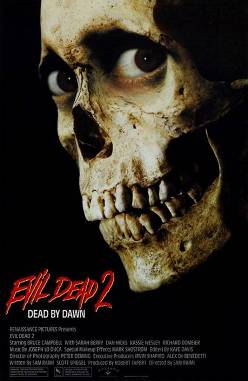
I'm finally back on campus...back for another semester, another year of college life and all the challenges, stress and struggles that come with it. I find myself transitioning into the IC flow once again and with the first day of classes now over, the summer's relaxation seems distant. Last night offered a nice opportunity, though. It was a chance to become immersed in the atmosphere of a film favorite one last time without the bothersome reminders of deadlines and upcoming assignments hanging over my head. I had a 9am, but my materials were all together and I had nothing better to do, so I figured why not pick something fun and practice some cinematic meditation. Naturally, my choice was Sam Raimi's Evil Dead II.
Now, Evil Dead II was never a film I expected to love. It's a bloody, zany horror comedy with extensive practical effects work and a wild, untamed energy. The film is relentless in its commitment to the weird and outlandish, the demented dark humor and the gory kills. Prior to this summer, the world of 80's horror schlock was not one I was familiar with. Stubbornly holding onto my Criterion collection and the ponderous art house cinema I treasured, there was something about that era/genre mix that made me uneasy. The addiction to foreign art house film is overstated, as I am not one to shy away from the occasional blockbuster (Guardians of the Galaxy, anyone?) or hesitate to revel in some unabashedly comedic cheese (I'm looking at you, Coming to America). Still, 80's b-horror was an untapped area for me and I wanted to finally give it a shot.

The power of camp compels you!
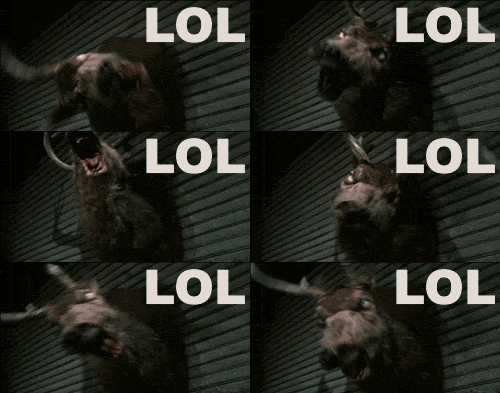
Fright Night was the beginning of my little endeavor. Not a perfect film, but perfectly entertaining for what it is. Vampires, flamboyant hair styles, an 80's dance club and Roddy McDowall. All good fun, but I was only scraping the surface. Next came the gut-busting Re-Animator, the ridiculously unintelligent The Stuff and the comic book come to life, Creepshow. It all crescendoed in my first viewing of Evil Dead II. The film was mad. Limbs were flying. Cartoonish blood geysers everywhere. Bruce Campbell gets into a life-or-death scuffle with his freshly possessed right hand and a mounted deer head comes alive and laughs hysterically as all the other objects in the room follow suit. 

Taxidermy has never been so lifelike.
By the time the credits rolled, I knew I had just seen an instant favorite. The film didn't take itself too seriously and had the best balance of horror and comedy that I'd ever seen. The one-liners were goofy, the story was strung out and yet, there was something endearing about it. This wasn't the end of the horror-thon, though. Twenty films (including the dreadful Maximum Overdrive and Galaxy of Terror) would be viewed before my movie intake went back to normal, but none would reach the heights of Evil Dead II.

Don't worry, I'm getting there!
So, patient reader, why is it that I have gone to the trouble of sharing my adventures in the 80's campiness of ghosts and ghouls, monsters and slashers? It's because today we talked about passions. What do we want to do? What makes us happy? I've recently had my doubts about filmmaking. I question my abilities. Am I up to it? Is it genuinely enjoyable?

Peter Jackson, circa 1991
Perhaps I should pair Peter Jackson's Dead Alive (AKA Braindead) with Evil Dead II on this point. Here are two films that convey an excitement, a zest for filmmaking in every frame. With the energy, the tone and the sheer creativity of visual effects, scenario setups and comedy, they showcase a go-for-broke mentality and no matter how bizarre the subject matter is, one can't help but admire the spirit of these two directors. I'm not the only one that saw past the gore and bad taste, as Raimi was given the chance to direct the Spider-Man trilogy and Jackson went on to make Lord of the Rings. Noticeable passion kickstarting flourishing careers and more ambitious projects.
Not bad, Mr. Jackson.
Watching Evil Dead II again reminded me of the fervor that can come with filmmaking (even under extreme budget constraints). I won't necessarily be breaking into the realm of b-horror this semester, but I aim to recapture the same passion that was expressed in so many of the 80's horror flicks I viewed this summer. For all their indulgences and gross-out tactics, these movies represent a level of creative commitment and raw enthusiasm that is often missing from today's soulless studio tentpoles and pandering, end-of-the year Oscar bait.

Long live the B-movie!