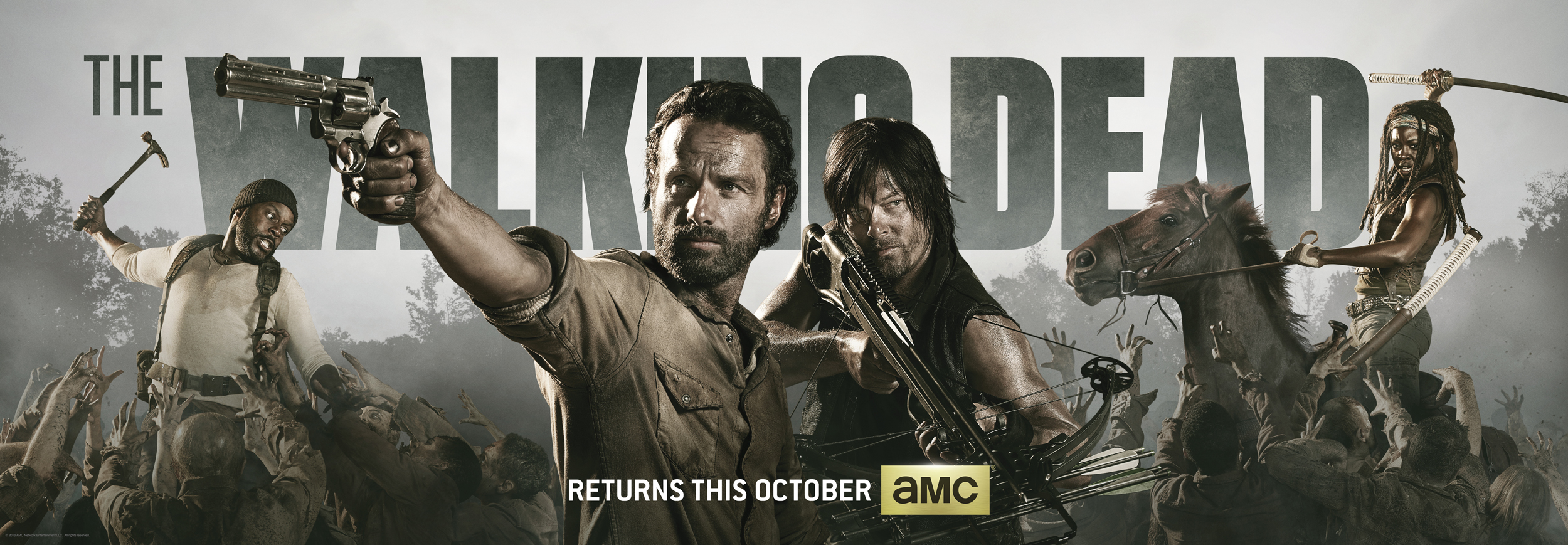
Hello there. I'd just like to take a minute out of your busy, busy schedule to discuss
The Walking Dead. More specifically, I'd like to discuss the season premiere that came out last Sunday, so if you haven't watched it yet, but intend to, I'm giving you a heads up that there may be some spoilers coming your way. What
The Walking Dead does very well--at least in my opinion--is portraying characters and the human condition. Basically, the writers for the show (Frank Darabont and Scott M. Gimple) do a wonderful job subtly showing viewers how, even though there's a zombie apocalypse going on, the characters still seem to maintain their most human characteristics.

First off, let's talk about Rick. Rick Grimes--father to Carl and leader of the "resistance"--is focused on a lot in the season premiere. In the opening of the episode, we see Rick tending to the garden and pig pen which he apparently built in the off-season. As a good father, Rick tells his son not to get attached to the pigs by naming them since they're simply going to be used for food. It turns out that Rick has already given them names of his own. Like a normal person, he himself has gotten attached and cares for the things he's taking care of, basically like pets. Later in the episode, Rick finds a woman wondering around in the woods. In the midst of a zombie apocalypse, many people would have just killed her--as previous episodes have shown--but Rick wants to help her. The only problem is, his past experiences have left him very suspicious of strangers. He could have just killed her right then and there, but, holding on to what makes him human, he chooses to try and help the woman.
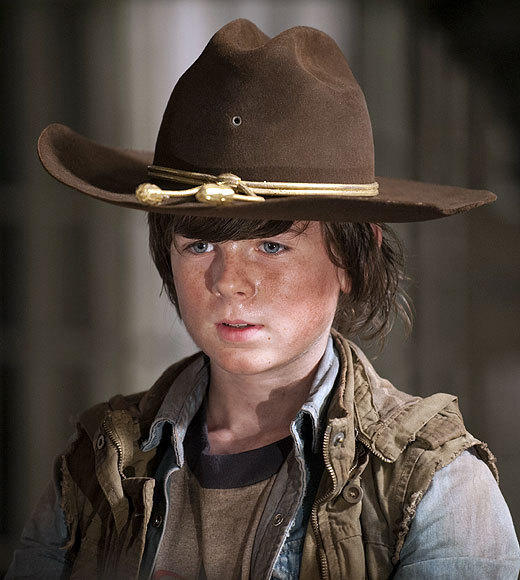
Next up is Carl Grimes. Carl is Rick's son. He's a character who viewers typically, well, strongly dislike. Nobody quite knows why, but we all dislike him. Strongly. Anyway, in this episode, Carl names the pig as previously stated. He gets attached to his "pets" like any other normal kid would do. He also accidentally slept in due to his reading comic books with a flashlight until really late at night. What Carl, and even Rick, often forget, is that he's still a child. Despite his many attempts to act older and more mature than his age, he is still indeed a kid. This is strongly highlighted later in the episode when he refuses to go to story time that's held everyday for the kids. He says it's too childish for him to go to, but he later sneaks into the room so that he can listen to the stories. The season premiere of
The Walking Dead really did a great job subtly reminding viewers that the stubborn, protective guy they're watching is actually still a little kid.
The woman in the woods, Clara, is a character that appears towards the
beginning of the episode and kills herself towards the end (sorry, I said there
may be spoilers). As her and Rick walk through the woods, she talks about her
husband and what he taught her. She explained how he taught her what was often
necessary to survive in a post-zombie apocalyptic world. He taught her how to
steal, betray, and sometimes kill other people in order to stay alive. What was
so touching about the writing in this scene was that it so strongly highlighted
people's tendency to want to do good. While the need to survive may out-trump
our original instincts, most people are not born complete savages. In order to
be able to do such terrible things, one must often be shown how.

The final character I'd like to discuss from The Walking Dead's season 4 premiere is Bob (yes, just Bob). Bob is a new character who we don't really know anything about. The reason for his appearance in this post is what he did in this one episode. While the characters were searching around a convenience store for supplies, we see Bob stop in the alcohol section of the store. He stares at a bottle of wine, seems conflicted whether or not to take it, then eventually begins putting it in his bag. He then stops himself and puts the bottle back on the shelf. Bob's actions could indicate that he's a recovering alcoholic. While he's searching for necessary supplies in order to survive, he still has trouble fighting his urges and desires. The writers did a phenomenal job with this scene because, while nothing is explicitly said, viewers can deduce that Bob most likely struggled with alcoholism at some point in his life and is still dealing with it. It doesn't matter whether or not there are zombies knocking at your front door. If a person has an addiction to something, the urges don't simply go away overnight.
In the Season 4 premiere of The Walking Dead, the writers truly did an excellent job emphasizing the human condition. The episode showed all the characters are still human despite all the nonhumans trying to eat them.