Showing posts with label hybrid. Show all posts

Tuesday, March 3, 2015

Forrest Gump

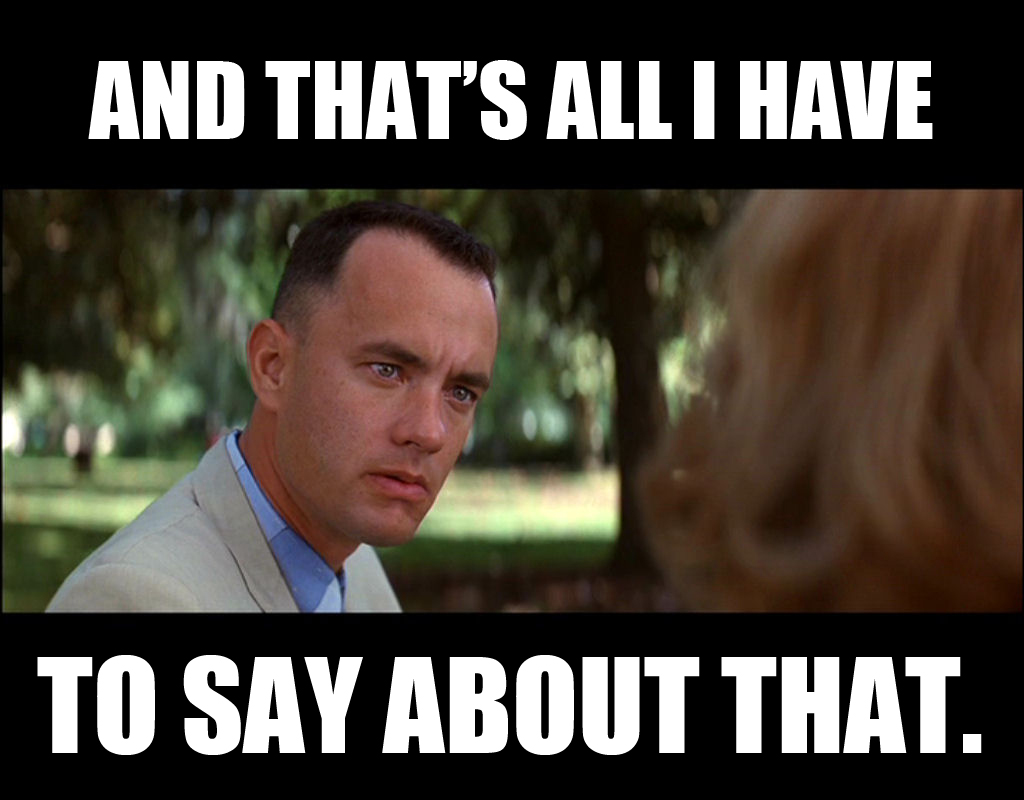
Forrest Gump is a 1994 American epic romantic-comedy-drama film (genre hybrid) based on the 1986 novel Forrest Gump by Winston Groom. The film was directed by Robert Zemeckis and starred Tom Hanks, Robin Wright, Gary Sinise, Mykelti Williamson, and Sally Field. The story beautifuly illustrates several decades in the life of Forrest Gump, a slow and naïve, but good-hearted and athletically gifted, man from Alabama who witnesses, and in some peculiar cases influences, some of the defining events of the latter half of the 20th century in the United States (the period between Forrest's birth in 1944 and 1982). The film is much different from the novel on which it was based, including Gump's personality and some of the events that took place.


The main sets took place in late 1993, mainly in Georgia, North Carolina, and South Carolina. Extensive visual effects were used to incorporate Gump (Tom Hanks) into archived footage and to develop other fun scenes. A compelling soundtrack was featured in the film, using music intended to pinpoint specific time periods portrayed on screen. Its commercial release made it a top-selling soundtrack, selling over twelve million copies worldwide.  Some of the songs include Hound Dog by Elvis Presley, Fortunate Son by Creedance Clearwater, Respect by Aretha Franklin, and many more American favorites. 


This famous film was released in the United States on July 6, 1994.  The film became a commercial success as the top grossing film in North America released in that year, being the first major success for Paramount Pictures since the studio's sale to Viacom, earning over $677 million worldwide during its theatrical run. Forrest Gump holds a high rating of 8.8 on the Internet Movie Database, which makes it the 13th best movie of all time for the website and in 1995 it won the Academy Awards for Best Picture, Best Director for Robert Zemeckis, Best Actor for Tom Hanks, Best Adapted Screenplay for Eric Roth, Best Visual Effects, and Best Film Editing. Forrest Gump also easily attained multiple other awards and nominations, including Golden Globes, People's Choice Awards, and Young Artist Awards, among others. Ever since the film was released, many variations of interpretations of its protagonist (Forrest Gump) and its political symbolism have been made.  


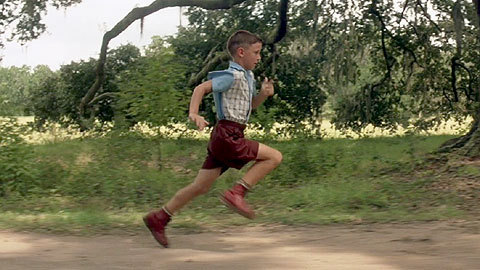
In 1996, a themed restaurant, Bubba Gump Shrimp Company, opened based on the film and has since expanded to multiple locations worldwide.  If that doesn't show you have much of an impact this film made, I don't know what will!  One of the scenes of the American classic of Gump running across the country is often referred to when real-life people attempt the feat. In 2011, the Library of Congress selected Forrest Gump for preservation in the United States National Film Registry as being "culturally, historically, or aesthetically significant".  


After all these facts, can you even argue that this movie isn't the best movie of all time?! If you haven't seen this film yet, it's time to stop whatever you are doing, sit down, and focus your attention on the best movie of all time. 

Thursday, September 24, 2009

Stelarc

Stelarc's Handswriting "Evolution"
Maki Gallery, Tokio, 22 May 1982. Photo by Akiro Okada

“…Working in the interface between the body and the machine, he employs virtual reality, robotics, medical instruments, prosthetics, the Internet and biotechnology. Stelarc’s art includes physical acts that don’t always look survivable-or as science fiction novelist William Gibson puts it in his foreword, “sometimes seem to include the possibility of terminality.” (From Stelarc, The Monograph, The MIT Press, Cambridge Massachusetts, 2005)

Is the actor, artist, filmmaker, farmer, soldier, different in any fundamental way in terms of the reality of his/her life? Are the players of online games, a stripper in Second Life, an Ebay entrepreneur, living a life less “real” than the banker, the Jihadist or the Olympic marathon runner? And if so, what or where is the difference? Is it in the space where the performance takes place, is it the intensity of pain or pleasure or the time spent in a particular activity that defines reality? if not, then what? How is performance different from real life (RL)? How is RL different from virtual life (VL)? How do both coexist? Other than questions of embodiment, which many theoreticians deal with, they are in a certain way indistinguishable from each other. In Koyaanisqatski, architectfilmmaker Godfrey Reggio evidences how humans are part of the pattern or flow of information that constitutes the world at large. The utilization of technical means such as high speed or time-lapse photography allows Reggio to discover and reveal those things that make us who we are in the time and place where we find ourselves, in this “life out- of-balance”.
From "Roboethics and Performance"
Arturo Sinclair, Krems 2008