For those of you who have
read the books, you know why this series has become the new talk of the town,
and for those who haven’t…well, lets just say you are missing out on something
that will forever be one of the worlds greatest franchise’s. The writing, the themes,
the characters, the actors, and the cinematography are only a few credible
aspects of the film that makes it so appealing and such a universal phenomenon.
Themes
I’ve heard many people talk
about the horrible message that The Hunger Games represents. They complain that
it is setting a bad example for society and showing kids that it is okay to kill
each one another. However, every time I hear someone say this, I can’t help but
want to turn around and show them the other great, empowering things we see in
these stories. As well as point out the
fact that they are books/movies and, like any other action based movies, they
are based on tragedy in which we conquer and look past through the sympathy and
actions of the heroic character (in this case Katniss). It’s what makes a great
movie a GREAT movie. Without a set back or type of devastation or conflict,
there wouldn’t be much of a film entertainment business, if any at all. So lets push that aside and look deeper into
the story and look at the more meaningful and relative themes that bring much
more meaning to the story.
Beating The Odds- This, in its own, entails several themes. First is, poverty. Panem, which is described as
the United States divided up into twelve districts in a post apocalyptic world,
with each district based on wealth, starting from District 1/ The Capital who
are extremely rich, to District 12 who are almost unbearably poor. Katniss and
Peeta live in District twelve and not only struggle to find enough food to feed
themselves and their families, they are at the largest disadvantage within the
hierarchy since they have they option to exchange an extra ballad with their
name in the ballad of potential tributes of the games for a trade of food and
essentials for their loved ones. And not only that, they are weaker and not as privileged
as the other Districts who can afford food and useful weapons, yet they come
out stronger and most experienced than the others because of their unprivileged
situations at home where they had to fight for there food and go over and under
to make ends meet.
Another is Individualism. The tragic and stressful
situations each tribute is put under to save their own life, let alone take the
life of another to do so is enough to draw one out of their right mind. Yet, Peeta is determined to not let the
temptations take over who he really is. He wont let the Capitals influence of
murder and betrayal become his new identity. Instead he dies the opposite. He
states that he doesn’t want to die as anyone but himself within the games. He
doesn’t want to be a murderer, he would rather die true to himself than live as
a different person.
These themes alone relate so
much to real life and can be taken into context of our own lives.

Love/ Compassion- Whether real or not, love is a major theme in the story. Later in the
story we find out that Peeta, unbeknownst to Katniss, is in love with her. The results of this love façade played a
major role in the life of the characters, literally and figuratively,
especially with them both winning the games. Also, we see the compassion that pours out
from many of the tributes, such as Rue and Katniss who made a pact to protect
eachother, and did until their fate made them part.

Characters/ Actors
Katniss/ Jennifer Lawrence-
It is inevitable to say that Jennifer Lawrence is going to be the new Meryl
Streep of our generation. She has already won two awards, a Golden Globe and an
Oscar before the age of 25, and has captured the world with her profound talent
and likable personality. It is arguable
that her role as Katniss is what sparked her career, but it is fair to say that
it did and forever will be the role that made us remember who she was. Katniss is a very strong- headed upper
teenaged girl who has sacrificed her life for her sister to participate in the
annual Hunger Games. From the beginning
we see her struggle on the brink of death and continue to do so throughout the
movie. She is fierce and hungry for
life, yet vulnerable and very compassionate.
This, as you could imagine creates its own conflicts and Jennifer
Lawrence undeniably does an amazing job with displaying both of those
characteristics in a way that is believable and realistic.

Peeta/ Josh Hutcherson- Peeta is also very compassionate yet doesn’t
possess the same urge for survival as Katniss. He is more of a follower and
hides from danger instead of facing it.
Josh Hutcherson also embodies his character so well and brings the
character to life through his great acting and chemistry between him and
Jennifer Lawrence.

Besides Katniss and Peeta,
the cast is filled with many unique and important characters. There is Gail
(Liam Hemsworth), who is Katniss’ best friend and sort-of love interest that
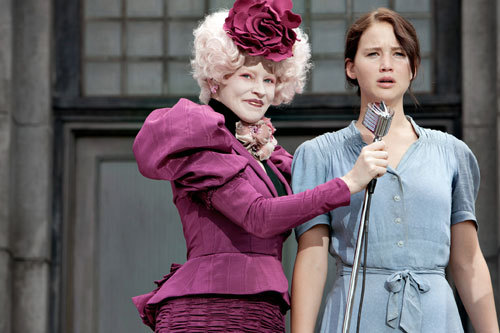
also taught her much of what she knows about hunting. Then there is Effie Trinket
(Elizabeth Banks), the escort of the tributes. And then of course the tributes
themselves. All are tremendously talented and make this story come alive.
Cinematography
Directed by Gary Ross with
cinematographer Tom Stern, The Hunger Games broke records in the box office and left the
audience talking. Though, unfortunately it didn’t get the best rep. as many
complained about the changes they made to the story by not following the book
and the unfavorable layout of the arena, the film was still very visually
appealing. Gary Ross did a great job
telling the story, and Tom Stern did a wonderful job in creatively capturing
all of the elements of the story.
Catching Fire has finally hit
theatres and I cant wait to see what masterpiece they have created now. I
expect that they kept to the original
story based on the backlash of The Hunger Games, as well as will blow all the
competition out of the water, like it did the first time too! Good luck getting a ticket, and may the odds
be ever in your favor!


