Showing posts with label japan. Show all posts

Thursday, March 26, 2015

Tengen Toppa Gurren Lagann


Gurren Lagann is the kind of animated television series that lets you relive all the fun you had watching saturday morning cartoons as a kid every time you see it. The story gets so insane that near the end, giant fighting robots are throwing planets at each other! The characters are well developed and definitely give a good performance in the midst of an intense action sequence. Gurren Lagann is considered a classic in the animation world and it only gets better every time you watch it.
The story centers around two boys from Jeeha Village, a city that resides underneath the surface of the Earth. Kamina and Simon desperately want to reach the surface to see what lies outside the city walls. In a moment of terror, a giant beast falls through from below into their city and they are forced to fight for their lives. They battle with a small robot they found while digging and they pilot to defeat the beast, eventually leading to their escape to the surface. From here on out, Kamina and Simon fight along with other humans to take back control of the surface from the oppressive Spiral King with the help of their mechanical friends. The plot escalates far beyond this however, and they eventually travel into deep space, constantly gaining more and more powers. Each episode gets more and more ridiculous as the series goes on and it's a ton of fun.
The series gets a lot of praise for emulating the feeling of a over the top Saturday morning cartoon. Not only did it produce awesome battle scenes and finishing moves, but it did a lot to redefine what giant fighting robot shows could potentially do. There are twists and turns all throughout the series and there are somethings you could have never expected to happen. The whole tone of the show could do a one-eighty in an instant and it really keeps the audience engaged in what is happening. The first time I watched the series, I watched the last twelve episodes in a row because I was so invested.
Overall, Gurren Lagann is one of my favorite animated shows because it balances over the top action with a serious plot very well and at the same time, it's so much fun to watch.

Thursday, March 19, 2015

Akira

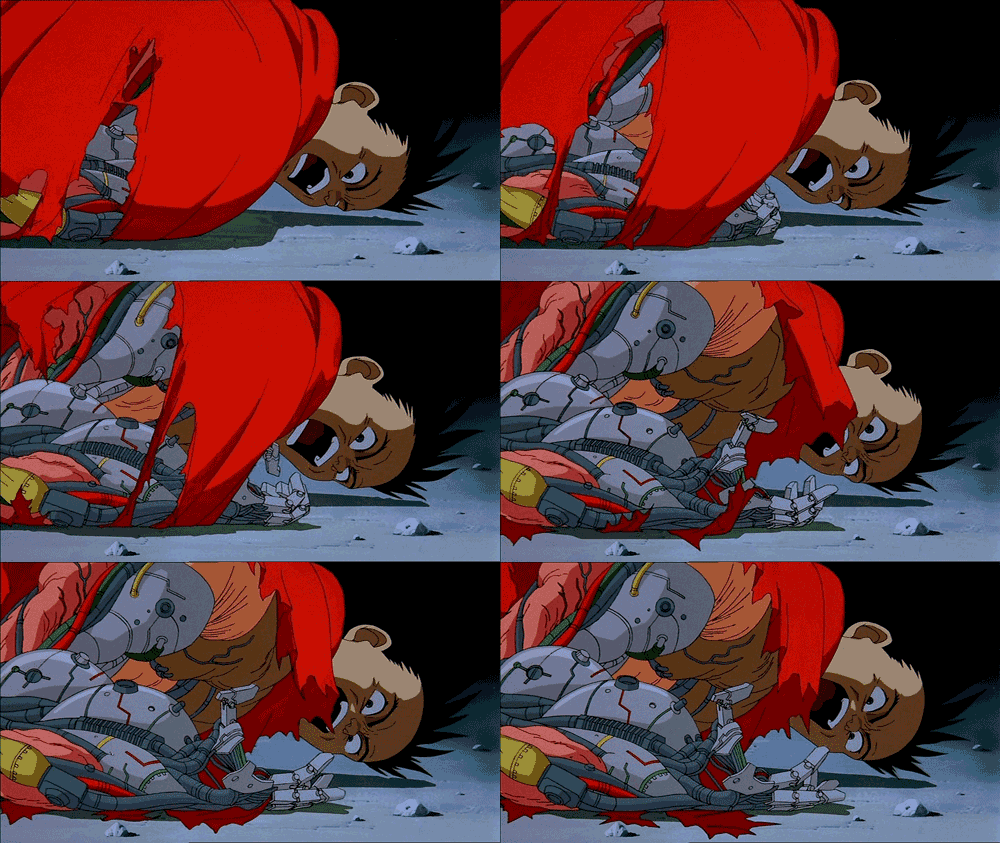
I first saw Akira over winter break last year in a movie theater near my home town. It had been over twenty-five years since its original debut in Japan but after seeing it for the first time, I understood why it is so critically acclaimed to this very day. Not only was the animation far ahead of its time, Akira revolutionized the genre and allowed more animation like it to be localized to a western audience, specifically the U.S.A.     
The story takes place in the year 2019, where the original Tokyo has been destroyed in nuclear war and has been rebuilt as Neo-Tokyo. The plot revolves around Shotaro Kaneda, the leader of a motorcycle gang, and Tetsuo Shima, his best friend. Throughout a series of strange events, Tetsuo is transferred to a top secret government facility where they run tests on him and discover that he has the potential to use unbelievable psychic powers. Consumed by his own incredible strength, Tetsuo goes on a rampage, destroying everything in his path. He learns about a being that is very similar to himself named Akira, who has been locked away by the government and goes on a mission to confront him. Meanwhile, Kaneda must try to talk sense into his friend before the entire city is destroyed again and millions of lives are lost.  
Akira pretty much set the standard for Japanese animation after its initial release in 1988. It is action packed, over the top, and a hell of a lot of fun. It is very bloody and violent which some people say distract from the complex story that is going on around it but I disagree. It might be because I have developed a strong stomach for gore over the years, but I thought the violent scenes, especially the most brutal ones, really complimented the movie overall as it is an epic animated science fiction thriller. The animation is still breathtaking to say the least. In a time where animators didn't have the luxuries of the advanced technology we have today, it is unbelievable how much work and dedication went into creating this movie. From intense fight scenes to serene pans of landscapes and environments, Akira really nails it in every sense of the word.    
Overall, Akira is a classic in Japanese animation and it's hard to think what animation would be like today if this masterpiece was never created to inspire thousands of animators working today.


Thursday, February 5, 2015

Evangelion: 2.22 You Can (Not) Advance

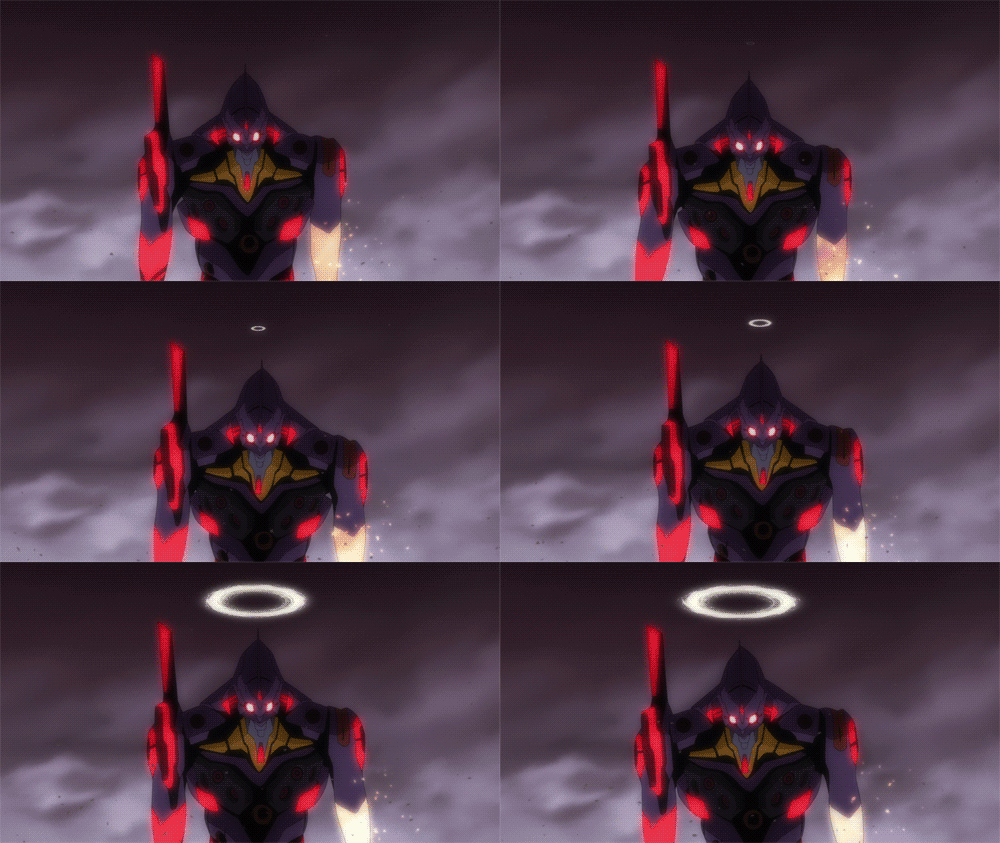
     This week, I was finally able to sit down and watch the second movie in the Evangelion movie trilogy, Evangelion: 2.22 You Can (Not) Advance. In comparison to the first movie, it has better action, better animation, and drastically deviates from the original storyline in more ways than one. Overall, it was a complete upgrade from the first movie and a fantastic addition to the Evangelion franchise.

     The story picks up right after the events of the first movie. Shinji Akari and Rei Ayanami have worked together thus far to stop the advancing angels that have come to Earth to completely annihilate the entire planet. In the middle of another angel fight, a new and powerful evangelion emerges (piloted by a girl named Asuka Soryu) and defeats the angel single handily. Shinji and Rei begin to work with Asuka to strengthen their forces but they are far from the perfect team. Asuka acts very stubbornly and rude and Rei remains quiet and conserved while Shinji struggles internally with the weight of the human race on his shoulders as well as a crippling sense of loneliness. Through many hardships and struggles, the three pilots must defeat seemingly stronger enemies one after the other as humanity's last line of defense in preserving the lives of millions.


     While the first movie set up a good foundation and was a nice way of revamping the series as a whole, it was missing a lot that was looking forward to seeing in the second movie, namely the addition of Asuka as the third Evangelion. Although she can be very off-putting to most of the characters in the movie, she is a very complex character that was illustrated very well in the original series. With that being said, halfway through the movie, something involving Asuka happens that caught me completely off guard. The deviations between the movie and the original series suddenly changed from minor things to completely rewriting the plot. It definitely led to some fantastic fight sequences and emotional moments, but I won't know if it was the right decision to make until I see the third and final movie. At this point, they have completely changed the outcome of the series and I am excited to see what they do with it.


     Overall, the second movie is definitely my favorite out of the two and I'm hoping that they take it to the next level in the final installment of the movie adaptations.      

Thursday, January 22, 2015

Evangelion: 1.11 You Can {Not} Advance


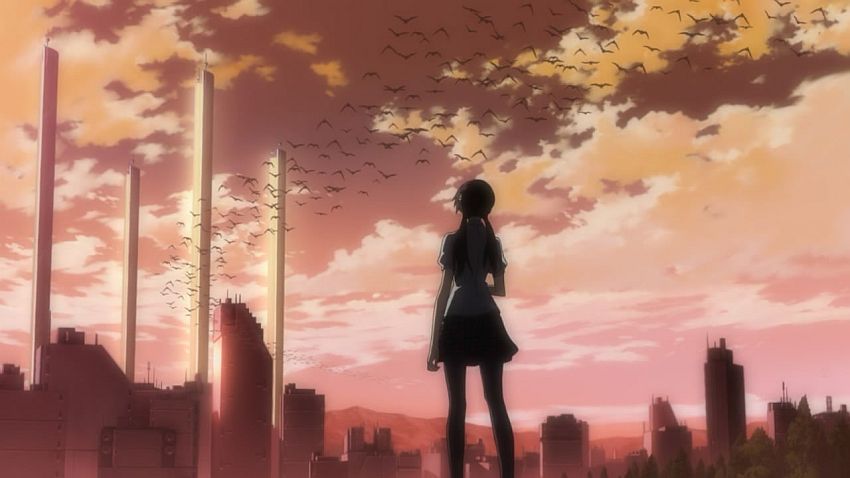
     Over the holiday break, I finally found the time to watch a movie that was highly recommended to me by a lot of my friends. Evangelion: 1.11 You Can {Not} Advance is a Japanese animated movie that is based off of Neon Genesis Evangelion, a TV show that ran for 26 episodes. Although the series originally ran from 1995 to 1996, this movie came out in 2007 and introduces breathtaking animation to a classic story with fantastic writing, plot, and characters. The story takes place in a desolate future where the world has been vastly damaged during the second impact, a mysterious disaster that killed half of the world's population. In Tokyo, Japan, the military has been developing technology to prevent such a disaster from ever happening again. In the middle of these developments, strange and nearly invincible monster's known as "angels" attack the earth and try to bring disaster to the planet once again. The military must use the only means they have to defeat these creatures which are humongous humanoid robots that are piloted by humans. The story follows a young boy named Shinji who has to pilot one of these robots and deals with the stress of the future of the entire human race resting on his shoulders.


     Overall, this movie is not supposed to be a complete retelling of the original series and handles it more like a reboot. There are new characters, new scenarios, and at some points, complete deviation from the original story that will keep fans of the old series , as well as people who have not, thoroughly entertained throughout the whole production. That being said, there is no way for any movie to capture the same feeling and emotion that a 26 episode series can and because of that, this movie is no substitution for the original series and should be viewed before watching the series only if audience members want the highlights of the series as a whole. Aside from the stunning visuals, characters are developed very fluidly and they feel like actual people trying to live their lives in a world with an uncertain future. The movie has no problems dealing with death and people that are squeamish of blood and violence should avoid this picture completely.


     This is the first of three movies that were made for the series and I haven't gotten the chance to see them just yet. Based off of the cliffhanger at the end of the first movie and the beautiful animation and direction that it has however, I will be sure to watch the next one and I am very excited to see if they can top themselves in the second installment. I will report back here once I have gotten around to finally watching it.    


Friday, November 7, 2014

Bushido Cinema: Honor, Swordplay and the Way of the Samurai

Writing on Kwaidan last week raised the issue of samurai cinema. Only a portion of the film is concerned with the subject, but I'll take any opportunity I can get to talk briefly about one of my favorite genres, so here goes nothing.
Of all the types of cinema in existence, I always find it strange that I gravitated toward samurai films. Since its beginnings, the genre has been tied to the western (which remains relatively unexplored territory for me and a genre I tend to have trouble getting into). Just from the screenshot provided above, you can see elements of "the final showdown" or "the final draw", just with katanas replacing revolvers. However, before there was The Magnificent Seven, there was Seven Samurai and before Leone's Dollars trilogy, there was Yojimbo and Sanjuro. Revenge and violence, lawlessness and the restoration of order...these are elements toyed with in both genres, but with samurai cinema, honor, specifically that of the samurai code, bushido, is frequently the central theme. The way this concept is addressed by Japanese filmmakers in the genre through the years is probably what I find most fascinating. Its rigid qualities are seemingly exalted by some and challenged by others. The fantasy of the bushido ideal is both played up and criticized. It has been used to comment on the present state of the nation while also reminiscing on Japan's history. Functioning as entertainment, allegory and unique cultural evaluation, the samurai film is a fascinating sub-section of cinema that proves itself to be much more exotic action spectacle.
Also worth mentioning is the enormous variety that the genre has to offer. Above, I've posted five screenshots from five different films, each carrying a distinct tone. There are many ways to approach a samurai film, more even then those I mention here, and it is fascinating to explore the different modes. The top picture comes from part 2 of Hiroshi Inagaki's Samurai Trilogy. Shot in vibrant color and featuring a sweeping musical score, the melodramatic series displays many of the hallmarks of classical Hollywood cinema- a very different feel from other samurai films of the time. The second screenshot is from Kuroneko, a ghostly, samurai-based, late-60's horror film. The third is from Samurai Rebellion, a deathly serious drama with considerable restraint and much more on its mind than simple swordplay. The fourth picture comes from Kill!, a comedic action-packed romp with satirical elements. And finally, the last shot is from the first installment of the Lone Wolf and Cub series, Sword of Vengeance. Made in the early 70's this cheekily bloody contribution to the genre leaned closer to grindhouse fare, while still retaining an aspect of artistic sophistication. 
Despite its noted ties to westerns, the samurai film is a rich, one-of-a-kind genre with something to offer to every fan of cinema, whatever the desired tone of presentation may be. 

Thursday, October 30, 2014

'Tis the Season to be Scary

Happy Halloween, everyone! Once again, we are nearing the end of what many film lovers affectionately call "Horror month." A time for catching up on genre classics both old and new, the month often provides a number of opportunities for adventurous viewing. Schoolwork has limited my movie intake this year, but I was able to land a handful of fun ones including The Evil Dead and Hellraiser (which is more bloody and gross than fun, but you know what I mean). While I'm in the festive mood, I'll take this week's blog post as an opportunity to share my thoughts on a few of the best chillers, screamers and blood-curdlers out there. We all know the reputation of such films as Psycho, The Shining, Halloween and The Texas Chainsaw Massacre, so there's no use in trying to add to their legend. Instead, I'll be presenting some of the lesser-known greats that deserve to stand toe-to-toe with the more established masterworks.
First up is Herk Harvey's low budget tale of ghoulish dread, Carnival of Souls. Independently made and released in 1962 to muted reception, the film follows the lone survivor of an auto accident that claimed the lives her friends. Spurred by a spontaneous road race with a car full of like-aged boys, her vehicle veers off a bridge and into a river. Our protagonist emerges remarkably unharmed and attempts to move on with her life, taking a job as a church organist in a small town in Utah. Strange occurrences begin to take place, as she has visions of a ghostly pale man everywhere she goes. Meanwhile, an abandoned carnival on the edge of town starts to emit a bizarrely enticing energy to the young woman. She knows not what the creepy place holds, but she can't help but be drawn to it, repeatedly visiting, perhaps one time too many. The film plays like an 84 minute episode of the Twilight Zone and goes down easy, devoid of any pretensions or big philosophical messages. It's twisty, atmospheric and terribly enigmatic all the way through. Endlessly eerie and creatively macabre, it's a splendid little gem of 60's b-horror and I highly recommend it. Also...
...get ready to have this guy haunt your dreams.
Now onto another 60's treasure, Hour of the Wolf. In 1968, Ingmar Bergman made a horror film and it was every bit as amazing as one could imagine. An artist and his pregnant wife vacation on a remote island where they discover they are not alone. A gaggle of wealthy socialites live nearby in a monstrous mansion. They know of the artist's work and invite him to a dinner party, where they proceed to playfully insult him. But this isn't the end of the story. During his time on the island, the artist begins to mentally breakdown, experiencing surreal encounters and reliving painful memories. It all culminates in a final 20 minutes that is absolutely terrifying. Here is a taste of what I'm talking about (trust me, this spoils nothing):
Coupling disturbing imagery with Bergman's trademark existential angst, the film is both frightening and fascinating- a rare mix. I want to study it just as much as I want to turn away from its horrific sequences. It isn't Bergman's finest hour (In my opinion, that would be Persona), but it is brilliant nonetheless.
Last but certainly not least is one of my favorite films of all time: Kwaidan. Masaki Kobayashi's masterfully-paced film is an anthology covering four stories based on tales from Japanese folklore. The horror is mostly subtle in this one, so while it might not be as "scary" as the other two films mentioned, its storytelling ability is the strongest. Because it is difficult to talk about the film as a whole without highlighting each section, here are some brief summaries (with screenshots, of course!).
THE BLACK HAIR - A poor swordsman abandons his wife despite her pleas to attain greater social status with a woman of a wealthy family. He is sick of the impoverished existence and seeks a higher quality of life at the risk of losing the one solid relationship he has. Higher social status is indeed attained, but the swordsman's mind often drifts back to his wife, especially since the woman he married has revealed herself to be cold and unloving. He decides to return home, but will his wife still be there and can things ever go back to the way they were? A great opening tale with a startling final trick that effectively sets the tone for the rest of the film.
THE WOMAN OF THE SNOW - A woodcutter has a ghostly encounter with a lethal spirit one stormy winter night and makes a pact with it: The woman promises to spare his life if he agrees to never tell a soul about what he witnessed that evening. The man takes the agreement and time passes. Spring comes and then summer. He marries a lovely woman who is new to the area and all seems well, but he cannot shake the memories of that fateful night and begins to question if it really happened and if he should go ahead and tell his sweetheart about it. I'll leave it there, because it gets very interesting after that. Though it's hard to choose, this might be my favorite of the four. It unravels slowly, like a campfire yarn and next to the tale that follows it, the segment contains some of the film's most striking compositions.

HOICHI, THE EARLESS - A blind musician named Hoichi is visited by the ghost of a samurai and invited to play for a sinister group of spirits. His skill in playing the biwa is considerable and he humbly accepts the offer, not knowing the exact nature of his audience. He goes night after night and once his priest friends catch on to what has been happening and realize the danger of the situation, they devise a clever plan to help Hoichi go undetected by the spirits that will hopefully drive them away for good. Of course, things don't go quite as planned. The longest story of the group and the most complex, "Hoichi" is probably the most popular section of Kwaidan (And for good reason!)
IN A CUP OF TEA - A writer sees a face in his cup of tea. He dumps and refills the cup several times only to find the face sporting the same bizarre smirk each time. Upset by this encounter, he finds himself being confronted by a trio of supernaturally-endowed assassins later that night. It's probably the most cursory of the four stories, but still entertainingly executed and impeccably crafted.

The most expensive production in Japan's cinematic history at the time of release, Kwaidan is grandly envisioned and thoroughly chilling in each of its four conclusions (as well as in the conclusion of its framing story, which took me completely off guard). I've taken up too much blog-space already with this film, so I figure I should end it there. If you're looking for expansive, eerie and beautifully shot horror, look no further than this film. It is truly one of the best of the genre.

Friday, August 29, 2014

enliven

I remember sitting on our living room floor in Japan, drawing out Disney characters while the Little Mermaid was playing. At that time, that was my favorite movie. I never called a fork, fork. Instead, I would argue with waiters and anyone else who questioned me that it was simply called a dingle hopper. Animation movies and T.V shows were the things that I lived for. Growing up in Japan opened my eyes to all the anime cartoons and how magnificent the colors and artwork that came from these shows were. But there was one particular artist who was more than just an artist and a phenomenal storyteller who changed my life. His name is Hayao Miyazaki.


No one questions his abilities; he's proven time and time again that there's something about animation that takes us into another realm. The characters in his films all have this unique background, and they're characters that leave a lasting impression on almost anyone who sees the films. Growing up as a military child and moving so often, I never got the experience of having friends for more than two to three years. Miyazaki's films were like outlets for me to travel into another world with strange creatures, that it didn't really bother me (or I hardly noticed) that having friends was something I needed. Being so young at the time, re-drawing the characters from his films and running outside chasing after the Susuwatari was all that I really cared about.


Although growing up will all his films impacted my younger life, Princess Mononoke is THE film that made me decide to pursue a career in the film industry. I honestly had no idea what I was going to do after high school. I loved to draw, but I never thought my skills qualified enough for college level. I sort of just started sinking into this dark void and felt like I was going to follow my father's footsteps and join the military as well. That, was my final decision. I plopped in a Miyazaki film trying to cheer myself up, and that's when my mind began to tell me something different. Now that I was older, I was able to understand his films. I watched Princess Mononoke and began to see the story line and feel emotions I didn't feel as a child watching the film before. I thought to myself, "I want to do that." I didn't really know what I meant by that, but I just knew I wanted to be doing something that could make people think. I wanted to create characters that people never even imagined before, but can relate to. I wanted people to wonder in their minds, what if the world was like that?

Never did I think growing up that a couple imaginary creatures could help me make a decision that would impact the rest of my life.

Friday, September 28, 2012

Pokémon: A Love Story

In class on Wednesday, I jokingly said I'd blog about Pokémon after I heard Arturo call it "nothing." At first the idea of blogging about it seemed silly, but I thought about it for a while and decided to just go for it.

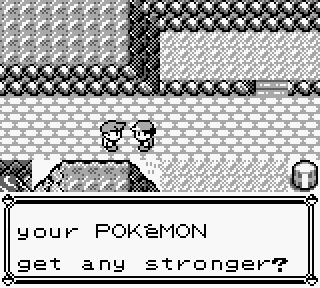
Pokémon came to the great United States in 1998 via the Nintendo Gameboy. Released as two versions of the same game the handheld RPG swept the nation. Almost everybody — kindergartners to college students — were captivated by the Japanese wonder that was Pokémon. Nothing could be greater than exploring a world full of 150 unique creatures that you can raise as your own. I mean, who wouldn't want to be a ten-year old boy that gets to travel the world fighting with these awesome animal sidekicks? I'm as sure as Squirtle going to want to do that.


The following year, in 1999, an animated Pokémon television series made its way to the States. This too, captured the imaginations of people everywhere. The viewers followed Ash Ketchum as he attempted to become a Pokémon master. His adventures were humorous, and he makes friends along the way, finding them in both fellow trainers and in his Pokémon. Ash even made his way onto the big screen, with multiple movies. And to think this all started as a Japanese handheld game.

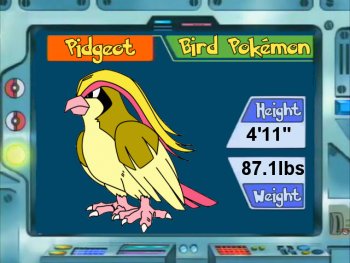
My personal story with Pokémon started with the TV show, then to the video game. I followed Ash's journey every Saturday morning when I was a child. I would struggle and cry as I had to leave for a soccer game before I found out whether or not he was able to get away from the evil Team Rocket. I would also cry when my Gameboy ran out of batteries and I couldn't play Pokémon Red any more. Car rides were so boring without my team of Charizard, Kadabra, Gyarados, Pidgeot, Nidoking, and Snorlax.

Childhood, so tough.

So what am I trying to get at here? I'm not trying to glorify a children's cartoon, and I'm not simply complaining that a professor thought my favorite game is silly.

Pokémon is a simple idea: a world is inhabited by "animals" that you can capture and raise as your own. We, as people, cling to this because it is both familiar and unfamiliar. We marvel at how absurd some of these creatures are, wishing we could have them as our own. We also see some of them as things we have here in our world: as birds, as fish, as plants, etc. Each of us take the Pokémon and give it a personality, allowing us to be a part of that world.

Something else I find amazing about Pokémon is its cultural impact. Starting 15 years ago in Japan, it has since morphed into Nintendo's second most popular franchise, only behind Mario. There are 16 seasons of the TV series, 14 films, dozens of video games, and a card game. The fanbase must be in the billions. Everything stemmed from the original video game. That's crazy. And I am glad I could be a part in the beginning of something so huge. I love it.


Tuesday, March 29, 2011

Ichi The Killer

Last night a friend and I watched (or tried to watch) a Japanese film called Ichi the Killer directed by Takashi Miike. It was based on a manga series also called Ichi the Killer. We didn't finish the movie mainly due to the fact that it has no plot. The film starts off with a man named Kakihara looking for his "boss" (they are members of a crime syndicate) and a mysterious figure named Ichi lurking around the city (presumably Tokyo). When you finally get acquainted with all the characters and their roles in the story (more than thirty minutes into the film) you find out the boss is dead. From their is no apparent impetus for the rest of the action. You have this vague notion that Kakihara is looking for Ichi (who killed "the boss"), but that is not really clear. The bulk of what we watched is made up of torture or sexual fantasy scenes (frequently a combination of the two) that contribute nothing to story other than to show you how messed up these people are. I'm not against violence in movies, but like every other aspect of film, it has to be relevant to the whole story. Not just some exposé of how many gory things something can think of and fit into a ninety minute movie.

It's not a forgettable movie, it just has no point. If you must watch it, let it be for no other reason than to say that you have seen it.