Showing posts with label apocalypse. Show all posts

Thursday, February 12, 2015

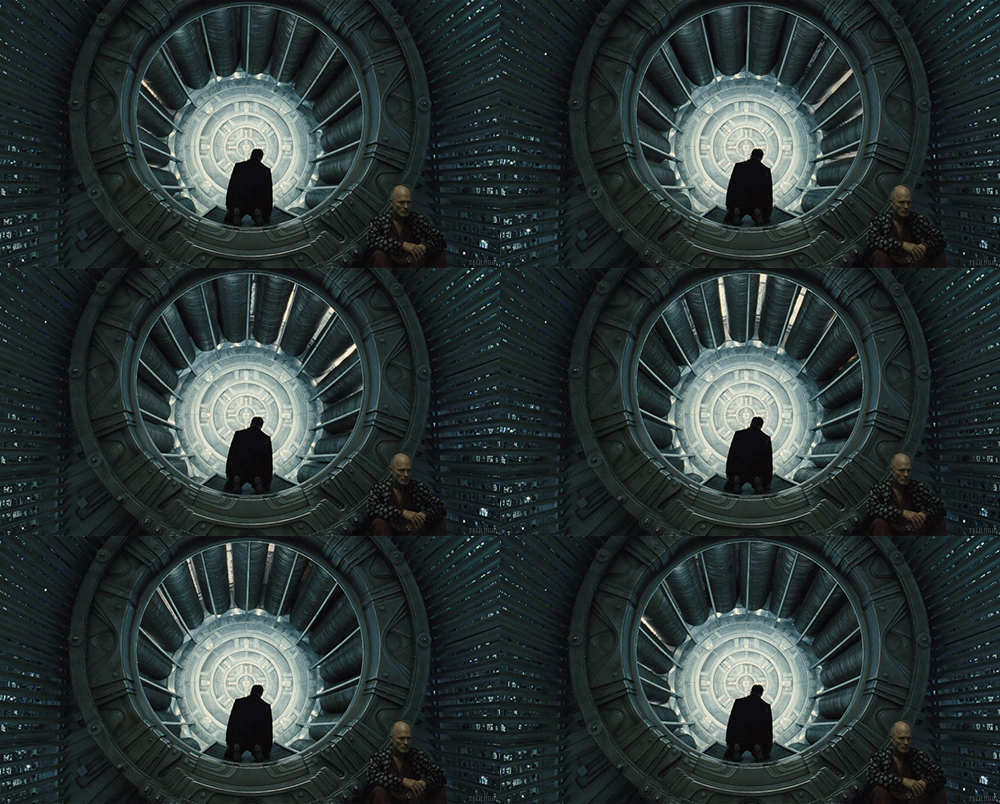
Snowpiercer


Over the winter vacation, I was scrolling through Netflix and decided to watch Snowpiercer without any prior information to what the plot of it was or how it was received by critics and audiences. To say the least, I was pleasantly surprised to find a movie filled with gritty and captivating action sequences as well as an interesting plot and premise. Snowpiercer does a great job of keeping the story and action interesting and, as long as you don't take it to seriously, it is a lot of fun throughout the entire feature.


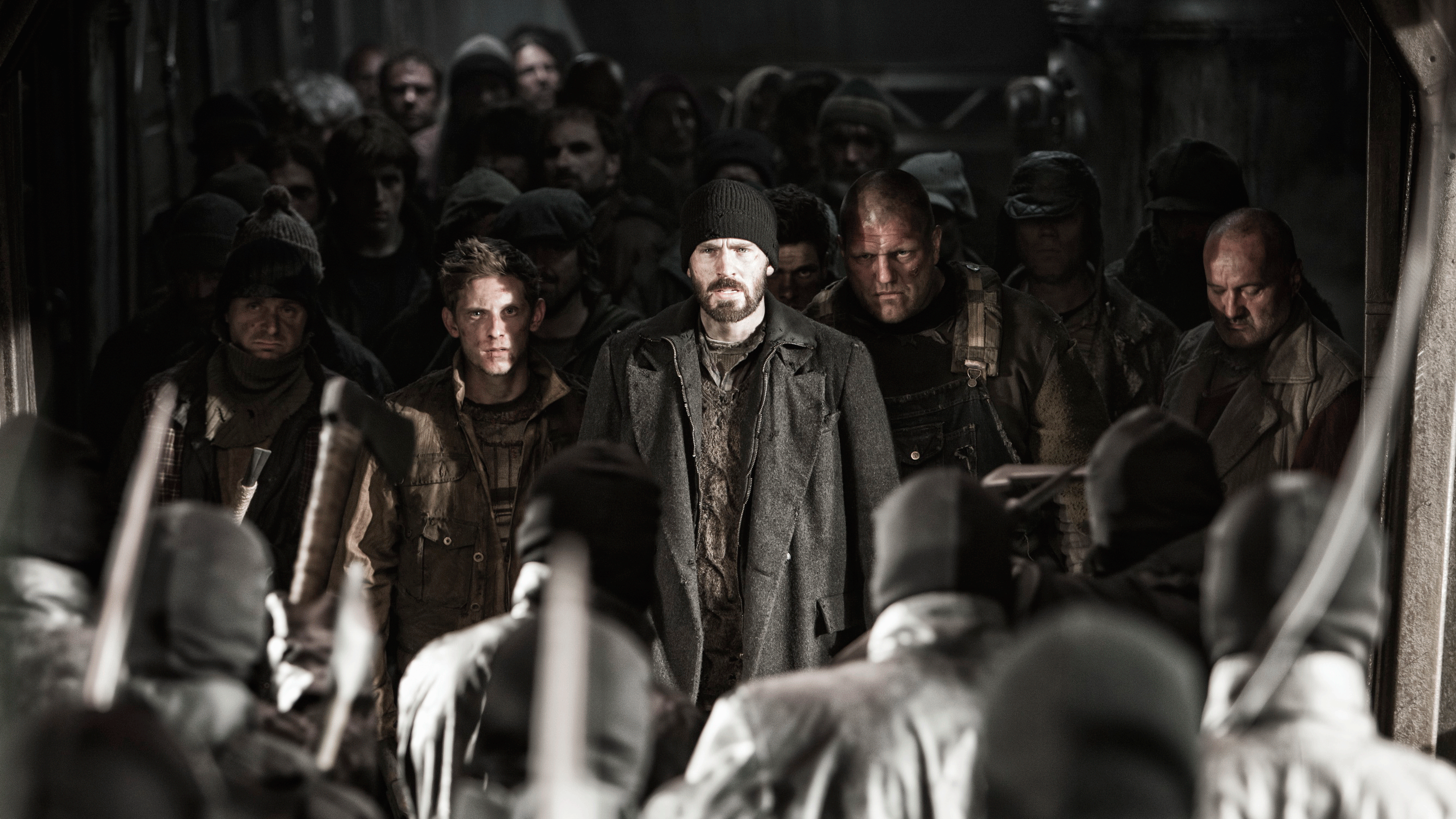
Snowpiercer takes place in a desolate future where the Earth has been frozen over due to a failed attempt to stop the effects of global warming. The surface is now completely uninhabitable and most of the world's population has been eradicated. The only surviving humans left on the planet now live on a train that is constantly moving and never stops under any circumstance. A man named Curtis (Chris Evans) lives in the back of the train with other survivors in harsh living conditions where they must work to survive. Meanwhile at the front sections of the train, wealthy aristocrats live lives of luxury and relaxation. Tired of the oppressive upper class, Curtis leads a revolt in order to take control of the train by fighting his way to the front and taking the engine room by force. 

It took me awhile to understand that the dialogue and circumstances of the movie were supposed to be over the top and ridiculous. That being said, it did take me a good twenty or so minutes into the film to actually start appreciating it for what it was. Once the plot and characters were established, the action started and thats when I really started enjoying it. Most of the characters are pretty one dimensional but there are moments that are very heartfelt and others that will make your stomach churn. The pacing is very good as the progression of the film is marked by the rebellion's advancement through different parts of the train. The ending was very unexpected and there wasn't a lot of clarity in where it was heading after the cliffhanger-esque sequence but I was able to look past it for all the fun I had while watching the entire movie. 


Since my first time watching, I have watched it again and it was great knowing what to expect and reliving all of the awesome fight scenes and emotionally gripping parts all over again. I highly recommend watching this movie if you enjoy science fiction and all of the ridiculousness that stems from the genre.     
   

Thursday, February 5, 2015

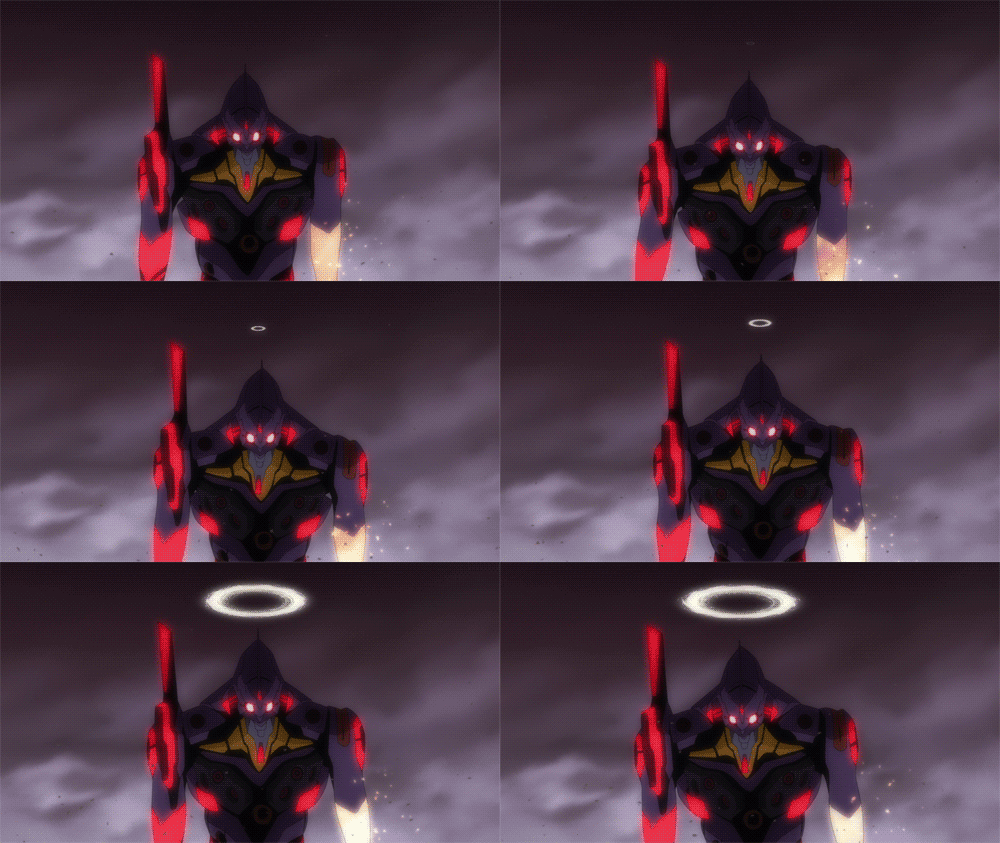
Evangelion: 2.22 You Can (Not) Advance

     This week, I was finally able to sit down and watch the second movie in the Evangelion movie trilogy, Evangelion: 2.22 You Can (Not) Advance. In comparison to the first movie, it has better action, better animation, and drastically deviates from the original storyline in more ways than one. Overall, it was a complete upgrade from the first movie and a fantastic addition to the Evangelion franchise.

     The story picks up right after the events of the first movie. Shinji Akari and Rei Ayanami have worked together thus far to stop the advancing angels that have come to Earth to completely annihilate the entire planet. In the middle of another angel fight, a new and powerful evangelion emerges (piloted by a girl named Asuka Soryu) and defeats the angel single handily. Shinji and Rei begin to work with Asuka to strengthen their forces but they are far from the perfect team. Asuka acts very stubbornly and rude and Rei remains quiet and conserved while Shinji struggles internally with the weight of the human race on his shoulders as well as a crippling sense of loneliness. Through many hardships and struggles, the three pilots must defeat seemingly stronger enemies one after the other as humanity's last line of defense in preserving the lives of millions.


     While the first movie set up a good foundation and was a nice way of revamping the series as a whole, it was missing a lot that was looking forward to seeing in the second movie, namely the addition of Asuka as the third Evangelion. Although she can be very off-putting to most of the characters in the movie, she is a very complex character that was illustrated very well in the original series. With that being said, halfway through the movie, something involving Asuka happens that caught me completely off guard. The deviations between the movie and the original series suddenly changed from minor things to completely rewriting the plot. It definitely led to some fantastic fight sequences and emotional moments, but I won't know if it was the right decision to make until I see the third and final movie. At this point, they have completely changed the outcome of the series and I am excited to see what they do with it.


     Overall, the second movie is definitely my favorite out of the two and I'm hoping that they take it to the next level in the final installment of the movie adaptations.      

Wednesday, October 16, 2013

The Walking Dead and the human condition

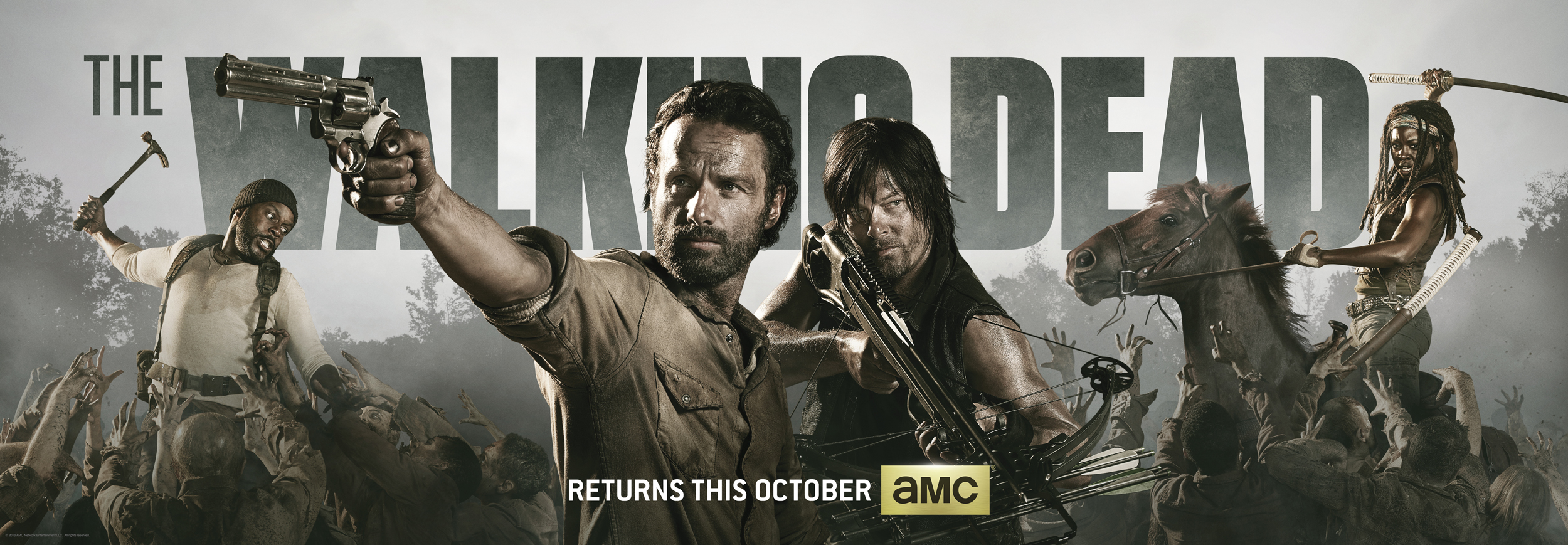
Hello there. I'd just like to take a minute out of your busy, busy schedule to discuss The Walking Dead. More specifically, I'd like to discuss the season premiere that came out last Sunday, so if you haven't watched it yet, but intend to, I'm giving you a heads up that there may be some spoilers coming your way. What The Walking Dead does very well--at least in my opinion--is portraying characters and the human condition. Basically, the writers for the show (Frank Darabont and Scott M. Gimple) do a wonderful job subtly showing viewers how, even though there's a zombie apocalypse going on, the characters still seem to maintain their most human characteristics.

First off, let's talk about Rick. Rick Grimes--father to Carl and leader of the "resistance"--is focused on a lot in the season premiere. In the opening of the episode, we see Rick tending to the garden and pig pen which he apparently built in the off-season. As a good father, Rick tells his son not to get attached to the pigs by naming them since they're simply going to be used for food. It turns out that Rick has already given them names of his own. Like a normal person, he himself has gotten attached and cares for the things he's taking care of, basically like pets. Later in the episode, Rick finds a woman wondering around in the woods. In the midst of a zombie apocalypse, many people would have just killed her--as previous episodes have shown--but Rick wants to help her. The only problem is, his past experiences have left him very suspicious of strangers. He could have just killed her right then and there, but, holding on to what makes him human, he chooses to try and help the woman.

Next up is Carl Grimes. Carl is Rick's son. He's a character who viewers typically, well, strongly dislike. Nobody quite knows why, but we all dislike him. Strongly. Anyway, in this episode, Carl names the pig as previously stated. He gets attached to his "pets" like any other normal kid would do. He also accidentally slept in due to his reading comic books with a flashlight until really late at night. What Carl, and even Rick, often forget, is that he's still a child. Despite his many attempts to act older and more mature than his age, he is still indeed a kid. This is strongly highlighted later in the episode when he refuses to go to story time that's held everyday for the kids. He says it's too childish for him to go to, but he later sneaks into the room so that he can listen to the stories. The season premiere of The Walking Dead really did a great job subtly reminding viewers that the stubborn, protective guy they're watching is actually still a little kid.


The woman in the woods, Clara, is a character that appears towards the beginning of the episode and kills herself towards the end (sorry, I said there may be spoilers). As her and Rick walk through the woods, she talks about her husband and what he taught her. She explained how he taught her what was often necessary to survive in a post-zombie apocalyptic world. He taught her how to steal, betray, and sometimes kill other people in order to stay alive. What was so touching about the writing in this scene was that it so strongly highlighted people's tendency to want to do good. While the need to survive may out-trump our original instincts, most people are not born complete savages. In order to be able to do such terrible things, one must often be shown how.

The final character I'd like to discuss from The Walking Dead's season 4 premiere is Bob (yes, just Bob). Bob is a new character who we don't really know anything about. The reason for his appearance in this post is what he did in this one episode. While the characters were searching around a convenience store for supplies, we see Bob stop in the alcohol section of the store. He stares at a bottle of wine, seems conflicted whether or not to take it, then eventually begins putting it in his bag. He then stops himself and puts the bottle back on the shelf. Bob's actions could indicate that he's a recovering alcoholic. While he's searching for necessary supplies in order to survive, he still has trouble fighting his urges and desires. The writers did a phenomenal job with this scene because, while nothing is explicitly said, viewers can deduce that Bob most likely struggled with alcoholism at some point in his life and is still dealing with it. It doesn't matter whether or not there are zombies knocking at your front door. If a person has an addiction to something, the urges don't simply go away overnight.

In the Season 4 premiere of The Walking Dead, the writers truly did an excellent job emphasizing the human condition. The episode showed all the characters are still human despite all the nonhumans trying to eat them.

Tuesday, November 6, 2012

The Road: Theme

       This past weekend I watched a film that had a new take on a post-apocolypic world.  "The Road" by John Hillcoat, tell the tale of a father and son trying to survive in a very cold and dark world.  The film seems to make a statement on human nature  when looking at how civilization was so quick to fall to pieces.
      We are never given a reason why civilization ended, we simply come into its aftermath.  There are no animals left aside from humans and no form of law/government.  Gangs run the land raping, killing, and cannibalizing as they go.  Our main characters, a father and son, are confronted as they go by gangs and murderers.  Through all the hardships they face they try to "be the good guys" as the son says and avoid falling into the chaos and lawlessness that surrounds them.  This desire to stay pure and good is a metaphor for the boys innocence.  The little boy tries to help people, while his father strives to protect him.  In a way the father starts to become corrupted when he steals the cloths of a man in the snow and leaves him to die, but is pulled back and saved by his son who convinces him to try and make up for what he has done by giving them back.
    This theme of trying to maintain ones innocence and remain morality is seen throughout the film.  This themes also directly dictates character interactions and how the two main characters view each other.  The reason I chose to talk about this movie is because it has an interesting theme to the viewer, but this theme simultaneously drives the plot.  I felt that this film had an excellent plot but also did exceptional job of choosing a theme that than motivated the characters actions while at the same time allowing them to become more multi-dimesional and realistic.

Thursday, February 10, 2011

If you ever feel like your shoot isn't going according to plan.

I think I'm one of the few people find the back story to how a film was made just as interesting as the film itself. A couple of days ago I was reading a little bit about the filming of the Palm D'Or winning Apocalypse Now. A few days into the principal photography, Francis Ford Coppola (the film's director) had to replace Harvey Keitel for Martin Sheen as the movie's protagonist. Sheen, who was struggling with alcohol abuse suffered a heart attack in the middle of the jungle by himself and had to crawl to a road in order to get help. A massive typhoon wiped out some of the sets which shut down production while they were moved and rebuilt. By that point, the project was six weeks behind and two million dollars over budget. Marlon Brando arrived in the Philippines for his role so out of shape that Coppola was forced to rewrite the ending, have Brando only wear black, photograph only his face, and have a taller actor play him for wider shots. Many of the extras playing Viet Cong soldiers were members of the Philippine police and military and kept leaving during shooting to fight drug lords. Several very expensive films were eventually cut from the final edit wasting even more of the budget. At first critics thought the film would be a disaster, but it ended up sealing a director's legacy (one who had already made the Godfather Parts I and II, the Conversation, American Graffiti, and had written Patton). So ever you're having issues shooting a project, just remember, one of the greatest directors of all time had so many issues with one film that it's amazing the movie was even finished.

Tuesday, September 9, 2008

The ugly american god

According to vice-president candidate Palin, the war in Irak is god's will and plan. We should be grateful for it:

"Pray for our military men and women who are striving to do what is right. Also, for this country, that our leaders, our national leaders, are sending [U.S. soldiers] out on a task that is from God. That's what we have to make sure that we're praying for, that there is a plan and that plan is God's will."

God is also apparently a shareholder on big-oil and is very keen on pumping up whatever is left so that total destruction can be assured in time for his glorious second coming. Make sure you have your camera loaded and please post the event on YouTube.

"I think God's will has to be done in unifying people and companies to get the gas line built, so pray for that."

Like they say, this strategic candidate has an excellent record on both energy and the environment, issues that are intricately related. And, proverbially, two birds can be killed at once. Since it is her stated belief that human activity has no impact whatsoever on global warming (use the internet to check this outrageous if not plain stupid statement) then it is OK to "drill, drill, drill", "kill, kill, kill" so that we get rid of that inconvenient wilderness full of animals that deserve to be killed, not to mention the rest of humanity. That way we can all enjoy front seats at the Apocalypse. Excellent strategy.

Palin's favorite hobby

It is a sad thing to see the pathetic crowds pumped up by such shows of indifference to life, coming from someone who claims to be on god's side in everything she does. With that consultant who needs Kissinger?

It used to be that the "ugly american" usually referred to some individuals that exemplified the worst arrogance that this country exported abroad. But as of today the global perception has shifted to the "ugly country" which I guess plays very well with the political campaign slogan of "country first". After all our exports were suffering, now we have a true product that we are supposed to be proud of.

Made in America.