Showing posts with label samurai. Show all posts

Wednesday, April 29, 2015

Samurai Champloo

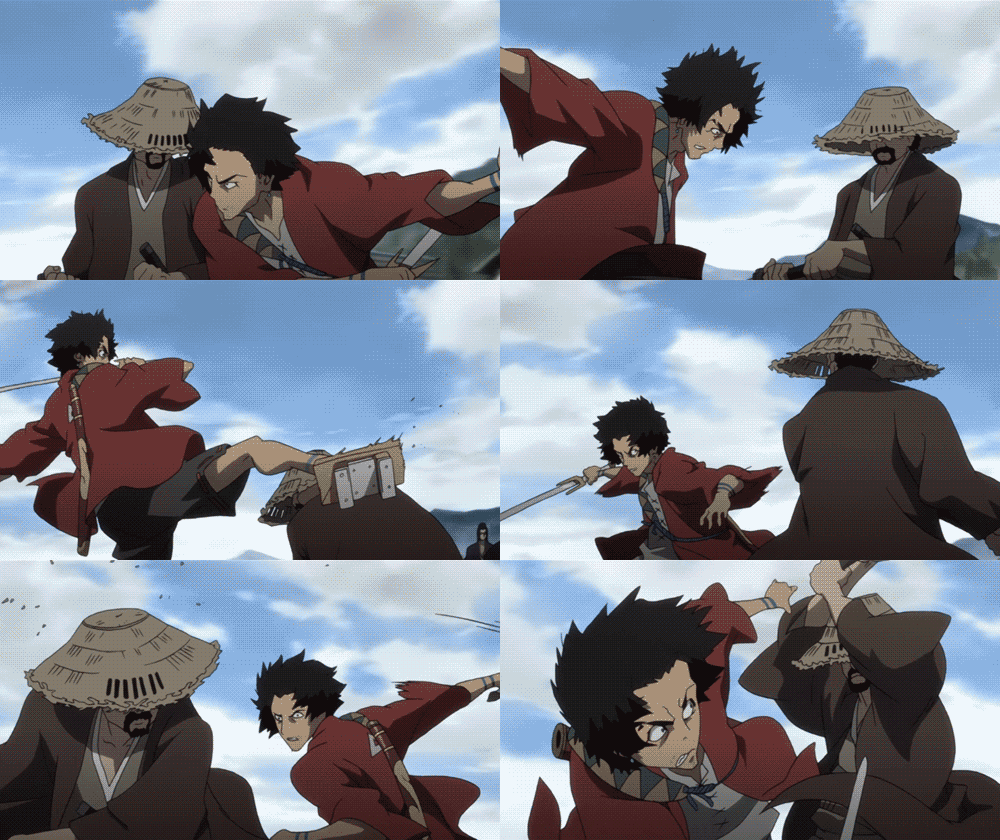
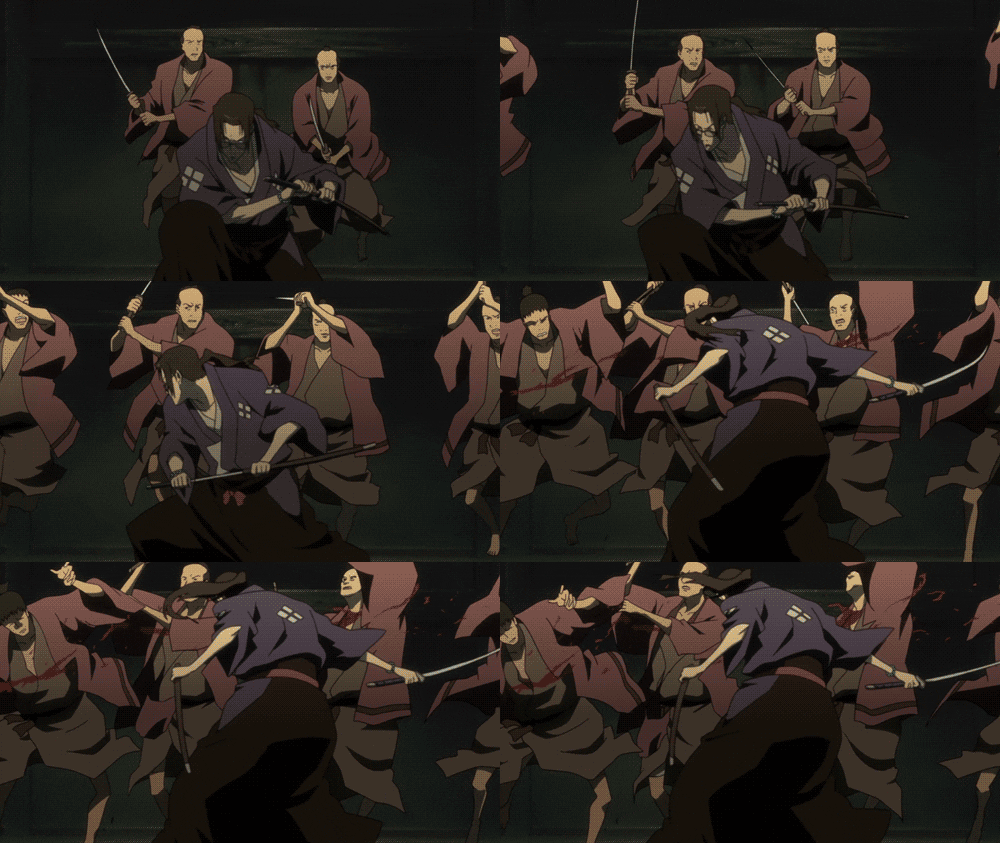
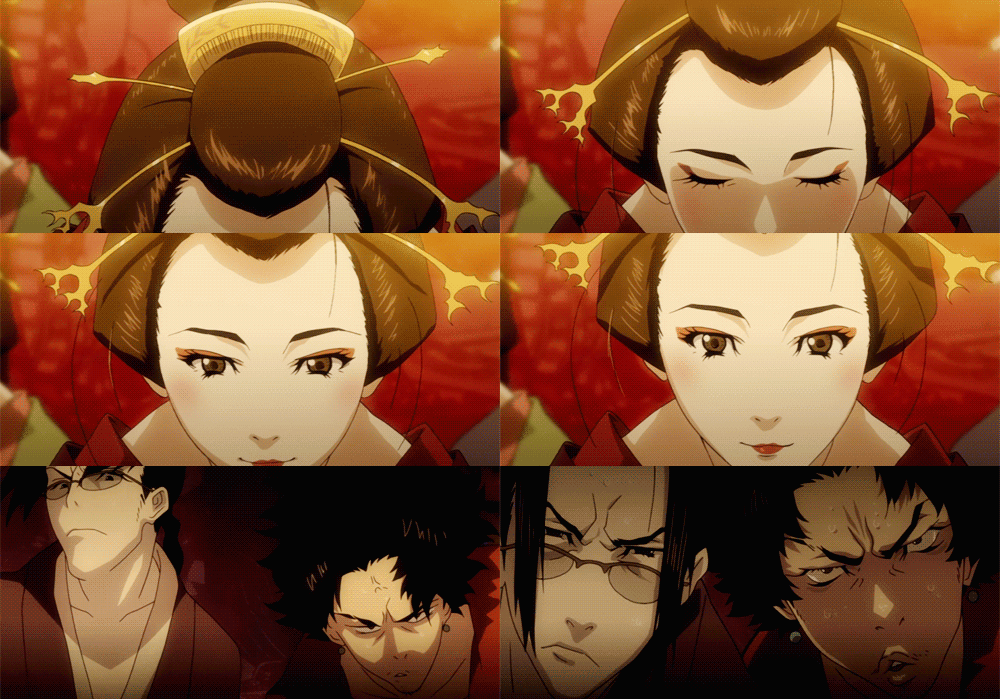
Samurai Champloo is an action packed animated series that has a ton of kick ass fight scenes and never takes itself too seriously.  The characters are fun and interesting and are developed very well throughout the twenty six episode show. Aside from the action and story, Samurai Champloo has a very recognizable soundtrack that is a mashup of hip-hop and electronic which gives the setting of feudal Japan a very fresh, if not somewhat out of place, feeling to it.

 The story revolves around Fuu,  a waitress who enlists in the help of two samurai to hunt down the man that killed her father, referred to as the "man who smells of sunflowers". Mugen, a rude and unorthodox swordsman, Jin, a calm and emotionless samurai, and Fuu travel from town to town, embarking in one adventure after the other. Every episode, apart from a few two parters, focus on new environments and side characters which keeps the show fresh and entertaining. From accidentally thwarting a national revolution to entering eating contests and playing intense games of baseball, first time watchers will never expect what will happen next.
Fans of Cowboy Bebop, the animated space-western series, will find plenty to love in Samurai Champloo as they share the same creator and a lot of the same aesthetics. Although the space and samurai themes could not be anymore different, they are similar in other ways. The group of loners and rejects, the dramatic and cinematic styles, and a heavy influence of music are shared amongst both while still keeping their own individual and unique charm. Fans of either series should absolutely watch both shows.          
Overall, I would recommend Samurai Champloo to people who are trying to get into animated Japanese shows or action cartoons in general as it really is considered a classic. 
   

Friday, November 7, 2014

Bushido Cinema: Honor, Swordplay and the Way of the Samurai

Writing on Kwaidan last week raised the issue of samurai cinema. Only a portion of the film is concerned with the subject, but I'll take any opportunity I can get to talk briefly about one of my favorite genres, so here goes nothing.
Of all the types of cinema in existence, I always find it strange that I gravitated toward samurai films. Since its beginnings, the genre has been tied to the western (which remains relatively unexplored territory for me and a genre I tend to have trouble getting into). Just from the screenshot provided above, you can see elements of "the final showdown" or "the final draw", just with katanas replacing revolvers. However, before there was The Magnificent Seven, there was Seven Samurai and before Leone's Dollars trilogy, there was Yojimbo and Sanjuro. Revenge and violence, lawlessness and the restoration of order...these are elements toyed with in both genres, but with samurai cinema, honor, specifically that of the samurai code, bushido, is frequently the central theme. The way this concept is addressed by Japanese filmmakers in the genre through the years is probably what I find most fascinating. Its rigid qualities are seemingly exalted by some and challenged by others. The fantasy of the bushido ideal is both played up and criticized. It has been used to comment on the present state of the nation while also reminiscing on Japan's history. Functioning as entertainment, allegory and unique cultural evaluation, the samurai film is a fascinating sub-section of cinema that proves itself to be much more exotic action spectacle.
Also worth mentioning is the enormous variety that the genre has to offer. Above, I've posted five screenshots from five different films, each carrying a distinct tone. There are many ways to approach a samurai film, more even then those I mention here, and it is fascinating to explore the different modes. The top picture comes from part 2 of Hiroshi Inagaki's Samurai Trilogy. Shot in vibrant color and featuring a sweeping musical score, the melodramatic series displays many of the hallmarks of classical Hollywood cinema- a very different feel from other samurai films of the time. The second screenshot is from Kuroneko, a ghostly, samurai-based, late-60's horror film. The third is from Samurai Rebellion, a deathly serious drama with considerable restraint and much more on its mind than simple swordplay. The fourth picture comes from Kill!, a comedic action-packed romp with satirical elements. And finally, the last shot is from the first installment of the Lone Wolf and Cub series, Sword of Vengeance. Made in the early 70's this cheekily bloody contribution to the genre leaned closer to grindhouse fare, while still retaining an aspect of artistic sophistication. 
Despite its noted ties to westerns, the samurai film is a rich, one-of-a-kind genre with something to offer to every fan of cinema, whatever the desired tone of presentation may be. 

Monday, September 12, 2011

real life in animation

That was a look in to the choreography of Samurai Jack. I’m a fan of cartoons and I really like action cartoons. Samurai jack is a great cartoon show for many reasons but what sticks out for me are the fights. What I love about Samurai Jack is how thought out the fight scenes are and how it’s not like the artists just throw in a bunch of cool looking moves, ever thing that is done by a charter is a real Kung Fu move and isn’t just a montage of punches.
For a while I didn’t know how much animation depended on real life for references to how people move and dress. I was watching the special features on the season one dvd of Archer and found out that they even dressed people in the clothing the characters would wear and made them move around just to get a feel for how the fabric and clothing would look from different angles.
This video really shows what goes into make a good cartoon. Good fight scenes use the real world to stay grounded. Unlike some Japanese shows that have characters punching each other really fast for 2 minutes choreography in fights really involves the audience and make a better viewing experience