Showing posts with label House of Cards. Show all posts

Thursday, January 22, 2015

Netflix and House of Cards

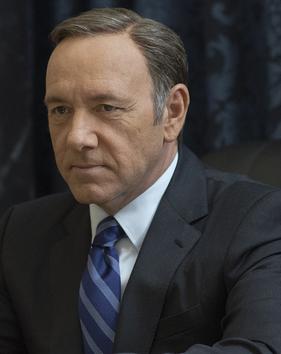
With the amount of money Internet streaming services like Netflix and Amazon Instant Video make, it didn’t take long for them to start airing original series. One of the most popular of these shows is House of Cards, a political drama featuring Kevin Spacey. Set in Washington D.C., this show follows fictional politician Frank Underwood through all the deception and manipulation of a job in the White House.

House of Cards is one of those shows that it seems like everyone has seen, and if it were to be included in the Nielsen ratings system, it would likely be one of the highest rated shows currently on TV. Sadly for Kevin Spacey, his pay rate is not quite up to par with the show's popularity. Since Netflix is a private company that does not air any commercials, and House of Cards (a Netflix original series) does not air anywhere else, there is no reason for Netflix to release information regarding the amount of views its shows get. This leaves Spacey and his agent guessing as how to much money he should make for each episode.

Netflix’s ability to keep their data private gives them an advantage that television networks do not have - although with their gross revenue of $5.5 billion in 2014, they would be doing just fine even if Kevin Spacey were to make twice as much as he does. Despite the disadvantage Spacey faces, he is returning for a 3rd season which airs on Netflix on February 27th. It will be interesting to see how the show progresses having gained so much popularity since the last season was released, and how other existing Netflix original shows like Orange Is The New Black will progress as well. 2015 will be a big year for Internet streaming, and House of Cards will be no exception.
Sunday, November 2, 2014

Netflix the New Media Titan
      Its the recent phenomenon that captured America by storm, it is what 95% of college students are doing right now, and it is why children under the age of 4 are going to ask “what television was for” when they grow up, it is Netflix. 

         This new fad is a company that provides subscribers a platform for on demand Internet streaming for movies and television shows. It also has the much less used DVD mail rental service, all for less than ten dollars a month. Forbes listed it as 30th in its most innovative companies list. According to Wikipedia the company was established in 1999 and approximately ten years later it had ten million subscribers and offered over one hundred thousand titles. Then by 2013 is more than tripled its amount of subscribers.
      
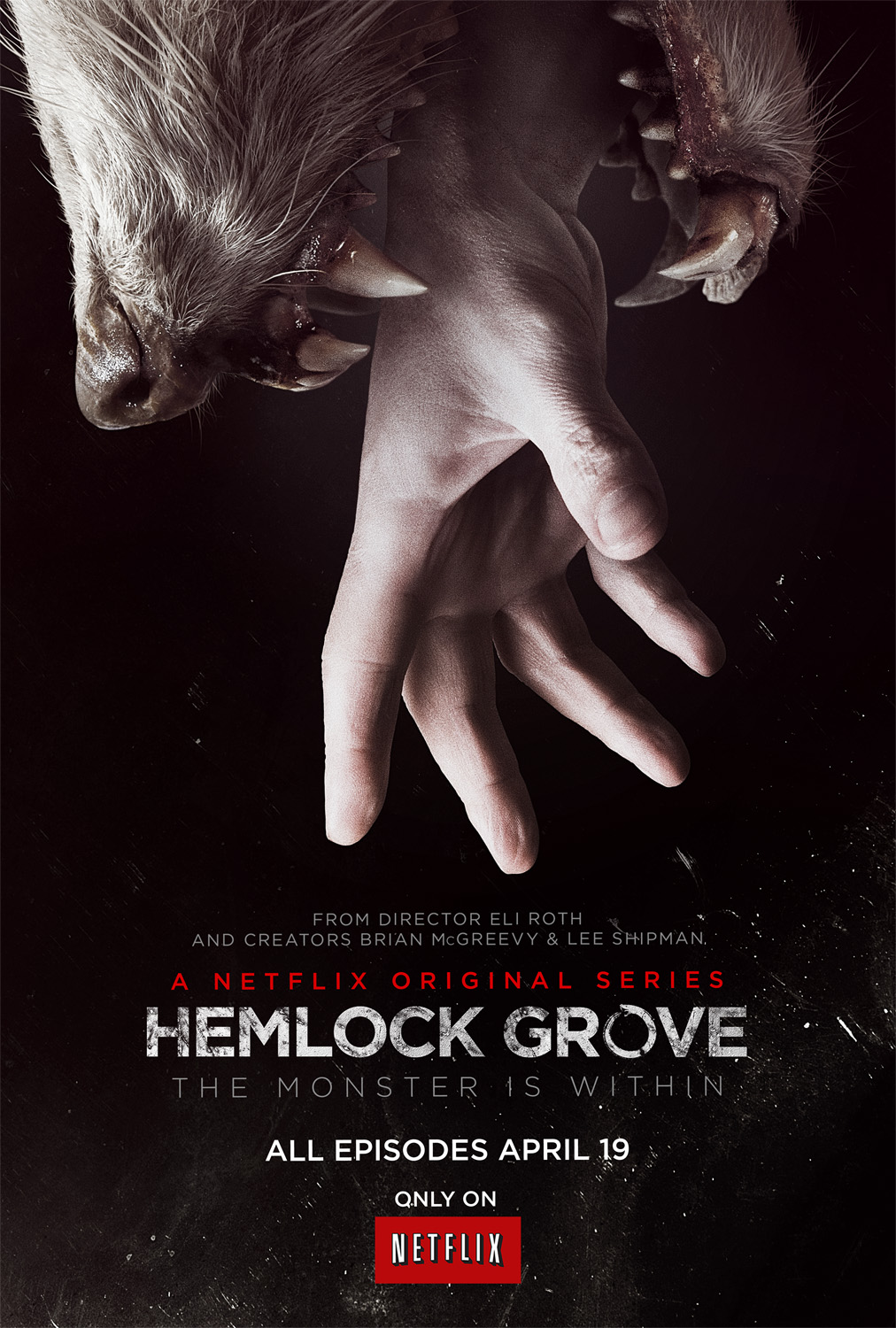
      Netflix didn’t stop there; I suppose the company got tiered of just being the medium to films and television programming. That is why in March of 2011 Netflix began producing its own original content to be premiered strictly off of Netflix. Netflix now streams a plethora of “Netflix originals” as well as rebooting and continuing other series, which it bought the rights to such as:

  • ·      House of Cards
  • ·      Arrested Development
  • ·      Hemlock grove
  • ·      Orange is the New Black
  • ·      Lilyhammer
  • ·      Knights of Sidonia
  • ·      Love
  • ·      Derek


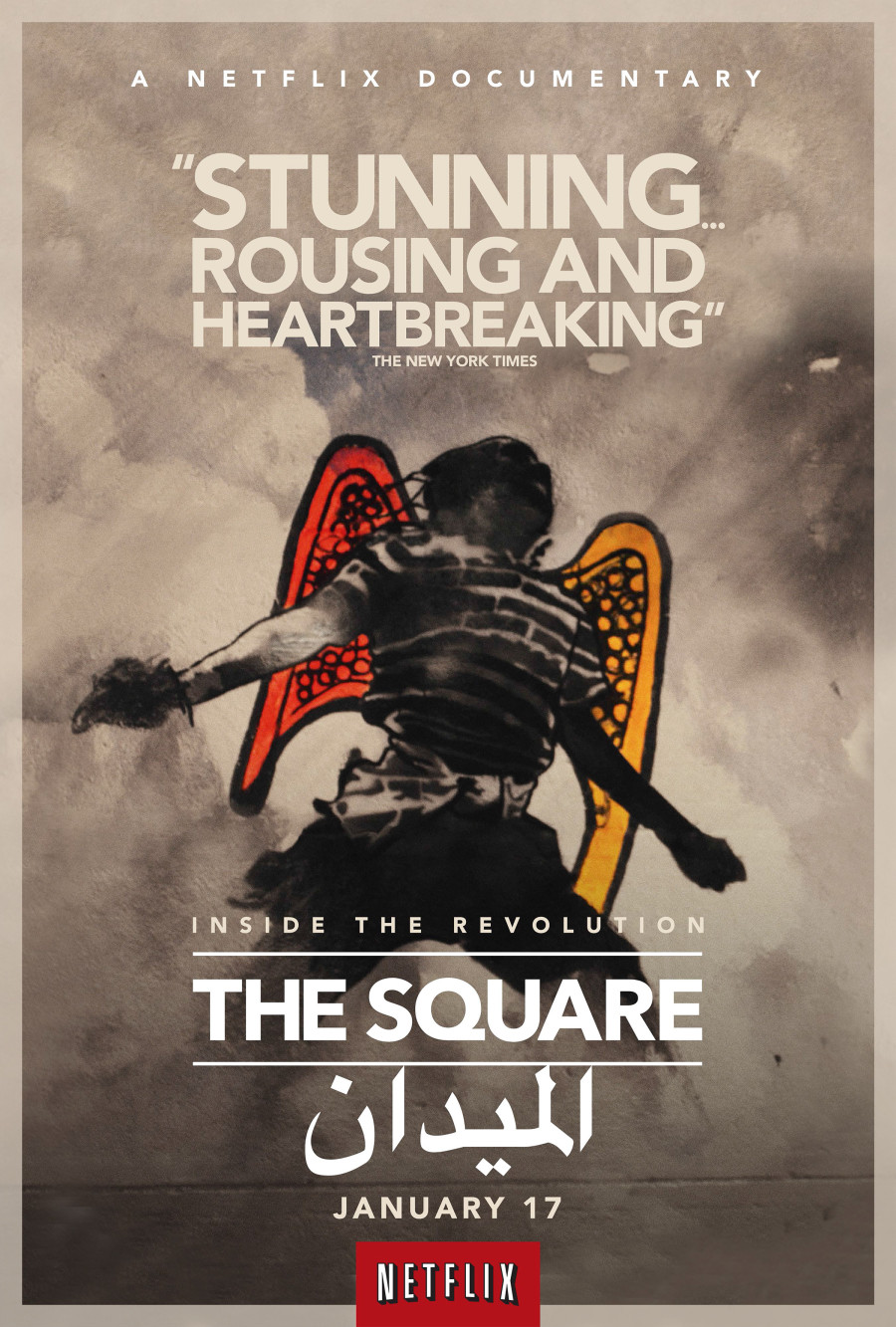
      Netflix is also planning to team up with larger studios such as DreamWorks Animation and Disney to release new series based off of existing shows or franchises. Netflix was nominated for and won a Golden Globe award for its original series “House of Cards” and just this year its original document “The Square” was nominated for an academy award. 


Thursday, October 9, 2014

"And the Other Way is Wrong" - David Fincher

Over on Vimeo and YouTube, a film educator named Tony Zhou has been creating a short web series called Every Frame a Painting, where in every episode he breaks down the visual approach of a popular director to examine what elevates that director's work. Last week, in anticipation of David Fincher's new film Gone Girl (which I'd strongly recommend),  Zhou released a new video breaking down Fincher's style, from his breakout film Se7en up through his work on House of Cards and Gone Girl, with a particular interest on Fincher's use of blocking and framing. This video, particularly the bit about featuring the police station scenes from Se7en, emphasized to me just how important framing can be in creating power dynamics between characters in a scene. As evidenced by the video, great directors can bring a cinematic style to something as simple as two characters spouting exposition, which can elevate a film from good to great. The restrictions that Fincher puts on his own shot choices, which all seem to have evolved from his deep understanding of the grammer of film, allow him to tell a story in the best possible way. Another article I read this week about Fincher and Gone Girl noted that Fincher's specialty is in adapting narrative material (the origins of Facebook, a pulpy detective story, etc.) and introducing a cinematic element to these stories that heightens the drama and deepens the audience's understanding of the characters.


David Fincher - And the Other Way is Wrong from Tony Zhou on Vimeo.

Friday, October 3, 2014

The Master Craft of David Fincher

In honor of David Fincher's new film Gone Girl, lets take a look into the sense of style in his direction that has put him into the forefront of Hollywood. After working a couple years with Industrial Light and Magic Fincher left to direct music videos and commercials. It wasn't until 1992 when he made his first feature Alien 3 that we got a glimpse into his talent. It's an odd film to go back and look at after knowing all the films he has made now but it's still great to check out. The crazy thing about David Fincher is that you can see him grow throughout each film he has made, either toning his style or tweaking his sense of direction.

That green and blue.

From there Fincher would make two amazing films Se7en and Fight Club, and these two films would turn him into one of the biggest directors today. You can see in Se7en the way he directs just two or three people talking and then turns just that into something cinematic and intense. Fincher is known to not really use handheld shots and always keep the camera locked onto a tripod or a track. He knows when to cut and which shot to use to build up tension until it all falls. You can clearly see this throughout Zodiac and the anxiety you get from watching the film. Throughout the film Fincher uses some beautiful insert shots of detectives scrambling through notes and puzzles left behind by the killer. And you can see how that carried over to Netflix's House of Cards and in an odd way there's also a serial killer in that show too.

As time passed Fincher further toned his style but this time through his production design and the colors used in his films. Starting with Panic Room in 2002, Fincher's films started to get this green and blue tint. This was only expanded when he made The Social Network, The Girl With the Dragon tattoo, and now Gone Girl. Fincher combines these elements and just from watching his films you know exactly what he wants, and no matter how many takes it takes, he will get it.


Friday, September 19, 2014

4th Wall

Ive always been iffy about my feelings towards breaking the 4th wall. Breaking the 4th wall is when a character in a film talks directly to, or acknowledges the audience watching the film. I'm indecisive about this technique, because it throws you out of the film for a moment, which means if the movie is not engaging enough to begun with, it may be hard to fall back into the world of the film. however when it is done correctly it can make for an amazing viewing experience.  

One of my favorite examples of breaking the 4ht wall is in Woody Allen’s Annie Hall. Annie Hall is about a comedian in New York City named Alvy Singer and his relationships and love interests throughout his life. Through out this movie Allen’s character, Alvy, breaks the 4th wall and talks directly to the audience. Allen later said he chose to use this Technique “because I felt many of the people in the audience had the same feelings and the same problems. I wanted to talk to them directly and confront them.” 

Another excellent example of breaking the 4th wall is in the Netflix series House of Cars staring Kevin Spacey. This show is based on a BBC mini series which was based off a Michael Dobbs novel. The show centers around a power hungry, Congressman, and his equally heartless wife and their rise through the government. The creators of the show says that they use “Shakespeare’s direct address from Richard III, where the Main Character speaks directly to the audience.” the goes on to say “i think it is a really rich and effective way to bring an audience even close to the material.”


Fight Club also famously breaks the 4th wall, arguably the most seamlessly. Fight Club revolves around an insomniac and a strange soap salesman he meets on a plain. The two become unlikely fiends and start a fight club, that become more and more popular and spreads to many cities. The first time you see this film you might not even realize the 4th wall was being broke, however Ed Norton and Brad Pits characters, or character, do it relatively frequently. 


Friday, April 4, 2014

House of Cards Foreshadowing in the Final Scene


SPOILERS

      Music in television and movies are a great way to create a feel or emotion and really set the scene. Another way to use music is to foreshadow future events. In the final episode of House of Cards they use music to potentially foreshadow the feeling of season 3.

     In the final episode the protagonist Frank Underwood meets with his enemy Raymond Tusk at an opera. During the conversation Tusk tells Frank that when he is put in prison to try and remember how beautiful the music was tonight. To which Frank responds "I never liked Puccini, he's such a downer. I prefer a happier tone" he then walks away humming hail to the chief. 

     Later in the final scene of the episode when Frank Underwood's final plan works and he is awarded the the presidency. As he is walking down the hallway to the oval office there is opera playing in the background. After hearing it I did some poking around and discovered that the Puccini is also what is playing in the background. I don't know exactly what that means for the next scene, but I am predicting that it will be bad news for Frank Underwood since he thinks Puccini is a downer and his music is what was being played over Frank's final moment of success as he finally reaches his goal.

Friday, March 7, 2014

Netflix Original Content

     Netflix is a provider of on demand video streaming over the internet and a by mail DVD distribution service. The company was established in 1997 with its headquarters in Los Gatos, California. Just ten years later Netflix announced that it had delivered its billionth DVD. And then in 2011 Netflix had 23.6 million subscribers in the United States and 26 million worldwide. According to a 2013 report by Sandvine, Netflix is the biggest source of North American downstream web traffic, at 32.3%, and registered 28.8% of aggregate traffic.
     Netflix's online streaming is so popular that it has started to create it's own content for it's site. In March 2011 Netflix released its plan to start airing it's original content beginning with the political drama House of Cards which debuted February 2013. Since then Netflix has picked up two seasons of Lillyhammer a season of Arrested Development (with talks of doing another), and two more original shows Hemlock Grove and Orange is the New Black. All three of Netflix's original shows have been approved for more seasons.
     The state of television certainly is taking an interesting turn with full series being created or revived solely for viewing on the internet. This system seems to be going well, but everything could change for the better or worse once Amazon makes its play at the online TV and Movie streaming business.    

Friday, February 21, 2014

The Fourth Wall

     The fourth wall is a term that comes from the theater. Typically on a stage set there are three visible walls, one in the back and one on the left and the right. The fourth wall is an imaginary wall at the front that is left open so the audience can see into the room and watch the action. This "wall" is used to separate the audience from the action and keep a sense of realism about the story. Television and movies also have their own version of the fourth wall. Although there is no actual wall in those media the camera creates its own. So what happens when some one acknowledges the wall?
      Talking to the audience directly, noticing the camera, or talking about being in a show/movie/book is all called "breaking the fourth wall". Why would someone break the illusion and the reality that is created in their medium? Originally it started out as a comical action. It was funny to see a character realize that they are in some work of fiction and see how they react to it. A character that commonly breaks the fourth wall for comedic purposes is Marvel's Deadpool.


     Unlike Deadpool comics some shows will only do it once and awhile for a quick joke. Such as in an episode of "30 Rock" the Character Liz Lemon is talking about how great Verizon phones are and then asks "Can we get our money now please?"
     
     Breaking the fourth wall doesn't always have to be a used in a comedic way some serious dramas break the fourth wall and it at first seems jarring and uncomfortable, but that is the perfect feel to fit a show like "House of Cards". In both the American and the British version the main character Francis will look into the camera and have a one sided conversation with the audience. This makes the character feel even more all knowing and intimidating.
                                   

Friday, November 15, 2013

Netflix Takes on Movies


There’s no doubt that over the past decade, conventional television and film has felt a squeeze from online media providers like Netflix.  With the advent of full television series produced for the internet being ushered in by The House of Cards, the future of media consumption his definitely quickly evolving. 


For the most part, film has stayed the same, at least the initial release of each film, as it has been for many years. Now, however, Netflix is once again trying to change the game.  They’ve just announced that they’d like to start producing full scale, high budget films, for both the Internet and the theater. They’d ideally be released at the same time, over both venues. The caveat is, many movie theaters will not show a Netflix film, for fear that it would take away from ticket sales. It seems that Hollywood wants to stick to the archaic version of movie distribution. Regardless, I guess we’ll have to see how this pans out, as Netflix’s title as a game changer should never be underestimated.

Friday, September 27, 2013

Shock of 65th Emmy Awards


Award Season has finally kicked off! The Emmy Awards were this weekend and they were quite different from years before. Check it out.

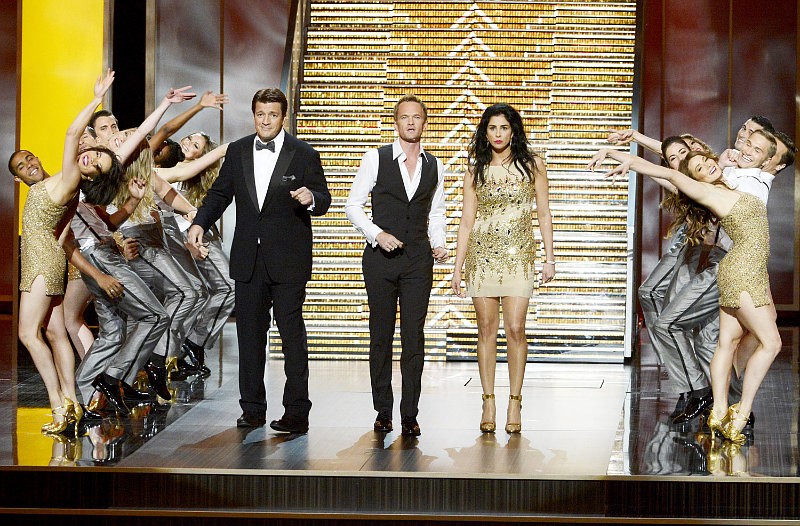
Neil Patrick Harris was the host this year so expectations were high, not only because he has quite the experience with hosting big award shows like the Tonys, but also because he is the main character of the funny sit-com How I Met Your Mother.  However, perhaps my expectations were too high.  The grand entrance of an original musical number, specially choreographed to the Emmys for our excitement and to keep us wanting to watch more was none other than disappointing.  Mostly because there wasn’t one.  Instead it was like most previous openings where other celebrities are in some way trying to tell him how to host a show and what he is doing wrong, as well as him taking a few jabs at other celebrities in the audience.  The opening of the show was quite sad, much like the rest of the show.
 
This year the show seemed more to me as a funeral reception more than anything.  Like Ken Levine, a hollywood comedic writer, put it, “it was one long funeral interspersed with production numbers.” There were individual tributes, musical tributes, presidential tributes, and they even felt it necessary to show Lee Harvey Oswald get shot again. I was very confused by all of this. Especially by Elton Johns tribute to Liberace.  Its been over 25 years, I didn’t get it but maybe im just missing something, I don’t know.  Regardless, I did not see the relevance most of that had to do with the actual Emmy awards.


To kick off one of the big shocks of the night. Merrit Wever, from Nurse Jackie, won the Emmy for Outstanding Supporting Actress in a Comedy Series. She out-won Anna Chlumsky from Veep, Jane Krakowski from 30 Rock, Jane Lynch from Glee, Mayim Bialik from The Big Bang Theory, Sofia Vergara in Modern Family, and two-time consecutive Emmy winner, Julie Bowen, from Modern Family. I definitely didn’t see that one coming. And perhaps what was even more unexpected was her speech.  A short and humorous “ Thank you so much. I gotta go. Bye” was all she said in response to her new piece of gold.  Maybe she was afraid of the getting cut off by the music cue in the middle of an important acknowledgment like every other winning actor and actress of the night. Either way it was actually pretty fun to watch since it was not at all what I was expecting to happen.


The other major shock of the night was when Jeff Daniels, as Will McAvoy, in the show The Newsroom, was the winner for Outstanding Lead Actor in Drama Series.  He beat out John Hamm as Don Draper in Mad Men,  Hugh Bonneville  for Downton Abbey, Damian Lewis for Homeland,   Kevin Spacey for House of Cards, and Bryan Cranston as the infamous Walter White of Breaking Bad.   My mouth dropped to say the least. I definitely would have lost a bet on this one.  All of these actors do tremendous work, however I firmly believe Breaking Bad would not be the show it is without Bryan Cranston.  His performances are incredible and very much worth of the acknowledgement. 


 On a different note, The mid-show performance referencing all of the shows for best TV drama was really cool to watch. The choreography was spectacular in the way that every move correlated to the different themes of the shows and what they represent.  It was by far my favorite part of the entire show.  Besides when Tina Fey and Amy Poehler decided to crawl up the stage. That was priceless.


The Emmy awards are always something I look forward to watching around this time of year.  However this year was a miss in terms of entertainment for me so I hope for the Oscars and Golden Globes to make up for it in the next few months.                             

Thursday, September 5, 2013

New Onscreen Text Messages in Fiction TV


Recently there has been a rise in a new form of onscreen information in fiction television.  Made famous by the BBC's Sherlock and Netflix's House of Cards, is the concept of displaying text messages on screen for the audience to see.  These messages come completely separate from the phone and aren't your traditional over-the-shoulder shot that we are used to.  The interesting difference between the two comes in the execution of the concept.  Sherlock features the simple plain text as seen in Image 1 below.  Whereas House of Cards, actually uses a text bubble which makes it feel much more directly out of a smartphone texting application (see Image 2). 

enter image description here
Image 1

Image 2

Admittedly when you start watching these shows (and I have seen all released episodes of both), it is somewhat distracting that this information is being displayed in this fashion.  Once you get a fair ways into an episode however, this technique becomes very effective.  I will say that I find the Sherlock format a bit more efficient in lay out and definitely more seamlessly integrated in; House of Cards sometimes uses the technique in a more distracting fashion.  Part of the reason why it is so seamless in Sherlock is that Sherlock incorporates it as a way to have insight into Sherlock Homes' mind.  When he thinks his way through a problem, his many possibilities are projected onto the screen (see below).  This really helps tie the technique together in a big way.  
    
    
I am very excited to see how this technique of extra onscreen text plays out in the future.  It has huge potential to be a great way to help tell stories.  I would be interested to see how long it takes for it to jump to movies.  

Thursday, February 21, 2013

HBOGO

     The ability to re-watch any show on television new or old is a technology of a generation.  Since Netflix started in 1999 they have been the leader in changing the game of how we watch television on our computers.  The technology spread fast and soon enough every television station will have some type of internet access for live viewing or re-programming.  In 2010 HBO launched its internet streaming syndicator, HBOGO.  This allowed HBO to maintain its credibility as a high powered premium channel with great respect for the quality of programming.


     HBO has been reaching out to service providers to make deals so more people have access to HBO as long as they are paying the premium through the service provider.  Once HBO made a deal with Optimum I immediately created an account with HBO GO.  Since then I have been catching up on my favorite HBO shows like Entourage, Boardwalk Empire, The Sopranos and I can't wait till Game of Thrones season 3 comes out.  What is nice about HBO that differs from companies like Netflix and Hulu Plus is that because HBO has its own programming they can put their shows up on their site immediately after they air giving the viewer the ability to access them anytime.  Netflix has recently taking the role of studio with the release of their first original series House of Cards.  I can't wait to view great television shows on my computer at home on my own time.

Friday, February 15, 2013

Becoming Internet Famous


TV is moving online, or so it seems. Most younger demographics consume TV content through the internet, legally, or unfortunately for content providers, illegally. Youtube and Netflix are famously paying huge money for original content, with the latter's House of Cards rivaling primetime content from premium cable channels.

Similarly, original web content is an exploding market. Websites like CollegeHumor are thriving, producing new comedic content every day, occasionally nabbing an A-list celebrity for a cameo.

With so many people making content for the internet, how is one to discover quality and separate the good from the bad? Thus is the problem. Without millions in funding or a big name attached, months, if not years of hard work can disappear in the black hole that is the internet.

I worked on a web series last semester called John and Kyle Do Everything (which you can find here), and while I am thrilled with the reception we got, it took us months to understand how exactly to get people to watch the show. We did a condom handout in the on-campus dining halls, with our logo emblazoned on the wrappers. Classic.

In an environment as expansive and impersonal as the Internet, web marketing really boils down to establishing person-to-person connections. How many times have you received an email telling you to check out a website and immediately deleted it? Thus is the problem... or at least another problem. Try to market too broadly and people will think you are a robot (and you will most likely get your accounts suspended).

If you want to get big on the internet, you need to get small first. Build your empire from the ground up, person by person.

Monday, February 11, 2013

Spacey delivers the chills


Last weekend a friend noticed a new original series that was on Netflix called “House of Cards”. When I saw it was a ruthless political drama starring Kevin Spacey, I had to give it a shot. Spacey plays congressman Frank Underwood, a brilliantly manipulative and cunning politician who will stop at nothing to accomplish his goals. David Fincher directs this US remake of a BBC series by the same name from the early 90s.

The show starts with the presidential election of the democratic candidate, Underwood’s party. Frank was expecting to be named Secretary of State as reward for helping win the election, however the president reneged on his promise, sending Frank on a path of merciless retribution.

Kate Mara, best known from “American Horror Story”, plays an integral role in the series as Zoe Barnes, a journalist from the Washington Herald desperate for hard hitting political news. Frank is more than willing to obliged…as long as she paints the picture he wants.

Season 2 will supposedly start filming in the coming months, so I would expect it to hit Netflix for the Fall season, however I’m keeping my fingers crossed they make it this summer.