Showing posts with label Breaking BAd. Show all posts

Thursday, April 7, 2016

Interpreting Narrative

So, my film is not finished, but I've been showing a lot of people the stuff I have so far. And it's really interesting to hear what people say about it. Everybody has a different interpretation. Everybody has a different perspective -- telling me things that I never thought of while filming.

This got me thinking a lot about interpreting story and how different backgrounds and beliefs can cause different interpretations. 

Here's a little story.

A while ago, I dated this girl named Courtney. She wasn’t the nicest girl -- actually, she was downright cruel, but I can’t deny the love we shared for television and movies. After watching a show or a movie, we would both share our individual opinions and reasons for our opinions. Though we may not have always agreed, (which happened frequently thus resulting in our break up) we would both have educated and thought-out reasons for why we liked or didn’t like a show or movie. This was one of her few redeeming qualities.
            
Courtney and I both followed the show Breaking Bad very closely. It was perfect for television junkies like the two of us because it had strong character development, clever symbolism and great cinematography. We would watch season after season guessing what would happen next. The show follows the life of Walter White, who is an under appreciated chemistry teacher who turns to cooking methamphetamine to provide for his family after he is informed that he has lung cancer. As the show progresses, you see how the life of crime changes Walter White as he deviates from simple family man to becoming a megalomaniac drug kingpin.
          
 Breaking Bad shows the transformation from the good guy to the bad guy. And what usually happens to the bad guy at the end of a movie or television show? They die. When Breaking Bad was coming to its final season, Courtney and I made predictions on how the show would end. Opposed to popular belief, Courtney did not think that Walter was going to die at the end. She was certain that the writers were going to show how Walter pushed away everything that he valued in his life and then show him living with nothing left. I thought that was absurd. There was no way that the writers would let Walter White live after all of the villainous things that he had done throughout the series. Courtney and I had legitimate fights where we would yell and scream at each other because we couldn’t agree how it would end. More of her yelling at me because I didn't agree with her. Well, at least, that's how I remember it. 

She was convinced that Walter White would have to live with himself after ruining his life that he worked so hard to afford. She thought that this would be the punishment that Walter deserved giving the viewers a satisfying ending. I thought that Walter was going to die. I thought that the whole show revolved around how Walter tied to escape death, from when he first found out he had lung cancer to killing his drug competitor, and the conclusion would show how death finally caught up to him. Courtney did not like this. But when the finale premiered and Walter White died, I didn’t let Courtney forget it. It felt great being right. But more importantly, this showed how our different beliefs resulted in our different interpretations.


Wednesday, September 3, 2014

Walter White: Boring Lame Chemistry Teacher to Bad Ass Meth Cook

Let's be real here; for those of you who have seen Breaking Bad, you know why it's such an amazing show. For those of you who haven't seen it, just stop reading this post and go on a binge watch right now.
Character development is such an essential item for all films and television shows. There's nothing better than to see characters grow and change. And to be honest, in the words of Yeezus himself, "Imma let you finish, but Walter White had the best character development of all time."


Breaking Bad first came out in 2008, but the show wasn't buzzing at that time. It only got hyped up and became the most watched show on American cable when it was approaching the season finale. People were starting to go crazy with every episode being a cliff hanger. As the show started to get more noticed and recognized, everyone just knew Walter White as the bad ass, bald chemistry teacher suffering from Stage III lung cancer who could also cook some high quality blue meth. At least, that's who I knew Mr. White to be when I started hearing about Breaking Bad. But Mr. White was never anything close to being Heisenberg at the start of it. Instead he was the socially awkward, boring chemistry teacher.

He had hair on his head too. Weird.
How did he become such a bad ass you're wondering? It's obviously because of Aaron Paul's character, Jesse Pinkman.

Pinkman, bitch!
Yeah, Pinkman. I mean, just look at this: Walter starts doing the famous 'grab crotch' motion to anyone that makes him angry, just like Pinkman. 


Okay...so maybe that's not entirely the reason, but if we really want to explore this development, it all goes back to the man who plays the genius: Bryan Cranston. The writers never really developed a back story as to who Walter White really is when developing the show. So, Cranston made his own past. He gained weight for the show and dressed in bland and boring colors like green and brown. He also took some attributes that his father had like being slightly slouched over to make it seem like the character had so much weight on his shoulders. He starts off like this, being the protagonist in the show. But later on, we start to see how he becomes the antagonist and we as the audience start to question his morality in choices as well.

Some have suggested that Walter White actually adopts some traits off of the people he's murdered, and maybe that's what has led to him being such a bad ass. And it's a pretty accurate theory. Gus was probably the most irritating character of all for Mr. White; he was always ahead of Mr. White's plan and just knew exactly what to do. Later on, Walter would adopt the same concept. We even seen a little bit of Mike's personality in Walter, especially in the season finale. Mike had a non-sense attitude, kind of serious humor, and Walter would eventually develop the same personality, which can be witnessed here:


He pulls off some smooth tricks that really do make him the bad ass that he is. For example, he pulls of a stunt when selling meth to one of his "bosses" early in the season:


And other pretty sneaky stunts like when he finally got rid of Gus:


Whether or not you think Mr. White is the bad ass bad guy at the end of it all, he did start out pretty lame. But to become this genius meth cook that happens to be two steps ahead of his enemies is still pretty awesome if you ask me. We even witness in the beginning of the season how he ends up being the one pursued all the time. But eventually towards the fourth season, he becomes the pursuer. He's no longer Walter White at the end of it, but instead he finally becomes Heisenberg. 

Always in style.


Friday, March 7, 2014

Shows To Watch Over the Duration of What Will Hopefully Be a Rather Long Lifetime

Over the years, a great many people have asked, "Ryan, what television shows are worth watching?" (Editor's Note: Only one person has ever actually asked him this.) I have spent much of my own time pondering what one's time would be put to best use, in terms of television gazing. 

And so with nothing else to do, (Editor's Note: He wrote this about an hour before a final he had not studied for at all up until that point. And he spent half an hour writing this.) I wrote up a guide to shows that deserved to be watched. Hope it is of some use to someone someday:

Essentials
- The Sopranos (My pick for the best TV show of all time.  It’s about a mob boss in New Jersey named Tony Soprano who is stricken with panic attacks. He goes to therapy to try and solve them. Through both his therapy sessions and his life, we see him struggle with sin, lust, greed, anger. Basically everything that makes us human. And it’s about whether he can overcome those things, or if he’ll be crushed by them. If Freud, Shakespeare, and Martin Scorsese all made a show together, it’d be this. There’s much more to it than that (He’s not the only character), but all this is what that’s what makes the show interesting to me.)
- The Wire (The general consensus pick for the greatest show of all time. Slow, but so worth it. It’s a very smart dissection of the drug war on a Dickensian scale, analyzing every single possible angle of “The Game”.  If you want to understand that’s wrong with the drug war, this is where to find out.)
- Deadwood (The other pick that sometimes people make for the greatest television show of all time. Of the top 3, it is probably the most optimistic, but that is not saying much. Takes place in a gold mining town in South Dakota during 1877. All about how societies slowly grows. Think Shakespeare if Shakespeare used the word cocksucker every thirty seconds. )
- Mad Men (It is The Great Gatsby on television. All about people and their attempts to acquire happiness, or what they believe is happiness, during a very iconic era of this country. Riveting stuff.)
- Breaking Bad (Favorite show of the last five years. What does it take to break a good man?)
- The Simpsons (Trust me, early Simpsons changed the game. They’re brilliant. For the 90’s, greatestAmerican satire there was. I mean, they’ve invented words that are now in Webster’s Dictionary. That’s how good it is! THEY MADE UP WORDS.)

Not Quite in Top 6 But Might As Well Still Be Essential
- The Shield (Ifyou combined The Wire and Breaking bad. Plus, best series finale to a showever. Taking place in a drug ravaged area of L.A. called Farmington, it’s all about this small squad of cops that is allowed to deal with drug dealers by anymeans necessary. Sometimes they do the right thing. Other times, they don’t. But then, what price are you willing to pay for your safety?)
- Arrested Development (If you haven’t seen this, I’ll be disappointed.)
- Battlestar Galactica (The newer one. I haven’t actually seen it yet, but the general acclaim surrounding this inclines me to say to watch this one.)
- Game of Thrones (Lord of the Rings with more blood, sex, and modern themes of power and politics. And lots of incest.)
- Louie (Modern day Woody Allen basically. Funny but introspective. I love this show to death, and one episodein particular had a massive impact on me emotionally… I am a dork.)

Some Random Great Shows That Are Not Necessarily Essential
- Justified (This show is so good that even when it is slow it is still better than 90% of what’s on tv. But I don’t want to say essential because it’s still on and they could mess it up. I doubt they will at this point though.)
- Terriers (Little known, it only ran a season, but holy shit was it great. Think a modern noir films about two shaggy private eyes working for scraps in southern California. Most fun you’ll have all year. Please watch this show, it deserves to be known!)
- Veronica Mars (Film noir that takes place in high school. Witty and dark, it is a compelling private eye shows. BUT WATCH TERRIERS FIRST.)
- Firefly (I’ll just use what Joss Whedon said. “It’s about nine people looking into the blackness of space and seeing nine different things.”)
- Comedy Bang Bang (You can knock this show out in a day. Parody of late night talk shows, really absurd humor. May not be up your alley, but I love it.)
- Cheers (Not as crazy or manic as current sitcoms and more character based, but great stuff in here if you can get into it.)

Great But Flawed Shows Worth Watching
- Buffy/Angel (Great, great character work. Amazing dialogue. And some wickedly inventive plotting. That said, when it's bad, it's really bad. Which is unfortunately something that happens more often then I'd like to admit. Especially in the beginning, Buffy's rough to get through. I would just skip season one entirely, but many would disagree. Ultimately, it's your call. I haven't seen Angel, but understand that it is of equal merit.)
- Lost (People either love or hate this show. Watch it to enjoy the stellar character work, but do not expect a perfect resolution to all your questions.)
- Friday Night Lights (Another series I have not actually seen but I understand is very good, the only reason I put it on flawed is that a certain subplot in season 2 is still, to this day, routinely mocked by the TV watching populace at large.)
- West Wing (Great in the early seasons, but the seasons not penned by Aaron Sorkin are apparently lacking.)
- Scrubs
- Boardwalk Empire
- Homeland
- Malcolm in the Middle
- 24

Friday, February 21, 2014

What Editing Can Do to Feeling

Many people have seen the popular she show the seriousness, like the emotion of the actors in the scenes, what the actors are doing within the shot, how the show is composed, what music is chosen, and so many more. You can really give a show a certain feeling by the way you edit it. A perfect example of this is Breaking Bad The Sitcom. Many people have seen the popular show Breaking Bad. The show is a very serious crime drama. Youtuber Sacha Proctor created many videos from many different episodes of Breaking Bad. It is funny, but at the same time really hard to watch. Here is an example of Breaking Bad The Sitcom and an original clips from Breaking Bad.
Breaking Bad The Sitcom

Clips from the original Breaking Bad
So as you can see there is a huge difference in the feeling, even though many of the same scenes were used. The way it's edited can really set the mood. I definitely recommend watching some more of Sacha Proctor's videos.


Friday, January 31, 2014

Music in The Sopranos: Offering Humanity in a Show Absent of It

                If you’re looking for a show that explores the kindness and generosity of the human spirit, than The Sopranos is not your best option. David Chase's television classic focuses on the anxieties and personal struggles of middle aged mobster Tony Soprano, played by James Gandolfini, as he goes through therapy. The show's viewpoint of people and the psychological makeup that makes them tick is deeply pessimistic. Everyone is selfish and self-serving. Conversations are not exchanges of thoughts and ideas as much as a series of thoughts spoken aloud to one another with little to no value given to what the other participant says. Characters store emotions up inside of them for years until they explode, often at the expense of people entirely uninvolved with the situation. And by the end of the show, many characters who claimed to have changed themselves and their evil ways find themselves in a far worse place than they ever started. There are moments of empathy and humanity, and these scenes are indeed powerful, but they are few and far between, more often the exception to the rule. Basically, the show seems to believe that people are often no good. This is such a deeply pessimistic viewpoint runs the danger of being far too oppressive viewpoint. But it never does, in no small part thanks to the music.

                The use of licensed music in film and television is nothing new. Ever since movies like Mean Streets, Easy Rider and American Graffiti, licensed music has become a means of accentuating and commenting upon the emotional core of any scene in a variety of films and television shows. And certain television shows, such as LOST, Twin Peaks and Breaking Bad, have used music to great effect. But The Sopranos truly stands out amongst them all with the strength of aural landscape. Songs are deftly utilized to convey any number of sentiments. Sometimes they will be an indicator of the times or a character’s interest, such as when Britney Spears plays in the background of a fast food restaurant. Often the music is used as a means of getting into a character’s head, such as at the end of the episode Blue Comet, when a sparse piano piece lays as Tony sits on a bed alone holding onto a machine gun, his friends either fatally injured or killed. Sometimes it serves as a means of juxtaposition, such as in the pilot when a Doo-Wop song plays as Tony beats a man so he can get his money. One of the most notable uses of music is the montage that begins season two, which plays to Frank Sinatra’s “It Was A Very Good Year.”


                As we watch the characters live their everyday lives, Frank sings nostalgically about his days of youth. But intertwined with this nostalgia is a sense of melancholy. As each verse passes, the character gets older and older, yet he still finds himself dwelling on the past. The song ends in the autumn, with the character reflecting on all the good times. Autumn, the season where the weather gets colder and the plants and trees start to die. The brutal winter is not here yet, but it is on its way. But these are the good times. This may be as good as it ever gets. Revel in it, enjoy it. Because it may not always be this way. And so as we watch these characters live their everyday life, there a combined sense of comfort at how things are and one of dread for what is to come. I was able to articulate this by analyzing the song, but it is understood on an emotional level as soon as one watches it. That the show could conjure such a complex emotion out of a short three minute montage is laudable. Magical moments like this are strewn all over The Sopranos seven year run, to the point where it makes the perfect mesh of song and image seem easy.

                There is such a consistency to the one of the music, with much of the selections being a heavy dose of classic rocks songs such as The Rolling Stones and The Kings mixed with a hint of deeply humanistic, sometimes spiritual songs. The music landscape almost becomes, if not another character, than an entirely different viewpoint for the show to articulate and further its overall perspective. A song does not only comment and accentuate the single scene it plays against; it works alongside the established musical palette  and deepens our understanding of the overall show. The song selections come together and form a shading of the show’s viewpoint as important and tangible as the writing, acting and cinematography. And whereas the other shadings of this perspective typically work to further the show’s pessimistic declaration of humanity, the music instead offers with a deeply emotional and sentimental tone that allows us to enjoy the characters and occasionally empathize with them. This is not the only aspect of the show to make these characters and the shows viewpoint tolerable, humor also being quite important to what makes the show work, but it may be the most affective one. 

Wednesday, December 4, 2013

Binge Watching

In a world of endless television shows and little to no time to watch them, I've decided that I will partake in a binge of television when I go home for winter break in just a few weeks. This semester has been a busy one, which has given me no time to watch the shows I've been meaning to watch for a few months now.


This has been one of my favorite shows for the past couple years now, but due to my recent schedule, I haven't been able to find the time to watch any episodes past the Season 4 premiere a couple months ago. It's been nearly impossible to avoid overhearing any spoilers giving insight into the newest season, but up to this point, I've managed to steer clear of any important details that will ruin the surprises. Apparently, the last couple episodes have been phenomenal--good enough to redeem the show for it's previously terrible season 3--so I'm overly excited to catch up on the show. The Walking Dead is definitely at the top of my list of shows that I'll be binge watching over the upcoming break.


Now, I can honestly say I haven't watched a single episode of Game of Thrones, but I've recently decided that it's being put on the list for winter break. I've been told it's long, complex, and often requires a lot of attention to understand what's going on (due to the surplus amount of characters), but with a month off from school that requires minimal mental and physical energy, I figure it won't hurt to watch a show that takes a little bit of thinking. Also, the blood, swords, and dragons certainly don't hurt. I also just really want to watch this "Red Wedding" that I've heard oh so much about. My friends couldn't talk about the episode since it made them so upset. I'm really interested to see what kind of show has the power to make so many people speechless, and that's why it's going on the list.


Breaking Bad is the last of the shows I'll list for you since I could just keep going and going and going. I know very little about this show. It has something to do with a chemistry teacher who turns into a meth dealer. He has an associate (as seen in the above photo) who I know absolutely nothing about. All I really know is that this show has to be some kind of masterpiece for it to receive as many rewards as it has and to have had so many avid followers. I'm a little late on the bandwagon, I know, but it's never too late to enjoy a great show.

With a month-long winter break coming along in just a few short weeks, I've been compiling a list of shows I feel that I should at least begin watching. I've listed just a few, but there are at least half a dozen more shows that I could list as well. While some people will be outside playing in the snow and others will be spending their time traveling, I'll be home binge watching.

Friday, October 4, 2013

Comedy vs. Drama in Television

Originally, I wanted to make this post about Nurse Jackie and how it is a very different kind of comedy. A darker kind of comedy. But I've trashed that blog post and I'm starting over. Instead, I'd like to take a moment to reflect on what television classifies comedy and drama, and the fine line between them.

In the 2010 Emmys award show, Edie Falco, who plays Jackie Peyton in Showtime's Nurse Jackie, said in her acceptance speech for Outstanding Actress in a Comedy Series, "Oh, this is just the most ridiculous thing that has ever, ever happened in the history of this lovely awards show. Thank you so much. I'm not funny." And quite frankly, she is correct. Her character is dead serious at all times. So why is the show considered a comedy? Let's take a moment to reflect some other shows.

Weeds and Breaking Bad are, on paper, extremely similar shows. Beg to differ? Pop quiz. Which show featured a child committing murder with the weapon of a baseball bat? Answer: Weeds. The show certainly does not lack the dramatic situations found in Breaking Bad. So what makes one a comedy and the other a drama? In reality, the only thing differentiating the two is a lighter tone obtained almost single-handedly through dialogue.


However, it goes both ways. Dramas can often be comedic. With every drama, you need the supporting characters that provide comedic relief. That's what makes Nurse Jackie on such a fine line. Jackie is dead serious at all times. She has no funny side. Meanwhile, plenty supporting characters like Zoey and Cooper deliver the comedic side. Even in shows with an extremely dark main character, like Dexter, the audience is still drawn to him. We are able to see past his behavior as a result of his moral ambiguity, and humor plays an important role in that conflict. His inner dialogue is often a satirical statement on human emotion. Even so, nobody would call Dexter a comedy.


I don't want to be misunderstood. Comedies with a serious touch, like Nurse Jackie and Weeds, aren't trivializing the main characters and their situations. In fact, these television shows are written with far more depth and complexity than the average comedy. Still, there seems to be a lot of gray area when it comes to categorizing the genre of shows. Maybe, just possibly, there really is no difference between comedy and drama. Or, maybe, I'm wrong.

Friday, September 27, 2013

Shock of 65th Emmy Awards


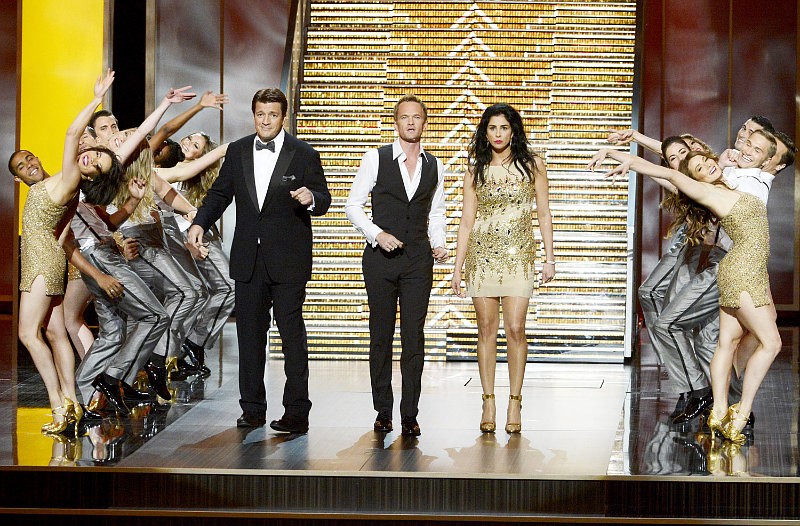
Award Season has finally kicked off! The Emmy Awards were this weekend and they were quite different from years before. Check it out.

Neil Patrick Harris was the host this year so expectations were high, not only because he has quite the experience with hosting big award shows like the Tonys, but also because he is the main character of the funny sit-com How I Met Your Mother.  However, perhaps my expectations were too high.  The grand entrance of an original musical number, specially choreographed to the Emmys for our excitement and to keep us wanting to watch more was none other than disappointing.  Mostly because there wasn’t one.  Instead it was like most previous openings where other celebrities are in some way trying to tell him how to host a show and what he is doing wrong, as well as him taking a few jabs at other celebrities in the audience.  The opening of the show was quite sad, much like the rest of the show.
 
This year the show seemed more to me as a funeral reception more than anything.  Like Ken Levine, a hollywood comedic writer, put it, “it was one long funeral interspersed with production numbers.” There were individual tributes, musical tributes, presidential tributes, and they even felt it necessary to show Lee Harvey Oswald get shot again. I was very confused by all of this. Especially by Elton Johns tribute to Liberace.  Its been over 25 years, I didn’t get it but maybe im just missing something, I don’t know.  Regardless, I did not see the relevance most of that had to do with the actual Emmy awards.


To kick off one of the big shocks of the night. Merrit Wever, from Nurse Jackie, won the Emmy for Outstanding Supporting Actress in a Comedy Series. She out-won Anna Chlumsky from Veep, Jane Krakowski from 30 Rock, Jane Lynch from Glee, Mayim Bialik from The Big Bang Theory, Sofia Vergara in Modern Family, and two-time consecutive Emmy winner, Julie Bowen, from Modern Family. I definitely didn’t see that one coming. And perhaps what was even more unexpected was her speech.  A short and humorous “ Thank you so much. I gotta go. Bye” was all she said in response to her new piece of gold.  Maybe she was afraid of the getting cut off by the music cue in the middle of an important acknowledgment like every other winning actor and actress of the night. Either way it was actually pretty fun to watch since it was not at all what I was expecting to happen.


The other major shock of the night was when Jeff Daniels, as Will McAvoy, in the show The Newsroom, was the winner for Outstanding Lead Actor in Drama Series.  He beat out John Hamm as Don Draper in Mad Men,  Hugh Bonneville  for Downton Abbey, Damian Lewis for Homeland,   Kevin Spacey for House of Cards, and Bryan Cranston as the infamous Walter White of Breaking Bad.   My mouth dropped to say the least. I definitely would have lost a bet on this one.  All of these actors do tremendous work, however I firmly believe Breaking Bad would not be the show it is without Bryan Cranston.  His performances are incredible and very much worth of the acknowledgement. 


 On a different note, The mid-show performance referencing all of the shows for best TV drama was really cool to watch. The choreography was spectacular in the way that every move correlated to the different themes of the shows and what they represent.  It was by far my favorite part of the entire show.  Besides when Tina Fey and Amy Poehler decided to crawl up the stage. That was priceless.


The Emmy awards are always something I look forward to watching around this time of year.  However this year was a miss in terms of entertainment for me so I hope for the Oscars and Golden Globes to make up for it in the next few months.                             

Mark My Words: 'Masters of Sex' Will Change the Future of Television

For those of you haven't heard about Showtime's hot new drama, Masters of Sex is the real story of the sex study conducted by William Masters (played by Michael Sheen) and Virginia Johnson (played by Lizzy Caplan) in a time where even talking about sex was extremely taboo. It is a period piece, bringing us back to the late 50s aesthetically and culturally, but cannot possible be compared to Mad Men, as it reaches completely untouched territory.


Since The Sopranos, television drama has been in a violent-driven era. In terms of violence, television is flooded with adult content. And yes, there has been sexual adult content to a certain extent. Game of Thrones is the first show that comes to mind. But sex just happens to be in those shows. They do not revolve around it. With two monumental antiheroes, Dexter Morgan and Walter White, making their exit on the small screen, millions of television watchers are looking for the next big thing. And I promise you, Masters of Sex will be that thing. It's opening up so many doors in the television world: protagonists who are not heroes, are not antiheroes, but just naturally interesting and compelling. The television industry has gotten comfortable with using violence as a means for capturing viewers. And yes, it works. But we have to get out of this slump and continue progressing in television. Masters is going to do exactly that.

When I first heard that the show is about a sex study in which the two researchers actually observe sexual activity, I thought, "Okay, so Showtime picked up some extremely plot-elaborated porno...?" I had no plans on giving it a try. But after hearing such high remarks on the show, I decided to be brave and watch the pilot, which was released online two weeks before the premiere. I am very adamant about my three episode rule. When trying a new show, I have to watch three episodes before making any judgement, allowing sufficient time for them to show me what they've got. But halfway through the pilot, I was sold. It was nothing like I expected.

Masters successfully dove into the other half of adult content, and respectfully too, I might add. The show diverts from the real sexual graphicness that we assume we'll find. It takes place in the last 50s, a time so sexually clueless. William Masters is not a pervert, though risking the reputation, he's a scientist who believes we should be more aware of the way our body works. Secondly, the actual study is far less erotic than one would think. The study is conducted in a research hospital, so the lighting is not exactly sexy. Plus, the subjects in the study are hooked up to a bunch of wires, which actually is somewhat science fiction-esqe.

What I find so interesting is that we know where the show going. It isn't very hard to type the researchers names into Google and find out that they end up getting married. But it really doesn't seem to matter. It actual makes it all the more interesting to watch where they started and how their relationship, both professionally and romantically, grew over time. There's also no hiding how influential the study was. It was a major contributor to the openness of sexuality in the 60s and the feminist movement in the 70s. But quite frankly, those details make the story that much more appealing.

It's fascinating to see William Masters pioneer this study as he is very typical for a man of his time, even to an extreme when it comes to the way he interacts with women. He had no idea what he was about to discover and how that would completely change our society. His partner, Johnson, is also a fantastic character. She can almost be considered the first feminist. Johnson doesn't follow traditional ideas. For example, she doesn't understand why love and sex have to go together. Watching a woman without a degree be so vital to this study, where she finds herself becoming an equal partner and not an assistant, is really awesome. Not to mention, Sheen and Caplan are fantastic actors.


Masters of Sex is extremely refreshing to watch. It's a show about sex and birth and love, not war and death and rivalries. Hopefully it sets a new era of television drama, with stories that are naturally compelling without the need for darkness. I don't think the show will be for everyone, but it's definitely worth giving a chance. It officially premieres this Sunday at 10 pm on Showtime.

Friday, September 20, 2013

Unoriginal Creativity

I like to consider myself a creative person. I find the ability to create and destroy universes under a shady tree on a late afternoon an extremely gratifying and therapeutic process. The stories I manufacture are an expression of who I am and how I'm feeling.  The thing is, these stories I create aren't mine; they've been told thousands and thousands of times before. As a self-proclaimed writer, I find it extremely disheartening to find that something I put so much stock in, something I identify with, is merely an emulation of something someone else created. The question the becomes: If every story that can be told already has been, what can I offer to the pool of creativity?

The answer: a lot. The same rule that has applies to my stories has applied to literally every story that has ever been told throughout time, save perhaps for the first story that was ever told. Arguably some of the greatest works of literature throughout history have merely been adaptions of something that came before. Virtually none of Shakespeare's content was original. His works had all been previously told, he just added his own personal spin to each story. For example, The Tragedy of Othello, The Moor of Venice, was based upon two books, "Hecatommithi" by Cinthio and "A Geographical History of Africa" by Leo Africanus.


His content wasn't his own, but we still laud him for his mastery of the written and spoken word over 400 years later. Inversely, Othello has lead to an innumerable number of modern adaptions. There have been many theatre adaptions, such as "Desdemona, a play about a handkerchief" by Paula Vogel. This modern adaption tells the same story, but this time from Desdemona's point of view. All the events of the "original" still occur, but you get the "meanwhile" action. Is it the same story? Yes. Does it still have merits for the way the story is spun? Absolutely. Othello has led  to other liberal adaptions, such as 2001's movie "O", where it's practically the same story, only in a high school setting. In the original, Iago may warn Othello "O, beware, my lord, of jealousy! That is the green eyed monster which doth mock the meat it feeds on". In "O" the Iago character says " Watch your girl, bro".

"Watcheth your wench, bretheren"

Perhaps that is the beauty of it all. True creativity stems from taking an existing piece of work an morphing into something fresh and your own. As seen in the "Everything is a Remix" video by Kirby Ferguson, some of the best movies of the 20th and 21st centuries have literally taken and copied scenes shot for shot and adapted them into their movies. Films such as "Star Wars" and "Kill Bill" all have adapted scenes from previous movies. Their stories too are adaptions on previous ones. Still, we still give them credit for being great movies.

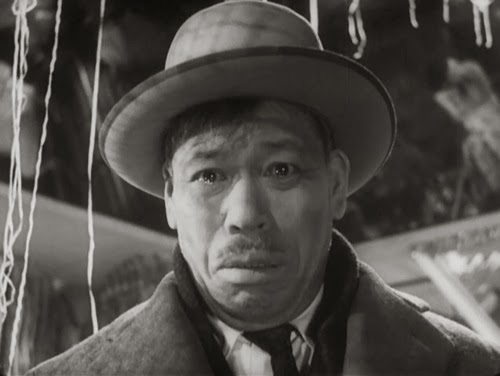
Today, arguably some of the best creative pieces are adaptions. One of my favorite films of all time is called "Ikuru" (1952), co-written and directed by Akira Kurosawa. It follows a minor Tokyo bureaucrat, who is dying of stomach cancer and struggling to find meaning in his life.  "Ikiru" although arguably one of Kurosawa's lesser-known pieces, has influenced arguably the hottest show on television right now, "Breaking Bad".


Recently, Vince Gilligan, the creator of "Breaking Bad" was on NPR's Fresh Air, had a few things to say about Wantanbe-San, the main character of "Ikiru", and Walter White.

There’s a wonderful Kurosawa movie from the 50s in which a man, a mid-level, very much a Walter White-type, or rather, Walter White, I suppose, inspired by this man. This man is very much a mid-level corporate guy who finds out he’s dying of cancer. And in the last months of his life what he chooses to do is a very good thing, it’s to build is playground, a small playground in Tokyo for the children in his neighborhood.
And this haunting ending of this movie is this man swinging on a swing set in this playground that he’s managed to build after a surprisingly hard go of it. And the snow is coming down and he singing a Japanese children’s song, and it’s just haunting and beautiful. And, of course, Breaking Bad is anything but that. It’s the flip side of that. It’s a man doing terrible things once he is freed by this knowledge that he does not have long for this world.
But I think what the two stories to share in a sense is the idea that if we found out the exact expiration date on our lives if we found out when we were going to be checking out, would that free us up to do bold and courageous things, either good or bad things, hopefully good things, then I think there’s a lot of that involved in Breaking Bad.”


If you had to boil each of these pieces of media into a log line, they would both be extremely similar. "Dying man struggles to make something of himself in his last days". It's the same story, just taken in two beautifully different directions. One focuses on a man trying to build a playground, and the other focuses on a man cooking meth. Both great. The story is only one part of the overall piece, and ultimately the sum is greater than it's parts.


To push an argument further, "Ikiru" was in fact inspired by a Leo Tolstoy short-story titled "The Death of Ivan Ilyich".

Everything is built off of something else. Once I realized, I became confident in my "unoriginality" and now can take little bits of things and fashion them into a "script collage" all of my own.