Showing posts with label npr. Show all posts

Thursday, October 8, 2015

Doc Work

During Monday’s lighting workshop with Chris Scarafile, he said something toward the end that really stuck with me.  When someone asked him whether he enjoyed his fiction work or his documentary work better, he answered that without, documentary was where he his heart was. It’s the part of media creation where he can really make a difference, to tell real stories about people and places we otherwise would never be aware of. As he talked about the photos he had, the certainty in his voice made that very clear.

While I had never been much into documentary work myself, a few years ago I came across a small production company called Gnarly Bay. It’s a small group of five young filmmakers who aim to inspire people and tell stories that are worth giving people pause and spread positivity. I didn’t realize it in the moment but the short videos and films I had been watching on their website were documentaries or sorts. The sorts that I began to get really into.

This past Summer, I spent a lot of my free time walking the nature trails in Ithaca and listening to podcasts, two in particular: Radio Lab and Invisibilia. Both of these podcasts tell extremely fascinating stories in a way that is both entertaining and inspirational. It was through these podcasts that I began having the realization that there are so many amazing, heart-wretching, inspirational, shocking, and otherwise fascinating stories out there happening everyday, and if told right, can empower people to change the way they think and to take action. All of these stories floated around my head and I continued to find myself surprised and inspired. It wasn’t until our road trip to Virginia a few weeks ago that I realized my own new passion.


As we drove and talked about the film that were driving to shoot for, Shai said something to me that put to words what I had been feeling. “I want to use media to make people care about people.” That’s it. That’s what all of these videos, these podcasts, these documentaries were doing. They were making people see each other differently. When Chris Scarafile told our class that his heart lay in documentary work because of the real impact it had on other people, I didn’t need the pictures or his voice to convince me that he was telling the truth; I was feeling the same thing and just didn’t know how to express it. This semester, Shai and I are working on a short documentary that’s sole intention is to remind people to reach out and help each other every day in whatever capacity they can, to remind people that others are doing good things despite the terrible news stories and the tragedies that fill our newsfeeds. Shai, Chris, and the guys from Gnarly Bay are right; there are a lot of stories out there that need to be told and documentaries are a great way to do it. As we continue to work on this project, I am realizing more and more that while I had never been much into documentaries before, I’s never too late to realize another passion. I’m glad I still have this opportunity to get my feet wet in this field of work before I graduate because at this rate, I may end do much more documentary work after school than I ever would have thought a few years ago.

Friday, September 20, 2013

Unoriginal Creativity

I like to consider myself a creative person. I find the ability to create and destroy universes under a shady tree on a late afternoon an extremely gratifying and therapeutic process. The stories I manufacture are an expression of who I am and how I'm feeling.  The thing is, these stories I create aren't mine; they've been told thousands and thousands of times before. As a self-proclaimed writer, I find it extremely disheartening to find that something I put so much stock in, something I identify with, is merely an emulation of something someone else created. The question the becomes: If every story that can be told already has been, what can I offer to the pool of creativity?

The answer: a lot. The same rule that has applies to my stories has applied to literally every story that has ever been told throughout time, save perhaps for the first story that was ever told. Arguably some of the greatest works of literature throughout history have merely been adaptions of something that came before. Virtually none of Shakespeare's content was original. His works had all been previously told, he just added his own personal spin to each story. For example, The Tragedy of Othello, The Moor of Venice, was based upon two books, "Hecatommithi" by Cinthio and "A Geographical History of Africa" by Leo Africanus.


His content wasn't his own, but we still laud him for his mastery of the written and spoken word over 400 years later. Inversely, Othello has lead to an innumerable number of modern adaptions. There have been many theatre adaptions, such as "Desdemona, a play about a handkerchief" by Paula Vogel. This modern adaption tells the same story, but this time from Desdemona's point of view. All the events of the "original" still occur, but you get the "meanwhile" action. Is it the same story? Yes. Does it still have merits for the way the story is spun? Absolutely. Othello has led  to other liberal adaptions, such as 2001's movie "O", where it's practically the same story, only in a high school setting. In the original, Iago may warn Othello "O, beware, my lord, of jealousy! That is the green eyed monster which doth mock the meat it feeds on". In "O" the Iago character says " Watch your girl, bro".

"Watcheth your wench, bretheren"

Perhaps that is the beauty of it all. True creativity stems from taking an existing piece of work an morphing into something fresh and your own. As seen in the "Everything is a Remix" video by Kirby Ferguson, some of the best movies of the 20th and 21st centuries have literally taken and copied scenes shot for shot and adapted them into their movies. Films such as "Star Wars" and "Kill Bill" all have adapted scenes from previous movies. Their stories too are adaptions on previous ones. Still, we still give them credit for being great movies.

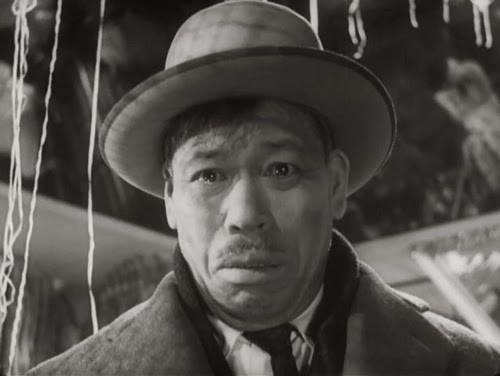
Today, arguably some of the best creative pieces are adaptions. One of my favorite films of all time is called "Ikuru" (1952), co-written and directed by Akira Kurosawa. It follows a minor Tokyo bureaucrat, who is dying of stomach cancer and struggling to find meaning in his life.  "Ikiru" although arguably one of Kurosawa's lesser-known pieces, has influenced arguably the hottest show on television right now, "Breaking Bad".


Recently, Vince Gilligan, the creator of "Breaking Bad" was on NPR's Fresh Air, had a few things to say about Wantanbe-San, the main character of "Ikiru", and Walter White.

There’s a wonderful Kurosawa movie from the 50s in which a man, a mid-level, very much a Walter White-type, or rather, Walter White, I suppose, inspired by this man. This man is very much a mid-level corporate guy who finds out he’s dying of cancer. And in the last months of his life what he chooses to do is a very good thing, it’s to build is playground, a small playground in Tokyo for the children in his neighborhood.
And this haunting ending of this movie is this man swinging on a swing set in this playground that he’s managed to build after a surprisingly hard go of it. And the snow is coming down and he singing a Japanese children’s song, and it’s just haunting and beautiful. And, of course, Breaking Bad is anything but that. It’s the flip side of that. It’s a man doing terrible things once he is freed by this knowledge that he does not have long for this world.
But I think what the two stories to share in a sense is the idea that if we found out the exact expiration date on our lives if we found out when we were going to be checking out, would that free us up to do bold and courageous things, either good or bad things, hopefully good things, then I think there’s a lot of that involved in Breaking Bad.”


If you had to boil each of these pieces of media into a log line, they would both be extremely similar. "Dying man struggles to make something of himself in his last days". It's the same story, just taken in two beautifully different directions. One focuses on a man trying to build a playground, and the other focuses on a man cooking meth. Both great. The story is only one part of the overall piece, and ultimately the sum is greater than it's parts.


To push an argument further, "Ikiru" was in fact inspired by a Leo Tolstoy short-story titled "The Death of Ivan Ilyich".

Everything is built off of something else. Once I realized, I became confident in my "unoriginality" and now can take little bits of things and fashion them into a "script collage" all of my own.

Sunday, October 23, 2011

Schweddy balls

I noticed on the news last week that besides Ben and Jerry's having a new limited edition ice cream,  it was dedicated to the old christmas skit of SNL about Schweddy Balls!  Not only was this skit amazing because it pushed the boundaries of television, but it is insanely funny because the spoof takes place on a fake set of NPR.
This is a classic SNL skit that I have NO idea how someone finally got the "balls" to put into an actual product!  This is a MUST see for any SNL fan, and Alec Baldwin is just as amazing as he is on 30 Rock.


Apparently the name of the ice cream has caused problems with grocery stores in the U.S. because it's too much of a "locker room" joke for children.  I agree with the logic, but the name's spelling is so different from the actual meaning that I'm sure any child young enough to not understand, won't be affected by a carton of ice cream.  An orginazation called One Million Moms was one of the groups trying to get the name changed for the limited edition flavor, and it's conservative views were enough to change the minds of many east coast grocery store chains from accepting the new item.