This week, a short film called "First Kiss" sent the internet on a frenzy, becoming an instant viral sensation, with over 49 million viewers so far. Many of you have probably seen it. Ten couples, meeting for the first time on set, kiss each other in black and white to the soundtrack of French musician Soko's "We Might Be Dead by Tomorrow". The result was awkward and heartwarming, to be able to see something raw and vulnerable shot in such a beautiful way. Here's the video:
Cute, right? Or so we all thought. The internet backlashed when it was revealed that the video was actually made to showcase a line for a small clothing company called Wren. The people in the film were all models and actors, friends of the film's director Tatia Pilieva. Apparently the video was submitted to Style.com for their Video Fashion Week, to show off the company's new fall designs.
But was it really a secret? The film clearly states in the beginning and in the credits that it was presented by Wren. Nevertheless, many felt duped because the company was not well known. Although the models and actors really did meet each other for the first time on set, crowds of viewers felt violated by the marketing tactics of Corporate America, no matter how unintentional it was.
Despite the controversy and the advertisement, I still felt that the video was sincere and creative. The emotions and reactions of the couples were real, no matter what clothes they were wearing. I thought the soft-focus and black and white was an excellent choice, and the music fit so well.
But, this film does have implications for future advertisements. Viral videos are an excellent way to gain exposure, and through product placement, who can really tell what's real and what's a commercial? Unfortunately, fact-checking is going to have to be on the back of everyone's minds the next time they see anything presented by the media.
Whether you're a fan of the video or not, something good did come out of it. Dozens of parodies, including one by Jimmy Fallon, featuring adorable puppies and kittens. Enjoy.
Art comes in a lot of different forms. Film and television are some of those forms. They are the art of storytelling. I strongly believe in the preservation of art. I'm not talking about old films from 1910, although I do wish more films from that time survived. I'm talking about respect for the art of storytelling. Marketing, and really the industry, seems to to lack that respect. They see money as more important than conserving this art. Storytelling has been jeopardized by trailers and sneak peeks that are used to advertise and up their ratings. The currently system used to advertise is an insult to the work it is advertising.
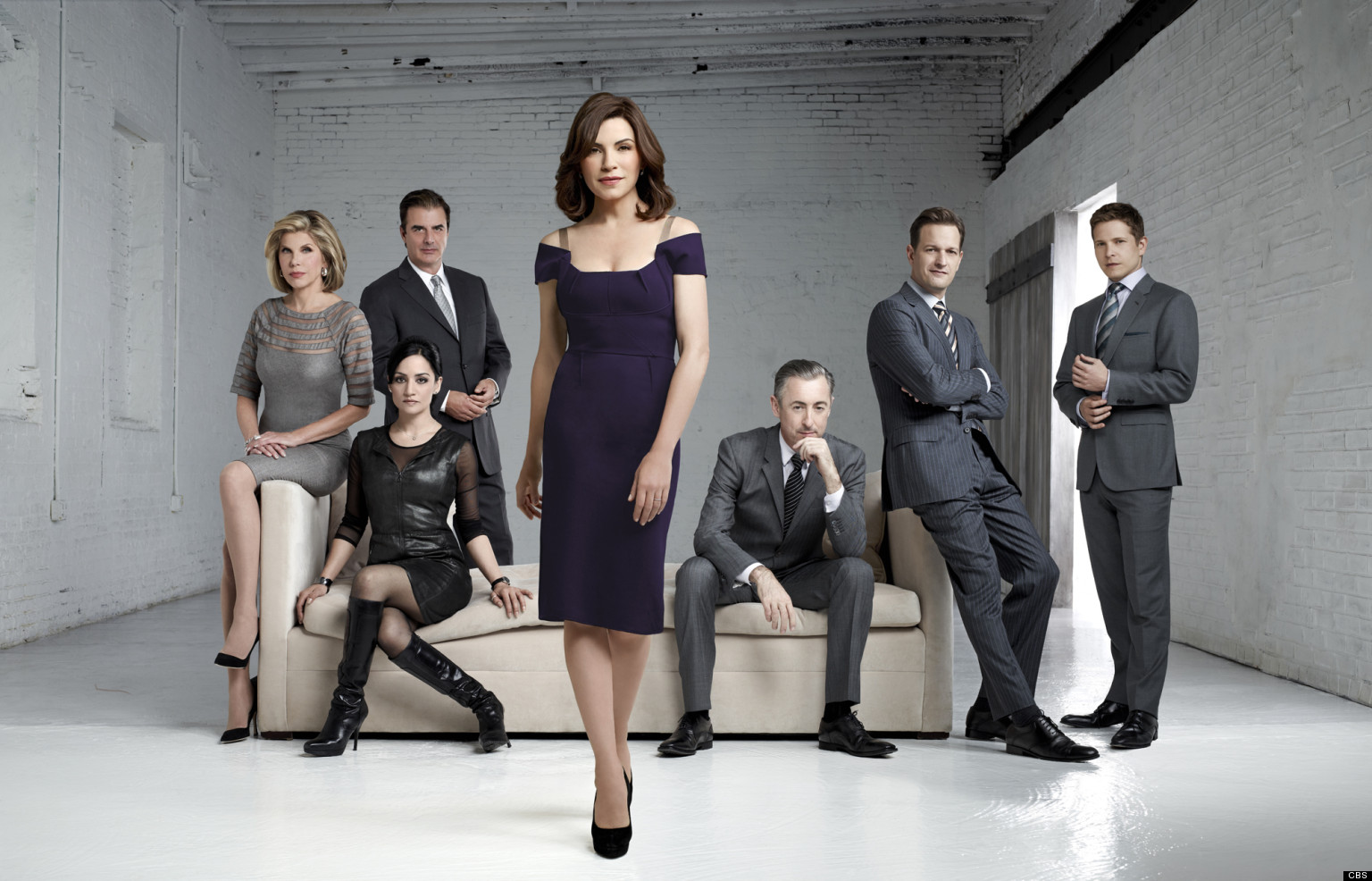
I'm only writing about it now, because of recent advertising that upsets me. CBS's The Good Wife is currently my favorite show (tied with Showtime's Shameless). It is easily the most well rounded show I know of. It's a political drama, a lawyer drama, and a family drama all at once. The amount that happens in one episode is equivalent to probably an entire season of Breaking Bad...or more. And still, while juggling so much, they never drop the ball. There is not a dull moment and nothing is ever predictable. For example, the season four finale was unbelievably incredible. In the fifty-ish minutes, there were over a dozen unexpected twists and turns. You thought you were following the story until the last shot of the episode, where you learned you were completely wrong and misinterpreted everything and were left with wide eyes and jaw dropped as you realized that nothing on this show will ever be the same.
I can talk about how phenomenal The Good Wife is forever, but that's not why I'm writing this. Back to my point. Here we are. Four episodes into the fifth season, with episode five coming out on Sunday, and it already feels like this next episode should be a season finale...or season premiere. No other show can tell a story as well as Robert and Michelle King. Their art speaks for itself. Example, as soon as last week's episode ended, I yelled to my roommate, "And that is what it looks like when shit hits the fan." I found out the day after that the next episode is actually called "Hitting the Fan." So why am I talking about this? Because CBS and The Good Wife have been really trying to create buzz about this Sunday's episode. I don't blame them, the entire world needs to see how great they are at their art. However, it's their methods that I'm honestly so appalled by.
At first, I came across a Buzzfeed article: http://www.buzzfeed.com/jacelacob/the-good-wife-hitting-the-fan-review. This came out the day after last week's episode, but it is a review on next week's episode. I thought maybe he got the title wrong, so I read it. He didn't get it wrong. CBS screened the episode for critics ahead of time to create buzz. I quote and agree with Jace Lacob, "I’m not one of those Good Wife adherents who qualifies their
passionate engagement with the Robert and Michelle King-created drama by
adding “on broadcast television,” as the show shouldn’t be forced to
carry such a backhanded compliment." The Good Wife is without a doubt one of the best television shows, period. Despite this, the ratings are not doing very well. My age group is extremely important when it comes to ratings, and nobody my age watches this show. The only people I know that watch The Good Wife are my roommate and my best friend, and that's only because I made them. I fear this is the last season of the show, as a result of their ratings. For that reason, I gave them some slack and didn't get upset about early reviews.
Then, the show released four sneak peeks on YouTube. They have been posting the videos like crazy on Facebook, Twitter, CBS's website, and whatever other social media networks. I do understand the need to keep their ratings up. However, those four sneak peeks add up to 7 minutes and 24 seconds of footage, from let's assume a 52-minute program. Now that pisses me off. Why is the solution to give things away, spoil parts of the next chapter, and insult your art? There has to be another way. The last scene of the latest episode contained a pivotal moment of the story. To keep this spoiler-free, let's just say it left us with one of the characters finding out that he is being betrayed by the last person he ever expected. Clearly, the entire next episode will be able how he reacts and how everything plays out. Now that's something I could spend an entire week thinking about, freaking out about, and waiting to learn about. However, there's no need to wonder how he will react. Just check out the sneak peek. No. Absolutely not. That is rude and offensive to character development, and I personally, as a fan, find it irritating that my experience of the story has been compromised.
Another example of this was the season eight trailer for Showtime's Dexter. My brother somehow convinced me that it didn't spoil anything, and I stupidly trusted him. SPOILER ALERT - The previously season ended with Dexter's sister Deb about to shoot him, then instead shooting a co-worker to save Dexter. If you watched the show, you'd know this is extremely unexpected of Deb, just completely out of character. There couldn't be a cleaner, more hard-working cop. She would never kill an innocent person. With an ending like that, the viewer is left wondering what happens next. Does Deb join Dexter as a serial killer? Does she turn herself in? Is she unable to live with herself? Here's the trailer to season 8:
How my brother thought that didn't give anything away is beyond me. Things I learned in that trailer that I shouldn't have: Deb turns to drugs, lots and lots of drugs, Dexter is safe, nobody knows that Deb killed LaGuerta, Deb blames and hates Dexter for what she has become, Deb wishes she shot Dexter instead of LaGuerta, there's some new character named Evelyn Vogel who is an expert at psychopaths and is a potential threat to Dexter, Deb is getting DUIs and getting into car crashes. Now my brother argues that all those things happen in the first episode of two anyways so it doesn't matter. I very much disagree. Every episode is important when telling a good story. Every scene is significant to the world that has been created. Deb's character change, like Will's in the next episode of The Good Wife, is a definitive moment and a game changer. Sneak peeks and trailers do not display critical moments properly. They ruin them.
Similar to my feelings towards trailers and sneak peeks, I despise the "Next week on (insert television show that I'm about to spoil)" that comes at the end of every episode. My only exception to this is "On the next... Arrested Development." At the end of every Arrested Development episode, there is an epilogue segment in which lingering stories are wrapped up or extended humorously. The scenes in this segment rarely appear in the next episode, but instead further ongoing jokes.
Most shows use a "on the next" or "next week on" to show mini clips of what will happen in the next episode. It is a pathetic attempt to get the viewer to tune in next week. If do you do your job correctly, engage the viewer, and end at a place where they would like to see the next part of your story, then they will tune in next week. I now know what direction they are taking the next step when I shouldn't. I want to know when I am supposed to know, which is when I would find out in the story. I used to have to run out of the room and down the hall when an episode of Walking Dead ended to make sure I heard nothing. Then I would come back, wanting to talk to my friends about what think Rick is going to do. Only all of them knew already that he would meet with the Governor. I find it aggravating that it's an option for people to hinder their viewing experience like this.
All my examples have been on television, but movies are even worse. Trailers give away every good part of a movie. Let's start with comedies. Go watch the trailer of a comedy that you have seen a dozen times. Try to tell me that the funniest lines, the ones you quote weekly, aren't in that trailer. Lies. They are. Moving onto action films, go watch the trailer of your favorite action movie. It probably showed every explosion, car chase, fight or battle scene in the movie. It isn't as cool to see that slow-motion bullet-dodging badass move in The Matrix (you know what I'm talking about) when you already knew it was coming.
The amount that is spoiled in a trailer is a major flaw of this industry. Why are we showing all of our cards? It isn't just that trailers spoil the funny lines or the big explosions. They're guilty of bringing you way too far into the story. It would be one thing if they set the stage, showed you life pre-initial plot point. It would be one thing if they revealed the first plot point that changes daily life. Either of those would be understandable. Trailers do more than that, though. They show key points in rising action and often show clips from the climax of the story. It is absolutely ridiculous.
My favorite trailer of all time is that of Hitchcock's Psycho. I'm warning you, it's long. Six and a half minutes long. I think it's wonderful though. Alfred Hitchcock gives you a tour of the set of the film. He brings you to different rooms where important scenes in the film take place. He almost talks about the action that takes place in each place, but repeatedly brushes it aside. By never revealing the action, he teases the viewer and draws their curiosity. I am not saying it's perfect, but I prefer this style of trailer to the ones that ruin key parts of the story.
Another great trailer is the one for Orson Welles' Citizen Kane. Welles himself narrates this trailer, similar to Psycho and Hitchcock. He introduces each key actor, then asks the characters (not actors) of the film what they think of the protagonist, Kane. Without a single second of footage of the actual film itself, Welles reveals what a complex character Charles Foster Kane is and invites the viewer to see the film and form their own opinion of the man. Again, I would love to see trailers more like this. Citizen Kane and Psycho both have trailers that honor the story being told. Hitchcock and Welles showed their respect and confidence in their art by advertising in this fashion.
I realize that it is my choice to watch a trailer or sneak peek or "next week on," and as you can assume, I choose not to watch those things. However, I believe it shouldn't be my choice. I respect the art of film and television and storytelling, because this art is my life. Not everybody thinks this way though. They don't care if things get spoiled and I have a problem with that. It's our responsibility as artists to preserve the art of storytelling and give our viewers the experience intended for them. It's time we find other methods to advertise movies and television shows, one that doesn't compromise the art.
An interesting theory of analyzing societal values and entertainment has come to my attention: Michael R. Drew's Pendulum Cycle. As a motivational speaker and entrepreneur, he set out to discover a means of trend forecasting to predict what society will want before they want it.
In a nutshell, the theory is that society swings, much like a Pendulum, between two states: Me and We. The me stage says "I'm okay, you're not okay", whereas the We stage says "I'm not okay, you're okay". For example, if one were to examine the 1950's (the last fulcrum of the last "We" social mindset), people were focused on conformity: the suits, the nuclear family, the white picket fence, etc. Then, in the 60's, the pendulum started swinging backwards to "Me", with the Beatles making fun of conformity and these major pop idols surfacing with their big hair and glam-rock diamond-encrusted vests.
It takes 40 years to go from one extreme to another, with the whole cycle spanning 80 years. As of 2003, we as a culture are re-entering the "we" mindset. This can explain the booming success of Vlogging on Youtube (where we do not idolize the content creators but view them as equals), the gritty reboots of movies (again, not idolizing but bringing them down to our level) and much more.
So what does this mean for the you? You can both predict how your product should be marketed and how you should present yourself in the future. Not to preach to the choir, but what's big now is viral videos. Obviously. Viral marketing and even (to an extent) alternate reality games are huge now. People look for the grainiest, most real video out there, and this is why videos like "Charlie Bit Me" are pulling in huge dollars. TV spots are primarily bland and set in casual locations like an office, and often times feature testimonies from consumers (who are portrayed as being "real"). For example, the Windows "I'm A PC" marketing campaign:
This is in direct contrast to the Ginsu Knife commercials of the 80s, that were all hyperactive and "ORDER NOW AND RECEIVE A FREE CUTTING BOARD!!! AHHH!!!" Comedian Kyle Cease put it best in saying that "Now, if we receive an email and it has an exclamation point, we assume it's spam".
We can use these thinking and predictive methodologies to effectively brand, market, and present media products and to satisfy the ever-changing wants of the consumers in society.
In the spirit of October and Halloween and zombies, I thought I'd make a post about movies that are being re-animated (no pun intended) and why. Finding Nemo hits theaters again, but this time in 3D; The Lion King and Titanic, both huge successes originally at the box office, came back for round two with an added dimension. The list continues on, and the future has even more in store (Little Shop of Horrors, The Birds, Dirty Dancing...see the rest here), both in our regular 2D movie experience and in pay-an-extra-four-bucks-for-glasses 3D. Why not just make something new, though?
The fact of the matter is, even these "classics" are just imitations of other stories that came before, and I'm not entirely sure that such a thing as an "original idea" even exists these days. It's sad to think of the world of creativity in that way, but really, what are we left with? Directors, producers, and screenwriters therefore must come up with ways to manipulate the same old song and dance into something that another generation can enjoy, with updated pop culture references, soundtracks, and images. Plus, with the relatively new frontier of 3D available for exploration, ticket prices rise (in a fair ratio to the increase in cost of making a 3D film, on average about 18% according to the MPAA) to add to the climbing cost of living in today's world. There has to be something flashy and new to add to the old storyline to attract an audience back to the theater, whether it's in the technology or the talent (you know that you see some movies just for the actors, admit it); otherwise, viewers just won't be pulled back in to see a plot they've watched unfold seven times before in various formats.
I'm not saying that this isn't a decent way to make up for a lack of new ideas; after all, it is said that imitation is the sincerest form of flattery. Still, I wouldn't mind seeing filmmakers give a little more effort in the way of creating something at least slightly new, rather than spending more money to jazz up the same shots from the "original." If you want an upcoming generation to think outside of the box and to try new things, you've got to inspire them through what they see on the big screen, because who doesn't want to be just like a movie star?
After completing my freshman year at college, I was able to find myself an internship for the summer. I worked for a company called Pro Dynamix. This company was an athlete marketing company based out of West Jersey. They marketed athletes ranging from the high school to the pros. Most of there work involved making highlight videos, but they also helped high school students with college recruiting.
My first assignment I did for them was a highlight video for a football player named Mike Daniels. Mike Daniels had been a client for the company since high school, and was recently drafted by the Green Bay Packers. The high light was requested by a Green Bay Packers fan page/blog. They wanted a highlight video of his college and high school play that they could put on their site so that the Green Bay fans could see who Mike Daniels was. After that I spent most of my time doing smaller projects for high school and a couple college athletes.
Overall it was a very good learning experience for me. Not only did I feel I became more capable as an editor, I felt I learned a lot about working in a professional setting. Having to continually produce content that is top quality and better was very stressful but it helped me grow and develop my skills. I also learned how to pitch ideas and sell people my ideas. Was very happy with the experience and am looking forward to more internships in the future.
I stumbled across this the other day somewhere on vimeo. This little sound company appears to be based out of Ithaca. I think its a pretty neat way to use to the internet to market themselves, kind of like what Arturo was talking about. Some of these live mixes have hundreds of thousands of views. Does anybody know these guys personally?
I came across this article in Business Week, which I found interesting about social media and companies. Even though, social media has been around for many years now, companies are still struggling with the expanded reach of users-generating content. It seems that companies are always slower to catch up then consumers. While I was looking for inspiration for my project on user-generated content and tourism, I was really surprised how far behind some companies are. The companies seem to either do it poorly or just pretend it doesn't exist. Although, I think as social media increases more companies will be unable to ignore it.