Showing posts with label black comedy. Show all posts

Thursday, January 28, 2016

The Graduate

     I've been watching a lot of dramatic comedies lately to get into the mindset of what I want my movie to 'feel' like. The Graduate might be the most famous dramatic comedy, or dark comedy, of all time. So I rewatched it to try to get a quick master class of funny/sad that Mike Nichols seemed to do so well. 


     The Graduate is a movie that seems to defy explanation. Even Roger Ebert was greatly divided on the film. When he first saw it he called the movie "the funniest American comedy of the year". When he reviewed it again for the 30th anniversary special he called it "a movie about a tiresome bore and his well meaning parents."


     What I think divides the younger and older Roger Ebert, and people in general, is that Dustin Hoffman's character, Ben Braddock, doesn't really change. The beginning of the film tells a lot thematically. Ben is on a moving walkway in an airport and while he is "moving forward" he is not walking or moving himself anywhere. People pass him and he watches them go by. Ben is also facing towards the left, which in traditional American film means going backwards or against the grain.


    Throughout the course of the movie Ben doesn't do much. He sits in his pool and ignores his family friends. The main conflict of the film, Ben's affair with Mrs. Robinson, is started not by Ben but by Mrs. Robinson. The argument can be made that Ben changes when he falls in love with Elaine and follows her to Berkley and then again follows her to her wedding. 


     But Ben's reasons are still completely selfish. He is in love with Elaine because she is in the same "not moving" position he is. There are several moments where this is implied in the cinematography, most famously the runnning scene.


   This begs the question that is asked every god damn semester in every film class. In film, does the main character have to change? I'd argue no. Ben doesn't change much in The Graduate. But what does have to happen is that audience has to see that the character has the ability to change but, for whatever reason, does not. Nichols shows this inability to change as a tragedy as Ben and Elaine pull away. What we thought was a happy tale of romance is just the characters realizing they haven't changed.


     My goal for this semester is to make a movie where a character is given multiple opportunities to change but ultimately fails to do so. I think it's a powerful form of story telling that encourages introspection. While it is easy to say this, and showcase a movie in which this happens, it will be difficult to pull off. It will require constant rewriting and meticulous shot planning. I never thought I would say this but I disagree with Roger Ebert. The Graduate is a film that stands the test of time. Not as a comedy, but as a complex movie about depression and the selfishness in passiveness. 


Thursday, September 3, 2015

Comedy + Drama = DRAMEDY

Developing a story is often a work in progress. Even the most experienced writers know that story telling takes time. Myself and the creative team behind "Scout's Honor" are discovering first hand the struggles that come with creating a well rounded plot. All the ingredients are there for us, diverse characters, strong environment and a premise we're happy with. And yet, even with all these elements we're still working to get over the hump between draft 2.99 to 3.0 One of the things we've been struggling with is the tone of the piece. We're tabbing our film as a "family dramedy," key word being dramedy. This genre of storytelling combines parts of both drama and comedy, elements we're looking to include in our film. As we write and revise, we've discovered the difficulties that come from this type of storytelling.

Dramedy is tough because the author must establish a fine line between laughs and drama. A big part of a successful dramedy (or any story really) is establishing a tone and keeping it consistent throughout. Part of this is creating reliable characters. If they are, the audience will never question their emotions. Moments whether sad or happy will feel appropriate.


Even with all of these elements, it can still be hard to walk that line between comedy and drama. In "Scout's Honor" we're covering something that isn't necessarily funny: death. While our plot covers a sad part of life, we've been trying to find humor in the situational's, the aftermath. We've tried to create characters that feel real and relatable, however sometimes it can be difficult when the comedic element is added. One of our characters, the attorney, has sort of become our go to guy for comedic relief. In each draft we've tried to work on him so that his character feels multi dimensional and real, not just funny. Once again we had to go back to this character's situation and use that to justify his actions, trying to make them consistent with his predicament. As we work to complete our script we're focusing hard on finding a reliable tone.

One of the things that got me thinking more about the line between comedy and drama, is the netflix show "BoJack Horseman". I started watching this show about a week ago and have already finished the first season. I had heard good things about it, but my expectations weren't exactly through the roof. I liked the premise and most of the voice actors working on it, but otherwise I didn't think it would be much more then an easy to watch comedy. The first couple episodes were about what I expected; funny, decent plot, enjoyable enough to keep watching. As I got deeper into season 1, I was surprised to see storylines carry over episode to episode. Plot points started to get darker and the character emotions became relatable. This is when it really started to differentiate between other adult cartoons such as "Bob's Burgers" and "Family Guy." While it continued to make me laugh, the 2nd half of season 1 really pulled me in with the dramatic aspects. "BoJack Horseman" began to waver between comedy and drama. And while you can't really sell it as a drama, you can't discount the dark moments that resonate with the viewer. In one of the later episodes in season 1 there is a scene where BoJack takes too many drugs and begins to hallucinate. At coming off as funny, his hallucinations take a reflective turn as BoJack starts to visualize what his life would be like if he had a family, if he made different choices. He sees how happy he could have been before he wakes up outside a gas station collapsed in the pouring rain. As silly as the show can sometimes be, this scene really resonated with me. With graduation a year away, I'll soon have a lot of tough decisions to make as I pursue a career and a family. Each of these choices I make could have a ripple effect on the rest of my life. And while these are things everyone will think about at some point, it was this "comedy" "BoJack Horseman" that got me looking to the future.


Dramedies are awesome in that they can connect with the viewer in all kinds of ways. If done right they can connect with all kinds of emotions. Make you laugh, make you cry, and more then anything make you think.


Saturday, September 27, 2014

Based on a True Story

We've all learned that movies are never completely original. They're either based on a comic books series, television show, or books. And you can always trace back movies and relate them to many other things. One of the most common movie themes are true stories. However, movies never seem to be able to depict the actual real events. Here's a perfect example of a movie that was based on a true story, that wasn't even accurate:

Pain & Gain


We all know the black comedy pretty well; it's a bunch of buff dudes that start killing people that started off as an accident and got out of control, just to get money. However, that whole scenario wasn't so accurate. The movie was loosely based on articles from the The Miami Times featuring the murders of the Sun Gym Gang. The survivor of the kidnappings and tortures, Marc Schiller, was never contacted during the making of the film. He confessed that the movie got all the characters wrong. In fact, the Sun Gym Gang wasn't just three members, it was instead a much larger group.

                     
                             Dwayne Johnson (Paul Doyle)

Carl Weekes
 Dwayne Johnson's character (Paul Doyle) doesn't even exist in real life, and was actually composed of three different guys: Jorge Delgado, Carl Weekes and Mario Sanchez. There is also a scene where Doyle robs an armored truck and gets a toe shot off. That scene? Entirely fictional. And those gay references that affected Doyle's life? Completely made up by Hollywood. 

                  
                       Tony Shalhoub (Victor Kershaw)
Marc Schiller


Marc Schiller was the survivor of the gruesome kidnapping in real life. But in the movie, Victor Kershaw (Marc Schiller's character) is nothing like the real deal. In the movie he's seen as a brash person, living the life and smoking cigars. In reality, Schiller was a humble man and had a family to take care of, not a house full of women in their bikinis. He also wasn't a rich scumbag, but instead owned a failing deli franchise that still gave him seven figures in the bank. Hollywood did this in order for the audience to sympathize with the killers, instead of the kidnapped. Kershaw also never hit Daniel Lugo with his car in the Bahamas, which we saw towards the end of the film. None of that happened. The task force just arrested Lugo in a hotel. And if we really wanna get picky with how accurate the film is, Schiller was never buckled up in the car when the gang attempted to kill him. He actually jumped out of the car before it hit the pole, and then was ran over twice with a Camry, not a van.


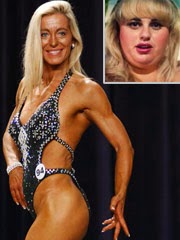
This is Rebel Wilson's character in the film. I'm not even gonna explain this.


What does make matters worse about this movie is that the filmmakers turned a real life event that affected a lot of people, into a comedy. As Schiller says, the only accurate thing about the movie is the title: "My pain really did result in a lot of people's gain. Especially Hollywood's."