Showing posts with label Racism. Show all posts

Thursday, February 11, 2016

Diversity at the Oscars

Although in my last blog post I touched briefly upon Leo and his outstanding performance in The Revenant, this post is about how unfair it will be if he wins. For many years, the academy has lacked a sense of diversity, therefore most of the winner, in fact 74% of them are white. This is a huge problem with film, and in the world in general. Truly, this world is run by the "white man" and because of that most of the lead roles in hollywood are of white people, but interestingly enough, those roles that are of minorities are usually supporting roles. This year was a little different, we saw Will Smith in Concussion,

As we all know the Oscars are films biggest award shows highlighting the best pictures, and performances of the year:

But did you take the time to notice, that none of those people are not of the white race? In fact last year the academy had a similar issue:
Those people are all white too! Basically the academy is saying if you are not white, your not in! But this truly is not just a problem with Hollywood, its a problem with the entire world.  

Thursday, October 29, 2015

No Comedy, No Confidence

This week Ithaca College president, Tom Rochon, called an all campus meeting to discuss the racial climate on campus. On his part it failed spectacularly, on the part of the students involved in POC at IC it was a energizing success. A few days before this meeting the comedy clubs on campus released a statement that read:

"Comedy is at its best when it is honest, contains complex ideas, and expresses diverse experiences. This cannot happen on a campus where the college administration does not support people of color and invalidates their experiences. The comedy community at Ithaca College representing IC Comedy Club, IC Stand Up, The Acahti Players, and IC Sketch would like to formally voice our support for POC at IC and express a vote of no confidence in President Tom Rochon and the Board of Trustees."

As president of IC Sketch I partly released and stand by this statement. Good comedy cannot exist in spaces where authority dictates which experiences get brought to light and in which light they are brought. This lack of confidence is mirrored in the greater entertainment community, although the problem of authority tends to be more insular. The reason we end up with racially insensitive (to say the least) comedies such as "Get Hard" and Adam Sandler's latest movie "Ridiculous Six" isn't because of an outsider force, it's because Adam Sandler and Will Ferrell are the authorities on how experiences are dictated. Adam Sandler has decided they would be dictated with jokes, that caused Native American actors to walk off set, such as these:

1) Sandler’s character, Tommy, aka Three Knives, a white man raised by Native Americans since childhood is married to a woman named Smoking Fox. A recurring joke refers to her "sweet zum-zum."

2) A female character named Beaver’s Breath, is propositioned by a male character, asking, "Hey Beaver’s Breath." To which she responds, "How did you know my name?"

3) A "sexy" female character named No Bra (originally named Sits-on-Face in the 2012 script), is depicted crudely squatting to urinate behind a teepee while stereotypically lighting up a peace pipe.

4) Will Patch (Will Forte) propositions Sits-on-Face by asking her, "How about after this, we go someplace and I put my peepee in your teepee?"

5) Cicero (Danny Trejo) interacts with Sits-on-Face by calling her "Strawberry Tits," to which she indignantly corrects him, saying "I am Sits-on-Face." Cicero responds, "Well, then I’m Stiff-in-Pants!"

6) There are numerous instances of crudely-punned pseudo Native American names like Five Hairy Moles, One Eyebrow, and Four Pickles.

Adam Sandler has declared himself the authority on how to portray the Native American identity leading Native American actors to unsurprisingly cast a vote of no confidence in Sandler and the industry he represents. We must recognize that this problem exists outside of IC and that the comedy battleground does not get more leveled upon graduation. We need to continue to evaluate our confidence in the institutions we have previously lauded, especially if those institutions starred in Jack and Jill.

Friday, February 7, 2014

Sweet, Honey Nut Revenge

Last May, Cheerios came out with a surprisingly controversial commercial featuring an interracial family. Surprising in the sense that it was considered controversial at all. It stars Gracie, a cute little girl who just happens to have parents of different races. The ad, like many other Cheerios ads, focuses on heart health, but low and behold the internet did not see it that way. The commercial was put on youtube, where it was harshly criticized by a wave of users in the comments section. Countless racial slurs and explicit disapproval forced Cheerios to disable the comment option on the video.

Here is the commercial:


But this is where it starts to get good. In response to the backlash from the more ignorant folk of the nation, Cheerios decided to buy a time slot in this year's Superbowl, something they've never done before. Not only were they featured in the Superbowl, but their commercial brought back the same family from the first commercial. And instead of addressing the issue of race like some might've expected, they did something much, much better.

The Superbowl Commercial titled "Gracie":


Cheerios cleverly used this commercial to once again normalize the concept of family by sticking to a basic and sincere plot. By highlighting a completely ordinary situation that any family might have to go through, Cheerios reiterated how silly the controversy was in the first place. Camille Gibson, Cheerios' vice president of marketing, stated about the positive response of the second ad "At Cheerios, we know there are many kinds of families, and we celebrate them all." Simply put, Cheerios strikes with a "no big deal" attitude, which might be the best offense against those who wish to stir up unwanted and unwarranted issues.

Although I have no doubts that Cheerios saw this as a fantastic way to promote advertising and gain publicity, they still serve as a role model for other ad agencies. The world of commercials progresses much slower than that of television or film, and continuously shies away from diversity. Hopefully, this ad will start the ball rolling, or at least make everyone more aware of the racial problems that still very much exist in the media.

Wednesday, December 4, 2013

12 Years a Slave and White Guilt in 2013

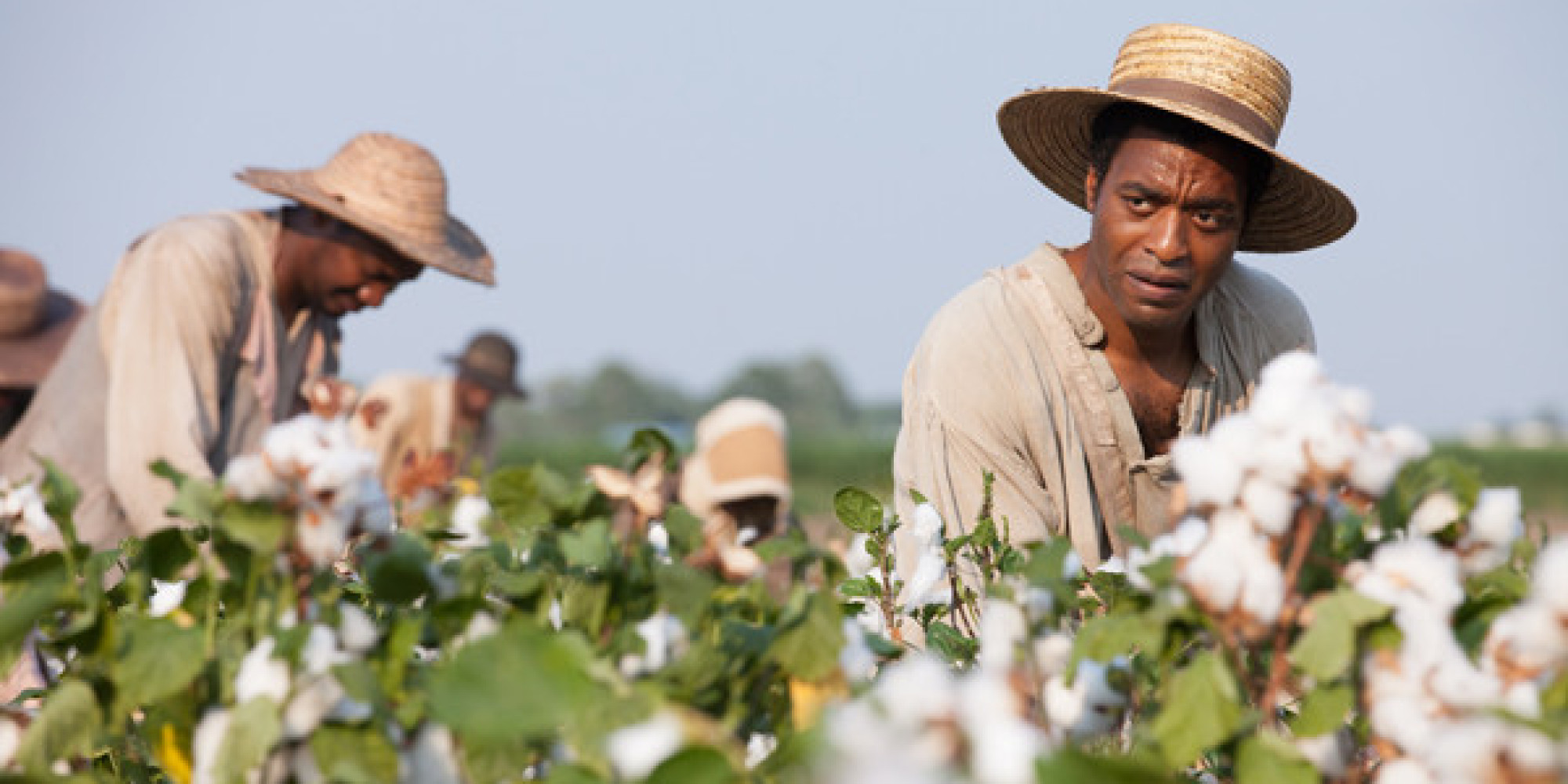
When the credits began to roll at the end of 12 Years a Slave, nobody in the theatre made any sort of move to leave. There was no popcorn crunching, no soda slurping, just dead silence. In part, this was because it was a fantastic movie - probably the best of the year - but it was also because, as an almost exclusively white audience, nobody was quite sure how they should feel. 

12 Years a Slave, which is only the third film by director Steve McQueen, is based on the true story of Solomon Northup, a free black man living in New York who was captured in 1841 and sold into slavery. The film follows Solomon (the incredible Chiwetel Ejiofor, who will almost certainly be nominated for best actor this year) as he gets moved around from slave owner to slave owner, trying to stay alive and somehow return home to his wife and children. As I mentioned, it’s a spectacular movie - the acting, the directing, and the cinematography are some of the best I’ve ever seen - and yet I can’t think of film in recent memory that has had so much Oscar buzz while simultaneously being something that people are almost afraid to talk about. 

So, to clear the air, I’d like to talk about 12 Years a Slave. 

Racism is an incredibly daunting thing for me to write about, and the more I look up at the title that I’ve given this piece, the more I have to wonder if it’s something I have any right talking about at all. As a middle class white guy from Vermont, I have almost no first hand experience with the topic apart from what I’ve obtained over the years through different kinds of media. My parents are not racist in the slightest, and I was raised to constantly be disgusted that people could judge others based solely on the color of their skin. Just because I’ve read Invisible Man and The Autobiography of Malcolm X doesn’t mean that I claim to have any real connection to or knowledge of black culture. Who am I to judge a brutally honest film about slavery?

I’ve done a little bit of research ever since I watched 12 Years a Slave, and I’ve found lots of articles that both praise and criticize the film; many, understandably, written by black critics. Some, like Orville Lloyd Douglas’s, make fine points about why Hollywood should make more “black” movies that focus on more than just the topic of race and that don’t try to make white people feel guilty. I understand where he’s coming from; with 12 Years and The Butler hitting theaters around the same time, it feels like someone’s really trying to make a point. However, other people, such as Wesley Morris, argue not only for the artistic merits of the piece as a film, but for how McQueen pulls no punches in the portrayal of white people; this is a film about slavery where the slaves stand alone; there are no white men pushed into the foreground, no Lincolns or Christoph Waltzes, to save the day for them. I agree with this aspect as well. 

But I still believe many people are missing the point. When I’m asked how the movie was, I typically respond “it was incredible, but there was an unbelievable amount of white guilt in that movie theatre.” Someone on YouTube even took the time to create a series of parody videos on that very topic. But this shouldn’t be anybody’s response. I’m fully aware that race is still a very prominent issue in our country in 2013, but there is no reason any person - white, black, hispanic, asian, or anywhere in between - should feel guilty when watching this film. By all means, we can be disgusted at how Solomon is treated by white people throughout the course of the movie; we should be. But taking that guilt - the guilt that slaveowners should have felt over 160 years ago - and applying that to ourselves today is wrong. 

I’m convinced that 12 Years a Slave defies all boundaries of a normal Hollywood film in a few different ways. There’s no real target audience: while the art house crowd might eat it up, no matter who you are, this film is for you. It’s a film that spends a painfully long time lingering on the botched hanging of Solomon, with the man, front and center, desperately trying to gain some traction with his toes in the mud pile beneath him. It’s a film that takes its time, utilizing really long takes and interspersing certain segments with shots of nature. It’s certainly not your standard Oscar-bait film. It is not a “black” film, and it’s not a “white” film. It’s not even a wholly American film (both McQueen and Ejiofor are British). More than anything, it’s a human film. 


Perhaps that’s what some people are missing, and what gives me the right to talk about racism and 12 Years. It is truly impossible for any white person to know what it’s like to be black and vice versa, but that doesn’t diminish the fact that this is a powerful film that affects each individual that sees it. Disagree with me if you want, tell me that the filmmakers are playing to my innate sense of white guilt and I’m not qualified to talk about this, but you’d be wrong. When you see Solomon come home after 12 years to find that his family is barely recognizable, and you see that no amount of happiness can fix the years of hell that he was forced to endure, you don’t have to have any necessary qualifications, apart from one. You just have to be human. 

Thursday, February 7, 2013

Too critical?

I have always been a fan of Disney movies.  Always.  I still go to see Disney and Pixar movies in theaters, and still feel the same amount of joy I did when I was a little girl.  I contribute this feeling to two things - 1) me being such a child at heart and 2) because Disney is doing something right.  I came across a blog that brought up a lot of points that I didn't necessarily agree with, but at the same time sort of understood.
"I want my children to be able to experience the same movies, however, as an informed adult I am not sure I want to support a company that produces racism, sexism, violence and many other politically incorrect issues."

*Sigh* Alright... first of all, we need to consider the time that most of these movies were created.  Most classic Disney movies came out decades ago, where these issues of racism, sexism, and violence were relevant to the time.  Not to mention, the "offensive" characters are usually the villains.  A huge controversy began over the line "Where they cut off your ears if they don't like your face" from Aladdin.  I have seen Aladdin many times on VHS (aka BEFORE the line was changed to "where it's flat and immense and the heat is intense") and never did I find that line offensive until I actually read about it and became and informed adult.  Five year old Courtney didn't even notice this line, she was more concerned on the music and the color and the animation.  

"Perhaps the most offensive and ignorant part of any movie is simply the size and body image of Ariel in "The Little Mermaid". Her figure is completely unrealistic and the it also gives the message that if a girl is beautiful, skinny, and has large breasts and long flowing hair she can date any man no matter what her personality may be."

Sure, Disney favors the attractive.  I have never watched a Disney film with an ugly princess or where the prince wasn't chiseled to perfection.  But let's open our eyes- that's media.  Media favors the "attractive".  The focus in these films is never about how the characters look, but what they achieve.  It's their attitude and their perseverance that takes them far, not their good looks. 

"Even though I loved Disney movies as a child and would not give up watching them even because of all the politically incorrect and inappropriate messages I still think they are valuable to children's imagination and fantasies. I will have to grapple with the idea of showing them to my children, and it will be a difficult decision"

Alright.  Take a deep breath.  They're not that bad.  Most children don't comprehend the more "adult" based content in these movies.  I know I didn't.  None of my opinons on races, politics, or sex stem from Disney films.  Not to mention, Disney is improving their variety.  Example: "The Princess and the Frog" features an African American princess... see?  They're making strides.

Media is media.  It's always going to be skewed.  

Monday, September 10, 2012

The Boondocks


I’m usually not a big fan of anime shows with their explicit scenes of violence and fighting. However, there is one show that is considered in the anime category that I can’t stop watching. This show is called The Boondocks. The show began in 2005 on Adult Swim and continued to make 3 seasons. Currently, season 4 is in the making.

This show consists of two 8 year old’s name Huey and Riley who are polar opposites of each other politically and morally.  Huey is the voice of reason, extremely liberal socially and underestimated by his family and ridiculed for having such radical views and having goals higher then from which he came. He is a strong believer for “Afrocentrism” and is wiser then most 8 year olds. Riley is completely opposite, interested in gangster related activities and committing crimes; he's into modern mainstream hip-hop and living the life of rappers on TV. They are both raised by their Grandad, who is very outspoken and moved his grandchildren to a suburban neighborhood called Woodcrest to have a better life. 

The first thing I love about this show is the social issues that they cover. Because they are one of the only African American families in Woodcrest, the show deals with such issues as African American vs. White Culture (exaggerates each races culture in order to juxtapose them), racial struggle with law enforcement, racism, and current events and pop culture. Obviously because of these issues the show is deemed as controversial. They push the limits with the heavy use of the word “ni***” and was voted as 5th most controversial cartoon of all time in Time Magazine. 
Other then it’s controversial topics, the show is known for it’s music. A lot of the extensive fight scenes in the show are played with hip-hop music over it. These occur in almost every episode and the it is usually underground rap. This music plays a large role in the show and the songs usually have a political theme and were written for the show specifically. There are also many celebrities that voice the characters.

I highly recommend this show to anyone who loves animated shows that push the limits of what is acceptable on TV. You do not need to have watched past episodes to understand what is going on in the show, so you can start by watching Season 4 this year when it comes out!