Sticking with the theme from two posts ago, I returned this week to the documentary section of Netflix.
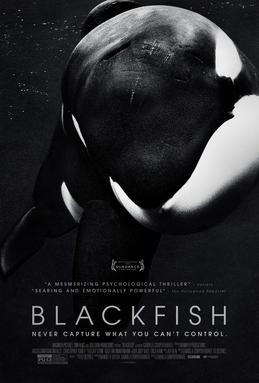
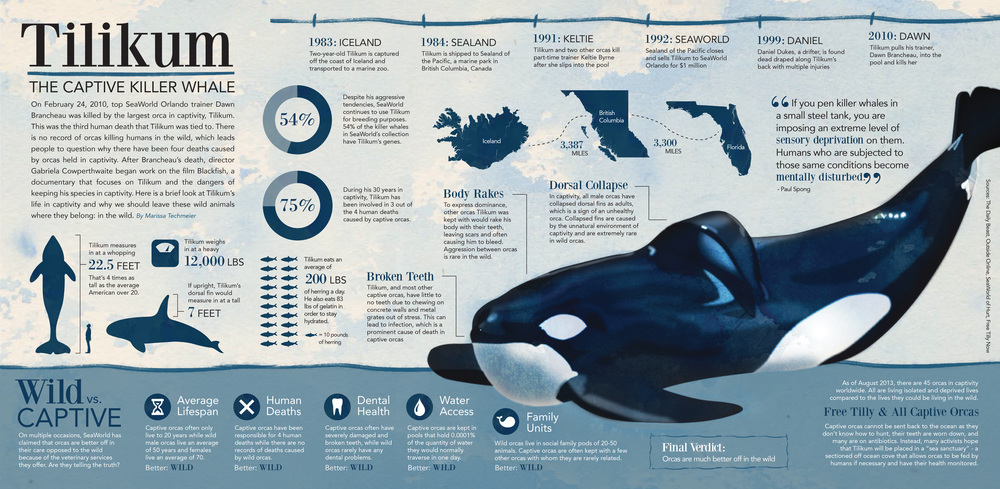
A friend of mine recommended I watch a 2013 documentary titled Blackfish. Blackfish tells the story of a killer whale named Tilikum, who is known for being the largest killer whale ever kept in captivity. This documentary follows Tilikum from when he was first captured in waters near Iceland in the early 1980’s through his days as a performance whale at SeaWorld. Tilikum’s story is unique because it showcases the need for SeaWorld and similar animal performance parks to stop keeping animals in captivity. Tilikum is known for being the orca that has caused the death of 3 different trainers through his time as a show whale. This aggression is a direct result of the way that he lives; killer whales are generally not very violent at all in open water. In captivity, however, orca violence increases dramatically. There has actually never been a documented death of a human by a killer whale in the wild, while Tilikum alone has been the cause of three deaths in captivity.
Blackfish tells Tilikum’s story in a strong and passionate way. Viewers feel a connection to Tilikum and feel bad for him for everything he has to go through. This is especially true as viewers watch the physical changes in Tilikum; he goes from being a strong, active orca to having a floppy dorsal fin and being almost completely active. SeaWorld has reported that it is not uncommon for Tilikum to go three hours at a time without swimming around at all - he just sits in his much too small tank, motionless.
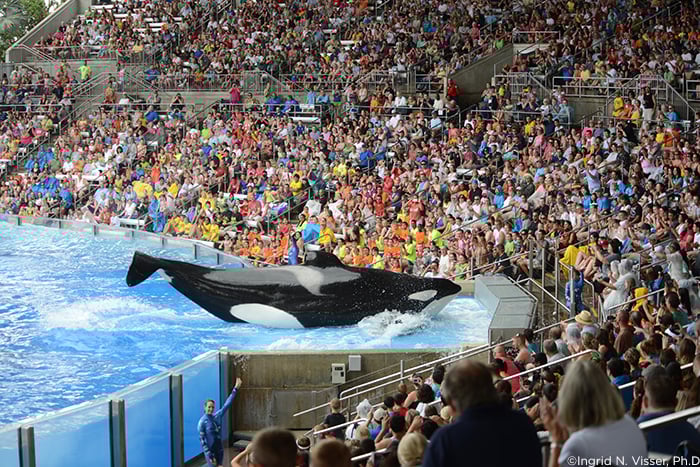 This documentary has received very positive reviews from all places, and rightly so. This is a very touching and inspiring film, and it completely changes the way that people view orcas in captivity. They go from being the “friendly Shamu” to the poor, tortured orca who will die, on average, 20 years too young. This powerful film has had a very positive impact, and I am very glad that I watched it and could learn more about the life of animals in captivity.