Showing posts with label Aaron Sorkin. Show all posts

Tuesday, November 3, 2015

Steve Jobs and Story Structure

Steve Jobs - the new Aaron Sorkin-scripted movie, not the person - is incredibly unique. Certainly not in its subject matter, since Jobs has been featured in like, four dramas/documentaries in the same amount of years, but in the way it's structured. Because of this (and the acting, and directing, and everything else that makes this movie great) I would venture to say that this movie, this iteration of possibly the most well know technological innovator of our time, should be considered the definitive screen version of Jobs and his life story. Everyone else wanting to make a Jobs movie, just stop. It's not worth it. You can't win this one. I don't care if it's not the most accurate, or if "Apple Experts" hate it, or even what your most basic opinion of the real Steve Jobs is. This is the one.

Even if you push aside most of the things that you'd normally focus on when seeing a movie, things like actors, direction, and cinematography, and focus solely on Sorkin's story structure, you've got something that is far more original than most films being made today. For a studio-backed biopic to break away from a more traditional "follow our main character throughout their entire life" story is huge. If you haven't seen it (and judging by the way it's doing at the box office, you probably haven't) Steve Jobs is broken down into three main scenes, with each one taking place before a major product launch. With the exception of a few brief, well placed flashback scenes, all exposition, all character introductions, everything is done in real time, within the boundaries of these three product launches. Is it what happened in real life? No, probably not. But Sorkin uses this structure to tell a damn good story.
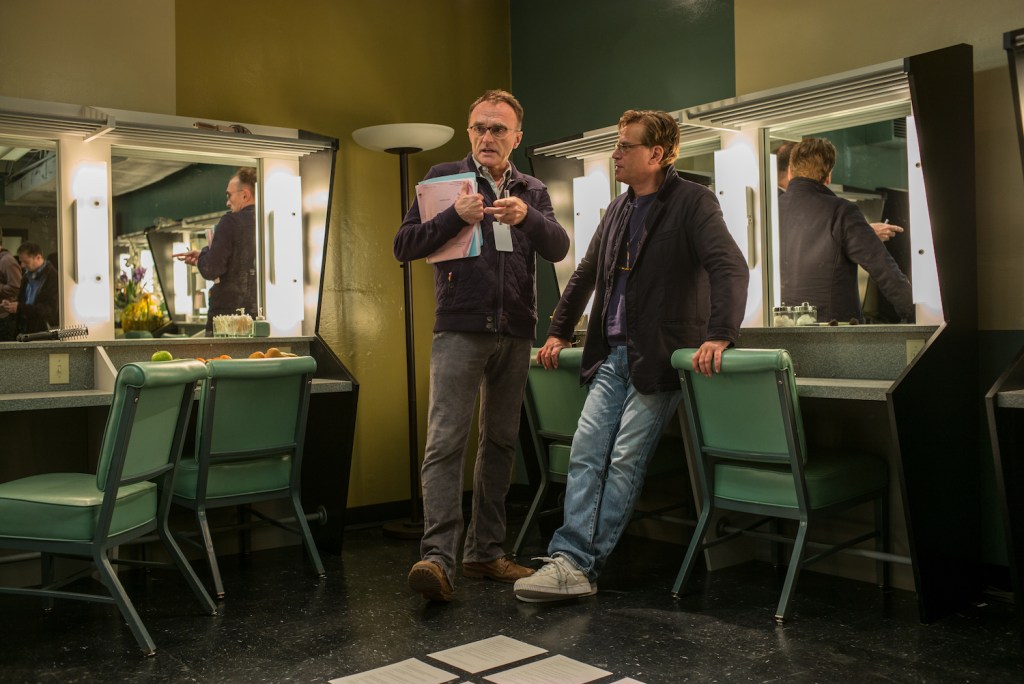

There will always be movies that try to radically change the structure of a typical story, films like Memento, or Eternal Sunshine of the Spotless Mind. These can be fun, a nice break from the monotony of characters going from point A to point B over the course of a film, and some of them (these two may be some of the most notable) use non-linear storytelling to a stronger effect than just trying to confuse the audience. Other than these handfuls of non-linear scripts, movies tend to stick to the same basic structure. Sorkin broke this with Steve Jobs. It wasn't the most radical idea in the world, and you still see the development of Michael Fassbender's Jobs over the course of the film, but even Sorkin expressed his surprise at being allowed by the studio to follow through on such a different premise. In a way, it really mirrors its subject matter. A big part of the movie is how Jobs focused on adding a human component to a scary new machine (one of the major crises in the first act is how they can't get the Macintosh to say "hello) and that's more or less what Sorkin did with the script. Instead of of looking at the big picture, at Jobs' entire life, he narrows it down to five or six particular conflicts, and shows how they develop from '84-'88, and then again from '88-98.

It's also, in general, an overall compellingly human film. Again, was it totally accurate? Maybe not. But when you see the character of Steve Jobs struggling to admit that his daughter is actually his daughter, or when Wozniak is demanding that Jobs show some retroactive respect for the Apple II team, accuracy kind of stops mattering. It's a character portrait of a man who wants to change the world - who is actually in the very midst of that change - but of one who loses and finds his priorities along the way. And it's all done in a neatly wrapped, beautifully designed, three act package. It's aesthetically and emotionally fulfilling, and I'm sure Steve wouldn't have wanted it to be any other way.

Thursday, September 10, 2015

Dialogue-Heavy Films are Movies Too

Through my almost three and half years in Park, I've been told over and over again that film is a VISUAL medium, and that it should be treated as such when you're writing a script. For the most part, I would agree with this: when at all possible, you should tell a story visually instead of spelling something out with pointless, expository dialogue. Let the viewer figure stuff out for themselves instead of having characters broadcast it. I get it. That's all good.


So my question is, after watching something like the fantastic "The End of the Tour," how can movies consisting of mostly dialogue be compelling? End of the Tour follows Rolling Stone columnist David Lipsky (Jesse Eisenberg) as he goes about interviewing David Foster Wallace (Jason Segel, in an uncharacteristically good role) during the last stop of his book tour for the novel Infinite Jest.

And that's pretty much all there is to it.

Nobody dies (I mean, teeeeechnically DFW does in the intro, but it's barely part of the plot). There's no big twists or turns. At times, it can seem like there's barely any conflict. Just two dudes named David, talking about everything from sex to junk food. So where's the hook? What's the elevator pitch there? If I had tried to write something like this for my advanced screenwriting class, I probably would have been immediately shut down. It didn't help when I discovered that the writer was Donald Margulies, a guy that normally writes plays (albeit, really great, compelling plays). Then THAT got me thinking: what's the difference between a play and a film? Is a play also not a visual medium? Why is ok for a play to be talky, but not a movie?

Turns out, even though they're visual, stage plays are a different creature altogether, mainly for some obvious reasons. Plays don't have cameras, for one: they work with a single stage, and whatever you see is going to be determined by your place in the audience and your particular view of that stage. Many times, all you'll be able to work with is a couple actors and a bare bones set, so compelling dialogue is the one thing that you have to really focus on.

Sometimes, this can be translated over into film. Take Glengarry Glen Ross, for instance. It's a super talk-y movie, one of those films that I would have absolutely hated as a kid, but it's compelling, and it's adapted for the screen from what was originally a stage play. If you're able to translate the intensity and keep the dialogue tight and interest-keeping, then you're set.

And that's more or less what Margulies is able to do with End of the Tour. He takes a book about a long conversation and turns it into a movie about a long conversation. I'd like to say that framing and shots help the movie stay interesting as well, but from a technical standpoint, it's fairly average and forgettable (apart from this one shot in a parking lot that makes the physically imposing Wallace look like a child). Sure, you can go the route of David Fincher/Aaron Sorkin in the Social Network and also make it super visually appealing, but you also, surprisingly enough, don't need to. Sometimes a good script is a good script, and musings about masturbation, Alanis Morissette, and television are all you need. Which is kind of both inspiring and strangely depressing. Oh well. I guess that's David Foster Wallace for you.

Tuesday, February 10, 2015

First Episode of The Newsroom

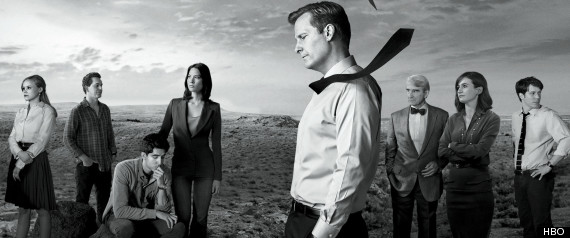
The Newsroom is a television show that premiered in 2012 that depicts an interesting inside look of a newsroom for a very popular fictional news network. The creator, Aaron Sorkin, created the episodes around actual news events that were occurring in the country at the time. The show stars actor Jeff Daniels who plays the lead news anchor and has an outrageous, stubborn personality.
The first episode of The Newsroom was full of controversial topics and intense scenes that pulled you in right from the beginning. In addition to this, this show is identified as a comedy as well and it definitely contains comic elements that make you laugh out loud. In this episode, the first 10 minutes were the most powerful, because of the speech he made about why America was not the best country in the world. This sparked contrasting reactions from people that witnessed the episode, because he really went off on the government and how we are not as great as we used to be. This speech rang a harsh truth in many people's ears that they didn't necessarily want to hear. It created a conflict in the show that you were intrigued by and made you want to continue watching so you can find our the answer to it. In addition to this conflict there are many love conflicts that arise. One between the main character and his new producer that was an old flame, and a love triangle between the secretary and two guys that work for the station. These conflicts that are presented right away make everyone interested in the story and the dialogue. The Newsroom is definitely shot beautifully and the lighting is mostly natural from the windows and very bright. The shots include a lot of close ups and pans of the studio, and they undertake the feeling of the chaotic studio structure very well. The Newsroom is definitely a show that I want to continue watching and I would recommend it to anyone wanting to find a great show to see. 

            Here's the video of this great speech. 

Wednesday, September 18, 2013

What exactly goes into an episode of The Newsroom?


A LOT (hopefully you read the title). The Newsroom isn’t the typical show when it comes to its content. Actually—if I do say so myself—it’s reasonably atypical. For those of you who have never watched the show, it’s basically about a news station and all of the stories the station reports on, along with the individual plots it follows regarding the show’s characters, but that’s not the important part. The important part is how the writer of the show, Aaron Sorkin, manages to somehow put on at least one complete news broadcast every episode while actually doing a substantial amount of research (many of the news stories have been real-life occurrences or have been based on ones) for each of these broadcasts.

Have you ever seen a news broadcast? Well I'd sure hope so. If you haven't, you, sir/ma'am, are a caveman. Anyway, a whole lot of different things go into an average news broadcast. There's the talent, the crew, the equipment--and yes--the story. Here's the thing. Putting on a broadcast is a lot of work. Having done this in classes (on a much lesser scale, of course), I know this to be a fact. You know what else is a lot of work? Shooting a field project. Now, imagine putting on a broadcast...while simultaneously shooting a field project. Now imagine incorporating said broadcast into said field project. Sound easy? Nope.

For every single episode of The Newsroom, there is AT LEAST one news broadcast is incorporated into the show. While the scene is taking place in the station's control room, the broadcast is being shown on the monitors right in front of the actors. The show is clearly happening right in front of us--but guess what--so is the news broadcast. Whether viewers realize it or not, an entire news broadcast is going right in front of them as well. Basically, two shows are being shot for the sake of one show. Cool, right? Yes. Yes it is.


Think about this. For every broadcast that's made in the show, at least one of the stories discussed has, at some point in our recent history, occurred. Such stories as 9/11, Occupy Wall Street, and the 2012 Presidential Election have been covered in The Newsroom, and each of the topics would require a large amount of research to make sure they were portrayed correctly in the show. Well guess what. The proper research was clearly done. While watching the show, it's evident that enough research was done to make sure the show portrayed the events as realistically as possible, and to make sure the stories were reported as accurately, if not more so, than they were in real-life broadcasts.


It's simply amazing to think about the extraordinary amount of work that must be put into each and every episode of Aaron Sorkin's, The Newsroom, and I truly hope that there are more shows like this one to follow soon.

Wednesday, September 4, 2013

News broadcasting in the fast lane

hbo the newsroom3
What happens in a newsroom? Does anyone besides those who work inside the concrete walls of a news broadcasting station really know? Probably not. The Newsroom, created by Aaron Sorkin, dives into this topic. Scratch that. He slams face first into this topic.

The show doesn't begin like most others. Will McAvoy, played by Jeff Daniels, starts off running right from the start. If you've ever watched some of Sorkin's most recent work (The Social Network, Moneyball, etc.), it's not hard to predict that The Newsroom is a fast-paced, quick-witted show with endless amount of dialogue. Viewers are not eased into what they are about to see. No, they are forced to decide right then and there whether or not this show is for them. Just watch and see. What do you think?


This isn't the one time throughout the show's first two seasons where this kind of thing happens. The entire show is actually based off of this kind of behavior. You see, Will McAvoy isn't the average news anchor. He actually cares what he's reporting about. So does his crew. Unlike the large majority of network stations you see today--whether in television shows or in real life--McAvoy and his team really fight for the truth and nothing but the truth, no matter how damaging it is to the station's or their own reputation.

The most amazing thing about this show is that pretty much every single story ACN (the fictional network stations known as Atlantis Cable News) reports, is a story that has actually occurred in the recent past. Stories span from the attack on the Twin Towers to the 2012 Presidential Election. Occupy Wall Street and the killing of Osama Bin Laden are also covered in this revolutionary show.

There's really not a whole lot this post can do for any of you. Simply go and watch an episode of The Newsroom. It's the only piece of advice I can give you.

Thursday, March 21, 2013

The Newsroom

Whenever Aaron Sorkin is involved in a television show it automatically becomes a must see. Sorkin is the main writing mind behind this HBO series and it shows, as the writing of the show is definitely what makes it so good. The coolest part about the show is how the dates of the episodes coincide with major events in the news world in the year the show is taking place. In season one's case, that is the year 2010. The Newsroom, literally, covers things like the rise of the Tea Party, the BP Oil spill, and the assassination of Osama Bin Laden. It gives viewers a behind the scenes look to how the news is put together and delivered to viewers in the United States. Much like West Wing and other Sorkin shows, the accuracy of the industry is off the charts.

The other great aspect of Sorkin's writing in this case is how he not only involves real news worthy events, but each character also has a personal life and backstory. Whether it is the lonely, drug addicted life of news anchor Will McAvoy or the different relationships going on around the office, the audience is clued in on it all. What Sorkin is capturing is that not everyone that produces the news for a living is a boring person in real life, these people have interesting and complicated lives that capture the audience when the news stories don't. It is a good mix of high-paced news driven content and slow-placed character development.

As great as Sorkin's writing is, you can't talk about this show and not mention how great the acting is. Jeff Daniels as Will McAvoy plays the role perfectly. Daniels is extremely talented and captures Will's up's and down's perfectly. Will is a troubled character, who suffers from depression and anxiety due to childhood issues and his now producer (MacKenzie McHale) cheating on him. Daniels is able to portray the gunslinging anchor in a way that makes the audience wish that Will McAvoy was the anchor of their local news program.

For someone that is interested in going into the television industry The Newsroom is one of the most interesting shows on TV. I am constantly paying attention to how the characters in the show produce the news, and how things work both in front of the camera and behind the scenes. What this shows explains to viewers is just how much work and effort it takes to put out the nightly news. Confirming stories with sources, getting live interviews, asking all the right questions, all while working to get as many viewers as possible. It's a results based business, and viewership is truly the most important thing. After watching this show, viewers feel like they know the in's and out's of television news.

Friday, February 8, 2013

HBO does it again

In the recent light of my external hard-drive crashing, my complete indecisiveness to pick something on Netflix, and seeing a clip of Jeff Daniels as Will McAvoy  I was finally motivated to watch the HBO series The Newsroom.  


This show has shattered all of my expectations. The quick talking and even more quick witted dialog written by Aaron Sorkin coupled with a high a tension news broadcast team is incredibly entertaining to watch. Aaron Sorkin's writing is clearly noticeable when watching, everyone is as fast paced and witty as Jesse Eisenberg was in The Social Network. If you stop paying attention for even a few seconds you'd look back and be completely lost. The actors do a great job portraying their characters, and Jeff Daniels performance is   almost enough to make you forget this priceless moment.
The story line is fantastic, and the characters interact great with each other. Were this an actual show, I would be e-mailing them my resume three times a day to get them to hire me. I recommend this show to anyone, whether you are a fan of Aaron Sorkin's writing or just liked the classic film Network. Seeing everything that goes in to putting a news broadcast together is extremely interesting and is giving me second thoughts about where i might go with my career in the future.  

Sunday, September 23, 2012

The Newsroom

HBO is known for churning out original television shows that are widely considered as the best on TV. Time after time they prove with each series, why they are a premium cable channel as opposed to just basic. I have watched many of these series in there entirety since i first got HBO in high school and i have loved every one. The most recent series i have started watching is The Newsroom. This is a show written by Aaron Sorkin about a news personality named Will McAvoy who is, in the world of the show, the most trusted name in news. The series is based off of the fact that for his entire career will has been very unbiased and rarely stated his actual opinion on anything and that has all changed. He has taken his show in a new direction aimed to help the american voters see what is really going on in modern news.

The show is brilliantly written, mixing real world events with incredible characters with very compelling subplots. The show is set roughly a year ago and each episode deals with the reporting of an event that has happened in real life. Certain news stories include the riots in Egypt and the killing of Osama Bin Laden. Most of the show is focused on how a story evolves in the news and how daily news show's like Will McAvoys are produced. However there is a good portion that shows the actual news coverage that they are producing and when Will is on the show i find a part of it a bit troubling.

Basically for me i am split between whether or not this show is cleverly written for the time it is being shown in or if it is being used as a means of social commentary. The reason why i say this is because a lot of Will McAvoys reporting deals with slamming of the conservative side of politics. In a recent episode i watched, one of the segments that they showed Will reporting was one designed to point out some of the hypocritical flaws in Rick Santorums campaign. Part of me believes that this is just cleverly written but the other part thinks there is something else going on here. I for one support the possible message i think might be there which is this. The show is trying to support better journalism designed to educate the masses, not scare them. That is one of Will's biggest values on the show. He doesnt lie about anything on air and stresses the importance of good, honest journalism designed to inform. While i am not entirely sure this is what the show is going for, i really hope it is because this is a message that would really help out our country right now.