Thursday, February 18, 2016

SAVE DAT MONEY

As production students, we all attempt the best method to either raising or avoiding costs for our films. Last year, my fiction 2 film was a complete disaster in terms of money. 

This film was called "The Pee-Wee" which is a story about fathers who gamble on their kids hockey games. It was a good story, and over $4,000 was spent on the project, but I simply had the wrong team. It just goes to show that although money is a quick problem solver, it can really bite you in the ass in the long run. 

As I begin my journey into creating my final Ithaca College video, I am devoting hours upon hours trying to save dat money. And I think it is only fitting that because I am doing a music video for my thesis, I talk about Lil Dicky's "SAVE DAT MONEY" 
This video is a huge inspiration to me because Lil Dicky did it without spending a cent. At the end of the video the even do a behind the scenes on how they got away with it. And lastly, I think as television/film students we all have a lot to learn fro Lil Dicky.

The Industries New(ish) Obsession with Penguins

It's not that hard to believe that over 86% of the planet's population find penguins to be absolutely adorable. They are some of the silliest and cutest birds on the planet!
It was only a matter of time before Hollywood would realize this and capitalize on it for a pretty penny. Big producers have monetized these furry little critters and made a huge profit off of them. What is worse is that these penguins did not get to share in the wealth at all. In fact, few penguins are even aware they their species is a Hollywood hit.

Some might say that this isn't a big dear or that there are bigger issues going on right now, but when you look at how much Hollywood has profited off penguins, the numbers are jaw dropping. Let me try and put this in perspective for you:

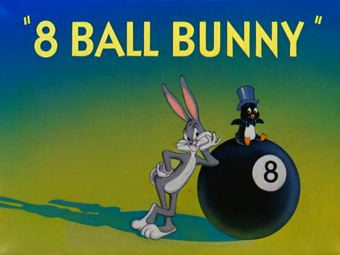
8 Ball Bunny (1950)
Mr. Forbush and the Penguins (1971)
A.K.A
Cry of the Penguins
The Adventures of Lolo the Penguin (1988)

Shocked yet? If not, let me keep going cause I'm not even close to being done

March of the Penguins (2005)
Farce of the Penguins (2007)
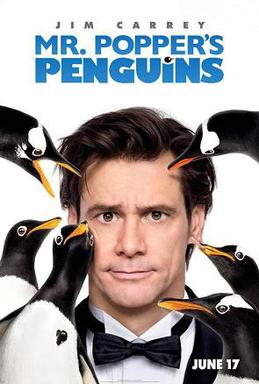
Mr. Popper's Penguins (2011)
Oddball (2015)
Adventures of the Penguin King (2013)

This doesn't even begin to complete the list of penguin movies out there. All films combined probably raised over one billion dollars, and again, not one penguin saw a single cent of that money.

The Obsession With the Death Penalty

Documentaries have always been fascinated witht he death penalty and those who sit on death row. There is something truly unique about waiting to die. There are few other circumstances where a usually healthy person sits still, waiting for that day. Often, they know the exact day.

One example of our fascination is the infamous last meal. Last meals are known for being the very last thing the inmate eats before being executed. The inmate gets to choose whatever they want to eat, within reason.

A photo collection went viral late last spring called "No Seconds" by Henry Hargeaves. He gathered information on infamous inmates last meals. He then recreated what they would look like then photographed each one. The photos are ominous.


This may hint at why there are so many death row films. Errol Morris made the Thin Blue Line. Werner Herzog made Into The Abyss. And do not forget fiction films like Dead Man Walking. It is a powerful subject matter.

The Merc with a Mouth

I saw Deadpool opening day. And showing up late to the theater, I was lucky to get a seat. It was packed. Deadpool broke many box office records, including highest grossing film of February (the record originally belonging to Fifty Shades of Grey). And it’s well deserved.


Deadpool was arguably the most entertaining Marvel movie yet. It was fun, subversive, and laugh out loud funny. And as I’ve discussed it with my fellow peers, they seem to share the same enthusiasm I had after watching it.

BUT…

Although, it was a great movie, there were a lot of things that bothered me.

***SPOILERS ALERT***

IF YOU CONTINUE READING AND HAVE NOT SEEN THE MOVIE YET, DO NOT, I REPEAT, DO NOT CRY LIKE A LITTLE BITCH IF I HAVE SPOILED ANYTHING FOR YOU.

You have been warned.

Anyways, first thing that bothered me was during the climax. Deadpool tries to save his girlfriend Vanessa from plummeting to her death from a crumbling helicarrier. So in order to save Vanessa, he has her climb into the glass chamber that Ajax used to suffocate her. But, not even five minutes before this, we see Deadpool effortlessly pierce the glass chamber with his sword. I don’t care how strong he is and how great his regenerative powers are, if that helicarrier topples onto that glass chamber, it will be crushed to shit. And, in the movie, the helicarrier does in fact fall on top of the glass chamber with Venessa inside, but Venessa is left unharmed. Eh…

Another thing that bothered me (and I’m not the only one according to the internet) was the fact that, in order to escape Ajax’s dreadful experimental facility, Deadpool had to blow it up. But Marvel has already announced an X-force movie, and considering the X-force originates from Ajax’s facility, did blowing it up kill the X-force? Maybe answers will be resolved in the X-force movie.

Lastly, the taxi driver character – what will happen to him?! We left him knowing that he just got into a car accident with his lovers partner tied up in the trunk, also, (to make matters worse) with Deadpool’s bag of artillery in the front seat. How will he explain that to the authorities?

But that being said, I was able to easily forgive them. Deadpool had me laughing out loud more than once, and I don’t remember watching a movie that genuinely did that to me. So I highly recommend seeing Deadpool, if you haven’t already.


Silence Broken: A Mother's Reckoning

On Feb. 12th Sue Klebold, the mother of one of the Columbine shooters, spoke on television for the first time since the shooting. She appeared on 20/20 and was interviewed by Diane Sawyer. The entire 20/20 episode was chilling and emotional, and I definitely recommend people check it online. 


Listening to Klebold talk was extremely interesting, but I was also paying close attention to how Diane was conducting the interview. As an aspiring documentary producer, I have become more comfortable conducting interviews throughout my time in college. However, sometimes it is hard to gather inspiration for conducting tough interviews. Documentary producers often edit together interviews so most of, if not all, of their questions are not heard in the film. Sometimes I watch interviews in a documentary and wonder how the interviewer was able to make the interviewee respond the way they do. After watching Diane Sawyer conduct the interview with Sue Klebold, I felt inspired because of how powerful Sawyer's interviewing skills are.

Sawyer was not afraid to back down from a question, and she did not sugarcoat her wording in order to make Klebold feel better. She was blunt and often cut off Klebold if she wanted more from the answer. I've seen this (slightly aggressive) technique used before in documentaries, but usually the person conducting the interview is a man, not a woman. In fact, last semester my professor told the class that women are typically better interviewers when you want the interviewee to feel comfortable opening up, but men are better when it comes to asking tough questions that the interviewee may not want to answer. Sawyer left me feeling inspired because she proves that gender does not have to play a role in how tough a person can be as an interviewer. As long as I don't let myself believe I am limited, I can ask the tough questions too.

Thanks D. Sawyer.


What happened at the Grammy's?


The 58th annual Grammy awards aired Monday night and as I sat and watched the event all I could think about was 'what is going on with the audio team?' While Adele managed to perform beautifully despite what was happening, the clip illustrates the audio issues that plagued the Grammy's all night long. Microphones were cutting out, equipment was being dropped, but still the show went on. While it is a testament to the artists for still being able to perform despite the problems, it is vital to have back up plans upon back up plans in any production--but especially live productions. While Adele took a little bit of an emotional hit, I can only imagine what the audio engineers are experiencing right now.

Thursday, February 11, 2016

Visual Accompaniment

Sonny Moore, more commonly known as Skrillex, has a catalogue of records unlike any other. With many of those is an accompaniment of spectacular visuals that puts the average music video to shame. Some have clear stories, while others are completely ambiguous. Regardless, they are amongst some of the most viewed music videos of their kind... I think I'll let them do the talking


The Dude Who Abides


    The Big Lebowski, labeled a cult classic, is a comedy crime film written and directed by the Coen Brothers team.
    The film centers around a character known as The Dude. The Dude doesn't do much. When police ask him what he does for a living he responds that he's currently unemployed. He mostly lays in the bath tub and gets high. And he goes bowling.
 Jeff Bridges' character, who gets confused with a businessman also named Lebowski, is given a desire. He wants to fix his rug. It's one little want. It's one little need. The Dude is mostly propelled through the movie by the plans and schemes from business men to nihilist. But the promise of the rug, the one that pulled the room together, that keeps The Dude moving. It's relatable. Viewers are lazy. We don't want to do things.
    I added The Big Lebowski to my lookbook for a few different reasons. Firstly I love Roger Deakins and think he creates beautiful images out of simple character placements. Secondly, The Dude doesn't do a whole lot. Rather, like Andrew, things are mostly done to him. And for whatever reason this tires him out. Even though he's along for the ride he hates the journey. 
     Plus the Dude learns from his surroundings. He repeats the things other characters say. And he the solution to his problems come in a drug laced dreamed sequence. Which is an effective form of visual storytelling.

The Big Lebowski is a cult classic because each time you watch it there's a new joke. The high stakes create a lot of tension and juxtaposition of the calmness that often follows. The Coen Brothers show us a dramatic money hand off that failed. They ostensibly cut from John Goodman jumping out of a moving car to Steve Buscemi bowling. The Dude's enemies include nihilists and Jesus the bowler. The movie sets up and deceives are expectations, the hallmark of comedy.
    The Big Lebowski is about a man just trying to get vengeance for his rug. He's The Dude.


A Clown's History of the United States

When writing the script for my thesis, I have to admit I went in blind. I had no real prior knowledge of clowns other than what was depicted in various forms of media. This was definitely a problem. I didn't want my clown to fall victim to these clichés. So I decided to give myself a little history lesson.

Clowns originated all the way back to Roman times. They performed as secondary figures in farces and mime, parodying the actions of more serious characters. Then, during the middle ages, Court jesters and fools emerged, entertaining figures of power and authority. And if they failed, they would be decapitated. But obviously, times have changed.

There are three types of clowns.

WHITE-FACE CLOWN


The White-face clown is the ‘classic’ clown, the oldest and most well-known of the clowns, and is typically the straight clown in skits. This is the oldest style of clown, dating back to Greek theatre. Whiteface is the court jester of the Middle Ages. The White-face is the most intelligent type of clown with the highest status - typically the ringleader.

AUGUSTE CLOWN


In the 1860s, or so the story goes, a low-comedy comic appeared under the name of Auguste, who had a big nose, baggy clothes, and large shoes. He worked with a White-face clown and always spoiled the tricks by appearing at the wrong time to mess things up. This then became a type of act – called the Auguste clown. The Auguste clown is the least intelligent, and zaniest of the clowns. The Auguste clown tends to be the silly clown in skits. 

CHARACTER CLOWN


The Hobo or Tramp clown is the most popular character clown, although character clowns can be police officers, women, babies or government officials. The Hobo usually has tattered clothes, a tattered hat, make-up which suggests he is unshaven, exaggerated features and a red nose. The generic Tramp character is 'down-on-his-luck'. The Tramp clown is an American creation. Charlie Chaplin as the silent 'Little Tramp' clown, brought laughter to millions worldwide through film.


Now, that I knew a little bit more about clowns, writing the script became easier. I knew exactly what type of clown I wanted to make my clown and how I wanted to depict him. It’s crazy what a little research can do!


Amy and Nina

My two favorite jazz singers of all time, Amy Winehouse and Nina Simone, just so happened to be in two of my favorite documentaries of this year (which just so happened to be nominated for Oscars). What a mouth-full.

These two films tell two tragic tales. Neither of these lives were easy. Both films take on a similar aesthetic in the singers tell their own stories through found footage, audio and photographs. However, What Happened, Miss Simone? takes on an even larger task of telling the history of the civil rights movement through her lived experiences. Amy remains self indulgent through a riveting tale, but one without huge depth.

Of course, the music really tells the stories of these women's lives. The lyrics are carefully embedded into the story, often with no introduction. However, I was surprised Feeling Good, one of her most noteworthy songs, was not featured in Nina's story. Instead, the film introduced hidden gems in her line of work. Either way, I highly recommend both films.

The Art of Using Birds in Movie Titles

For ages, movie producers have tried to find new and innovative ways to make their movie a blockbuster. One common trend that has been observed most frequently in the past decade has been the use of birds in the titles of movies.

Some of the most successful and highly-acclaimed movies of all time have used birds in their title: Black Swan (2010), One Flew Over the Cuckoo's Nest (1975), and Chicken Little (2004) to name a few.

There is speculation over when this trend started but most movie buffs agree that the first big movie that used a bird in its title was Alfred Hitchcock's 1963 thriller, The Birds. After The Birds's gigantic success, many movies followed in its path, but were forced to take circuitous methods of using bird names.

There are many ways you can go about using birds in your title. Some movie makers like to make movies about penguins and be very straightforward with their titles such as Penguins of Madagascar (2014) and March of the Penguins (2005) while others like to take trickier approaches such as Robin Hood (1973), Robin Hood (2010), and Black Hawk Down (2001).

Although these movies took the approach of adding a bird in the title while keeping birds out of the plot, nobody has done as good of a job at subliminally inserting a bird in a movie title than Michael Moore with his widely successful 2002 documentary Bowling for Columbine which cleverly inserted the word "owl" into the title.

We might never know if the fact that birds are in the titles of these movies are what made them successful but we can at least say with some certainty that the use of birds didn't hurt the films.

Birds I'm Glad Don't Exist

Birds are great! They are pleasing to they eye, elegant, and fun to watch. But some birds can have quite the opposite reaction!

Like this bird for example:


Don't worry though, this picture is photoshopped, birds don't usually have teeth.
If you thought this bird is scary, wait till you see this next one!


The fabled dragon. Personally, its the scariest bird I can think of, and couldn't be happier that it doesn't exist. I remember watching Reign of Fire (2002) and being scared half to death thinking about how much it would suck if dragons really existed. It was one of my first encounters with a dragon on the big screen and man was it a powerful one.

How To Train Your Dragon (2010) was a much more kid friendly dragon movie that tried to break the mold of dragons being terrifying and put a delightful twist on it. The movie focused around a boy who befriends a dragon only to realize that dragons have been sorely mistaken and are actually very nice.
Although the movie does a great job in helping the audience sympathize for dragons, I still think the world would be a lot worse of a place if they actually existed.

Diversity at the Oscars

Although in my last blog post I touched briefly upon Leo and his outstanding performance in The Revenant, this post is about how unfair it will be if he wins. For many years, the academy has lacked a sense of diversity, therefore most of the winner, in fact 74% of them are white. This is a huge problem with film, and in the world in general. Truly, this world is run by the "white man" and because of that most of the lead roles in hollywood are of white people, but interestingly enough, those roles that are of minorities are usually supporting roles. This year was a little different, we saw Will Smith in Concussion,

As we all know the Oscars are films biggest award shows highlighting the best pictures, and performances of the year:

But did you take the time to notice, that none of those people are not of the white race? In fact last year the academy had a similar issue:
Those people are all white too! Basically the academy is saying if you are not white, your not in! But this truly is not just a problem with Hollywood, its a problem with the entire world.  

Scene Reenactments

Shooting scene recreations

Scene recreations are a common form of documentary technique that is often used when there is a lack of archival footage or the archival footage is not adequate quality. There are many issues that arise with the use of reenactment. Some people consider it to be untruthful, but others argue that if the truth is already known, re-enactments can deliver it cinematically.
In 1988, documentary filmmaker, Errol Morris released a documentary that proved the innocence of a death row inmate and resulted in his release. The New York Film Critics Circle named A Thin Blue Line the best documentary feature of that year. On top of that it received numerous awards and recognition. Despite this film’s praise when the Oscar nominations of the year came around, this film was nowhere to be found. Roger Ebert, a top film critic, was outraged. He called it “the worst non-nomination of the year,” and blamed it on the academy’s “inability of academy voters to appreciate innovative filmmaking.”
This film was made in 1988 about a crime that took place in 1976. Morris’ signature style of filmmaking is his use of dramatic reenactments. A Thin Blue Line was one of his earlier films, but today he is known for these reenactments. Morris attributes this technique as to why A Thin Blue Line was overlooked, “Critics don’t like re-enactments in documentary films – perhaps because they think that documentary images should come from the present, that the director should be hands-off.” Although the crime occurred in the past, Morris was not given a pass for his use of reenactments. He even had one confused Dallas Morning News reporter ask him, “So, how is it that you managed to be on the roadway (the crime scene) that night?”
Morris disagrees with the academy’s decision to not acknowledge his film as a true documentary because of the techniques chosen. Re-enactments, like any other type of film, photography, or communication, can be used to search for the truth or subvert it. It is not the use of re-enactments itself that is wrong, but how they are used. Morris and the Texas Court of Appeals believe they were used to uncover the truth.

Morris disagrees with the academy’s decision to not acknowledge his film as a true documentary because of the techniques chosen. Re-enactments, like any other type of film, photography, or communication, can be used to search for the truth or subvert it. It is not the use of re-enactments itself that is wrong, but how they are used.

Trainwreck: The Evolution of The RomCom


The third wave of feminism is, I would argue, being dominated by shifts within media and the representation of female narratives and experiences. Trainwreck, starring Amy Schumer and Bill Hader, flips conventional notions of gender and the romantic comedy genre on its head. The story follows Amy, a young adult living in New York City, whom grew up thinking that monogamy was unrealistic. She carries that mantra with her as an adult and fills her life with one night stands, but never anything more. She's happy that way, and funny enough it's the men she sleeps with that crave intimacy and a relationship--a total twist on traditional notions of what women are seeking vs what men are seeking in the world of love and romance.

We're seeing a slow evolution of the romantic comedy--and it's much needed. What was once a standard, stereotypical formula ripe with rigid gender roles is being reinvisioned by fresh plots. It's about time.

Waste of Time


A recent study by mobileinsurance.com has revealed that the average person spends 90 mins a day on their phone. That figue may not sound like a lot but that amounts up to 23 days a year and 3.9 years of the average person's life is spent staring at their phone screen.

Image result for waste of time

Americans aged 18-64 who use social networks say they spend an average of 3.2 hours per day doing so,according to new research released by Ipsos Open Thinking Exchange (OTX).

The amount of time I spend on social media and on any technology in a day is pretty significant.  I wake up in the morning and immediately check my phone and I check my texts, emails, social media and any other notifications I get. I would say I spend about 15 to 20 minutes in the morning on my phone every morning. 


Then after doing my morning routine I check my phone again to make sure I am not behind on texts or emails. Then I head to lunch and I usually surf the web for about an hour and do homework or research. Then I go to class and my teacher is usually using the Internet and I use the Internet to look up information so that’s another hour of using technology. Then after class I check my phone and go on social media for another 10 minutes. I usually head home after class then sit down for 1 hour of 2 and watch TV usually the discovery channel. Then I head back to class and that’s another 1 hour of my laptop. After class and the rest of the night I am on my laptop for 2 more hours and probably watch 1 more hour of TV. 

The next time you pick up your phone try to spend less time on it and do something more productive!