Friday, November 15, 2013

Boy Meets World: Girl Meets World

The very well-known 90's show, Boy Meets World, revolved around a boy Corey Matthews growing up and facing problems with friends, family, school. And of course, his romantic relationship with his childhood friend Topanga played a large role in the series. Nothing could permanently come between the two. In my opinion, their relationship was one of the biggest contributors to the show’s success. I think their onscreen chemistry will also aid in making the new series Girl Meets World a success.

If you haven’t heard, Ben Savage (Cory) and Danielle Fishel (Topanga) will reappear their Boy Meets World roles in Girl Meets World. The series will be based on the grown-up childhood sweethearts raising their 12-year-old daughter, Riley and is scheduled to premiere next year.
As silly as it sounds, Corey and Topanga were my relationship models growing up. In a way it was good and in a way it wasn't  They were good role models because their relationship was always respectful. It showed children and teens how to respect one another in a romantic relationship. However, It gave children and teens the notion that you can find your soul mate in Elementary School which is possible but very unlikely.

My only concern with the spin-off Girl Meets World is the romantic aspect. I hope that Corey and Topanga’s daughter does not also meet her “soul mate” in elementary school, middle school, or high school because that will continue to give to kids and teens the idea that their current boyfriend or girlfriend is their soul mate when in reality he or she is probably not.

I think that this show will either be a huge success or get cancelled after the first season. However, I have high hopes that it will be a success!

Cortaca Broadcast

It is Cortaca weekend, which means a great game, great friends, and great times. For ICTV this means the most watched, and most important show of the year. Gridiron Report, Bombers Live, and all other sports shows are going to be covering the game in the studio and on the field. There are going to be hundreds of views online and hundreds of yards of XLRs will be laid out. Tensions are going to be high. The game will be broadcasted on channel 16, ictv.org, and on Time Warner channel 325 all over New York! This is going to be the last Cortaca I will be attending in person, however next fall when I am in LA, I will be attending in spirit. For a division three game, this event draws a lot of people out for a weekend of celebration, and school spirit. To everyone planning to go to the game tomorrow afternoon, have a good safe time! To everyone not able to attend the game, be sure to tune in to channel 16, or Time Warner 325!

Movies based off books

This past weekend I had the good fortune of being able to watch Laz Burhman's version of The Great Gatsby, based off the book by F. Scott Fitzgerald. I personally loved the film because of how over the top it was. I thought the audio was unbelievable and was so well done that I don't think people even caught everything they did unless you watched it twice intentionally listening for things. The one thing that I loved was how the high pitched noise you heard whenever you saw the green light from Daisy's dock was the same exact pitch and most likely derived from the ringing bell of Gatsby's phone. They fade it  together so well at the end that they really over emphasize that it's Daisy he's waiting for to call. It's obvious in the storyline but the sound was just over the top for me. That being said I really enjoyed the movie but my little brother's reaction was completely different. He recently just read the book for his English class and his main problem with it was that it didn't match the book enough for him. Of course I told him that they are two different mediums and it's like comparing a photo to painting and not being happy with the painting because it's not identical to what was really there. This made me think of movies that were based off books and did well and why they did well.


            VS


The first one was Perks Of Being A Wallflower originally a book by Stephen Chbosky who also directed it. That I think was key for it doing so well. The guy who wrote the book was able to be there step by step to make sure the movie did the book justice. I personally thought the book and the movie were pretty similar in quality but that being said it probably isn't fair when the director was the author of the book.


The next one I thought of was the Harry Potter series based of J.K. Rowling's books which had 3 or 4 different directors. To me these movies did not capture the books at all but they weren't bad either. I mean some of them were bad but come one they had 8 movies and for all them to be pretty decent is an accomplishment in itself. I think these movies did well because they focused on the characters and the biggest and most important story in the book, to end the everlasting threat of Lord Voldemort. They did have to cut a lot of minor story lines and scenes out but after experiencing the stress of producing a 16 page fiction one film, approaching a 600+ page book and turning it into a film is daunting.

Finally I thought of the opposite situation of the Harry Potter books and looked at The Hobbit directed by Peter Jackson and based off the book the Hobbit by J.R.R Tolkien. In this movie they added completely new story lines and reasons for the treasure hunt that the book didn't have. After reading the book I completely understood why they did because to me the real reason they went after the dragon was because they wanted some gold. They weren't looking for their old home but they just wanted money and I guess that isn't a completely good moral reason for heroically fighting dragons in Hollywood. And also they added the white Orc which I thought gave a nice conflict through out the film but there was no such character in the book. If you stuck to the book, I personally don't think the story would have fit a movie screen as well because that story wasn't meant for that medium. Leading me back to my original statement in which you shouldn't think a movie is bad because it doesn't match the book it's based off of. The movie is an artistic expression inspired by the book not an identical recreation.


Thursday, November 14, 2013

Pixar's Rules of Storytelling

In late 2011, a former story artist for Pixar tweeted 22 tips for storytelling that she learned while working for the company. Her name is Emma Coats (follow her on Twitter - @lawnrocket - for her thoughts on film and storyboarding) and after working for Pixar on both Brave and Monsters University, she plans on moving on to directing feature films. She's only 26 years old.

While her 22 tips are by no means representative of some kind of "Pixar story bible," they certainly give a good idea of how most people in the company go about trying to tell a story. Having worked with masterminds like Lee Unkrich and Pete Docter (director of Toy Story 3 and Up, respectively), she's picked up the overall tone that Pixar uses in their films, as she explains in detail in this article from the Washington Post. Since I'm so fascinated by the writing process, I went through all of her tips and picked out a few that I thought were especially useful or interesting.

As a writer, you want your main character(s) to succeed - in one way or another - by the end of your film. Unless you're some masochistic person who finds joy in torturing the people you've created, this is almost always the case. However, an audience is not going to appreciate a character who has everything handed to them; that's no fun for anybody. We want to see our characters fail. It makes them infinitely more human and relatable. If my best friend brags about not studying for a test and still gets an A on it, I'd be like "hey man, good for you" while secretly loathing him behind his back. If that same friend studied his ass off for the test, got a D, studied some more for the next test and still failed, I would admire him way more than if he didn't study and did well. Like your grandma always says: nothing else matters as long as you give your best effort.

Endings suck. Every writer will tell you that it's a blast to create characters and toss them into ridiculous situations, but you always have to be careful about writing yourself into a corner. Vince Gilligan and the writers of Breaking Bad are actually kind of notorious for this; to every writer's jealousy, however, he always seems to find an ingenious way to get his characters out of high octane, high stakes situations. Something that every writer needs to be aware of (myself included) is that we are not Vince Gilligan.  We need to know how our stories end. Not only will it help to flesh out your story and let you do things like foreshadow and plant items for later payoff, but it also just makes your life a hell of a lot easier.

This rule really struck a chord with me, probably because I'd never thought about surprising myself with my writing. It makes a lot of sense though. I want to write something that I would personally enjoy, which means that if I want to surprise my audience, then I have to surprise myself as well. Part of me hates the idea that I have to get rid of so many ideas, but that's what writing is; revising and revising until you find something that is truly great.

My personal favorite rule: #19. It sums up everything that a great film or piece of writing should be. While it's great when coincidences get you out of trouble in real life, it's a terrible, terrible thing to do when writing. For example, say I have two characters with the same gray Volvo and neither of the driver's side doors can be locked. One car is fairly average, but the other car has 10 million dollars of drug money hidden inside. The characters park next to each other and end up accidentally swapping cars. Great plot. A little unrealistic, but hey, let's go with it. That's a coincidence. If, however, the same exact thing happens at the end of the film and each man ends up getting out with no repurcussions, that's not fair. Your audience has been waiting 2 hours to see some kind of payoff; not only will they be disappointed by a clear lack of character development, they'll feel cheated and will probably hate everything about you. Yeah. Everything.

While nobody is perfect (no Pixar, not even you) I think all 22 of these rules/suggestions can be helpful to anyone who aspires to be any kind of writer. They're definitely something that I'll keep in the back of my head and on the favorites bar of my laptop for a long time.

Here's a link to all 22 Pixar rules and Emma Coats' personal blog.

TAR


Based on C.K. Williams and his Pulitzer Prize winning poems, his beautiful words have paved way of an incredible story, and now an incredible film.  However, it wasn’t the topic of the story, or the meaning of the story itself that amazed me when I found out about the creation of this movie.  It was actually the story behind the making of story that still has me in awe.

With a big name cast including James Franco from 127 Hours, Oz: The Great and Powerful, and This Is The End, Mila Kunis  known for Friends With Benefits, Black Swan, and That 70’s Show, and Jessica Chastain  known for her work in The Help, Zero Dark Thrity, and Mama, you would have been waiting  for the mention of a well known director and writer as well,  and the fact that there isn’t is the craziest part to me. 

Written and directed by 12 New York University film students—yes 12, and yes students—I am flabbergasted, not only by the fact that they were able to book a cast of actors with such prestigious credentials, but the fact that it is looks so professional you never would have known it was made by a small group of students who many would deem as inexperienced. As an aspiring filmmaker, and one with great appreciation of film itself, I am both envious and determined.  I am envious that I was not a part of that team of twelve, and even more determined to reach the quality and ability that they were able to do and gain the knowledge I need to become in a position like that.  They have raised the bar for young filmmakers and have made a beautiful piece worthy of recognition.

The story takes us back to 1940’s Detroit where we meet William’s mother (Chastain), then through his tough years as a teenager, to the time where his writing career began on its journey to its peak in the 1990’s.


I cant wait to see it!

Acting for the Camera and My Path into Filmmaking


For the entire span of human history (minus the last 100 years or so) acting has been a live performance in front of large audiences. It requires projection of the voice, dancing around, singing, and whatever else the production calls for. Countless hours are spent rehearsing for just a few hours of performance at the end.

Any of us that signed up to be in our school plays understand how this works. Most of us try a couple shows to fill some time, try something new, or meet some new people. Fore some reason, perhaps it was because of my distaste for sports, I went hardcore with school plays. 12 productions over those 4 years in high school. That's not including the shows I did before hand and the summer-stock theater I worked at. In total, I entered college with over 45 productions of acting experience. Convinced I knew a substantial amount about acting, I auditioned for student films with confidence. I was accepted into a lot of roles so I thought I was doing great, but looking at those films now I realize the truth... HOLY CRAP I SUCKED.

Here's me senior year of high school... being super dramatic while caught up in the emotions of a song:


And here's me in a student film last year... still very dramatic. Granted I was playing a drunk character at the time, but I'm giving it a theater-quality energy which is unneeded when the camera (aka the audience) is only a few feet away. 


In class we recently watched a video where Michael Caine gave the low down on film acting. I remember watching this video last year when I found it posted on nofilmschool.com. I remember being completely inspired by what he had to say. It really drew me in to the art of acting for film. It's incredibly harder then acting on stage because it focuses on the subtleties.  My favorite quote from everything he had to say:

"Theater acting is an operation with a scalpel, movie acting is an operation with a laser."

There's many other differences between the two also. There isn't a lot of rehearsal with film acting. You run the scene a few times and then you do it... the rest of the work comes from whatever talent you've already established. That's why I dub film acting: "AP Acting". Because it really is. It requires so much more (and yet, really, so much less) then acting in theater. It's hard to make that transition and it's probably going to take me several more years to really get the hang of it. 

The good news is that in the midst of all these discoveries, I found out I love making films too. Now, I find myself as the director of photography for a film. I've completely changed the side of the camera I'm on. It's new, but I love it. 

Moral of the story:
For anyone that has chosen to stay one side of the camera or the other, I urge you to try the other side of it. It's an incredibly new perspective and it will make you a better filmmaker or actor without a doubt. Now that I understand the technicalities of filmmaking, I better understand what is required when I put on a character in front of the camera. By going into filmmaking with a strong understanding of the actors perspective, I know how to get a quality performance out of an actor and I know what a captivating story requires. 

Michael Caine's video can be seen here. 

Weeding Through Gender Roles


Weeds is a dark, suspenseful American comedy-drama series that aired on Showtime on August 7, 2005. The show was created by Jeni Kohan and produced by Tilted Productions in association with Lionsgate Television. The show earned Showtime their highest ratings and has received numerous awards including two Satellite Awards, one Golden Globe Award, a Writers Guild of America Award, a Young Artist Award, and two Emmy Awards.

The show is most known for its central character, Nancy Botwin (Mary-Louise Parker), a widowed mother of two boys. After her husband dies of a tragic heart attack, Nancy struggles raising her two children and supporting their current lifestyle in Agrestic, California. Agrestic, which is the main focus in the show’s popular title sequence, is famous for its similar tiled-roof houses and over-involved soccer moms. Nancy goes against the stereotypical designer wearing, child caring mother when she decides that the only possible way to maintain her families’ upscale lifestyle is to deal marijuana. This, of course, plunges her and her loved ones into pure chaos and a long, complicated string of illegal activities. Throughout the show’s eight seasons, Nancy goes through the complex drama associated with growing and selling marijuana as a high-end competitor. Her drama includes that of an ordinary housewife. She packs lunches for her kids and deals with common teenage angst. At the same time, she goes through the drama of being a dealer, such as life-threatening arguments with competitors, the risks of smuggling substances, and taking a bullet to the head by a DEA’s revengeful son.
Despite the drama, the most fascinating aspect of the show is the role of a woman heroin who is constantly failing her family. Nancy Botwin has pushed the boundaries of most mother characters that star in comedy-dramas. In most series, if a mother character is rebellious and involved in illegal matters they are usually foiled or show guilt. In the past, mothers have merely shown assistance to the main male character. In modern day television, mothers are most often displayed as heroines with a fault, able to take care of their families but often messing up in a humorous and relatable way. However, Nancy Botwin breaks all of the stereotypes used to form woman characters on television. Nancy, to say simply, is a 40-something girl in a woman’s body, allowing greed to steer her decisions and avoiding every possibility to display responsibility. Often showing too much skin, wearing shorts too short, guzzling too much iced coffee, and cursing way too much, Nancy has mastered the ability to change the image of woman and make a badass image of herself in the drug business.
Nancy’s character has often been critiqued as “the worst mother on television”. When one of her sons becomes a major drug dealer at only 16 and her even younger son kills her main competitor, it’s easy to see how she earned this title. However, what makes her so much different than famous, popular television characters like Tony Soprano? What makes her a less suited parent and a less-liked individual? Ultimately, it is her gender that makes her parenting more surprising to viewers. Although characters such as Tony Soprano have made equally questioning decisions that have endangered their loved ones, Nancy’s actions have built her an unmistakably negative reputation as a poor role model rather than a simply entertaining, misunderstood individual. Specifically, Nancy’s gender makes her character a challenging concept for audience members to comprehend. Although she is a maternal character who truly loves her children, she is not relatable like other woman on comedy-dramas. Instead, Nancy’s problems do not revolve around what will be placed on the dinner table or how she will help her children with their homework. Instead, her life is filled with decisions surrounding drug trades, dangerous enemies and other issues that are difficult for almost every mother to relate to. In the end, Nancy proves that being a strong woman does not pertain to a man's common portrayal of what a woman should be. Instead, Nancy proves that a woman can be portrayed as any image of her choosing, no matter how impossible or how little society approves of it. Her choices may be far from ethical but playing dirty is not specifically a man's approach to life, but a human one.
Unlike most television characters that indulge in rebellious activities and then realize the negativity of their actions, Nancy fails to recognize her wrongdoings. Instead, she never considers obtaining a real, steady, legal occupation or dedicating all her time as a housewife who serves her family. Instead, Nancy seeks out danger and finds absolute comfort in doing illegal and unexpected activities. The lure of the financial aspects that come from dealing marijuana keeps her from leaving the game and doing what is the safest for her family. Her spontaneous hookups with drug dealers, her on and off relationship with the law and the fact that she sells weed to young college students hints at a missing maternal attribute that almost all other mother characters have. All in all, Nancy creates a new face for mothers everywhere, suggesting that being a simple housewife and striving to complete maternal perfection is completely overrated. Nancy reveals the adventurous attributes that most housewives often keep hidden away in order to restore their good-natured reputation. It is refreshing to see a woman on television whose moment of weakness is greater than simply ruining dinner or forgetting to sign her child’s permission slip for their field trip. She may not be relatable in her drug-related actions, but it’s her moments of weakness and her frustration that make her fascinating to female viewers.
The series finale of Weeds correctly displayed how the consequences of Nancy’s actions effected her family. In the series finale, the show sped ahead a few years to reveal that Nancy had establish a well-received, famous, legal product, marijuana cigarettes known as Puff Dragons. In fact, the product is so successful that Starbucks gives Nancy an offer to buy her product. The rest of the episode focuses on her internal debate on whether or not to sell. Although the offer seems impossible to turn down, it is evident that all these years later, after failing her family time after time again, Nancy’s family has left, abandoned her to go their own ways. In fact, even her youngest son, Stevie, who was merely a baby last time we saw him, has begged to be sent to boarding school, fed up with the constant drama associated with his mother. In the end, Nancy sells the business, allowing everyone who has not been able to sever their ties, free. She’s achieved the goals she’s focused on the entire series. She became the most prominent dealer, she became rich, and she became successful due to the growing and selling of marijuana. However, as the show ends with a shot of her smoking a pot-cigarette on a stoop during a wintery afternoon, it is evident in her loneliness what she has given up.

Wednesday, November 13, 2013

Arcade Fire's Live Music Video


While I was relaxing during my down time between classes, I stumbled upon news from the YouTube Music Awards. I had heard ads about this event, but I never got around to watching it. I discovered, to my surprise, that Arcade Fire had recorded a live music video of their new song "Afterlife". This music video was directed by Spike Jonze, director of films like "Being John Malcovich", "Adaptation.", and "Where the Wild Things Are". 

This music video was a low-budget production that happened right on stage as the band was performing. The video stars Greta Gerwig who plays a woman who has just dealt with a bad breakup. It involves her running through a forest on stage doing a choreographed dance and in the end dancing with a bunch of younger girls. This sounds pretty lame when I describe it so check out the video for more. 


Even though the dancing comes off as mildly cheesy, the video in whole just puts a smile on your face. You are taken into this world within the contents of the video framing, leaving the viewer almost completely unaware of the stage and audience that is just a few feet away. This video is a totally new concept for how music awards can run. A production is made on stage and it is live. It is high-stakes, but it could be the opportunity to create something really special. 

The Lego Movie

Yes you did not misread the title, this is a post about "The Lego Movie".  There is a film coming out in February 2014, about legos.  Right off the bat, it made me think of "Wreck it Ralph" except this time it is Legos and not video games.
Every single thing in this movie was rendered to look just like Legos.  Things like the water, smoke and other effects are actually legos (lasers in the film are the lego rods used in any Lego lightsaber sets).  Their isn't a whole lot known about the film at this point.  One thing we do know is that this film is packed with A, B and C List celebrities from all corners of the business.  The lead, Emmett, is played by Chris Pratt (Moneyball, Parks and Rec, etc).  He is surrounded by actors such as Will Ferrel, Morgan Freeman, Liam Neeso, Elizabeth Banks, Channing Tatum, Will Arnett and many many more.  There is not a single unknown quantity in this film, every single name is one that the audience should know.  This film is being directed by Phil Lord (Cloudy with a Chance of Meatballs, 21 Jump Street, producer How I Met Your Mother) and Chris Miller (same credits).
At this point only the basic plot of the film is known.  Emmett is mistaken to be the "MasterBuilder", which seems to be some sort of destiny that renders him very powerful.  He is pulled onto a journey where he must go up against a villain who is trying to "glue the universe together".  In my mind I see this either being incredible or horrible.  We will see...

The Secret Life of Walter Mitty (2013)


Last week, I wrote a post about the trailer for the upcoming Captain America sequel. I decided that I really enjoy dissecting trailers and everything they hold, so this week, I'm doing it again with The Secret Life of Walter Mitty. This time, though, I won't be focusing on the dialogue. That's because, well, there really isn't any.

The Dialogue
There's a million different ways a person can edit together a trailer. One of the biggest decisions the editor has to make is which dialogue they are going to feature in the preview to their film. Many editors choose to use very many of the most climactic, the funniest, or the most inspirational quotes to draw in movie-goers. The editor(s) for this trailer, however, decided to take the completely opposite route.

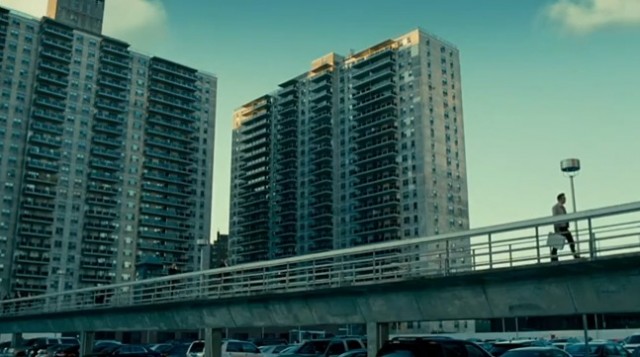
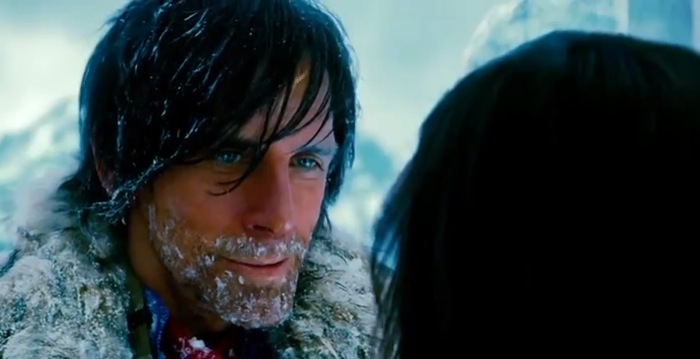
He/she/they chose to use absolutely zero lines of dialogue throughout the entire trailer; that is, until the last five seconds when Ben Stiller asks a man if there are any car available to rent and the man replies "Yeah. We have a blue one and a red one." These five seconds could either serve to emphasize the fact that the film is indeed comical at times, or could serve to represent some sort of change in Stiller's character (the majority of the film appears to be bluish, so choosing the red car could mean that Stiller eventually goes for change or wishes to stand out--it's a long shot, I know).

Either way, the lack of dialogue in the trailer leaves a lot to viewers' interpretation. Yes, this is a remake of a 1947 film, but who knows how closely the writers will stick to the original? Any character or voiceover telling me what's happening, I'm sitting there wondering why the pictures on the walls are moving. I'm wondering who the girl is who Stiller keeps looking at. I can make whatever assumptions I want, but the fact that I'm so intrigued to find the answers to my questions that I'll go see the movie in theaters means the editors did their job.

The Coloring
Wow. How about that coloring?! Everything's blue! I honestly don't know what to say about it besides the fact that it is simply stunning.


I mean, seriously! Hot damn!

Since IMDb is telling me that the film is an Adventure/Comedy/Drama, I'm not quite sure what kind of response the coloring is supposed to draw from viewers. With a drama, it would make a whole lot of sense. The blue adds a bit of bleakness and sadness to the overall emotion of any film. How the blue is intended to interact with the adventure and comedy of the film is beyond me. Maybe I'm looking too far into it? It's possible, but I'd like an answer, nonetheless.

The Storyline
Here's another thing about this trailer I know very little about, but intrigues me, nonetheless: the storyline. It doesn't give anything away! I have personally never seen the original Walter Mitty, so I have absolutely no foundation of understanding when watching this trailer. I've tried my absolute best to avoid asking others about it, too. Since this trailer has intrigued me so much, I want to go into the theater with nothing but my own expectations. Here's what I've deduced from the trailer: man is bored with life, man is bored with job, man likes girl at job, man imagines going on adventures, man eventually goes on adventures. I could be wrong, and I hope that I am. I'd really like to be surprised with some kind of surreal, unexpected plot that just shocks everyone.

The Secret Life of Walter Mitty has an incredibly enticing trailer. Its cinematic beauty manages to give away very little with the extreme lack of dialogue, and I can't wait to see what I've been waiting for when it comes out this Christmas.