Showing posts with label films. Show all posts

Thursday, March 3, 2016

What Makes a Good Trailer?

Recently I was watching the trailer for the new J.J. Abrams produced film 10 Cloverfield Lane. If you haven't seen it, here it is.

 While some may disagree, I think this is a really fantastic trailer. It sets up the film's tone and gives you a glimpse of what it's about without giving too much away. This got me thinking about what makes a really good movie trailer. It's important to know that a good trailer doesn't always mean a good film and a good film doesn't always have a good trailer.

I think the biggest thing those editing trailers do is focus too much on plot. You'll finish the trailer and feel like you've watched the entire movie. The editors seem to think that if you don't know the entire movie, you won't want to see it. That however, is completely the opposite of how it should be. Let's go back to the 10 Cloverfield Lane trailer.

Bad Robot loves greenish cloudy skies and a silhouette 

We open on a trio of people doing various activities to an upbeat score. However, the music starts to slow as we are shown images that this situation is less than ideal. The trailer ends with the female seeing something horrible but we of course do not know what she sees. All we are able to gather from this trailer is she is in the bunker and it's less than ideal. Everything surrounding it is left as a mystery. However, later trailers ended up showing far too much and revealing most of the mystery around the film, this one however does a great job. Bad Robot is well known for having well done trailer built around lots of mystery. Look at their trailers for Cloverfield and Super 8. However the latter did suffer from being marketed wrong. What we assumed would be another Cloverfield-esque horror film ended up being a coming up age film with a very Spielbergian feel.
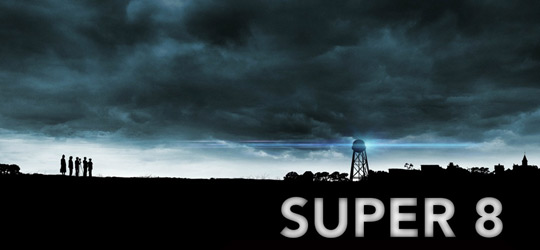
Bad Robot REALLY loves greenish cloudy skies and a silhouette
Another recent film that suffered from being marketed wrong was Guillermo Del Toro's Crimson Peak. See the trailer here


The trailer makes the film look like a straight out horror film. However Del Toro was explicit in pointing out that movie was more of a "Gothic Romance". However, the trailers didn't reflect that and many people went into it expecting much more of a scare and were treated something that was absolutely beautiful, but not up to their par in the scare department.

I'll end by talking about what I think is a near perfect trailer. Star Wars: The Force Awakens.
While nearly every trailer for this film was fantastic I think this one stands out among the rest. With only eight short clips and a minor bit dialogue, the trailer perfectly captured the spirit of the film without giving any story away. Never before has a trailer satisfied me over a year before the film.

Be sure to also check out this list of trailers for great movies that are pretty awful.


Thursday, August 27, 2015

Creativity and Originality in Film

I've been thinking a lot recently about what it means to be creative. Pre-production does that to you, apparently. Am I creative? Should I be more creative? Are there even levels to how creative somebody can get, or is it just like this big, overarching bubble of creativity that once you're in it, you're in it? Is creativity the same thing as originality? Does any of it even matter?

Those aren't rhetorical questions either. If someone has an answer, feel free to let me know.

You can find tons of articles online about how different writers and directors go about their personal creative processes (here's one that talks about how it took Chris Nolan 10 years to finish writing Inception, while Steven Soderbergh knocked out a script for Sex Lies and Videotape in 8 days - neither of which makes me feel particularly good about myself) but I've found very little about how to inspire creativity in yourself. There'll always be clickbait-esque pieces like this, suggesting different activities that might open your mind to new ways of thinking - thus bringing about creativity - but there's no tried and true formula. 

Because in the scheme of things, it's almost impossible to have a truly, never-before-thought-of idea. And that's kind of a bummer. It's an issue I've run into time and time again when working on scripts. Last year, I co-wrote a script about a washed-up TV star and had to listen to people go "oh, so you're making Bojack Horseman?" 

No. Dick.

But that's understandable. With so much media constantly getting thrown in our faces, it's impossible not to regurgitate some of that back out into our own work. It even happens to people who have already made it big, like the whole confrontation between Dane Cook and Louis CK - reenacted and dramatized in this clip from Louie - about how Dane might have, possibly, maybe, stolen a teensy bit of a joke from Louis. We all strive to make something that people think is "new" and "refreshing," but how do you do that when literally everything has already been done, one way or another?

The more time I spend writing, the less time I spend thinking about being original. After all, every story you tell - no matter who you are or where you're from - is going to have the same basic structure when you get down to the bones of it. There's no breaking away from that. And I don't know if that's awesome or horrible. Instead, I just focus on making something to the best of my ability, with characters that I find interesting and a plot that ties things all together, with the hope that it will all culminate in some tiny spec of originality. 

I guess I'm not really sure how to end this blog post, apart from giving what I - rightly or wrongly - assume to be the definition of being creative with a film. Creativity can't be quantitatively measured, despite what Cinemetrics seems to think. Films should make you feel something: whether it's happiness, love, fear, or anything in between. Shot lengths and camera settings and color palettes and every other "technical" aspect can be a part of this as well, as long as you play them to the overall effect that you're going for. You don't need to do anything groundbreaking. You don't need a 10 minute tracking shot (but oh man they're so cool). Emulate good films, take the techniques that you think will best help tell your story and use them.  In the end, as I've slowly learned, all you need is a camera, a story, and people willing to work their asses off to make something good. The rest will come. 

Thursday, April 9, 2015

FLEFF


Hey everyone, for my blog this week I thought it might be cool to show you all the films for the FLEFF Festival this weekend! There are a tone of very well made films from all over the worked and if you can you should try and make it to some! The one that I am looking forward to the most is a prison film called "15 to Life Kenneth's Story". 
100,000
100,000 stray dogs live on the island of Puerto Rico. When 80 were dropped off a bridge, outrage ensued; w/director Juan Agustin Marquez

The Amazing Catfish

A young woman connects with the family of an older woman who she meets in a hospital. Pathos and humor ensue; w Cinema Tropical's Carlos Gutierrez.

Backyard

The effects of fracking on the lives of five people, who live in five different states; w/filmmaker Deia Schlosberg.

Bad Hair

A young man, living in a Caracus tenement, decides to straighten his curly hair, causing his mother to panic; w/Cinema Tropical's Carlos Gutiérrez.

Big Men

Global capitalism and the unrelenting quest for oil in the poorest places on earth.

Brazilian Short Films

A program of cutting edge Brazilian short films, programmed by Kino Lorber's Rodrigo Brandao.

Brunello Cucinelli: A New Philosophy of Clothes

What can a contemporary, profit-driven, luxury, Italian fashion brand learn from the luminaries of European philosophy? w/filmmaker David LaRocca.

Concerning Violence

The writings of Frantz Fanon as narration to newly uncovered archival footage of 1960s and 70s anti colonial struggles.

Constance Cook: A Woman Ahead of Her Time

Biopic of the Republican Assemblywoman who led the fight to decriminalize abortion in New York State in 1970; w/filmmaker Sue Perlgut.

Cornell Lab of Ornithology: The Sagebrush Sea

w/ members of production team.

Cotton

Chinese independent film about cotton production in Xinjiang Province; w dGenerate film's Karin Chien.

The Crowd

The life of a man and woman bound together in a large, impersonal metropolis--their hopes and struggles; w/live music by Cloud Chamber Orchestra.

15 to Life: Kenneth's Story

In 2000, 14 year Kenneth Young was sentenced to life without parole for his part in four armed robberies, guaranteeing that he would die in prison.

Finding Fela

A big-hearted film about the musical creator of Afrobeat and his revolutionary politics, by Academy Award winning director Alex Gibney.

Floating

The difficult life of an internal Chinese migrant, who makes his living as a busker on streets and in subways; w/Karin Chien from dGenerate Films

The Gas Weapon - NORTH AMERICAN PREMIER

An examination of Ukraine and the rest of Europe's dependance on natural gas from Russia, and the political and economic consequences.

Gueros

A witty and charming dramedy about the 1999 Mexico City student demonstrations and Bob Dylan's tears.

Hollywood Habitats

A panel of invited guests: filmmakers, distributors, and other friends of the fest. Moderated by Steve Ginsberg.

Hurt: An Award Winning Short Play

A disgruntled Balkan-born adjunct professor who lost his job is at the end of his rope. Can he be saved by two women? w/playwright and cast talkback

Inhabit

Sumptuous film, tracks a journey across the US, which explored the ecological design concept of permaculture; w/the filmmaker & special guests.

Just Eat It

Award winning film about food waste, guaranteed to shock and awe. Sponsored by Tompkins County Solid Waste Management Division.

L Word Mississippi: Hate the Sin

Difficulties faced by gay women in the deep south; w/fimmaker Lauren Lazin.

The Last Colony

Puerto Rico became a U.S. colony after an 1898 invasion, and it remains one to this day. What should its status be? w/filmmaker Juan Agustín Márquez.

Miners Shot Down

South African police used live ammunition to brutally suppress a miners strike killing 34 and injuring many more.

Naturalist Outreach Films

Scientifically accurate engaging, and beautiful shorts to inspire young scientists to understand nature;w/ Dr. Linda Rayor, Carol Jennings, & students

Source - PREMIER

Three performers explore human and animal movement in the lush waterscapes of Six Mile Creek to reveal the intricate ecology of Ithaca's water source.

Sunday Ball

An annual favela soccer championship takes place in the shadow of 2014 World Cup's Maracana Stadium, marked by precise play and infectious enthusiasm

The Torrent

Greta Garbo's American silent film debut in a role that launched her storied career; w/live music performed by Fe Nunn and friends.

Tupac Resurrection

Academy Award winning biopic of the legendary 1990s rapper Tupac Shakur; w/filmmaker Lauren Lazin.

Upstate Filmmakers Showcase

A selection of films from upstate New York's finest filmmakers.

Thursday, January 22, 2015

American Sniper

I recently went to the movies to see American Sniper, and I have to say I was not disappointed.

American Sniper is a film directed by Clint Eastwood, staring Bradley Cooper. It is based around the life of Chris Kyle, the Sniper with the most confirmed kills in America.

While this film is a very enjoyable high action movie, there are both strong points and weak points in this piece. 

The Weak: 
I personally thought that the plot line wasn't very strong. The film was divided into the "3 Tours" and it seemed to be fragmented with out very much emphasis on the current setting of each tour. 
Another weak point was the stylistic color selection. The film had a very sepia tone style that I did not find appealing. 

The Strong: 
This was a very powerful movie. With out giving away any spoilers, I can say that this was the first film I have ever been too that left the audience speechless. Everyone left the theatre in silence. I have heard from multiple people that this was the same experience for them. 
Another strong point was the cinematography. There where multiple shots through out this film that I was impressed with. Very nicely executed. 


Over All Rating:  7.9/10 

Great film to see in theaters, but lacking in some ascetics and felt rushed. 

Friday, December 6, 2013

THE 4 RULES OF STUDENT FILMMAKING


As our projects come to end, I thought it would be a good time to reflect upon my experience as a student filmmaker. These rules are essential for anyone starting their career as a filmmaker, but I hope they can also be helpful for those who have already established themselves in the industry. These rules, if followed perfectly, can result in a very high quality film. 

1. Know your job
        It's one of the basics but it's also one of the most important. There are many different positions on a film set and it's essential that everyone knows what their responsibility is. Filmmaking is not the combination of one or two elements but the cumulation of several people's knowledge and skill. Dialogue, performance, lighting, audio, continuity– these are just a few of the many components controlled by one or more people on a film set. If even one of these components is lacking, it can ruin a film. The given number of people on a set can range anywhere from 4 to 400, but it's essential that everyone knows how to do their job perfectly as well as where they lie in the hierarchy of decision making.

2. Prepare for everything to go wrong
        It's a natural law of filmmaking– what can go wrong will go wrong. Seriously. Some of my first times shooting in the field were a complete disaster. Camera batteries were MIA, the talent wouldn't show up, SD card's couldn't format correctly, we had no AA batteries for the Zoom mic... the number of things that can go wrong on a film set are infinite, a fact that is reinforced every time I go on to a film set. There's no way to completely cover yourself, but there are ways to prepare yourself for the future when things go array.
Double check everything. Make sure you have the most important things you need to bring to the set and then bring everything else you might not need. These things can vary depending on what your job is, but even having the most basic household items like tape, markers, and jar openers can save a film. 
Bring extras. If you're in the audio department for example, you should have extra batteries, XLR cords, headphones, and extension cords. If something goes wrong in your department it's on you and it's up to you to cover yourself. This rule can only be learned though experience so grab every opportunity you have to work on a film. 

3. Focus on the story
       Making a film look and sound awesome will not make an awesome film. When you're looking to direct a quality film you are not making it for yourself or your close filmmaking friends, but an expansive audience. An audience that doesn't care how hard it was to work with the actors or light a tiny bookstore. The audience only requires that what they're watching will compel them with a certain emotion and that they can walk away amazed by what they saw. Before creating a film, plan all of the technical things as perfectly as you can, and then step away from it all and make sure the story you are telling makes sense. Not only makes sense, but draws your audience in and keeps them there until the credits finish rolling. 

4. Have Fun
      Come on guys... we have one of the coolest jobs. We're storytellers. To create a powerful film can be thrilling, empowering, and hopefully rewarding. Things can get very stressful on set though, and it's important to remember why you're there. When you know that all your bases are covered and you're skillfully prepared, making films can be an extremely fun and engaging job. It's not an easy process by any means, but if you have good people to work with you're guaranteed to have a fun time doing it. 

A quality film is like a gourmet sandwich... Crafted by several high-quality ingredients.


Friday, January 25, 2013

More Than Just a Silver Lining

Recently nominated for 8 Academy Awards, Silver Linings Playbook tells the story of an unlikely friendship between two people recovering from mental illnesses.  Going into the theatre I had my hopes up high after friends, parents and critics praising the film.  Surely I was not disappointed.  This touching, and emotional roller coaster allows the audience to see the frustrations and struggles of people living with these disorders.  Having only seen Bradley Cooper in movies like The Hangover, and Valentines Day, I was not expecting a strong, heavy hearted, leading male performance from him.  I was surely mistaken after Bradley carried the film impressing me with his acting and his on screen chemistry with all of the characters.  He played "Pat" a man living with bi-polar disorder who was recently released out of a mental health facility into the care of his parents Pat sr. (Robert DeNiro) and Dolores (Jacki Weaver) whom also gave wonderful performances in the show.


The film really picks up once Tiffany, a recovering sex addict played by Jennifer Lawrence, steps into the picture and befriends Pat.  Her performance was stunning and even won her the Golden Globe for a leading actress in a comedy or musical.  Both Lawrence, and Coopers ability to convey so much emotional depth within their facial features, especially their eyes and their necks, is unbelievable. I could not take my eyes off of either one, when either of them were on the screen.  I think both of them have reached new heights in their acting careers.  It's impressive to any actor who can steal the show away from Robert De Niro who still have a more than perfect performance.


The film is nominated for all 4 acting awards, best editing, best adapted screenplay, best director David O. Russell (nominated in 2010 for The Fighter) and best picture at the Academy Awards.  I think this film deserves all of these accolades.  The movie was a spectacular creation and beautiful tale of unlikely friends coming together.  After seeing the film I couldn't help but think if even a few things about the movie were different it could have been just another rom-com and not this beautiful work of art.  Don't get me wrong, I love rom-coms, but change Jenifer Lawrence with Katherine Heigel, have Gary Marshal direct instead, and it could have been a very different movie.

All in all, Silver Linings Playbook was a wonderful journey, and a stepping stone for film makers everywhere to show that even the most simple of plots can have the most lasting impact on audiences.

Friday, November 2, 2012

Period/Cultural Films and Their Importance


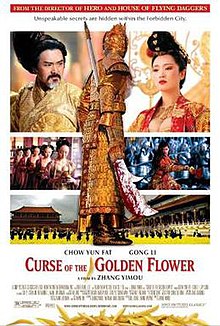
After watching the videos from behind the scenes of The Curse of the Golden Flower, I was very curious to figure out if the lead actress (Li Gong) had been in Memoirs of a Geisha directed by Rob Marshall, which is one of my favorite movies. I was delighted to discover that she was in fact in that movie as Hatsumomo. I have to admit just from the behind the scenes look and the fact that Li Gong is in The Curse of the Golden Flower, makes me desperate to see this movie. I'm intrigued by how Professor Sinclair described director Yimou Zhang's filming style, so I have also added some of his other movies, such as The Road Home and Not One Less to my list as well. So, hopefully more on that in a later post soon.


Anyways, I think I've come to the realization that I love period pieces. In high school, I was the nerd in history class who would research period clothing for a class project, (I actually made a dress in the Ancient Greek style my sophomore year). I think they are not only important for historical perspectives and understandings, but sometimes they even help with cultural perspectives. Even movies that tell of specific events, such as civil wars, have a lot to tell.


 Last weekend, I saw Hotel Rwanda directed by Terry George. I had seen it once before, but the impact of that movie still hit me hard. The way it was filmed not only tells a horrific and inspiring story, but also instills a desire to go out and help people who are in such positions. I watched the movie in a group of twenty people or so, and the tension and sorrow that filled the room was almost palpable. I can't tell you how many people went online trying to find ways to help those who are in similar situations around the world and even maybe in our own country.

This made me think about the role of filmmakers and the media in general. We tell stories, yes. Some stories are just meant to make someone smile. Some are meant to scare the audience. Some are very tense. Yet, something that they all share (at least most of the time) is that they all give some kind of message. I think it is so important to have films like Hotel Rwanda and Memoirs of a Geisha. Yes, they are events that happened in the past, and yes, they are not always pleasant to see, but without these reminders, who's to say history won't repeat itself?

~Amber Capogrossi

Friday, October 26, 2012

Novels vs. Screenplays


I love reading books. All kinds of books. I have had this passion for since I was probably 9 or 10, but it wasn't until tenth grade that I discovered a passion for creative writing. One of my closest friends in High School did a lot of fan fiction and wrote her own short stories, and because I love to read, I was her captivated audience whenever she wrote something new. It was during this time that I thought, "Hey! I should try to do this!" And so I did... only I wasn't as successful at first. I think I have around five or six stories that I started writing or have notes on that I just never finished. I guess I just never realized how much went in to telling a story: Characters have to be discovered and developed, the plot should twist and turn in ways that are both unexpected, yet make sense, research has to be done in period pieces, etc. This is true for novels, non-fiction, screenplays, and theatrical pieces. 

I tried to write my first mini-script for the stage just before my sophomore year in high school. Let's just say it wasn't the best piece of writing I have ever done, and I didn't really enjoy it. I have taken several creative writing classes in both high school and college that I have absolutely loved. Right now I am even working on a novel that I started in a class that I took last fall. It will probably be a long time until it is finished, because the more I write the more I find out that I need to still do more research. Since I was so unsuccessful in playwriting, and I loved creative writing for novels, I thought that was the only writing I would or could ever do. Hence why I was so nervous for the course Developing Story Narratives that I took last semester. 


It seemed a little rocky in the beginning of the semester. The first couple practice scripts seemed to be going okay; they weren't great, but at least they were ten times better than the "play" I tried to write when I was a part of the Hanger Theatre summer camp. For the course we had three major scripts to write: a story based around an important event in our own lives, a story based on a character that we create, and a story centered around a theme. The first one was okay. I based it on the events that took place during and after my grandfather's death. The second one, I fell in love with. It is a story based on an orphan named Henry who is, in many ways, searching for a place where he belongs. I won't go into too many details, but this piece turned out fairly well, to the point where I would LOVE to film this here at Ithaca College. I want to do it right though, and the first step is making sure the script makes sense. Currently, I'm in the process of changing around a couple of scenes because the events that occur don't quite fit. The interesting thing about writing a script versus a novel is that you have to keep in mind that you are writing for a visual medium. Every emotion or internal dilemma has to be able to be seen in some way. It would be easier for a writer if subtext could scroll across the bottom of the screen, but then it wouldn't be much fun for the audience. Besides, sometimes there aren't words for certain emotions. On top of all this, the character has to move or flow from one point to another in a way that makes common sense. This means looking internally into the character to decide what is exactly going on there, so that the actions don't seem forced. 

Details, details, details. They are so important in creative writing for novels. Not so much, or at least not in the same way, for screenwriting. My professor said that you have to imagine each line as a shot in the film. That is a lot harder than it sounds. Well, I will keep plugging away at it and hopefully I will find the best way to tell Henry's story. 

~Amber Capogrossi


Friday, September 21, 2012

What the Font?

Times New Roman. Arial. Helvetica. Comic Sans. Baskerville.

Serifs. Sans Serifs. Bolded. Italicized. 

Fonts are all over the place. Literally. There are thousands of fonts out there. Some are loved, others are hated by the masses *cough* Comic Sans *cough*

I have always been a huge supporter of custom and lesser-known fonts. They make everything from titles to lower thirds stand out. Sites like DaFont and FontSquirrel are fantastic resources to discover rad fonts.

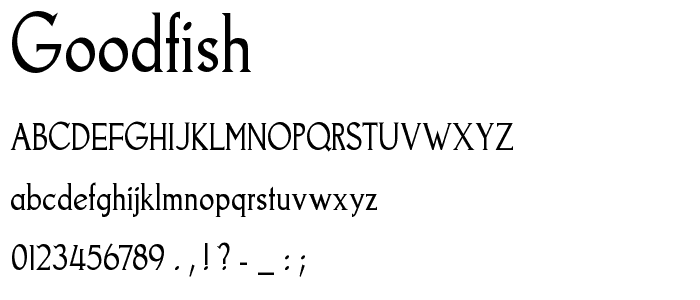
My personal favorite font to use in my projects is Goodfish. I don't know why I like it so much, but it has kind of become my go-to lower third look. It's pretty casual, yet still looks professional enough for what I'm trying to accomplish.

That's something I love about fonts: there is one for every occasion. If you need a goofy, comic-like one for your quirky film then there's a font for that. If you need a slanty, old-fashioned style font for your historical film then there's a font for that. All you need to do is do a little digging and discovering. I personally have spent over an hour on DaFont, downloading a hundred fonts and adding them to my computer. The only thing one needs to watch out for is that some of the authors of the fonts have strict rules on when to use them. A few ask that you do not alter them, or even make a profit from them (i.e. don't use them in your film if you want to submit it to contests or festivals).

Imagine if Comic Sans was the only font in the world. Terrifying, isn't it?

Lots of people look right past it, but fonts can make or break a project. Take a look at the movie poster for some your favorite films. They all have unique and different titles that tell you a bit about the film before you even see it. Make an impression with a cool font!

Friday, September 14, 2012

A Return to Middle Earth


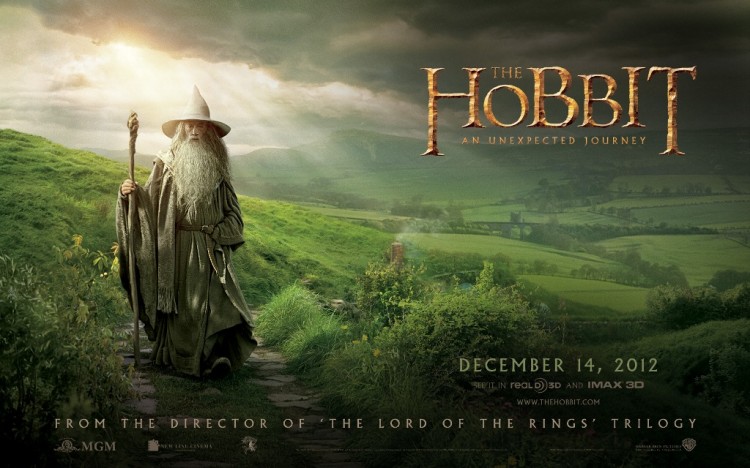
3 months, or 13 weeks, or 91 days. However you want to look at it, December is fast approaching. No, I'm not counting down to what many believe will be the end of the world. Lord of the Rings fans will know exactly what I'm counting down to... the release date of The Hobbit (Part 1)! Exactly three months from today, there will be huge lines in the theaters, with popcorn exploding from the seams and soda slurped up huge, plastic straws. All will be waiting impatiently for the movie to start.

December 14, 2012. A young Bilbo Baggins will be begin his own journey down a dangerous and exciting road. A road that will eventually send fate hurling his own nephew, Frodo, into a perilous journey as well. This is a story that is very near and dear to my heart. The Hobbit by Tolkien was the first fantasy book I ever read. My dad, the source from which I draw my love of everything fantasy and sci-fi, handed Tolkien's book to me when I was eleven and told me that it was a story worth reading over and over again. So I read it, and I loved it. I continued the story by following up with the Lord of the Rings Trilogy. I was an avid reader since then. I read books that ranged from the Shannara Series by Terry Brooks to Harry Potter by J.K. Rowling. At this point in my short life, my refrain had commonly become, "The book is always better than the movie." When I saw The Lord of the Rings directed by Peter Jackson, my whole world was shaken.

Not only was the story preserved in the films, but it was done in such a way that the beloved characters I saw in my mind were there before my very eyes. It is hard to find another movie that can actually sit so close to their paper and ink counterpart. I am still an avid reader and believe me when I say that the only other movie that I have seen is The Hunger Games directed by Gary Ross. In The Lord of the Rings, the whole of Middle Earth was there; it was almost tangible to my imagination. This was such an amazing feat that required so much talent on the part of both the cast and the crew. The acting was so superb, the visuals were perfect, the story was intriguing, character development was fantastic, this movie was and is truly a classic.

I was so drawn into this film, that at the age of fourteen, I watched all of the Behind the Scenes footage that came with the extended versions of the films. Again, my life was utterly changed. I fell in love with everything that is FILM. From learning about the make-up to the intricate creation of the miniatures, to the development of the different cultures through costumes, to the creation of all the magical creatures, to how they actually built the sets, to location scouting, the list can go on and on with how much I absorbed. It opened my eyes to a way to make the worlds I read about in books "come alive" in our reality in some way. It was at this point that I found a dream that resides so strong in my heart that it feels as if my entire being is going to explode. This is how I became so passionate about acting, and from there, about what happens behind the camera too. For the discovery of my passion, I have to thank all who were involved in the making of these fabulous films.

Peter Jackson is and forever will be one of my favorite directors. So many of his films, including King Kong, have kept me sitting on the edge of my seat and allowed me to escape into worlds and times that I can only do through reading books most of the time. Such is the depth with which his films are created. Every detail must be and is as perfect as can be. My favorite book series is the Green Rider series written by Kristen Britain. If anyone ever tries to make these fabulous books into movies, I would  hope that it would be Peter Jackson, because they deserve the best.


I encourage any who have not seen The Lord of the Rings to borrow the film from someone. It is an experience that shouldn't be missed. I can't wait for The Hobbit! Someone said to me the other day, "Yes, but they have a lot to live up to after Lord of the Rings." I agree, but I trust that both the cast and crew will be able to pull it off. If you haven't seen the trailer yet, it is below:
~ posted by Amber Capogrossi