Wednesday, December 4, 2013

12 Years a Slave and White Guilt in 2013

When the credits began to roll at the end of 12 Years a Slave, nobody in the theatre made any sort of move to leave. There was no popcorn crunching, no soda slurping, just dead silence. In part, this was because it was a fantastic movie - probably the best of the year - but it was also because, as an almost exclusively white audience, nobody was quite sure how they should feel. 

12 Years a Slave, which is only the third film by director Steve McQueen, is based on the true story of Solomon Northup, a free black man living in New York who was captured in 1841 and sold into slavery. The film follows Solomon (the incredible Chiwetel Ejiofor, who will almost certainly be nominated for best actor this year) as he gets moved around from slave owner to slave owner, trying to stay alive and somehow return home to his wife and children. As I mentioned, it’s a spectacular movie - the acting, the directing, and the cinematography are some of the best I’ve ever seen - and yet I can’t think of film in recent memory that has had so much Oscar buzz while simultaneously being something that people are almost afraid to talk about. 

So, to clear the air, I’d like to talk about 12 Years a Slave. 

Racism is an incredibly daunting thing for me to write about, and the more I look up at the title that I’ve given this piece, the more I have to wonder if it’s something I have any right talking about at all. As a middle class white guy from Vermont, I have almost no first hand experience with the topic apart from what I’ve obtained over the years through different kinds of media. My parents are not racist in the slightest, and I was raised to constantly be disgusted that people could judge others based solely on the color of their skin. Just because I’ve read Invisible Man and The Autobiography of Malcolm X doesn’t mean that I claim to have any real connection to or knowledge of black culture. Who am I to judge a brutally honest film about slavery?

I’ve done a little bit of research ever since I watched 12 Years a Slave, and I’ve found lots of articles that both praise and criticize the film; many, understandably, written by black critics. Some, like Orville Lloyd Douglas’s, make fine points about why Hollywood should make more “black” movies that focus on more than just the topic of race and that don’t try to make white people feel guilty. I understand where he’s coming from; with 12 Years and The Butler hitting theaters around the same time, it feels like someone’s really trying to make a point. However, other people, such as Wesley Morris, argue not only for the artistic merits of the piece as a film, but for how McQueen pulls no punches in the portrayal of white people; this is a film about slavery where the slaves stand alone; there are no white men pushed into the foreground, no Lincolns or Christoph Waltzes, to save the day for them. I agree with this aspect as well. 

But I still believe many people are missing the point. When I’m asked how the movie was, I typically respond “it was incredible, but there was an unbelievable amount of white guilt in that movie theatre.” Someone on YouTube even took the time to create a series of parody videos on that very topic. But this shouldn’t be anybody’s response. I’m fully aware that race is still a very prominent issue in our country in 2013, but there is no reason any person - white, black, hispanic, asian, or anywhere in between - should feel guilty when watching this film. By all means, we can be disgusted at how Solomon is treated by white people throughout the course of the movie; we should be. But taking that guilt - the guilt that slaveowners should have felt over 160 years ago - and applying that to ourselves today is wrong. 
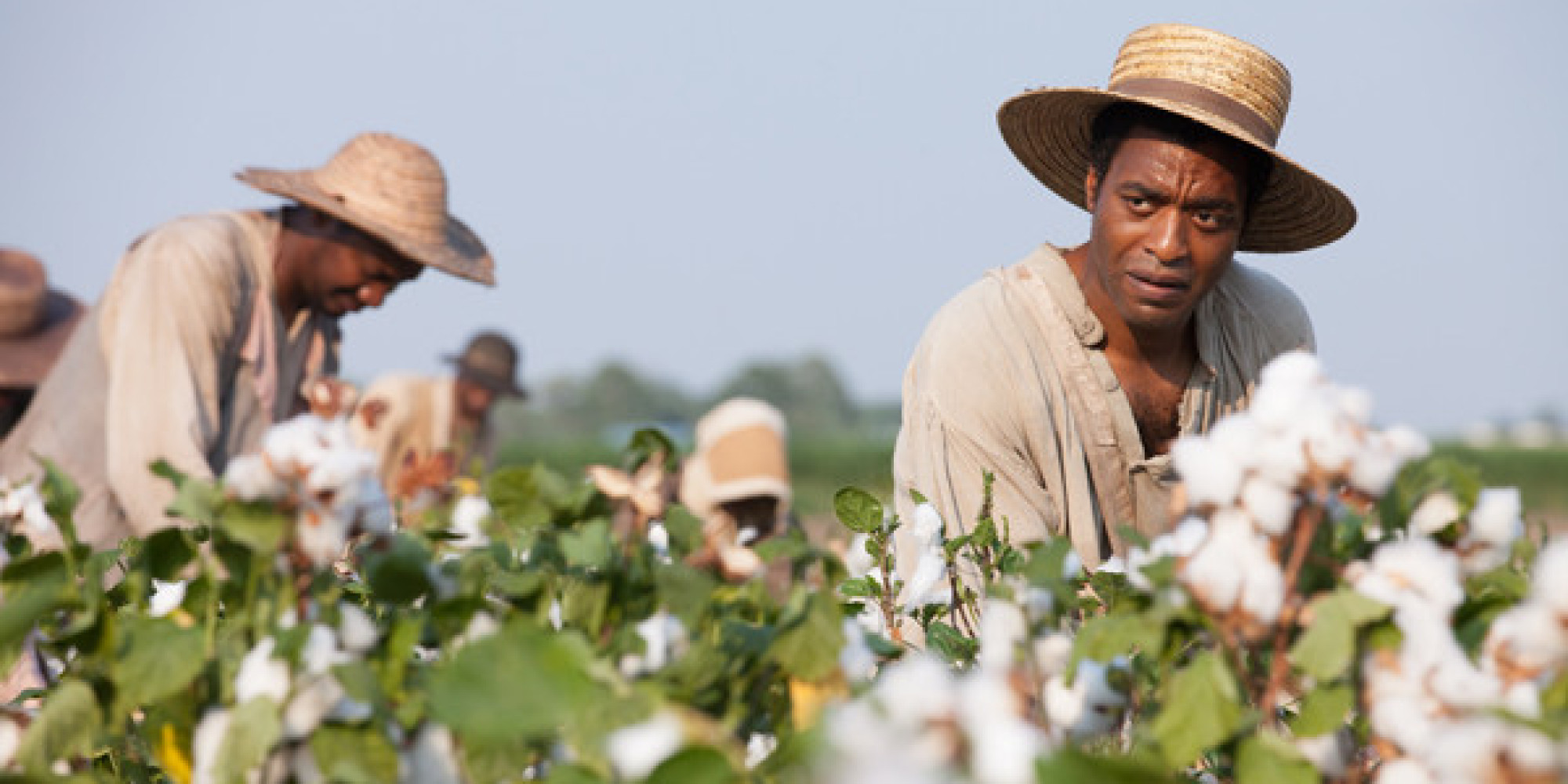
I’m convinced that 12 Years a Slave defies all boundaries of a normal Hollywood film in a few different ways. There’s no real target audience: while the art house crowd might eat it up, no matter who you are, this film is for you. It’s a film that spends a painfully long time lingering on the botched hanging of Solomon, with the man, front and center, desperately trying to gain some traction with his toes in the mud pile beneath him. It’s a film that takes its time, utilizing really long takes and interspersing certain segments with shots of nature. It’s certainly not your standard Oscar-bait film. It is not a “black” film, and it’s not a “white” film. It’s not even a wholly American film (both McQueen and Ejiofor are British). More than anything, it’s a human film. 


Perhaps that’s what some people are missing, and what gives me the right to talk about racism and 12 Years. It is truly impossible for any white person to know what it’s like to be black and vice versa, but that doesn’t diminish the fact that this is a powerful film that affects each individual that sees it. Disagree with me if you want, tell me that the filmmakers are playing to my innate sense of white guilt and I’m not qualified to talk about this, but you’d be wrong. When you see Solomon come home after 12 years to find that his family is barely recognizable, and you see that no amount of happiness can fix the years of hell that he was forced to endure, you don’t have to have any necessary qualifications, apart from one. You just have to be human. 

Orange Is The New Black Opening Credits


Recently, I’ve used my free time to re-watch one of my favorite new television series, Orange Is The New Black. I’ve always enjoyed its hilarious use of situational comedy to portray an environment that is usually avoided in sitcoms, the woman’s section of prison. The show, created by Jenji Kohan, as well as the same individuals who created Weeds, has done a beautiful job of capturing all different types of emotional moments. The show was filmed with more creativity and technique than anyone expected from a new series that can only be found on Netflix. Upon doing more research about the cinematography that was used during this show, I discovered some amazing information about the opening credits.
Overall, I find that the opening credits are one of the most emotional parts of this show. The opening credits go along to the sing "You've Got Time" by Regina Spektor. The song is fast-paced and the lyrics are very meaningful and symbolic to the content of the show. In an interview with Rolling Stones, Spektor says, "It's such a great show and such a cool look". This isn't the first time Spektor has worked with Kohan to create a song that perfectly described the plot of the show. In the past, Spektor had worked with Kohan to create the well-known song for the opening credits of Weeds, "Little Boxes". In the interview, Spektor stated that when she first brought the music to Kohan she was nervous that she wouldn't like it. She goes on to say, "She was listening on headphones and then she just turned to me: "This kicks ass! I love it! This is awesome! This is perfect." As the song plays, images of different parts of woman’s face flash among the screen, casually pausing to show images of a prison. The faces include a quick montage of woman smiling, laughing, frowning and glaring.

The most amazing part about this sequence is that the faces are not merely the faces of actresses, but actual woman who had been incarcerated.  Actress Natasha Lyonne who plays one of the main characters, Nickles, states in an online interview, “I think we got so used to seeing botax faces that this show is going to feel like such a relief”. I believe that this montage, which shows faces that display all different ranges of emotions and types of faces, can support her statement. Netflix went on to confirm the fact that the credits do not feature actresses but in fact, woman who had been incarcerated. I believe that by using incarcerated woman the show brings a refreshing, realistic outlook that is not typically seen on popular shows.

The montage is one that catches your attention because of its new approach. The title sequence is created by Thomas Cobb Group, the same people who created the sequence for the popular series, “Homeland”. Executive producer of TCG stated that the original meaning of the sequence was to simply present the credits at each character’s personal point of view.  However, Kohan intervened during the creating process in order to change the idea behind the credits entirely by personally talking to the woman. Bryman explained in the following, "Thomas directed each woman to visualize in their mind three emotive thoughts: Think of a peaceful place, think of a person who makes you laugh, and think of something that you want to forget. He apologized ahead of time for the last question but found it was incredibly effective in evoking a wide range of unfortunate memories".
I believe these questions evoked the correct amount of emotion and efficiently told a story without words. However, I also believe that the music had a lot to do with this emotion. My favorite lyrics from this song which I believe help to convey a message are, “remember all their faces, remember all their voices, everything is different the second time around and you’ve got time.”
Source: Huffpost TV
Source: Rolling Stone

Binge Watching

In a world of endless television shows and little to no time to watch them, I've decided that I will partake in a binge of television when I go home for winter break in just a few weeks. This semester has been a busy one, which has given me no time to watch the shows I've been meaning to watch for a few months now.


This has been one of my favorite shows for the past couple years now, but due to my recent schedule, I haven't been able to find the time to watch any episodes past the Season 4 premiere a couple months ago. It's been nearly impossible to avoid overhearing any spoilers giving insight into the newest season, but up to this point, I've managed to steer clear of any important details that will ruin the surprises. Apparently, the last couple episodes have been phenomenal--good enough to redeem the show for it's previously terrible season 3--so I'm overly excited to catch up on the show. The Walking Dead is definitely at the top of my list of shows that I'll be binge watching over the upcoming break.


Now, I can honestly say I haven't watched a single episode of Game of Thrones, but I've recently decided that it's being put on the list for winter break. I've been told it's long, complex, and often requires a lot of attention to understand what's going on (due to the surplus amount of characters), but with a month off from school that requires minimal mental and physical energy, I figure it won't hurt to watch a show that takes a little bit of thinking. Also, the blood, swords, and dragons certainly don't hurt. I also just really want to watch this "Red Wedding" that I've heard oh so much about. My friends couldn't talk about the episode since it made them so upset. I'm really interested to see what kind of show has the power to make so many people speechless, and that's why it's going on the list.


Breaking Bad is the last of the shows I'll list for you since I could just keep going and going and going. I know very little about this show. It has something to do with a chemistry teacher who turns into a meth dealer. He has an associate (as seen in the above photo) who I know absolutely nothing about. All I really know is that this show has to be some kind of masterpiece for it to receive as many rewards as it has and to have had so many avid followers. I'm a little late on the bandwagon, I know, but it's never too late to enjoy a great show.

With a month-long winter break coming along in just a few short weeks, I've been compiling a list of shows I feel that I should at least begin watching. I've listed just a few, but there are at least half a dozen more shows that I could list as well. While some people will be outside playing in the snow and others will be spending their time traveling, I'll be home binge watching.

Friday, November 22, 2013

Six More Days Until 'Frozen'

On Wednesday, the day before Thanksgiving, the newest Disney animated film Frozen will be released in theaters. It will be the third movie I see in theaters this break, after Catching Fire (which was amazing) and Thor: The Dark World (which I hope will be amazing). But still, I have decided it is worth becoming broke over. And here is why.


For the first time in history, a woman is directing an animated Disney feature. Screenwriter Jennifer Lee is doing the honors and I must say, it sounds like she did a killer job. Animation has a male-dominated industry for decades and this is the start of an era of female creative leadership. However, animation does not differ that much from the overall Hollywood breakdown of directors by gender.

One of the major perks of a female director is the perspective that she can add to the story and animation. Frozen is a Disney rendition of Hans Christian Andersen's fairytale The Snow Queen. The story revolves around the struggles between two princess sister, Anna (voiced by Kristen Bell) and Elsa (voice by Idena Menzel) in a fictional Nordic kingdom. With Lee's perspective impacting the sister conflict, reviews claim the sister relationship is relatable. Lee's goal was to humanize Anna and I'm excited to find out how she tried to do it.

The Hunger Games


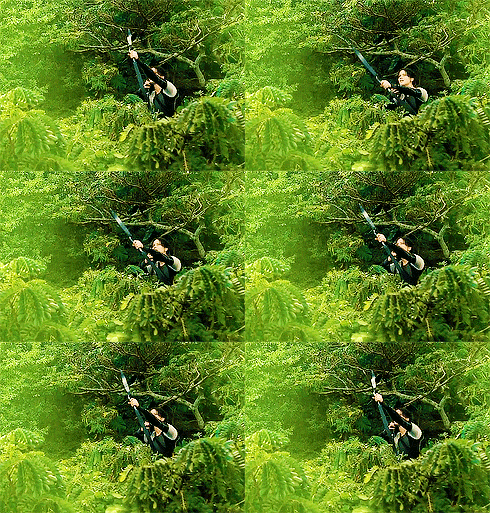
For those of you who have read the books, you know why this series has become the new talk of the town, and for those who haven’t…well, lets just say you are missing out on something that will forever be one of the worlds greatest franchise’s. The writing, the themes, the characters, the actors, and the cinematography are only a few credible aspects of the film that makes it so appealing and such a universal phenomenon.

Themes

I’ve heard many people talk about the horrible message that The Hunger Games represents. They complain that it is setting a bad example for society and showing kids that it is okay to kill each one another. However, every time I hear someone say this, I can’t help but want to turn around and show them the other great, empowering things we see in these stories.  As well as point out the fact that they are books/movies and, like any other action based movies, they are based on tragedy in which we conquer and look past through the sympathy and actions of the heroic character (in this case Katniss). It’s what makes a great movie a GREAT movie. Without a set back or type of devastation or conflict, there wouldn’t be much of a film entertainment business, if any at all.  So lets push that aside and look deeper into the story and look at the more meaningful and relative themes that bring much more meaning to the story.

Beating The Odds- This, in its own, entails several themes. First is, poverty. Panem, which is described as the United States divided up into twelve districts in a post apocalyptic world, with each district based on wealth, starting from District 1/ The Capital who are extremely rich, to District 12 who are almost unbearably poor. Katniss and Peeta live in District twelve and not only struggle to find enough food to feed themselves and their families, they are at the largest disadvantage within the hierarchy since they have they option to exchange an extra ballad with their name in the ballad of potential tributes of the games for a trade of food and essentials for their loved ones.   And not only that, they are weaker and not as privileged as the other Districts who can afford food and useful weapons, yet they come out stronger and most experienced than the others because of their unprivileged situations at home where they had to fight for there food and go over and under to make ends meet.
Another is Individualism. The tragic and stressful situations each tribute is put under to save their own life, let alone take the life of another to do so is enough to draw one out of their right mind.  Yet, Peeta is determined to not let the temptations take over who he really is. He wont let the Capitals influence of murder and betrayal become his new identity. Instead he dies the opposite. He states that he doesn’t want to die as anyone but himself within the games. He doesn’t want to be a murderer, he would rather die true to himself than live as a different person.
These themes alone relate so much to real life and can be taken into context of our own lives.


Love/ Compassion- Whether real or not, love is a major theme in the story. Later in the story we find out that Peeta, unbeknownst to Katniss, is in love with her.  The results of this love façade played a major role in the life of the characters, literally and figuratively, especially with them both winning the games.  Also, we see the compassion that pours out from many of the tributes, such as Rue and Katniss who made a pact to protect eachother, and did until their fate made them part.


Characters/ Actors

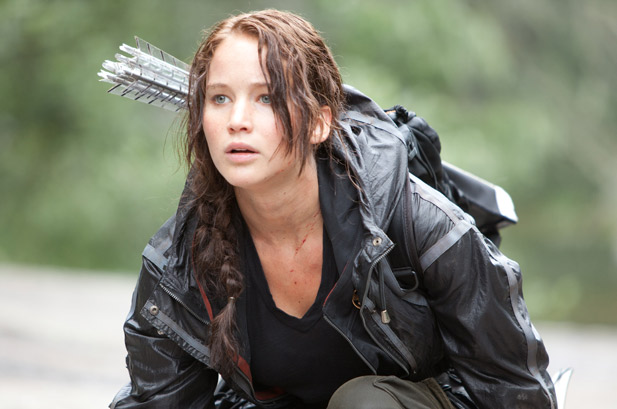
Katniss/ Jennifer Lawrence- It is inevitable to say that Jennifer Lawrence is going to be the new Meryl Streep of our generation. She has already won two awards, a Golden Globe and an Oscar before the age of 25, and has captured the world with her profound talent and likable personality.  It is arguable that her role as Katniss is what sparked her career, but it is fair to say that it did and forever will be the role that made us remember who she was.    Katniss is a very strong- headed upper teenaged girl who has sacrificed her life for her sister to participate in the annual Hunger Games.  From the beginning we see her struggle on the brink of death and continue to do so throughout the movie.  She is fierce and hungry for life, yet vulnerable and very compassionate.  This, as you could imagine creates its own conflicts and Jennifer Lawrence undeniably does an amazing job with displaying both of those characteristics in a way that is believable and realistic.


Peeta/ Josh Hutcherson-  Peeta is also very compassionate yet doesn’t possess the same urge for survival as Katniss. He is more of a follower and hides from danger instead of facing it.  Josh Hutcherson also embodies his character so well and brings the character to life through his great acting and chemistry between him and Jennifer Lawrence. 


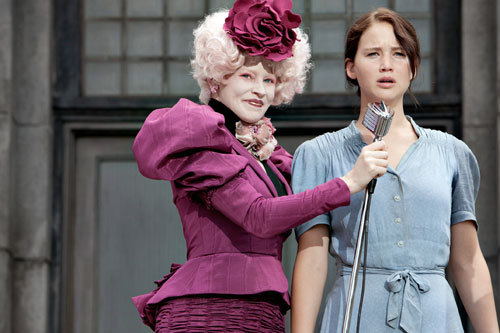
Besides Katniss and Peeta, the cast is filled with many unique and important characters. There is Gail (Liam Hemsworth), who is Katniss’ best friend and sort-of love interest that also taught her much of what she knows about hunting. Then there is Effie Trinket (Elizabeth Banks), the escort of the tributes. And then of course the tributes themselves. All are tremendously talented and make this story come alive.


Cinematography

Directed by Gary Ross with cinematographer Tom Stern, The Hunger Games  broke records in the box office and left the audience talking. Though, unfortunately it didn’t get the best rep. as many complained about the changes they made to the story by not following the book and the unfavorable layout of the arena, the film was still very visually appealing.  Gary Ross did a great job telling the story, and Tom Stern did a wonderful job in creatively capturing all of the elements of the story.

Catching Fire has finally hit theatres and I cant wait to see what masterpiece they have created now. I expect that they kept  to the original story based on the backlash of The Hunger Games, as well as will blow all the competition out of the water, like it did the first time too!  Good luck getting a ticket, and may the odds be ever in your favor!


Why I Might Watch Almost Human

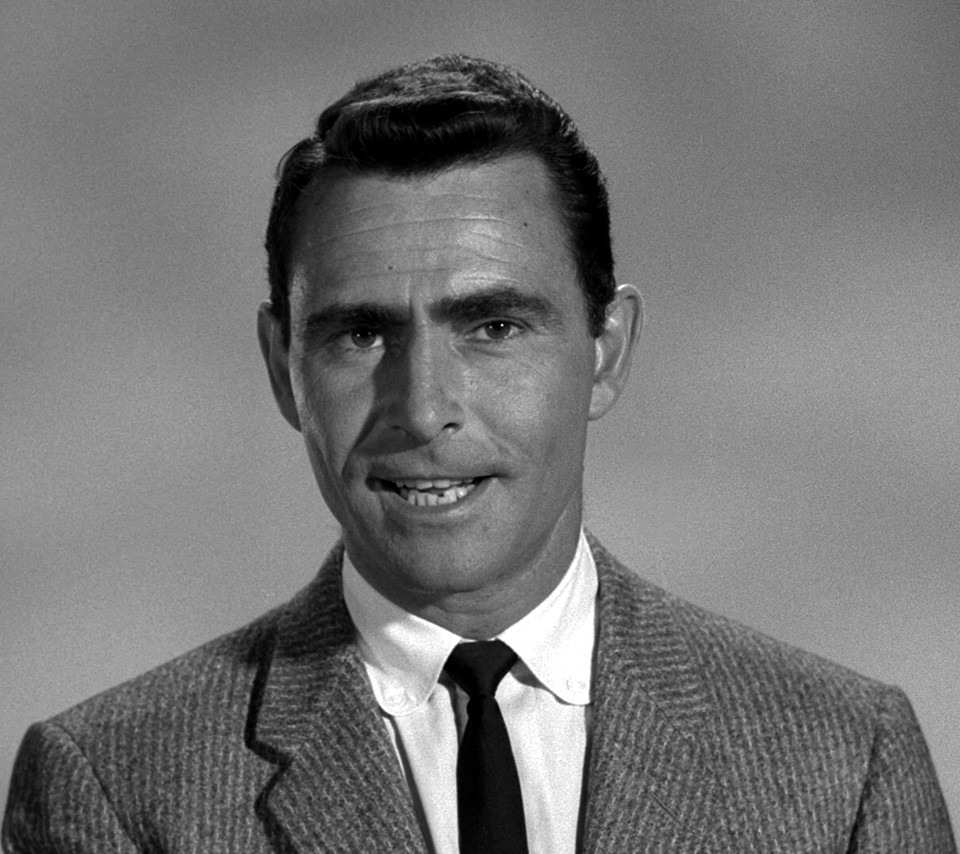
Good sci-fi shows are a rarity. In part, it’s because they cater to such a niche audience; the general population likes to stick to a blend of mostly drama/reality TV, and that usually does not include futuristic societies, robots, aliens, or any combination of the three. The first truly weird and successful sci-fi-esque show would have to be the Twilight Zone, created by Ithaca’s own Rod Serling. It was incredibly ahead of it’s time, and combined fantasy elements with current-day
issues to create a show that was a crazy and wonderful kind of social commentary. Few shows have really broken through the mold since then. The ones that have, however, have been mostly excellent.

In the mid 90s, the X-Files proved that it’s totally possible to have a successful procedural show about aliens, which is something people didn’t realize they were missing until the show debuted. A few other great sci-fi shows came during the mid 2000s, some recognized for their greatness (the adventure/drama/crazy shit-show that was Lost and the surprisingly critically acclaimed Fringe - thanks J.J. Abrams) and some that were not (you’ll always have Netflix, Firefly). Besides the love it or loathe it Battlestar Gallactica, no other shows immediately come to mind, which just goes to show that networks either don’t care for sci-fi shows anymore or that sci-fi shows, basically, just need to get better. 

Which is why I’m so intrigued by Almost Human. FOX has really been pushing this show for a while now, airing commercials for it almost constantly since before the World Series. It’s gotten to the point where I’m embarrassed to say that I’m interested in it; every time I see an ad, my roommates lampoon me for ever bringing it up. And yet, here I am, on Hulu, with my curser hovering over the ‘play’ button on the pilot of Almost Human. 

Part of me wants to give it a chance. For me, personally, it has a lot of similarities to Fringe when that first aired: it’s on FOX, it’s very much a science fiction show, and I know next to nothing about it, despite all the commercials. From what I gather, Karl Urban is a hard-ass cop living in a society that embraces robots. I think he gets hurt or something, and wakes up with a new robot partner, which he isn’t happy with. It’s like a buddy-cop movie, just instead of a person, one buddy is a robot. And they’re not buddies. So. 

The other part of me, though, doesn’t want to get hurt again. Knowing the life-spans of sci-fi shows, I know that the chances of it being good/getting picked up for multiple seasons is slim at best. That being said, the reviews have been mostly positive so far (even though only the pilot has aired and that has to be good) and people seem to be truly enjoying it. It’s also another show that J.J. Abrams has slapped his name on, so you have to expect a certain level of excellence from it. Well. It’s decided then. Despite whatever flak I might get from my roommates, I will sit myself down over Thanksgiving break and watch Almost Human. 


Maybe. 

Francois Truffaut and Wes Anderson

I've slowly been working my way down a list of films that I should see by influential directors through the century. The first director I wanted to take a look at, for no real particular reason was Francois Truffaut. I had seen the film he's arguably best known for, the French New-Wave masterpiece, "The  400 Blows" before. I had liked that, and I figured I would check out the other four films in the Antoine Doinel series, including "Antoine and Colette" "Stolen Kisses" "Bed and Board" and "Love on the Run".


 Out of those films, I really appreciated the third, "Stolen Kisses". I really couldn't place my finger on it, but there was something about that film that struck a chord with me. It was fun and lighthearted, all underscored by this lovable quirkiness. I believe at one point I said aloud to myself, "I really like this film". And it wasn't until I saw one shot, which was perfectly framed, dead on in the center of the screen, that I realized what felt so right to me. It reminded me a lot of Wes Anderson.


 Anderson is one of my favorite film directors. His movies are always quirky and charming, and I find the style of photography pretty endearing. Moonrise Kingdom and The Fantastic Mr. Fox are two of my favorite films.

I figured that this couldn't be coincidental, so I powered up the old google machine, and type in a fine-tuned, well-worded search of "Wes Anderson Francois Truffaut". Surprisingly, there were a lot of hits that came up. These are two articles that appeared, one from 2012 (Just before Moonrise Kingdom) and one from 2002.


http://film-dot-com.tumblr.com/post/20856422516/francois-truffaut-inspired-wes-andersons-moonrise

http://www.nytimes.com/2002/01/11/movies/watching-movies-with-wes-anderson-from-centimes-a-wealth-of-ideas.html?pagewanted=all&src=pm

I guess I shouldn't really be surprised at this point by the fact that great filmmakers have been inspired by other great filmmakers. I suppose this one just struck home the most for me, given the circumstances. If anything it serves as a reminder that inspiration does not come out of a vacuum and in order to get better at making films, you need to see what other people have done right first.

Catching Fire


Last year I finished all three books in the series “The Hunger Games” by Suzanne Collins. When I was reading the books I couldn’t put a single one of them down for a single second. Like most teenagers, I became completely enthralled in the 12 districts that made up the post-apocalyptic nation of Panem. So last night, when I went to see “The Hunger Games: Catching Fire”, the second movie in the series, I had extremely high expectations about how I wanted the movie to play out. In the end, I was more than satisfied.
“The Hunger Games: Catching Fire”, from Lionsgate, opens with a scenic view of the heroine, Katniss Everdeen played by our favorite actress, Jennifer Lawrence. One of the reasons why this movie is so successful is because of the amazing and publically appealing cast involved. To start, Jennifer Lawrence is a successful Academy Award-winning actress who has appealed to many young adults with her witty speeches and her love for food and drinking before interviews. Most importantly, her ability to act as a cunning, selfless fighter has been spot on, to say the least.

The movie begins with Katniss crouching in a bush hunting for animals in the forbidden part of her district. This opening scene reminds us that Katniss is just as bad-ass as she was in the first movie. That is, until her best friend Gale (Lian Hemswirth), startles her into a nervous breakdown. Then, we see her for what she has become since the first Hunger Games, a complete emotional wreck. But what else would you expect from a girl who had been dropped into an arena forced to kill the surrounding 23 people in order to continue living?
The Hunger Games might be directed towards young adults due to it’s superficial, cliché romantic theme of a girl constantly flip-flopping between two boys, each from a different world. However, the plot itself is complex and thoughtful, including references to past films and literature as well as universal themes including government, oppression and justice. In the first “Hunger Games” we meet Katniss, who resides in District 12, 1 of the 12 Districts that now makes up what is left of the world after a revolution destroyed most of North America. In order to make the people understand and regret their actions of revolting the president, currently President Snow, holds an event known as “The Hunger Games”. “The Hunger Games” is a broadcasted event in which two tributes from each district are chosen to fight each other to the death until there is one lone victor who receives fame, wealth for themselves, wealth for their district and the ability to continue living. In the first movie, Katniss and Peeta (Josh Hutcherson), are chosen to be tributes in order to participate in dramatic, horrifying, gladiatorial extremes.

The second movie tells the story of a new game that took place on an island set up as a clock to reveal a different lethal event with each new hour. The idea itself is intriguing, but on the screen it was completely engrossing. The poisoning fog, killer monkeys, raining blood, threatening lighting and more was exciting for any age.
Catching Fire has a different director than the first. This time around, Francis Lawrence replaced Gary Ross. When Ross directed the first movie, it was done in the hesitance and fear that usually fuels the adaption of a popular book onto the movie screen. But with the surprising popularity and success that followed the first movie, Lawrence was given more free range. Lawrence is known for previously directing the well-received films, “Constantine” and “I Am Legend”. There were also other details that made this movie so fascinating including the amazing costumes, designed by Trish Summerville, that were absolutely breathtaking. Other aspects that made the details of this film so detail oriented include the director of photography, Jo Willems, music by James Newton Howard, production design by Phillip Messina and producers Nina Jacobson and Jon Kilik.
The ending may have been disappointing, but it is hard to criticize it since it had ended exactly as the book had. In fact, most of the movie had followed the book, but not in a negative or downgrading manner. Rather, the movie did not take away from the book but only expanded on its ability to tell such a fantastic and symbolic story. The script, written by Simon Beaufot and Michael DeBruyn completed the difficult feat of adapting such a popular book. Typically, movie adaptations fail at properly adapting a popular book. However, this was not the case with this big-studio, beautifully visual adaptation. Although the ending was a chest, overdone concept of displaying the main character’s facial expression as she realized the consequences to her action, the scene did fill me with anticipation and excitement for the next two movies to come.